

Nightshade intolerance means your body struggles with foods from the Solanaceae plant family, such as tomatoes, potatoes, peppers and aubergines, and reacts with symptoms like bloating, wind, stomach pain or tiredness. It is not an allergy, it is not well studied, and the only dependable way to confirm it is to track your symptoms and test the foods one at a time. This guide shows you which foods to look at, what symptoms people report, and how to work out whether nightshades are really your problem.
TL;DR
- Nightshades include tomatoes, white potatoes, aubergines, peppers, chilli and spices such as paprika. Sweet potatoes are not nightshades.
- Reported symptoms are mostly digestive (bloating, gas, diarrhoea, stomach pain), sometimes with headaches, tiredness, joint pain or rashes.
- Intolerance is not an allergy. Sudden swelling or breathing difficulty needs a 999 call, not a diet change.
- A food and symptoms diary, followed by a planned elimination and reintroduction, is the NHS-recommended route. A hair-sample screening test can help you decide where to start.
- Speak to your GP or a dietitian before you cut out whole food groups.
Table of Contents
- What are nightshades?
- Nightshade intolerance symptoms
- Intolerance or allergy?
- How to find out whether nightshades are your trigger
- Where testing can fit in
- A test built to help you start
- Our perspective
- Making the most of your results
- FAQ
- Sources
What are nightshades?
Nightshades are plants in the Solanaceae family. The family also includes non-food plants such as tobacco, belladonna and mandrake, according to a 2024 UK allergy training factsheet. The edible ones are everyday staples in British kitchens, which is partly why a reaction can be so hard to pin down.
The foods most often listed are:
- Tomatoes and everything made from them: tinned tomatoes, passata, ketchup, tomato purée, pizza sauce, many soups and ready meals
- White and red potatoes, including chips, crisps, mash and potato starch in some products
- Aubergines (eggplant)
- Peppers, both sweet bell peppers and chilli peppers
- Pepper-derived spices: paprika, cayenne, chilli powder, crushed red pepper and many curry powders
- Less common edible nightshades: tomatillos, goji berries, golden berries and okra, which Cleveland Clinic includes in its list of edible nightshades
Two points often cause confusion. Sweet potatoes and yams are not nightshades, so they are a common swap. Black pepper, the peppercorn you grind over dinner, is not a nightshade either, even though the names sound alike.
Where nightshades hide
The obvious foods are easy to spot. The tricky ones are in the background: spice blends, stock cubes, sauces, seasoning on crisps, gravy granules, soups and takeaway curries. If you suspect nightshades, read labels for “paprika”, “spices”, “chilli” and “tomato”, and be prepared for a few surprises.
Nightshade intolerance symptoms
People who believe they react to nightshades most often describe digestive symptoms. The NHS page on food intolerance lists common symptoms of food intolerance in general, including diarrhoea, bloating, wind, stomach pain, nausea, headaches, tiredness, constipation and, for some people, joint pain and rashes. Nightshade reports tend to fall within that same range.
Timing is one of the clues, and also one of the difficulties:
- The NHS says intolerance symptoms usually start a few hours after eating and can last for hours or days.
- The UK factsheet mentioned above reports that symptoms may begin within 30 minutes but can take up to 48 hours to show.
That delay is why people rarely connect Tuesday’s bloating with Monday’s tomato pasta. A reaction that comes late, from a food you eat several times a week, is easy to miss without a written record.
What the evidence does and does not say
It helps to be realistic. Reactions to nightshades are believed to be rare, and the same factsheet says there is limited data on how many people are affected. Cleveland Clinic notes there is no proof that nightshade vegetables cause inflammation in people generally, and no concrete evidence that they are harmful for everyone, although some people report feeling better when they avoid them.
That does not mean your symptoms are imagined. It means nightshade sensitivity looks personal. Cleveland Clinic’s expert view is that food sensitivity is patient-specific and may reflect another underlying imbalance rather than a permanent problem with the food itself. For you, the useful question is not “are nightshades bad?” but “do they affect me, and how much?”
There is also some research interest. A 2024 study on a nightshade elimination diet explains that nightshades contain alpha-solanine, a compound that can cause nausea, abdominal pain, vomiting and diarrhoea even in small amounts, with far larger amounts being dangerous. In ordinary cooking, you are not eating dangerous amounts, but it shows why the family gets so much attention. Do not eat green or sprouting potatoes, and discard them if in doubt.
Intolerance or allergy?
This matters more than anything else in the article, because the two need very different responses.
The NHS explains that food intolerance is not caused by the immune system overreacting, whereas a food allergy can cause itchy skin, wheezing, or swelling of the lips, face and eyes. The BMJ’s clinical guidance adds that allergic reactions typically occur within minutes, and may involve hives, itching in the mouth or throat, wheezing, swelling or anaphylaxis. Intolerance symptoms, by contrast, are typically non-specific, may follow several foods, and can be hard to link in time to eating.
| Intolerance | Allergy | |
|---|---|---|
| Cause | Not an immune system overreaction (NHS) | Immune-mediated reaction |
| Typical timing | Hours, sometimes up to 48 hours | Usually within minutes |
| Typical symptoms | Bloating, wind, diarrhoea, stomach pain, headaches, tiredness | Hives, itching, wheezing, swelling, anaphylaxis |
| Seriousness | Uncomfortable, usually not dangerous | Can be life-threatening |
If you want more on this distinction, our guide to food intolerance versus allergy walks through it in more detail.
When to get urgent help
The NHS says to call 999 for sudden swelling of the lips, mouth or throat, very fast or difficult breathing, throat tightness or trouble swallowing, sudden confusion or dizziness, or fainting where the person cannot be woken. Those are signs of a severe allergic reaction, not intolerance. If your symptoms keep coming back, make a GP appointment, particularly if you are losing weight, are exhausted or have blood in your stools. Those signs need checking for other conditions first.
How to find out whether nightshades are your trigger
There is no single test that proves nightshade intolerance. What works is a structured process. The NHS recommends a food and symptoms diary and, where suitable, a diet that avoids the suspected foods, followed by reintroducing them after a few weeks to see if symptoms return. The BMJ guidance says that for likely intolerance, allergy tests are not necessary, and that a dietitian referral is worth considering if weight loss or nutritional deficiency is a concern.
Here is a practical way to do it.
- Keep a diary for two weeks. Write down everything you eat and drink, including sauces and spices, and every symptom with its time. Do not change your diet yet.
- Look for patterns. Do symptoms follow tomato-heavy or potato-heavy meals? Do they appear after takeaway curries but not after plain home cooking?
- Talk to your GP or a dietitian. The NHS advises against cutting foods from your diet without their advice. This is especially important for children, pregnant women and anyone with a history of disordered eating.
- Remove nightshades completely for a set period. Several weeks is the usual timeframe. Partial removal muddies the picture, so check labels and spice mixes.
- Reintroduce one food at a time. Start with one nightshade, such as tomato, eat a normal portion for a day or two, and note what happens. Wait before testing the next one.
- Keep what you tolerate. Many people find they react to one or two nightshades, not all of them. The aim is the shortest possible “avoid” list, not the longest.
Our elimination diet checklist gives you a printable-style version of these steps, and our guide to step-by-step diet optimisation covers how to rebuild meals around what works for you.
Safe swaps while you avoid nightshades
Cutting out tomatoes and potatoes sounds daunting, but plenty of everyday meals adapt easily:
- Potatoes: sweet potatoes, parsnips, swede, celeriac, cauliflower mash or rice
- Tomato sauce: a blended roasted beetroot, carrot and herb sauce, or a simple olive oil, garlic and basil base
- Peppers: celery, courgette, radish or fennel for crunch
- Paprika and chilli: black pepper, ginger, turmeric, cumin, cinnamon and fresh herbs
- Aubergine: mushrooms or courgette
When you drop a food group, keep an eye on variety. Nightshades supply vitamin C, potassium and other nutrients, so replacing them with a wide range of other vegetables matters. A dietitian can help you check that your plate stays balanced.
Where testing can fit in
Starting an elimination diet without any lead can feel like guessing. If you do not know whether tomatoes, dairy, gluten or something else is the culprit, you might remove far more than you need. That is where a screening test can help you narrow your focus before you begin the diary-and-reintroduction process.
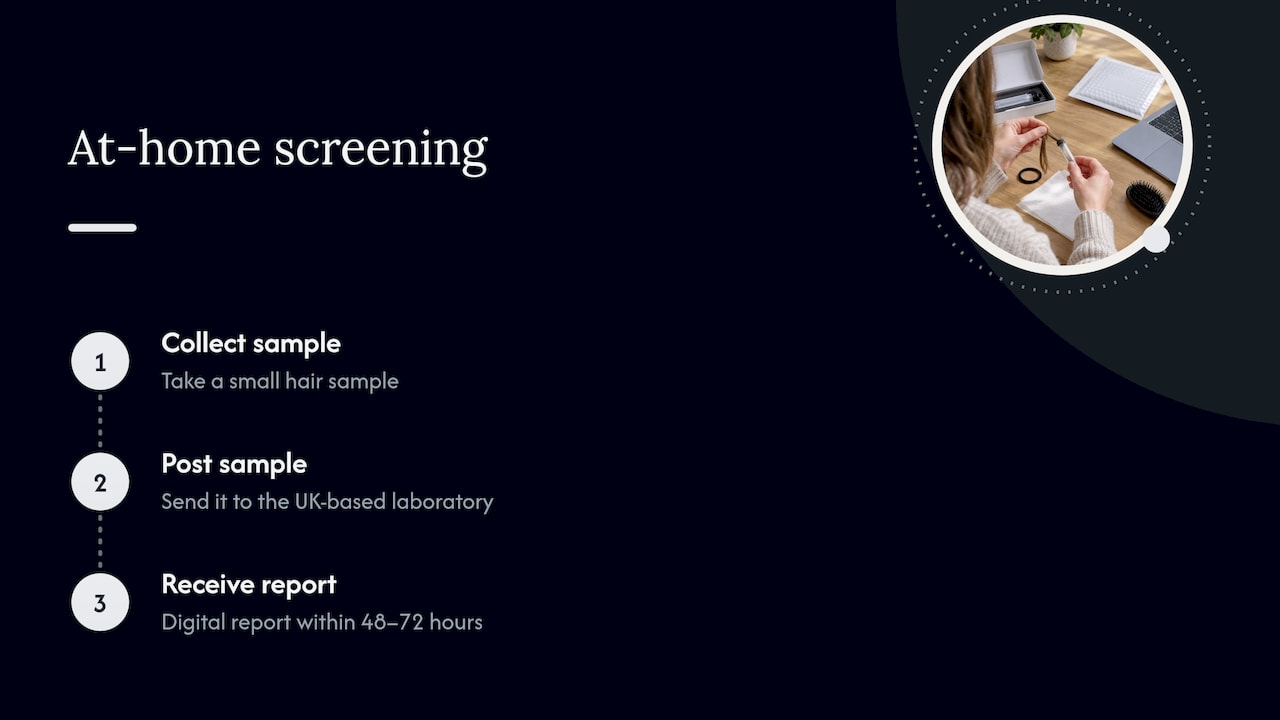
We use a non-invasive, at-home approach. You collect a small hair sample, post it to our UK-based laboratory, and receive a digital report within 48 to 72 hours. Our tests use bioresonance technology, and we present them as intolerance screening to guide an elimination diet, not as a diagnosis of allergy or disease. Your report is a starting point that you then confirm through the careful reintroduction steps above.
If you want to understand how our approach sits alongside your other options, our guide on reliable home testing in 2026 and our piece on using intolerance tests in 2026 explain what to expect.
Think about the whole picture
Sometimes symptoms that seem to follow nightshades reflect something wider, such as how your gut is working overall. If that sounds like you, gut microbiome testing is one way people look at the bigger picture before deciding which foods to remove. Whatever route you choose, the goal is to restrict only what you need to, so you avoid cutting out healthy foods for no reason.
A test built to help you start
Our range lets you choose the level of detail that suits you. The Core Test covers 500 items and is our more affordable option. Our Ultimate tests cover a much larger panel, and we offer up to 1,450 items, which is the largest panel we know of in the UK. Our Ultimate Plus Intolerance Test is priced at £140.99 one-off per person. Each report comes with guidance on how to use it for an elimination diet.
Not sure which one fits? Our comparison of Core versus Ultimate tests explains the difference. Ready to order? You can view the Ultimate Plus Intolerance Test, or browse all our food intolerance tests.

If you are testing for the family, we also have a Couples option, and we test pets too, since dogs and cats can have their own food sensitivities.
Our perspective
When someone contacts us about nightshades, they are usually tired of guessing. They have noticed that curry nights or tomato-heavy dinners leave them uncomfortable, but they cannot tell whether it is the tomato, the spice, the onion or the wheat in the sauce.
That is where we think a broad screening panel earns its place. Because nightshade symptoms are slow and easy to mix up with other foods, a wide report lets you see several possible triggers at once, rather than testing one food per month and losing patience. We built our panel, up to 1,450 items, so that you can plan one focused elimination instead of many partial ones.
We are also clear about what our test is. It is intolerance screening using bioresonance technology, not an allergy diagnosis. We tell customers to treat the report as a map, then follow it with a proper elimination and reintroduction, keep a diary, and speak to a GP or dietitian if symptoms are persistent or the diet becomes restrictive. Used that way, the report gives you a confident place to begin and results within 48 to 72 hours, so you are not waiting around.
Our aim is simple: help you eat well, feel better and keep the foods you love wherever possible.
Rob
Making the most of your results
Whether your list comes from a test, a diary or both, these habits make the difference:
- Change one thing at a time. If you remove five foods at once, you will not know which one mattered.
- Allow enough time. Because symptoms can take up to 48 hours to appear, a one-day trial can mislead you.
- Cook from scratch while testing. Ready meals and takeaways are full of hidden paprika and tomato.
- Reintroduce on purpose. Skipping this step is how people end up avoiding foods for years that they could have eaten.
- Stay in touch with your GP. Persistent or worsening symptoms deserve a proper check.
For a wider look at how testing and planning work together, see our intolerance testing and diet planning guide.
FAQ
What are the symptoms of nightshade intolerance?
Most people describe bloating, wind, stomach pain, diarrhoea or nausea. Some also report headaches, tiredness, joint pain or skin rashes. The NHS says intolerance symptoms usually appear a few hours after eating and can last hours or days, so a diary is the best way to spot the link.
Which foods are in the nightshade family?
The main ones are tomatoes, white potatoes, aubergines, peppers and chillies, plus spices such as paprika, cayenne and chilli powder. Goji berries and tomatillos are also nightshades. Sweet potatoes and yams are not.
Is nightshade intolerance the same as a nightshade allergy?
No. An allergy involves the immune system and can cause swelling, wheezing or anaphylaxis, usually within minutes. Intolerance does not involve the immune system in the same way and tends to cause slower digestive symptoms. If you notice swelling of the lips, mouth or throat, or have difficulty breathing, call 999.
How do I test for nightshade intolerance?
Start with a food and symptoms diary, then speak to your GP or a dietitian about a short elimination followed by reintroduction, as the NHS advises. A home screening test, such as ours, can help you choose which foods to look at first. You then confirm the result by reintroducing foods one at a time.
Do I have to avoid nightshades forever?
Not necessarily. Many people find they react to only one or two nightshades, or only in large amounts. Reintroduction shows you exactly which foods and portions you can keep, so your final list can be much shorter than your starting one.
Sources
- Food intolerance – NHS
- British Medical Journal clinical guidance on food allergy and intolerance
- Nightshade Vegetables: What To Know – Cleveland Clinic
- Nightshades factsheet, Food Allergy Training Consultancy, 2024
- The evaluation of nightshade elimination diet (NED), 2024









Leave a Reply
Want to join the discussion?Feel free to contribute!