

Salicylate intolerance, also called salicylate sensitivity, is an adverse reaction to salicylates. These are natural chemicals found in many fruits, vegetables, herbs and spices, and in aspirin and a wide range of everyday products. Symptoms can include headaches, a blocked nose, skin rashes and stomach upset. They overlap with many other conditions, so the cause is hard to pin down. Below you will find the symptoms, the foods most often discussed, what UK specialists say about low-salicylate diets, how diagnosis works, and where a home test can fit into your plan.
TL;DR
- Salicylates occur naturally in many healthy plant foods and in aspirin. Sensitivity to them is a non-allergic reaction, and the evidence on dietary triggers is still debated.
- Common symptoms include nasal congestion, headaches, itchy skin or hives, and digestive upset. None of them is specific to salicylates.
- UK dietitians and Allergy UK advise against long, strict low-salicylate diets without professional support, because they can be very restrictive.
- Suspected reactions to aspirin or NSAIDs need a GP or allergy specialist. Breathing difficulty or swelling needs urgent help.
- A home hair-sample test can help you screen for foods to look at in an elimination diet. It does not diagnose salicylate intolerance.
Table of Contents
- What salicylate intolerance actually is
- Salicylate sensitivity symptoms
- Foods high in salicylates
- Why a low-salicylate diet needs care
- How salicylate intolerance is diagnosed in the UK
- Where a home intolerance test fits
- Your next step: a test to guide your elimination diet
- How to use your results sensibly
- FAQ
- Sources
What salicylate intolerance actually is
Salicylates are salts and esters of salicylic acid. The British Dietetic Association explains that they are found naturally in fruits, vegetables, herbs and spices. They also turn up in artificial flavourings, preservatives, perfumes, skin care products and medicines such as aspirin.
An intolerance is not an allergy. An allergy involves the immune system. Salicylate intolerance is described in a medical review as a mix of pseudoallergy and metabolic intolerance, with symptoms often showing up where the body meets the outside world: the skin, the mucous membranes and the gut.
This matters because it explains why reactions are so individual. Two people can eat the same curry and only one will feel unwell. The amount you tolerate seems to depend on the person, which is why many people talk about a personal “threshold” rather than a fixed list of banned foods.
Is salicylate the same as aspirin?
Not quite, and this is a common source of confusion. Allergy UK points out that aspirin contains an acetyl group, whereas the salicylates in food are mostly non-acetylated. The same factsheet says most people with asthma or aspirin allergy can eat salicylate-rich foods, although it is unclear whether these foods trigger symptoms in some people.
So a reaction to aspirin does not automatically mean you need to cut out apples and tea. And the reverse is true too: feeling unwell after certain foods does not mean you have aspirin sensitivity.
Salicylate sensitivity symptoms
Symptoms vary from person to person and mimic other allergies, food intolerances and illnesses. An allergist quoted by Cleveland Clinic lists the following as typical:
- Fatigue and headaches
- Nasal congestion, a runny nose and sneezing
- Skin redness, hives and itching
- Stomach pain, nausea, gas, bloating and diarrhoea
For reactions to aspirin and NSAIDs, Allergy UK says symptoms usually appear within an hour of taking the medicine. They range from mild, such as hives (nettle rash) and a blocked or runny nose, to severe.
Food-related reactions are harder to read. Food intolerance symptoms can be delayed and depend on how much you ate, so you may not link a headache to a meal eaten hours earlier. That is why a food and symptom diary is the most useful tool you can start today. Note what you ate, when, and what you felt, for two to three weeks.
When to get medical help
Treat these as a reason to speak to a professional rather than to experiment with your diet:
- Wheezing, a tight chest or breathing difficulty after aspirin, ibuprofen or similar painkillers. See your GP, who can refer you to an allergy service. Stop taking the medicine until you have been advised.
- Swelling of the lips, face or tongue, or widespread hives. Call 999. Severe salicylate allergy can, rarely, cause anaphylaxis, a life-threatening emergency.
- Persistent symptoms you cannot explain, such as ongoing diarrhoea, weight loss or blood in your stools. These need a GP assessment first, because they can have causes that diet changes will not fix.
Foods high in salicylates
The BDA classes foods as high, medium or low in salicylates. In its guidance, Granny Smith apples, curry powder, black tea and coffee are high, while strawberries and mango are medium. So if you were wondering about mango: it contains salicylates, but at a medium level.
Here is a practical way to think about the groups. Treat it as a starting map, and check the BDA sheet or a dietitian for exact placements.
| Level | Examples often discussed |
|---|---|
| Higher | Curry powder and many dried herbs and spices, black tea, coffee, Granny Smith apples, many berries and dried fruit |
| Medium | Strawberries, mango, many other fruits and some vegetables |
| Lower | Many plain meats, fish, eggs, plain rice, and some peeled or cooked fruit and vegetables |
The lower row is a general pattern. Check the individual items against a trusted list before relying on it.
Two more points are worth knowing:
- Spices are the big hitters. A 2015 review notes that standard dietary intake may not reach the levels needed to cause reactions in most people. It highlights curry spices as possible exceptions, because they are so high in salicylates and may inhibit the COX-1 and COX-2 enzymes.
- Salicylates are not only in food. Mint-flavoured toothpaste, some shampoos, perfumes, creams and certain medicines can contribute. If your symptoms involve the skin, it is worth reading labels beyond the kitchen.
Why a low-salicylate diet needs care
Searching “salicylate intolerance diet” often leads to long lists of banned foods. The honest picture is more cautious.
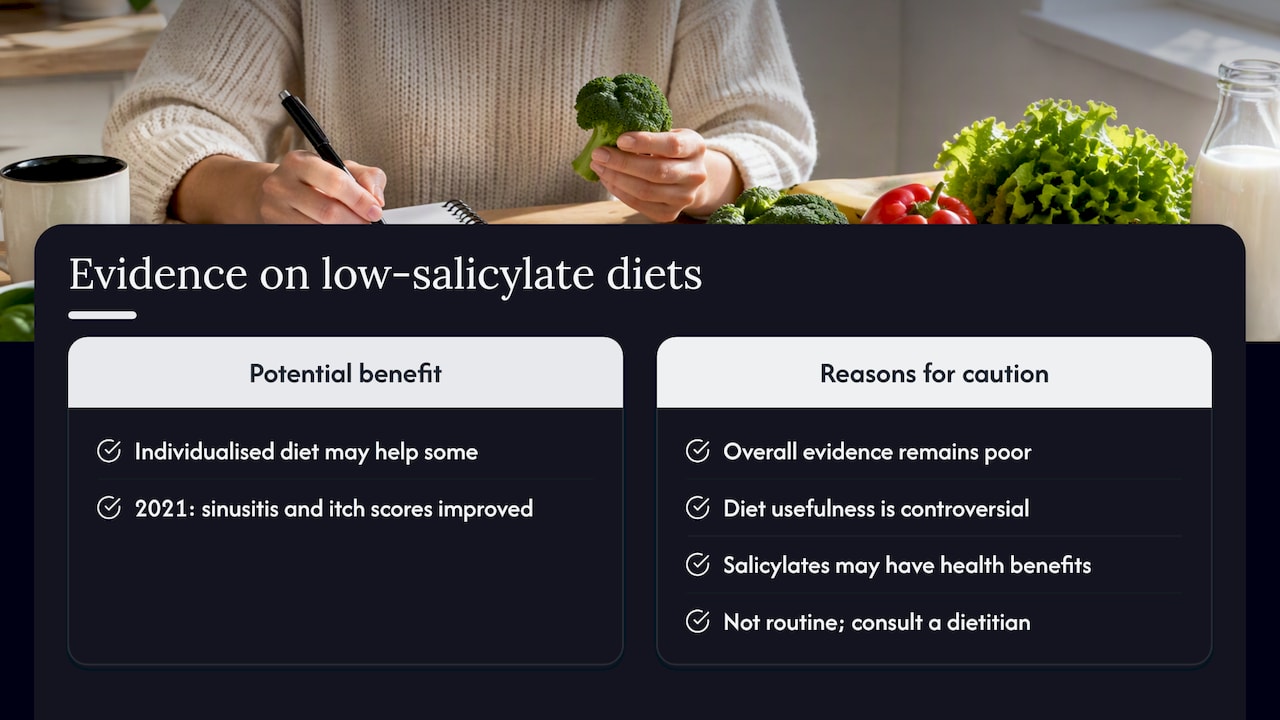
A 2015 review by Skypala and colleagues concludes that removing specific high-chemical foods may help some people, but the overall evidence for low-salicylate diets is poor. It recommends individual management, focused on nutritional health rather than long-term restriction.
There is some encouraging research. A 2021 interventional study found that a personalised low-salicylate diet improved sinusitis and itch scores in people with known NSAID hypersensitivity. The authors still note that the usefulness of these diets is controversial.
On the other side, researchers writing on aspirin and respiratory disease urge caution, because these diets are very restrictive and dietary salicylates may have health benefits. And Allergy UK states that low-salicylate diets are not routine, and that anyone who continues one should consult a qualified dietitian to make sure it is nutritionally adequate.
A sensible way to approach it
We think the most useful approach is a short, structured trial rather than a permanent ban:
- Keep a diary for two to three weeks and look for patterns.
- Pick a small number of suspects rather than removing dozens of foods. Fruit, vegetables, herbs and spices are good for you, so every food you remove should have a reason.
- Remove them for a defined period, often a few weeks, and note any change.
- Reintroduce one food at a time, in a normal portion, and watch for a reaction over the next day or two.
- Keep the foods that do not bother you. The aim is the widest diet you can comfortably eat, not the narrowest.
- Involve a dietitian if you are removing several food groups, if you are pregnant, or if you are making changes for a child.
If you want a practical walkthrough of the process, our guides on adjusting your diet for food sensitivities and practical dietary adjustments cover how to plan, reintroduce and keep your meals balanced.
How salicylate intolerance is diagnosed in the UK
There is no simple blood test or skin prick test that confirms salicylate intolerance to food. What UK specialists do depends on what you are reacting to.
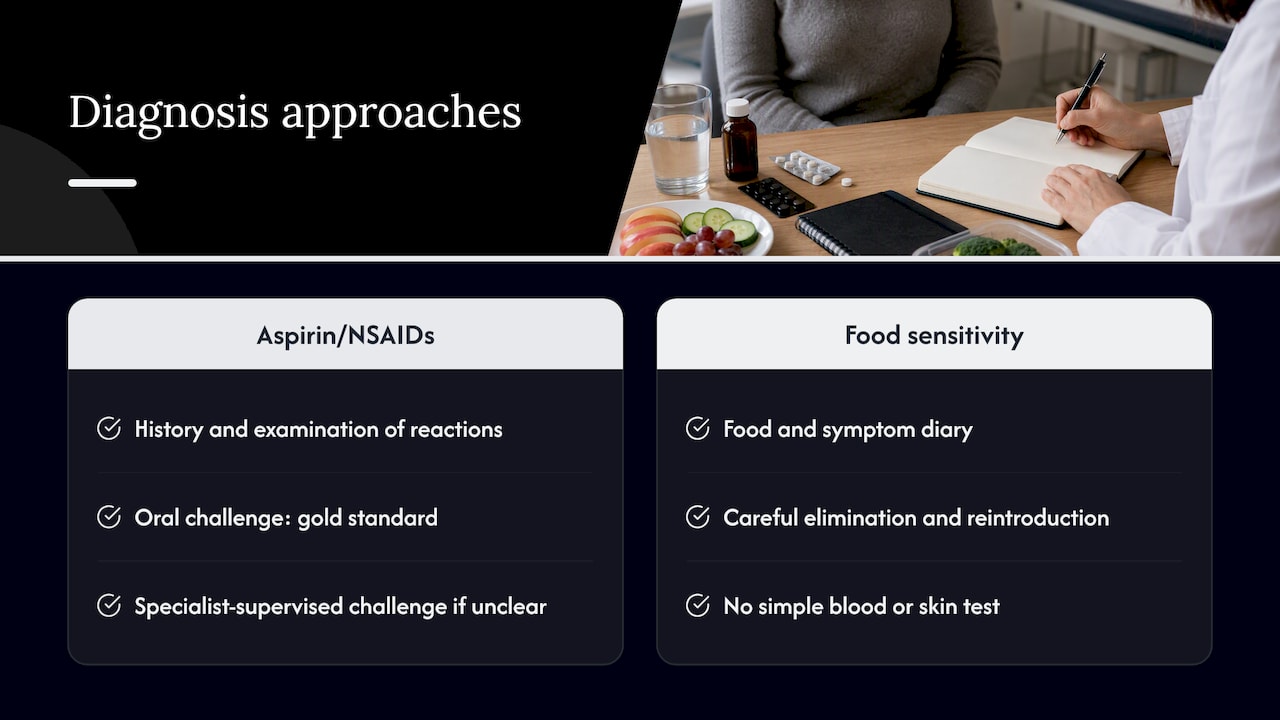
If aspirin or NSAIDs are the problem. Diagnosis is largely based on your history of reactions, such as asthma, nasal polyps and sinusitis after taking these medicines. According to a review in Rhinology, an oral aspirin challenge is the gold standard to confirm it, and nasal or bronchial challenges can also be used, with resuscitation facilities available. The same paper says the link between these symptoms and dietary salicylates is unproven for most patients.
Why it is done in specialist centres. The BSACI guidelines say that history and examination are the cornerstones of investigating drug hypersensitivity, and that provocation tests are reserved for unclear cases because they carry risk. The BSACI drug allergy guidelines stress that complex sensitivities should be managed in specialist allergy centres equipped to run drug challenges safely.
If foods are the problem. Most food-related salicylate sensitivity is identified the practical way: a diary, a careful elimination and a reintroduction. This is slow, but it is the approach with the strongest backing in UK practice.
If you want to understand how allergy and intolerance testing differ, our pages on UK allergy standards and diagnosis and sensitivity versus allergy test types explain the difference in plain language.
Where a home intolerance test fits
Many people search for a “salicylate intolerance test” hoping for a single yes or no answer. We want to be straightforward with you: no home test can diagnose salicylate intolerance, and we would not claim ours does. Diagnosis of reactions to aspirin and NSAIDs belongs with your GP and an allergy specialist.
What a home test can do is help you screen. If you suspect food is behind your symptoms but do not know where to start, a broad report can give you a shortlist of foods to look at first. That makes your elimination diet more focused, and it can spare you from cutting out everything at once. This is the same logic that our guide to food sensitivity in the UK walks through, including the limits of the evidence.
Our tests use bio-resonance technology on a small hair sample. It is non-invasive, so there is no needle and no blood draw, which many parents find reassuring when testing a child. Bio-resonance is not a medical diagnostic method, and our reports are intended for intolerance screening. You can read how it works in our educational guide to bio-resonance technology and see the background on our research and methodology page.
Our perspective
We hear from many people who have spent months wondering whether the trigger is tea, spices, fruit or something else entirely. The uncertainty is often as wearing as the symptoms.
Our view is simple. Salicylates are in some of the healthiest foods you can eat, so we never want anyone to strip their diet back based on a list alone. A report should give you a starting point, and your own body, a symptom diary and, where needed, a dietitian should decide what stays off the plate. We built our reports to be clear and actionable for exactly that kind of structured elimination, and we are open about the fact that they screen for intolerances rather than diagnose conditions.
If you have wheezing, swelling or any reaction to medicines, please see your GP first. For everyday digestive, skin or headache patterns, we think a step-by-step approach, supported by good information, is the kindest way back to feeling well.
— Rob
Your next step: a test to guide your elimination diet
If you are ready to take a structured approach, our Ultimate Plus Intolerance Test is priced at £140.99 per person as a one-off. You collect a hair sample at home, send it to our UK laboratory and receive a digital report. Our other options, including the Core, Essential, Premium, Ultimate, Gluten and Dairy & Lactose tests, are on our tests page.

The process is simple:
- Order online and your kit arrives at home.
- Follow our step-by-step sample collection guide.
- Send your sample to the laboratory.
- Receive your digital report, usually within 48 to 72 hours of the lab receiving it, and use it to plan your elimination diet. Our guide to the digital intolerance report shows what to expect.
There are also tests for dogs and cats, if a pet is the one struggling. See our pet testing options.
How to use your results sensibly
Whether your list comes from a test, a diary or a dietitian, the same rules keep you safe and make the outcome useful.
- Start small. Remove the top few foods, not forty.
- Change one thing at a time. Otherwise you will not know what helped.
- Give it time. Intolerance symptoms can take days or weeks to settle.
- Reintroduce on purpose. A food that is off the menu for good should have earned its place there.
- Watch nutrition. Fruit and vegetables supply fibre, vitamins and antioxidants. If you cut several, replace them with suitable alternatives.
- Do not stop prescribed medicines. Never change prescribed medication because of a test result without speaking to your doctor or pharmacist.
If your symptoms are mostly around your nose, eyes or skin, it may also be worth looking at non-food triggers. Our environmental sensitivity testing guide explains what else could be contributing.
FAQ
What does salicylate intolerance feel like?
Most people describe a mix of headaches, a stuffy or runny nose, itchy or red skin and stomach discomfort. Symptoms can be delayed and depend on the amount eaten, so they are easy to miss. Because the same symptoms occur with many other conditions, speak to your GP if they persist.
Does mango contain salicylates?
Yes. The British Dietetic Association lists mango as a food with a medium salicylate level. Whether it affects you depends on your own sensitivity and on how much you eat. A diary and a reintroduction trial will tell you more than a list.
Is salicylate an NSAID?
No. Salicylates are a group of chemicals related to salicylic acid, and aspirin is a medicine derived from them. Aspirin is classed as an NSAID, but the salicylates found naturally in food are not. This is why a reaction to aspirin does not always mean food salicylates are a problem.
Can I test for salicylate sensitivity at home?
No home test can diagnose it. A home intolerance test can screen for foods to look at in an elimination diet, and a GP or allergy specialist should assess any reaction to aspirin or NSAIDs. Use home results as a starting point, not a verdict.
Should I follow a low-salicylate diet long term?
Usually not without professional support. Allergy UK says these diets are not routine and advises seeing a qualified dietitian if you continue one. The aim is to find your own triggers, then eat as varied a diet as you comfortably can.
Sources
- Salicylate Sensitivity, British Dietetic Association
- Aspirin Intolerance and Salicylates, Allergy UK
- Salicylate Intolerance: Pathophysiology, Clinical Spectrum, Diagnosis and Treatment
- Sensitivity to food additives, vaso-active amines and salicylates (2015 review)
- Sensitivity to food additives, vaso-active amines and salicylates, Skypala et al.
- Effectiveness of a personalised low salicylate diet (2021)
- Aspirin and salicylate in respiratory disease, Rhinology
- BSACI guidelines for the management of drug allergy
- Salicylate Sensitivity: Symptoms and Management, Cleveland Clinic
- The Basics of Salicylate Allergies, WebMD








Leave a Reply
Want to join the discussion?Feel free to contribute!