

“Oxalate intolerance” is not a diagnosis your GP will recognise by that name. The medical conditions that do exist are high oxalate in the urine (hyperoxaluria), calcium oxalate kidney stones and a rare genetic disorder called primary hyperoxaluria. Online, the term is often stretched to cover a wide range of symptoms, from joint pain to rashes. This guide separates what is established from what is not. It also covers which foods are high in oxalate, who should actually cut back, and how to work out whether food is behind your symptoms.
TL;DR
- Oxalate is a natural compound in many healthy plant foods. For most people it is not a problem.
- The recognised problems are kidney stones and hyperoxaluria, which are diagnosed with urine tests, not guessed from symptoms.
- UK NHS dietetic advice for stone formers is to reduce high-oxalate foods, not eliminate them, and to keep calcium intake up.
- Persistent, unexplained symptoms deserve a GP review first. A home sensitivity test can then help you plan an elimination diet, but it cannot diagnose an oxalate disorder.
Table of Contents
- What oxalate is and where it comes from
- Is oxalate intolerance a real condition?
- Oxalate sensitivity symptoms: what is actually linked to high oxalate
- Primary hyperoxaluria and other causes of high oxalate
- How do you know if you have high oxalate levels?
- Oxalate foods list: what is high and how much it matters
- Low-oxalate diet: who needs one and how to do it safely
- Perspective: where a food intolerance approach fits
- If you suspect food intolerance rather than an oxalate disorder
- Practical tips while you find the cause
- FAQ
- Sources
What oxalate is and where it comes from
Oxalate is a compound found in plants, and your body also makes it. In the gut, oxalate can bind to calcium from food and leave the body in your stool. What is absorbed passes through the kidneys into urine.
It helps to know that diet is only part of the picture. Research reviews note that dietary oxalate typically accounts for only a portion of urinary oxalate, with the body’s own production a significant source. That is why cutting every spinach leaf from your plate rarely fixes anything on its own.
Oxalate levels also vary a lot from person to person. A 2023 review of oxalate metabolism is one of several academic papers pointing to wide differences between individuals, shaped by genetics, gut health and diet. We have not cited a specific page for that point, so treat it as background and ask a clinician about your own case.
Is oxalate intolerance a real condition?
The honest answer is that it depends on what you mean.
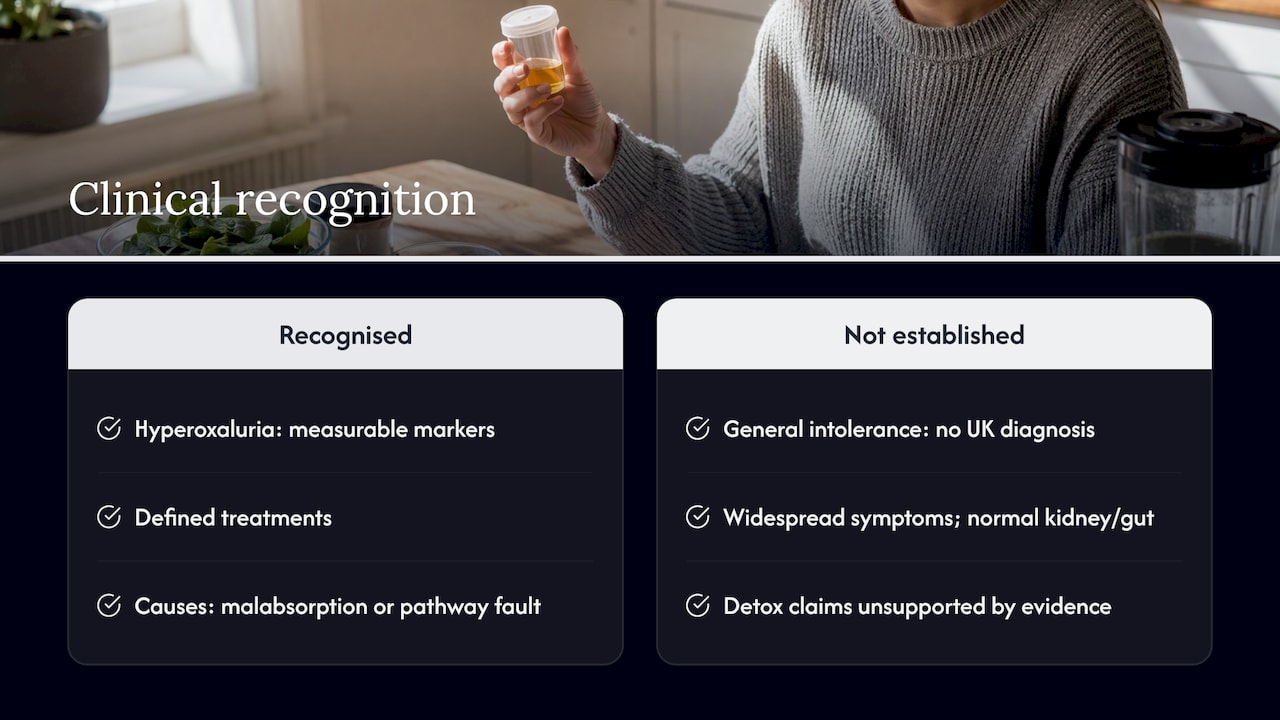
Medically recognised: The UK Kidney Association explains that hyperoxaluria can result from oxalate hyperabsorption in malabsorption, or from a fault in normal metabolic pathways, which is primary hyperoxaluria. These are conditions with measurable markers and defined treatments.
Not established: A general “oxalate intolerance” or “oxalate sensitivity” that causes widespread symptoms such as brain fog, skin flares or sensory problems in people with normal kidney and gut function is not a diagnosis in UK clinical practice. Some websites describe “oxalate dumping” and sell detox plans. We would not rely on those claims. The evidence cited on this page comes from kidney and metabolic medicine, and it does not support them.
That does not mean your symptoms are imaginary. It means the cause needs looking for properly, and oxalate may or may not be part of it.
Oxalate sensitivity symptoms: what is actually linked to high oxalate
The symptoms with real evidence behind them come from the kidneys and urinary tract.
Kidney stones
Stones are often the first sign. The Mayo Clinic lists sharp back or abdominal pain, blood in the urine, pain when passing urine and nausea as typical symptoms of hyperoxaluria-related stones. Pain like this needs prompt medical attention. Do not try to manage it with diet changes.
Kidney damage in severe cases
When the kidneys stop working well, oxalate can build up elsewhere. The Cleveland Clinic describes how this state, called oxalosis, can affect the blood, eyes, bones, skin, muscles and heart, with consequences such as bone disease, anaemia, skin ulcers and eye or heart problems. This is uncommon and happens in the context of serious kidney disease.
Can high oxalate cause inflammation?
In the kidney, yes. A review in the medical literature reports that oxalate crystal deposition in renal tissue activates the NLRP3 inflammatory pathway and is linked to kidney and systemic inflammation. This is evidence about crystals in kidney tissue. It does not show that eating a bowl of spinach causes inflammation in a healthy person.
Symptoms that are not specific
Tiredness, bloating, headaches, skin problems and joint aches are common and have many causes, including food intolerances, coeliac disease, thyroid problems, low iron and stress. Because they are so general, they cannot tell you whether oxalate is involved. Our guides on common symptoms of food intolerance and how to recognise them at home can help you describe patterns to your GP.
Primary hyperoxaluria and other causes of high oxalate
There are three broad routes to high urinary oxalate.
- Primary hyperoxaluria (PH): a group of rare genetic disorders. The UK Kidney Association notes considerable variation, from no symptoms to rapid progression to kidney failure. Genetic testing is required to confirm it. Type 1 (PH1) is the best known. In 2020 the UK made lumasiran available through the Early Access to Medicines Scheme for PH1 at all ages, and it reduced urinary and plasma oxalate levels.
- Enteric hyperoxaluria: the gut absorbs too much oxalate, usually because of a digestive condition or surgery that affects fat absorption. Academic reviews say that treatment focuses on the underlying gut condition, diet changes and sometimes calcium supplements to bind oxalate.
- Diet-related high oxalate: a very high intake of oxalate-rich foods, especially with low calcium intake, can raise urinary oxalate in people prone to stones.
If you have Crohn’s disease, have had bowel or gastric surgery, or have a family history of early kidney stones, tell your GP or specialist. Do not self-treat.
How do you know if you have high oxalate levels?
You cannot tell from symptoms alone. A clinician can measure it: urine oxalate is tested in a random or 24-hour sample, and genetic testing confirms primary hyperoxaluria. Doctors will usually also look at stone analysis, blood tests and imaging.
Speak to your GP if you:
- have had a kidney stone, especially more than one or at a young age
- have blood in your urine or severe pain in your side or back
- have a bowel condition that affects absorption
- have a child with recurrent stones or unexplained kidney problems
This matters because diagnosis of hyperoxaluria is frequently delayed, and early recognition and management are important. If you suspect it, ask directly for urine oxalate testing.
Oxalate foods list: what is high and how much it matters
NHS dietitians give a short practical list. Nutrition and dietetics guidance from NHS North Bristol names spinach, rhubarb, almonds, beetroot and dark chocolate as high-oxalate foods, and advises reducing them rather than eliminating them. York and Scarborough NHS guidance likewise says beetroot, almonds, rhubarb and spinach should be eaten in small quantities, and that cocoa and chocolate should not be eaten in large amounts.
| Food group | Examples named in NHS guidance | Practical approach |
|---|---|---|
| Leafy greens | Spinach | Keep portions small if you are advised to cut back |
| Stalks | Rhubarb | Occasional, small portions |
| Roots | Beetroot | Small quantities |
| Nuts | Almonds | Small handfuls rather than large servings |
| Sweet foods | Dark chocolate, cocoa | Avoid large amounts |
This is not a ban list. Many of these foods are nutritious, and dropping them without a reason can leave gaps in your diet.
Low-oxalate diet: who needs one and how to do it safely
A low-oxalate diet is a medical tool for specific groups, not a general wellness trend.
Calcium oxalate stone formers. UK NHS guidance says that for people with high urinary oxalate, oxalate reduction may be advised, but you should not avoid the foods altogether and should keep calcium intake adequate. The reason is simple. Calcium eaten with a meal binds oxalate in the gut, so less is absorbed. Restricting all oxalate-rich foods is generally not necessary.
Primary hyperoxaluria. Fluids are central. The UK Kidney Association states that high fluid intake is mandatory, at least 3 litres per square metre of body surface area per 24 hours. That dose is set by a specialist for the individual. Please do not copy it as a general target. If you are curious about the other side of hydration, see our post on whether you can drink too much water.
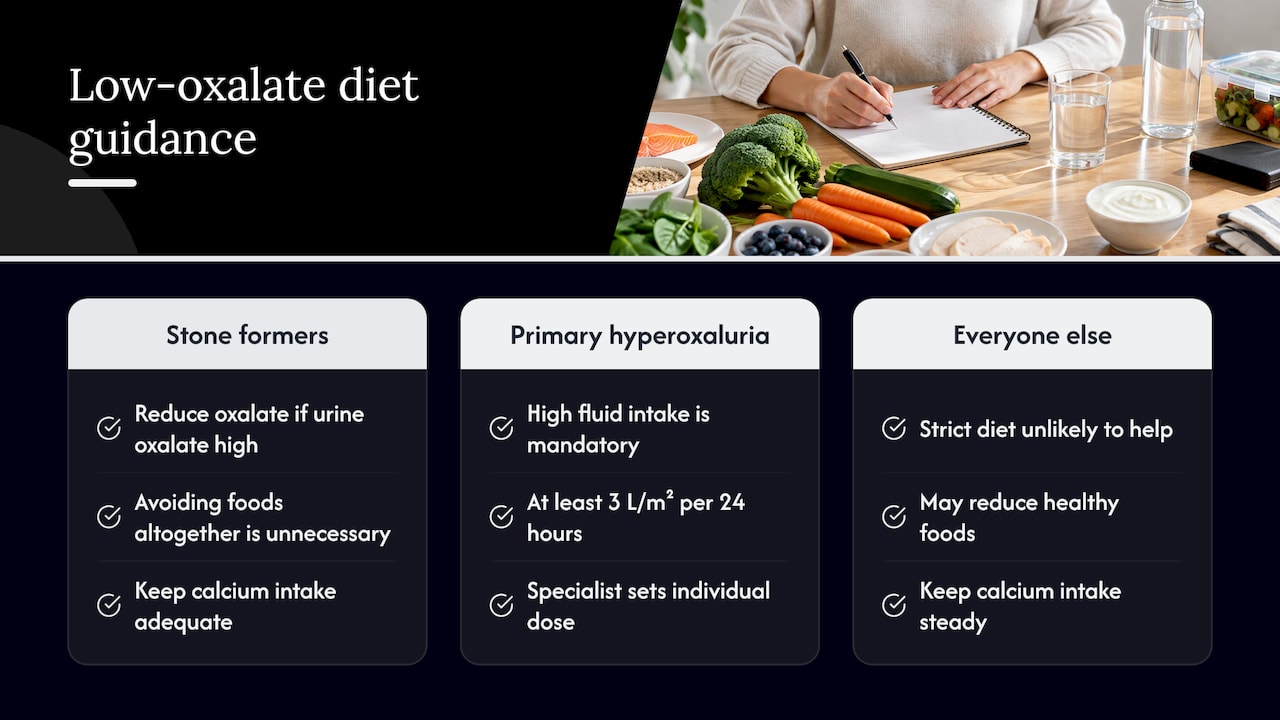
Everyone else. If no clinician has found a reason to restrict oxalate, a strict low-oxalate diet is unlikely to help and may reduce healthy foods. Keep your calcium intake steady, and if bone health is a concern, this guide to foods to avoid with osteoporosis explains how calcium and oxalate-rich foods interact.
A sensible way to start
- Ask your GP whether urine oxalate or stone analysis is appropriate.
- If you are told to reduce oxalate, ask for a referral to an NHS dietitian.
- Reduce portion sizes of the foods above rather than removing whole food groups.
- Include calcium-rich foods with meals, such as dairy or fortified alternatives.
- Keep a food and symptom diary for at least a few weeks.
How long does it take for oxalate levels to change?
We could not find a reliable, general timescale, and it differs by person and cause. Urine oxalate is measured, so the only way to know is to repeat the test your clinician arranged. Be wary of any site promising a fixed number of weeks to “clear” oxalate. Dietary changes help when absorption is the issue, but if your body makes too much, as in primary hyperoxaluria, diet alone will not resolve it.
Perspective: where a food intolerance approach fits
We speak to many people who arrive here after reading about oxalate online. Their symptoms are real: bloating, tiredness, skin flare-ups, headaches. What they want is clarity.
Our view is plain. If you have kidney stone symptoms, blood in your urine or a bowel condition, see your doctor first, because oxalate disorders are medical conditions with proper tests. Our bio-resonance tests are not a test for oxalate disorders, and they cannot diagnose or rule out any disease. They are best suited to screening for food and environmental sensitivities, which is something different.
Where we can help is the many people whose symptoms continue after a GP has looked into serious causes. Food intolerances are common, and they can look a lot like what people attribute to oxalate. A structured elimination diet is the standard way to identify them. A report can give you a starting list of items to try removing, so you are not guessing. You can read about our method and its limits in our bio-resonance guide and on our research page.
Never drop a whole food group, or a food your doctor has told you to eat, on the strength of any report. Reintroduce foods carefully and keep your GP or dietitian in the loop.
— Rob
If you suspect food intolerance rather than an oxalate disorder
Many “oxalate sensitivity” symptoms overlap with ordinary food intolerance, such as to dairy, gluten or other common triggers. Our guide to what foods commonly cause intolerances lists the usual suspects in the UK, and our piece on how intolerance affects digestion explains why symptoms can appear hours after a meal.
The process of using a test is simple:
- Order a kit and collect a small hair sample at home, following our step-by-step sample collection guide.
- Post it to our UK laboratory.
- Receive your digital report within 48 to 72 hours.
- Use it to plan an elimination diet, and reintroduce foods one at a time.
Our widest option, the Ultimate Plus Intolerance Test, costs £140.99 one-off per person. If you would like a smaller panel, you can compare the Core, Essential, Premium, Ultimate, Gluten and Dairy & Lactose options on our tests page. The test is non-invasive, and you do not need a blood sample. If you are weighing it up, our article on bioresonance side effects and nutrient gaps explains what to watch for when you remove foods.
Practical tips while you find the cause
- Keep a diary. Record meals, drinks, symptoms and timing. It helps both your GP and any elimination diet.
- Change one thing at a time. If you change five things, you will not know which helped.
- Do not stop calcium. Cutting dairy and high-oxalate foods together can leave you short of calcium and raise oxalate absorption.
- Be careful with supplements and detox plans. Several of the pages that rank for this topic push these. Check with a pharmacist or GP first, especially if you have kidney problems.
- Consider children carefully. If a child has unexplained symptoms, start with the GP. Restrictive diets in children should be supervised by a dietitian.
FAQ
Is oxalate intolerance a real condition?
Not as a named diagnosis in UK practice. Recognised conditions include hyperoxaluria, calcium oxalate kidney stones and primary hyperoxaluria, all of which are confirmed with urine or genetic tests. If you think you have symptoms linked to oxalate, your GP is the right first step.
Can high oxalates cause inflammation?
In kidney tissue, yes: oxalate crystals can trigger inflammatory pathways that contribute to kidney damage. That evidence relates to crystal deposition, mostly in people with kidney disease or high urinary oxalate. It is not proof that normal amounts of oxalate in food cause inflammation in healthy people.
Which foods are highest in oxalate?
NHS dietetic guidance names spinach, rhubarb, almonds, beetroot and dark chocolate. If you form kidney stones, you are usually advised to eat them in small quantities, not remove them, and to keep your calcium intake adequate.
Do I need a low-oxalate diet?
Only if a clinician has found a reason, such as calcium oxalate stones with high urinary oxalate or a diagnosed oxalate disorder. In that case, ask for an NHS dietitian’s advice so you do not lose important nutrients. For everyone else, a balanced diet with enough calcium and fluids is the usual advice.
Can a home intolerance test diagnose oxalate problems?
No. Our tests screen for food and environmental sensitivities, and they do not diagnose kidney or metabolic conditions. They can support an elimination diet once your doctor has ruled out serious causes.
Sources
- Hyperoxaluria | UK Kidney Association
- Dietary Oxalate Intake and Kidney Outcomes | PMC
- Symptoms and causes of hyperoxaluria | Mayo Clinic
- Hyperoxaluria | Cleveland Clinic
- Lumasiran treatment protocol, information for healthcare professionals | GOV.UK
- Pathophysiology and Treatment of Enteric Hyperoxaluria | PMC
- Pathophysiology and Management of Hyperoxaluria and Oxalate Nephropathy | AJKD
- Additional information if you form calcium oxalate stones | North Bristol NHS Trust
- Patient information on kidney stones | York and Scarborough Teaching Hospitals NHS Foundation Trust










Leave a Reply
Want to join the discussion?Feel free to contribute!