

A reliable food reintroduction schedule tests one food or food group at a time using a 2 to 3 day challenge and a 2 to 3 day washout between each one. Most people complete a moderate number of challenges over several weeks. You start small, increase the portion each day, and only move to the next food once your symptoms have settled back to baseline.
TL;DR:
- Most food challenges last two to three days with an additional washout period of two to three days before testing another food group.
- The full reintroduction process typically takes between six and ten weeks, with a specific focus on testing one food at a time for accurate results.
- Progression involves gradually increasing food portions over three days while maintaining a symptom diary to identify tolerance thresholds.
- Individuals should interpret symptoms carefully, expecting personal patterns and retesting ambiguous results after several months.
- Special caution is required for conditions like SIBO or suspected allergies, where reintroduction should be supervised by a healthcare professional to ensure safety.
Table of Contents
- What is the standard food reintroduction schedule?
- Practical sample schedule: an 8 to 10 challenge timetable
- How do you run each 2 to 3 day food challenge?
- How do you interpret your reintroduction results?
- Special situations: SIBO, Whole30 and suspected allergy
- Common pitfalls that skew your results
- How testing and structured guidance can support your reintroduction
- Why patience beats perfection in reintroduction
- Sources
What is the standard food reintroduction schedule?
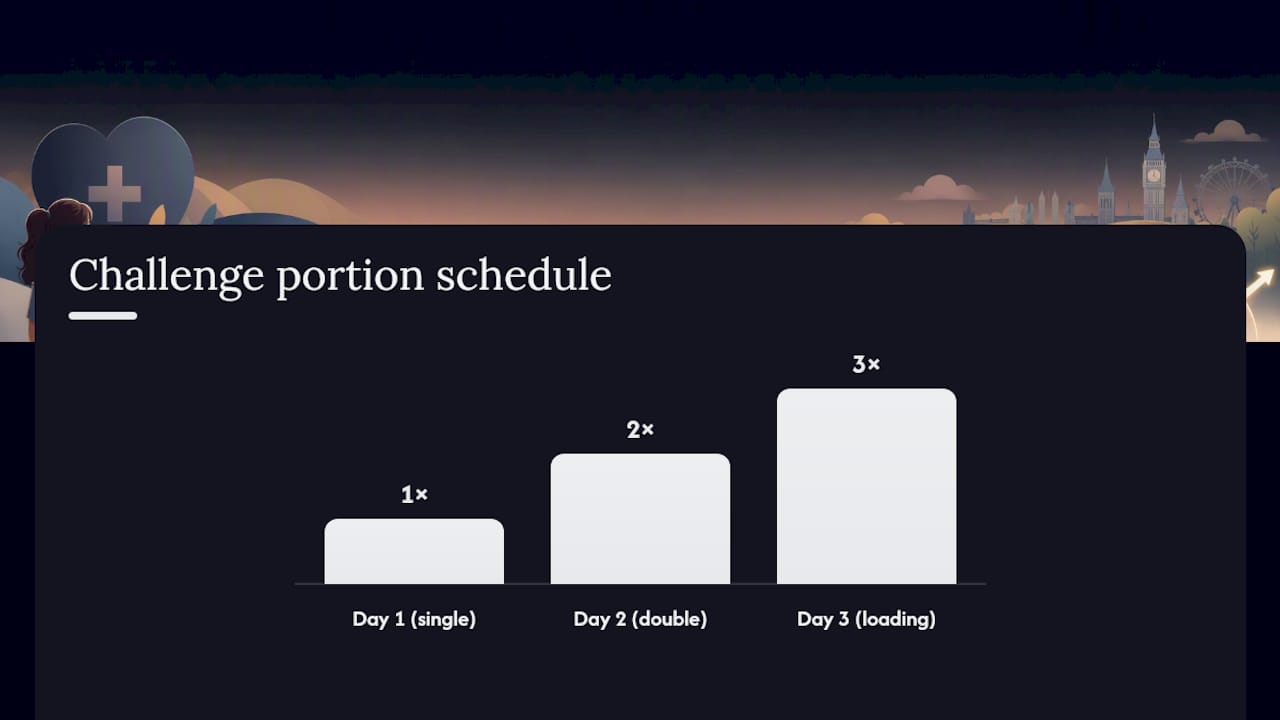
Every credible clinical protocol follows the same core rhythm: challenge one food group for two to three days, then wait. Gloucestershire Hospitals NHS Foundation Trust’s reintroduction guidance sets out this exact structure, and it’s become the template most dietitians and clinics work from across the UK. You eat a small amount on Day 1, a moderate amount on Day 2, and a larger portion on Day 3, tracking symptoms as you go.
Then comes the part people rush, and shouldn’t: the washout. You need 2 to 3 symptom-free days before starting the next challenge, so you’re never testing two variables at once. String eight to ten of these challenges together, each with its own washout, and you’re looking at a total reintroduction phase of 6 to 10 weeks.
This pacing isn’t arbitrary caution. A restrictive elimination phase is meant to be short, typically 4 to 6 weeks, because prolonging it risks nutritional gaps and an unnecessarily narrow diet. Reintroduction is the phase that gives your gut microbiome and your meal planning some breathing room back, according to a clinical review of low-fermentation diets. Rushing it defeats the purpose. Skipping it entirely defeats the diet.
Practical sample schedule: an 8 to 10 challenge timetable
There’s no single correct order for testing food groups, and Monash FODMAP’s guidance on reintroduction order confirms that the sequence matters far less than the systematic, one-at-a-time approach. That gives you two sensible strategies to choose between.
Confidence-building first means starting with foods you suspect you’ll tolerate well. Early wins keep motivation high and give you a clean baseline for comparison. Likely-trigger first means testing your most suspected culprit early, while you’re fresh and diary-diligent, so you’re not guessing months later whether fatigue or laxity in recording muddied a result.
A typical 8 to 10 week timetable might run like this:
- Weeks 1 to 2: lactose, then wheat (gluten-containing grains)
- Weeks 3 to 4: onion and garlic (fructans), then stone fruits (sorbitol)
- Weeks 5 to 6: legumes, then cauliflower or mushrooms (mannitol)
- Weeks 7 to 8: honey or apples (fructose), then dairy protein separately from lactose
- Weeks 9 to 10: any ambiguous groups retested, or a buffer for delayed symptom washout
For portion escalation, a wheat challenge might look like one slice of bread on Day 1, two slices on Day 2, and pasta plus bread on Day 3. If Day 2 already produces clear symptoms, stop the challenge, log it as a likely trigger, and move into washout rather than pushing through to Day 3. Ambiguous results (mild, inconsistent symptoms) usually mean a repeat challenge later, not an immediate verdict either way.
How do you run each 2 to 3 day food challenge?
The method is consistent regardless of which food group you’re testing, and Cambridge University Hospitals’ guidance on reintroducing fermentable carbohydrates lays out the daily portion logic clearly.
- Day 1: Eat a small to moderate portion of the test food at one meal. Keep everything else in your diet exactly as it was during elimination.
- Day 2: Double the portion from Day 1, still using the same food, at roughly the same time of day.
- Day 3: Increase to a high or “loading” portion, typically triple the Day 1 amount, unless Day 1 or Day 2 already triggered clear symptoms, in which case stop and record the result.
- Washout: Return to your baseline diet for 2 to 3 days, or until symptoms are minimal, before starting the next challenge.
Minimal symptoms means back to whatever counts as your normal, quiet baseline, not zero discomfort forever. Everybody has some background noise.
During the three challenge days, avoid eating out, trying new supplements, or introducing anything else unfamiliar. One new variable at a time is the entire point of the exercise; two ruins the data.
Pro Tip: Keep your symptom diary on your phone, not a notebook you’ll forget in a drawer. Log the time, symptom type, severity (a simple 0 to 10 scale), any medication taken, sleep quality, and stress level for that day. Delayed reactions can appear 24 to 48 hours later, and without a timestamped record, you’ll struggle to connect a Thursday stomach ache to Tuesday’s lunch.
How do you interpret your reintroduction results?
Your diary entries need translating into a decision, and most results fall into one of three categories.
- No symptoms at any dose: the food is likely well tolerated. Reintroduce it fully into your regular diet.
- Mild, transient symptoms only at the highest dose: this points to a portion threshold rather than a full intolerance.
- Clear, reproducible symptoms at low or moderate doses: this is a genuine trigger worth avoiding or minimising for now.
Randomised trial data on FODMAP reintroduction found symptom recurrence in 85% of patients during structured challenges, with fructans and mannitol among the most frequently symptomatic groups, though individuals typically reacted to only two or three FODMAPs out of the many tested. That’s the key takeaway: expect a personal pattern, not a universal culprit list copied from someone else’s results.
The threshold approach matters here. Many people who react to a full portion tolerate a smaller one comfortably, so reducing frequency or portion size often preserves more of your diet than an outright ban does. If a result is ambiguous, a retest a few months later, or whenever your baseline symptoms shift, often clarifies things. Some practitioners suggest revisiting known trigger groups roughly every six months, since tolerance can genuinely change over time. Base your verdict on the overall pattern across the three days, not a single bad afternoon that might have had nothing to do with food at all.
Special situations: SIBO, Whole30 and suspected allergy
Not every reintroduction plan should follow the standard pace, and a few situations need extra caution.
- SIBO or intestinal methane overgrowth: reintroduction usually needs to run slower and under supervision from a GP or registered dietitian, with closer attention to fibre tolerance and symptom control before escalating portions.
- Whole30-style plans: these typically stagger reintroduction by category rather than by FODMAP group, often starting with sugar, then grains, then legumes, testing each in isolation over a similar few-day window.
- Suspected allergy rather than intolerance: any swelling of the face or throat, difficulty breathing, or widespread hives during a challenge is a medical emergency, not a data point. Stop immediately and seek urgent medical help.
- When to involve a professional: persistent, severe, or confusing results, unexplained weight loss, or symptoms that don’t fit the intolerance pattern warrant a GP referral or allergy testing before you continue self-directed challenges.
A useful cross-reference for families managing this alongside young children is this guide to introducing new foods and allergies safely, which covers general safe-introduction principles worth knowing before any structured challenge begins.
Common pitfalls that skew your results
A handful of habits quietly sabotage even a well-planned schedule.
- Drinking alcohol, starting new medication, or doing unusually intense exercise around challenge days, since all three can mimic or mask digestive symptoms.
- Ignoring delayed reactions: a symptom appearing a day or two after a challenge often gets misattributed to whatever you ate most recently.
- Testing on chaotic days when you can’t control meals; weekends at home, with rest days kept close to your baseline diet, produce far cleaner results than testing during a busy work week or a holiday.
- Eating out during a challenge, where hidden ingredients and inconsistent portion sizes make it impossible to know what actually triggered a reaction.
Pro Tip: If travel or social plans are unavoidable during your reintroduction window, pause the schedule entirely rather than trying to squeeze a challenge in around a dinner party. A paused schedule loses you a few days; a contaminated result can cost you weeks of confused re-testing.
How testing and structured guidance can support your reintroduction
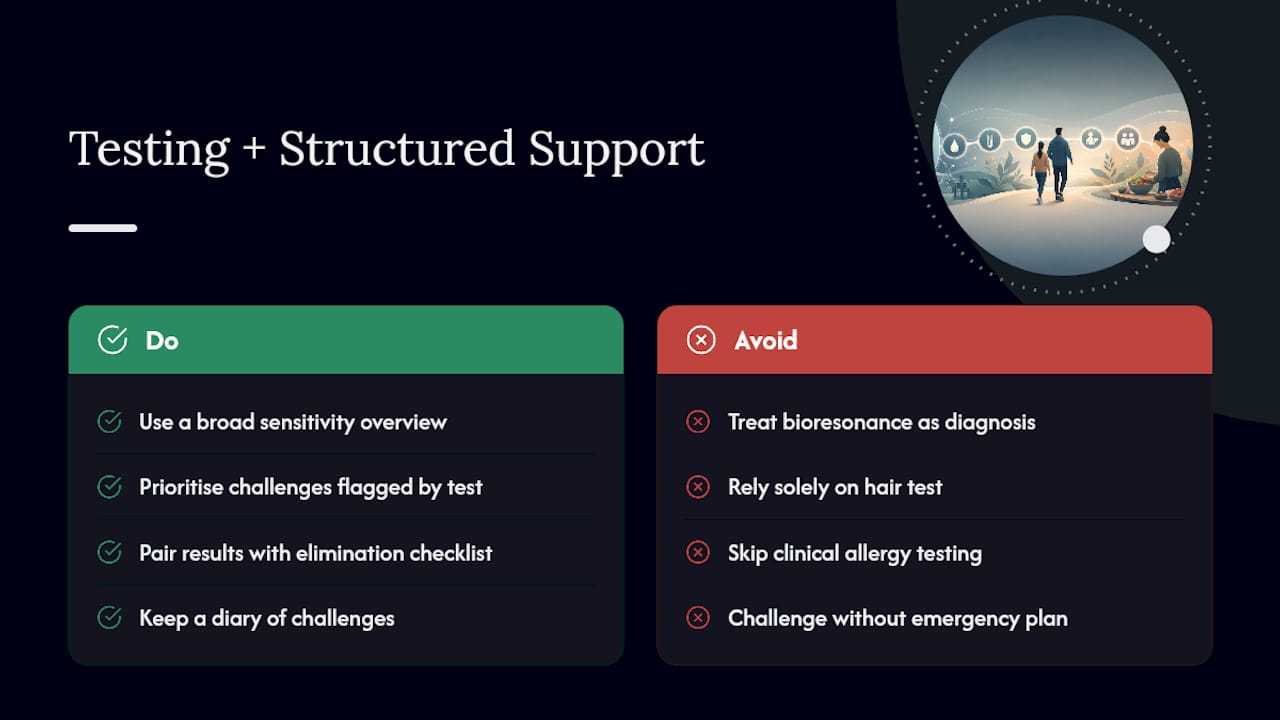
Working out which food group to test first is often the hardest part of planning a schedule, and this is where a broader sensitivity overview can help narrow the field. Ukfoodintolerance’s at-home food intolerance tests use a non-invasive hair sample and a UK laboratory analysis to flag potential sensitivities across a wide range of items, giving you a starting point for prioritising which groups to challenge sooner rather than later.
That said, a bioresonance report is a guide for sequencing your own diary-based challenges, not a diagnosis and not a substitute for clinical allergy testing or emergency care if you experience a severe reaction. Pairing test results with a structured approach, such as this elimination diet checklist, tends to keep the whole process organised rather than overwhelming.
Why patience beats perfection in reintroduction
Reintroduction rewards patience over precision. Nobody nails every challenge first time; ambiguous results are normal, not a sign you’re doing it wrong. The pattern that emerges after eight or ten challenges tells you far more than any single day ever will.
For anyone managing SIBO, a suspected allergy, or symptoms that don’t fit a clean pattern, get a registered dietitian involved rather than pushing through alone. Their input on sequencing and safety tends to shorten the whole process, not lengthen it. For everyone else, the schedule outlined here, paired with a decent symptom diary, is usually enough to get you back to a wider, more confident diet.
— Rob
Sources
- Re-challenging after the low FODMAP approach (Gloucestershire Hospitals NHS Foundation Trust)
- Order of FODMAP reintroduction (Monash FODMAP)
- Clinical review on low-fermentation diets and reintroduction (PMC)
- Reintroducing fermentable carbohydrates (Cambridge University Hospitals)
- Gi









Leave a Reply
Want to join the discussion?Feel free to contribute!