

What is FODMAP sensitivity and why does it matter?
FODMAP sensitivity is a recognised intolerance to a group of fermentable short-chain carbohydrates that the small intestine absorbs poorly. When these carbohydrates reach the large intestine undigested, gut bacteria ferment them, producing gas and drawing fluid into the bowel. The result is a range of uncomfortable digestive symptoms that can seriously affect your daily life.
The acronym stands for Fermentable Oligosaccharides, Disaccharides, Monosaccharides, and Polyols. These are not unusual or exotic substances. They are found in everyday foods like wheat, onions, milk, apples, and stone fruits. For people with a sensitive gut, even ordinary meals can trigger significant discomfort.
FODMAP sensitivity is closely linked to irritable bowel syndrome (IBS). The low FODMAP diet has been shown to reduce symptoms in around 70% of people with IBS, and it is recognised by both the NHS and the British Dietetic Association as an evidence-based dietary management strategy.
Key facts at a glance:
- FODMAPs are poorly absorbed in the small intestine and fermented in the large bowel
- Symptoms include bloating, abdominal pain, wind, diarrhoea, and constipation
- The condition is strongly associated with IBS and other functional gut disorders
- The low FODMAP diet, developed by Monash University, is the primary management tool
- Professional dietitian guidance is recommended by the NHS and British Dietetic Association
Common symptoms of FODMAP sensitivity you should know
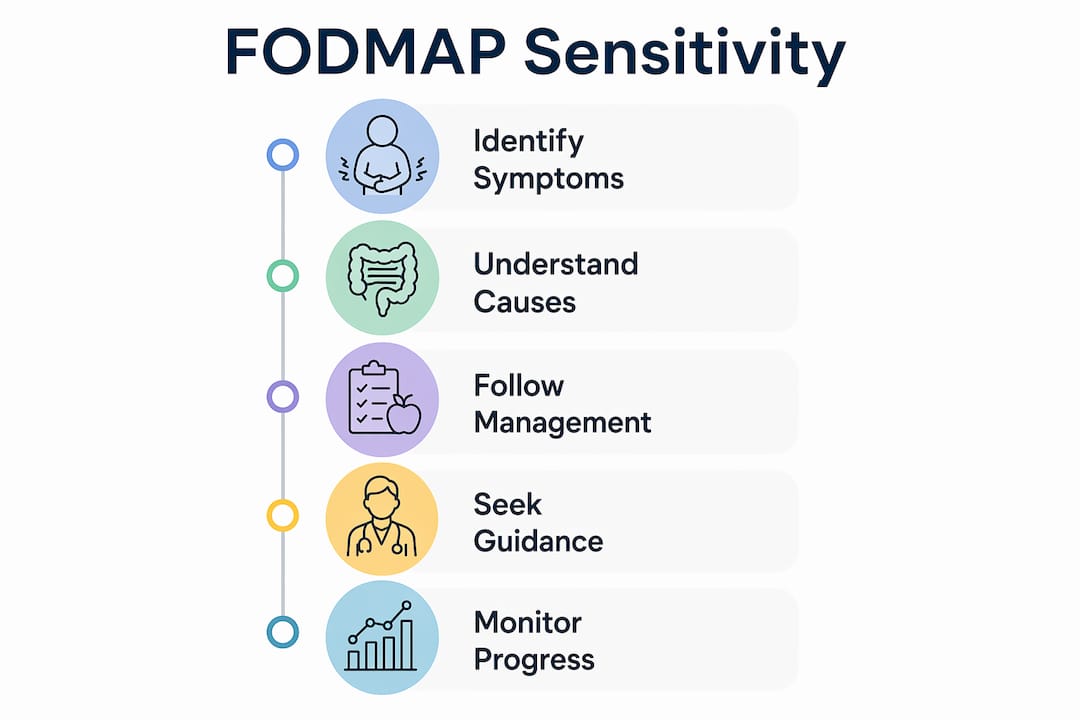
Recognising FODMAP sensitivity signs can be tricky because the symptoms overlap with several other digestive conditions. That is why a proper medical assessment matters before you make any dietary changes.
Typical symptoms include:
- Bloating and abdominal distension — often the most reported complaint
- Abdominal pain or cramping — ranging from mild discomfort to sharp, persistent pain
- Excessive wind (flatulence) — caused by bacterial fermentation in the large bowel
- Diarrhoea — triggered by fluid drawn into the intestines by osmotic effects
- Constipation — or a pattern that alternates between loose stools and constipation
- Nausea — particularly after eating high FODMAP meals
- Incomplete evacuation — a feeling that the bowel has not fully emptied
- Gurgling or rumbling — audible bowel sounds after eating
- Tiredness and lethargy — often reported alongside gut symptoms
Symptoms can vary in intensity from day to day, and digestive discomfort signs do not always point to a single cause. Conditions such as coeliac disease, inflammatory bowel disease, and thyroid disorders can produce similar symptoms. Your GP should rule these out before you begin any elimination diet.

What are FODMAPs? A breakdown of each carbohydrate type
FODMAPs are not a single substance. They are four distinct groups of carbohydrates, each found in different foods and absorbed differently by the gut.

| FODMAP type | What it includes | Common food sources |
|---|---|---|
| Oligosaccharides | Fructans and galacto-oligosaccharides (GOS) | Wheat, rye, onions, garlic, leeks, legumes, chickpeas |
| Disaccharides | Lactose | Cow’s milk, yogurt, soft cheeses, ice cream |
| Monosaccharides | Excess fructose | Apples, pears, mangoes, honey, high-fructose corn syrup |
| Polyols | Sorbitol, mannitol, xylitol | Stone fruits (peaches, plums, cherries), mushrooms, sugar-free products |
A few points worth noting about this list:
- Wheat and rye are high in fructans, not gluten. Someone reacting to bread may be responding to the fructan content rather than gluten itself.
- Garlic and onion are among the highest FODMAP foods and are hidden in many sauces, stocks, and ready meals.
- Sugar alcohols (polyols) appear in many “diet” or “sugar-free” products, including chewing gum and protein bars.
- Lactose tolerance varies widely. Some people with FODMAP sensitivity tolerate hard cheeses and butter, which are naturally low in lactose.
One practical point that often catches people out: cumulative FODMAP load in a single meal can trigger symptoms even when each individual food seems acceptable. A pizza, for example, may combine wheat dough, onion-based sauce, and a high-lactose topping, creating a combined load that exceeds your personal threshold.
How FODMAPs actually trigger symptoms in a sensitive gut
Understanding the mechanism helps you manage the condition more confidently. The process follows a clear sequence once you eat high FODMAP foods.
-
Poor absorption in the small intestine. FODMAPs are short-chain carbohydrates that the small intestine cannot fully digest or absorb. They pass through largely intact.
-
Osmotic fluid shift. Once in the large intestine, these carbohydrates draw water into the bowel through osmosis. This increase in luminal fluid can cause loose stools or diarrhoea.
-
Bacterial fermentation. Gut bacteria in the large bowel rapidly ferment the unabsorbed carbohydrates, producing gases including hydrogen, methane, and carbon dioxide. This gas production causes bloating and distension.
-
Visceral hypersensitivity. In people with IBS or functional gut disorders, the gut’s pain receptors are more sensitive than usual. The osmotic and fermentation effects that most people barely notice can feel genuinely painful in a hypersensitive gut.
-
Altered gut motility. The combination of excess fluid and gas can speed up or slow down gut movement, explaining why some people experience diarrhoea while others experience constipation, sometimes in the same week.
This process is normal in everyone to some degree. The difference with FODMAP sensitivity is the heightened response, not the fermentation itself.
How is FODMAP sensitivity diagnosed?
FODMAP sensitivity does not have a single definitive test. Diagnosis is a process of clinical assessment and dietary investigation, and it should always involve a healthcare professional.
- See your GP first. Before attributing symptoms to FODMAPs, your doctor needs to rule out coeliac disease, inflammatory bowel disease, and other conditions. Blood tests, stool tests, and sometimes endoscopy may be needed.
- Coeliac disease must be excluded before any gluten or wheat restriction begins. Removing wheat too early can invalidate coeliac testing. Understanding the difference between gluten intolerance and coeliac disease is an important first step.
- IBS diagnosis criteria are typically applied using the Rome IV criteria, which assess symptom frequency, duration, and type.
- Symptom and food diary. Keeping a detailed record of what you eat, when symptoms occur, and their severity helps your dietitian identify patterns and potential triggers.
- Dietitian referral. The NHS recommends referral to a FODMAP-trained dietitian once other conditions have been excluded. Self-diagnosis and unsupervised dietary restriction carry real risks, including nutritional deficiency and delayed treatment of an underlying condition.
Avoid starting a low FODMAP diet based solely on online information. The diet is restrictive and should be carefully supervised to avoid worsening symptoms or masking a more serious diagnosis.
Managing FODMAP sensitivity with the low FODMAP diet
The low FODMAP diet is the primary evidence-based approach for managing this condition. Developed by Monash University in Melbourne, it follows a structured three-phase framework designed to identify your personal triggers rather than eliminate FODMAPs permanently.
-
Elimination phase (2–6 weeks). You remove all high FODMAP foods from your diet. This phase is temporary and diagnostic. If symptoms improve, it confirms that FODMAPs are a likely trigger.
-
Reintroduction phase (8–12 weeks). You systematically reintroduce individual FODMAP groups, one at a time, to identify which specific types cause your symptoms and at what quantities. This phase requires patience and careful record-keeping.
-
Personalisation phase (ongoing). Using the results of reintroduction, you build a long-term diet that limits only your personal triggers while keeping as much variety as possible.
| Phase | Duration | Goal |
|---|---|---|
| Elimination | 2–6 weeks | Reduce symptoms and confirm FODMAP sensitivity |
| Reintroduction | 8–12 weeks | Identify specific triggers and personal thresholds |
| Personalisation | Ongoing | Build a varied, nutritionally adequate long-term diet |
The clinical evidence shows that around 70% of people with IBS-like symptoms experience meaningful improvement on this diet when guided by a trained dietitian. Skipping the reintroduction phase is one of the most common mistakes. Without it, you may end up avoiding foods unnecessarily for years.
Pro Tip: Keep a food, mood, and symptom diary throughout all three phases. Stress and poor sleep can amplify gut sensitivity, so tracking non-food factors alongside meals gives your dietitian a much clearer picture.
Why professional guidance is not optional
The British Dietetic Association and the NHS are clear: the low FODMAP diet should be supervised by a qualified dietitian. This is not a precaution. It is a clinical recommendation grounded in real risks.
Unsupervised long-term FODMAP restriction can reduce the diversity of beneficial gut bacteria, particularly bifidobacteria, which play a role in immune function and gut health. Prolonged elimination without reintroduction can also lead to deficiencies in calcium, fibre, and B vitamins, since many restricted foods are nutritionally valuable.
There is also a psychological dimension. Stress and anxiety directly influence gut sensitivity and can worsen symptoms independently of diet. The NHS guidance on IBS acknowledges that combining dietary management with talking therapies, such as cognitive behavioural therapy, often produces better outcomes than diet alone.
A common misconception is that FODMAP sensitivity means permanent avoidance. It does not. Tolerance levels can and do change over time. Gut health recovery, reduced stress, and improved sleep can all increase your capacity to tolerate previously problematic foods. Periodically re-challenging foods you once avoided, with dietitian support, is a recommended part of long-term management.
What happens if FODMAP sensitivity goes unmanaged?
Leaving FODMAP sensitivity unaddressed does not typically cause structural damage to the gut, but the consequences for quality of life can be significant. Persistent bloating, unpredictable bowel habits, and chronic abdominal pain affect sleep, work, social eating, and mental wellbeing. Over time, ongoing discomfort can contribute to anxiety and low mood, which in turn worsen gut sensitivity through the gut-brain axis.
Without a structured approach, many people resort to broad, unguided food restriction. This can lead to a nutritionally poor diet, disordered eating patterns, and social isolation around mealtimes. Identifying your specific triggers through a structured dietary approach is far more effective than avoiding entire food groups indefinitely. The goal is always to eat as widely as your gut comfortably allows, not to restrict as much as possible.
Key takeaways
FODMAP sensitivity is a medically recognised intolerance to fermentable carbohydrates that causes digestive symptoms in susceptible individuals, managed most effectively through the structured low FODMAP diet under professional dietitian guidance.
| Point | Details |
|---|---|
| FODMAP sensitivity defined | Intolerance to poorly absorbed fermentable carbohydrates causing gas, fluid shifts, and gut symptoms. |
| Symptoms to recognise | Bloating, abdominal pain, wind, diarrhoea, constipation, nausea, and fatigue are the most common signs. |
| Diet success rate | The low FODMAP diet reduces symptoms in around 70% of people with IBS when dietitian-led. |
| Three-phase diet structure | Elimination, reintroduction, and personalisation phases identify triggers without permanent restriction. |
| Professional guidance required | NHS and British Dietetic Association both recommend dietitian supervision to avoid nutritional deficiency. |
Could your symptoms point to broader food sensitivities?
If you are experiencing persistent digestive discomfort and want a clearer picture of what your body reacts to, Ukfoodintolerance offers at-home sensitivity testing using bio-resonance technology. A simple hair sample is all that is needed. Results covering over 1,100 food and environmental items are delivered digitally within 48–72 hours, giving you a practical starting point for working with your dietitian or GP.

Explore the full range of food intolerance tests available from Ukfoodintolerance and take the first step towards understanding your digestive health.










Leave a Reply
Want to join the discussion?Feel free to contribute!