

TL;DR:
- Food intolerance testing identifies foods that cause adverse reactions to improve long-term wellbeing. Reliable methods include hydrogen breath tests and supervised elimination diets, while commercial IgG tests are not scientifically supported. Proper testing paired with professional guidance helps safely identify triggers and avoid unnecessary food restrictions.
Food intolerance testing is defined as the process of identifying specific foods or substances that trigger adverse reactions in the body, with the goal of building a diet that reduces symptoms and supports long-term wellbeing. The role of intolerance testing in diet planning has grown significantly as more people report unexplained bloating, fatigue, and digestive discomfort. Approximately 10.3% of people worldwide report non-coeliac gluten or wheat sensitivity alone, with symptoms including bloating, abdominal discomfort, and fatigue. That figure reflects a genuine public health need, not a passing trend. Understanding which testing methods are reliable, and how to use results safely, is what separates effective diet planning from unnecessary restriction.
What methods exist for intolerance testing and how reliable are they?
Not all intolerance tests carry the same weight. The methods available range from clinically validated procedures to commercial products with little scientific backing, and knowing the difference protects both your health and your diet.
Commercial IgG blood tests measure immunoglobulin G antibodies to specific foods. They are widely marketed and easy to access. However, NHS, NICE, and BSACI advise against commercial IgG food intolerance tests because there is no reliable evidence that elevated IgG levels indicate intolerance. IgG antibodies often simply reflect recent food consumption, not a genuine sensitivity. Acting on these results can lead to unnecessary food elimination.
Hydrogen breath tests for lactose intolerance sit at the opposite end of the reliability spectrum. The hydrogen breath test is clinically validated and widely used in NHS settings to confirm lactose intolerance. It measures hydrogen gas produced when undigested lactose ferments in the gut. This makes it a dependable tool for one specific intolerance.
Elimination diets with supervised reintroduction are the gold standard. A structured elimination diet involves removing suspected foods for 2–6 weeks, then reintroducing one food every 3–4 days while tracking symptoms. This method is recommended by the NHS and the British Dietetic Association because it identifies true triggers without relying on antibody markers.
| Testing method | Accuracy | Recommended by NHS/NICE | Typical cost | Practicality |
|---|---|---|---|---|
| IgG blood test | Low | No | £100–£400 | High (widely available) |
| Hydrogen breath test | High | Yes (for lactose) | £50–£150 | Moderate (clinic-based) |
| Elimination diet | High | Yes | £60–£120 per dietitian session | Moderate (requires commitment) |
| Hair analysis test | Very low | No | £50–£200 | High (widely marketed) |
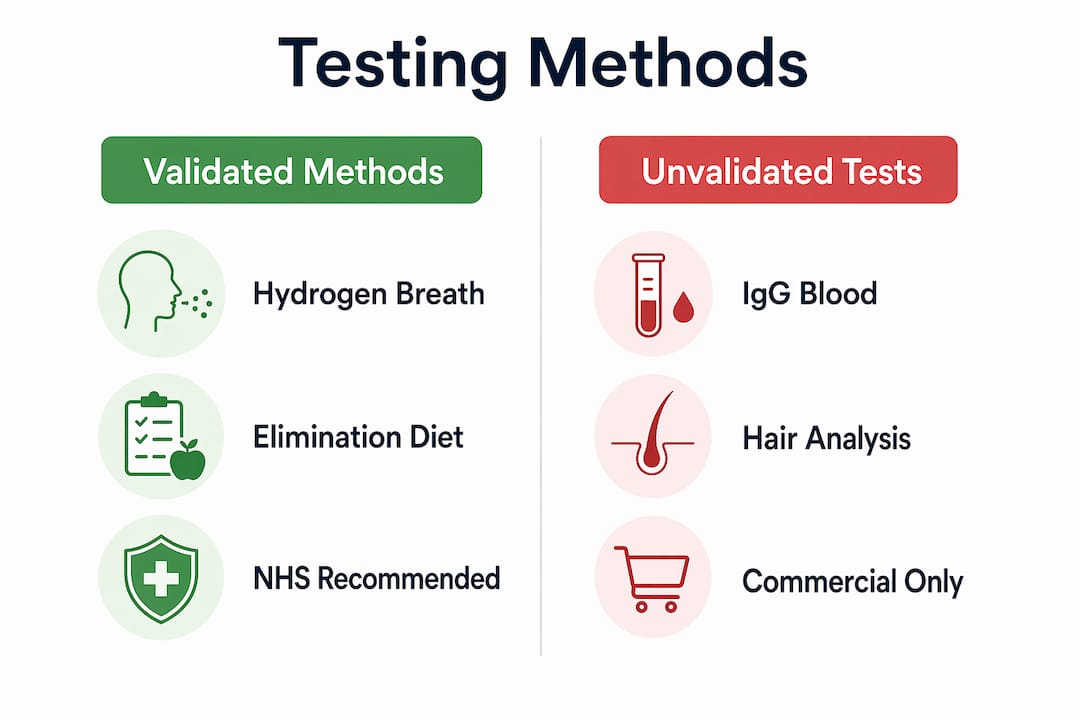
Pro Tip: Never use a single commercial test as the sole basis for removing food groups. IgG and hair analysis tests often reflect what you have eaten recently, not what your body cannot tolerate. A positive result on an unvalidated test is a starting point for conversation with a GP, not a prescription for restriction.
How does intolerance testing fit into an effective diet planning process?
Testing results only become useful when they feed into a structured, supervised diet plan. Without that structure, you risk cutting out foods you do not need to avoid, which creates nutritional gaps and rarely resolves symptoms.

The first step before any dietary change is ruling out serious underlying conditions. Guidelines advise GP referral before starting elimination diets to exclude coeliac disease, inflammatory bowel disease, and other organic causes. Removing gluten without first testing for coeliac disease, for example, can invalidate the blood test results used to diagnose it. Getting this sequence right matters.
Once underlying conditions are excluded, a food diary becomes your most practical tool. Recording everything you eat, alongside symptoms and their timing, reveals patterns that no single test can capture. Intolerance symptoms are often delayed and individual, sometimes appearing hours after eating, which makes real-time tracking far more informative than a one-off test snapshot.
A dietitian-supervised elimination diet then builds on that diary. The key steps in this process are:
- Remove suspected foods for a defined period (typically 2–6 weeks), keeping the rest of the diet as varied as possible.
- Monitor symptoms daily using a structured diary, noting severity, timing, and any changes in energy or digestion.
- Reintroduce foods one at a time, waiting 3–4 days between each to isolate reactions clearly.
- Record responses to each reintroduction, distinguishing genuine reactions from coincidental symptoms.
- Confirm findings with a registered dietitian before making any permanent dietary changes.
The risk of skipping professional oversight is real. Unregulated tests often lead to unnecessary food restriction, and clinical observations show people reducing their diets dangerously while symptoms persist. Overly restrictive diets can cause deficiencies in calcium, iron, B vitamins, and fibre, particularly when multiple food groups are removed at once.
Pro Tip: Private dietitian consultations typically cost £60–£120 per session in the UK. That investment is far less costly than months of unnecessary restriction or a missed diagnosis. The British Dietetic Association’s “Find a Dietitian” directory lists registered practitioners by location.
What are the benefits and risks of intolerance testing in diet planning?
When testing is done correctly, the benefits are clear and measurable. When it is done poorly, the risks are equally real.
Elimination diets overseen by dietitians help identify true food triggers and avoid unnecessary restrictions, leading to sustainable symptom improvement. People who follow a properly supervised elimination and reintroduction protocol report meaningful reductions in bloating, skin reactions, and fatigue. The key word is “supervised.” Unsupervised elimination based on unreliable test results produces the opposite outcome.
About 20% of families in the UK report symptoms possibly related to food intolerance. That is a significant proportion of the population seeking answers, which explains the commercial appetite for quick-fix tests. The demand is legitimate; the solutions on offer are not always trustworthy.
The table below maps common symptoms to their most frequently identified dietary triggers, based on clinical evidence.
| Symptom | Common dietary triggers |
|---|---|
| Bloating and gas | Lactose, fructose, wheat, legumes |
| Skin rashes or eczema | Dairy, eggs, gluten, artificial additives |
| Fatigue after eating | Gluten (in sensitive individuals), high-sugar foods |
| Abdominal cramps | Lactose, fructose, sorbitol |
| Headaches | Histamine-rich foods, caffeine, sulphites |
The psychological risks of poor testing deserve equal attention. Removing multiple food groups based on unreliable results can create anxiety around eating, social isolation, and in some cases, disordered eating patterns. This is particularly concerning for children, where commercial tests can cause dangerous diet restriction with no resolution of the original symptoms. Maintaining as varied a diet as possible throughout any testing process is not just nutritionally sound. It is psychologically protective.
You can learn more about recognising common intolerance symptoms before deciding which testing route to pursue.
How can you safely identify and manage food intolerances without relying solely on commercial tests?
The most reliable path to identifying a food intolerance does not require an expensive commercial kit. It requires patience, structure, and professional input at the right moments.
- See your GP first. Rule out coeliac disease, inflammatory bowel disease, and food allergies before changing your diet. Allergy testing (IgE-based) is distinct from intolerance testing and is medically validated. Confusing the two leads to missed diagnoses.
- Keep a detailed food and symptom diary for at least two weeks before making any changes. Note what you eat, when you eat it, and any symptoms that follow, including their timing and severity.
- Identify your most likely suspects. The foods most commonly linked to intolerance include dairy, wheat, eggs, soy, and foods high in fermentable carbohydrates (known as FODMAPs). Start with the group most closely matching your symptom pattern.
- Follow a structured elimination phase. Remove the suspected food or food group for 2–6 weeks. Keep everything else in your diet as normal. Do not remove multiple groups simultaneously without dietitian guidance.
- Reintroduce one food at a time. Wait 3–4 days between each reintroduction. Eat a normal portion of the food and monitor your response over the following 72 hours.
- Interpret results with professional support. A registered dietitian can help you distinguish a genuine intolerance from a coincidental reaction, and advise on safe long-term dietary adjustments.
If you are managing intolerances while travelling or eating away from home, practical guidance on eating healthily on holiday can help you maintain your dietary plan without unnecessary stress.
The goal throughout this process is to identify the smallest number of foods to remove while achieving the greatest symptom relief. A varied diet is always the target, not a restricted one.
Key takeaways
Intolerance testing supports effective diet planning only when it uses validated methods, is supervised by a registered dietitian, and feeds into a structured elimination and reintroduction process.
| Point | Details |
|---|---|
| Validated methods matter | Hydrogen breath tests and supervised elimination diets are clinically reliable; IgG and hair tests are not. |
| Rule out conditions first | Always see a GP to exclude coeliac disease and allergies before starting any elimination diet. |
| Food diaries are foundational | Symptom tracking over time reveals patterns that no single test can capture on its own. |
| Restriction carries real risks | Removing too many foods without guidance causes nutritional deficiencies and can worsen wellbeing. |
| Professional oversight is key | Dietitian-supervised reintroduction is the only reliable way to confirm a specific food intolerance. |
Why I think the testing conversation needs to change in the UK
I have spoken with many people who arrived at an elimination diet after spending hundreds of pounds on commercial intolerance tests, only to find their symptoms unchanged months later. The tests had flagged fifteen or twenty foods. They had removed them all. Their diet had shrunk to a handful of “safe” foods, and they were no more comfortable than before.
What struck me every time was not that the tests were useless in isolation. It was that people had used them as a final answer rather than a starting point. The UK’s official guidance from BSACI, NICE, and the NHS is clear: IgG tests are not recommended. Yet the marketing around these products is confident and persuasive, and it fills a gap that the NHS cannot always address quickly.
The question I always encourage people to ask before buying any test is: “What will I do differently with this result, and who will help me interpret it safely?” If the answer is “remove the flagged foods and see what happens,” that is not a plan. That is a guess with a price tag.
The most sustainable diet changes I have seen come from people who kept a food diary for three weeks, saw a dietitian twice, and followed a structured reintroduction. No expensive kit. No dramatic restriction. Just careful, patient observation. The step-by-step intolerance testing guide from Ukfoodintolerance reflects this approach well, and it is worth reading before you commit to any testing method.
The UK intolerance testing market will keep growing. Your job as a consumer is to ask harder questions of it.
— Rob
How Ukfoodintolerance can support your intolerance testing
Ukfoodintolerance offers a clear, non-invasive route into understanding your food sensitivities. Using bio-resonance technology, you collect a small hair sample at home and send it to a UK-based laboratory. Results arrive as a detailed digital report within 48–72 hours, covering over 1,100 items on the Ultimate Single Intolerance Test or 500 items on the Core Single Intolerance Test.

These reports are designed to be used alongside dietary planning, not as a standalone diagnosis. Ukfoodintolerance provides clear guidance on interpreting results and using them to inform an elimination diet safely. If you are ready to take a structured first step, browse the full range of intolerance tests available and find the option that fits your needs and budget. For those who prefer testing from home, the home test kit range offers a convenient and affordable starting point.
FAQ
What is the difference between a food allergy and a food intolerance?
A food allergy triggers an immune response involving IgE antibodies and can cause severe, rapid reactions. A food intolerance produces delayed, non-immune symptoms such as bloating, fatigue, and skin irritation, and is confirmed through elimination diets rather than allergy tests.
Are IgG food intolerance tests reliable?
No. NHS, NICE, and BSACI all advise against IgG food intolerance tests because elevated IgG levels reflect recent food consumption, not genuine intolerance. A structured elimination diet remains the only clinically validated method for confirming most food intolerances.
How long does an elimination diet take?
The elimination phase typically lasts 2–6 weeks, followed by a reintroduction phase where one food is reintroduced every 3–4 days. The full process can take 8–12 weeks when conducted properly under dietitian supervision.
Can food intolerance testing help with unexplained symptoms?
Yes, when the right methods are used. Symptoms such as persistent bloating, fatigue, and skin reactions are commonly linked to food intolerances. Proper food intolerance screening, combined with GP assessment, can identify dietary triggers that explain these symptoms.
Should children undergo intolerance testing?
Children should always be assessed by a GP or paediatric dietitian before any dietary changes. Commercial tests carry particular risks for children, as unnecessary restriction can affect growth and development. Supervised elimination diets are the recommended approach for paediatric intolerance evaluation.










Leave a Reply
Want to join the discussion?Feel free to contribute!