

TL;DR:
- Interpreting diet test results involves analyzing biomarkers to tailor nutrition based on individual health. Misunderstanding these results, especially IgG blood tests and microbiome scores, can lead to unnecessary restrictions and nutritional deficiencies. Using professional guidance, tracking symptoms over time, and pairing results with personal health context yields the most accurate dietary insights.
Interpreting test results for diets is the process of analysing biomarker data and dietary sensitivity information to make informed nutrition decisions tailored to your individual health. Whether you have received a food intolerance report, a microbiome analysis, or a nutrigenomics panel, the raw numbers mean very little without context. This guide explains what each test type actually measures, where the common pitfalls lie, and how to turn your results into real dietary changes. You will find the core insight in the first section, so you can act on it straight away.
What do different diet tests measure and how to read their results?
Diet-related testing covers four main categories: food intolerance tests, microbiome analyses, genetic nutrition tests, and standard blood biomarker panels. Each measures something different, and confusing them is the single most common mistake people make.

Food intolerance tests fall into two camps. Elimination and reintroduction diets, supervised by a registered dietitian, remain the gold standard for identifying true food intolerances and improving symptoms safely. Breath tests, such as the hydrogen breath test for lactose intolerance, are also clinically recommended when there is a clear indication. IgG blood tests are widely sold but sit in a different category entirely, which the next section addresses.
Microbiome tests report on the bacterial species living in your gut. The key markers to look for include:
- Akkermansia muciniphila, Faecalibacterium prausnitzii, and Bifidobacteria: these are beneficial species whose depletion is more diagnostically meaningful than the presence of any single species
- Proteobacteria levels: a Proteobacteria expansion over 10% in adults may indicate low-grade inflammation and warrants further examination when symptoms are present
- Diversity scores: a higher score generally suggests a more resilient gut community, but it is a clue, not a diagnosis
Genetic nutrition tests (nutrigenomics) analyse your DNA to predict how your body responds to specific foods and nutrients. Single-gene tests, such as those for lactose tolerance, carry high accuracy. Polygenic risk scores for traits like obesity account for around 1% variance, providing probabilistic guidance rather than definitive answers. Dietary response models built from multiple gene variants show predictive accuracy between 0.75 and 0.85. That is better than chance, but it is not a prescription.
Blood biomarker panels measure circulating levels of vitamins, minerals, and metabolic markers. Low vitamin D, elevated triglycerides, or suboptimal ferritin all point to specific dietary gaps or metabolic patterns you can address directly.
Pro Tip: Before booking any test, write down your three most pressing health questions. A test that cannot answer those specific questions is unlikely to change your behaviour, regardless of how detailed the report looks.
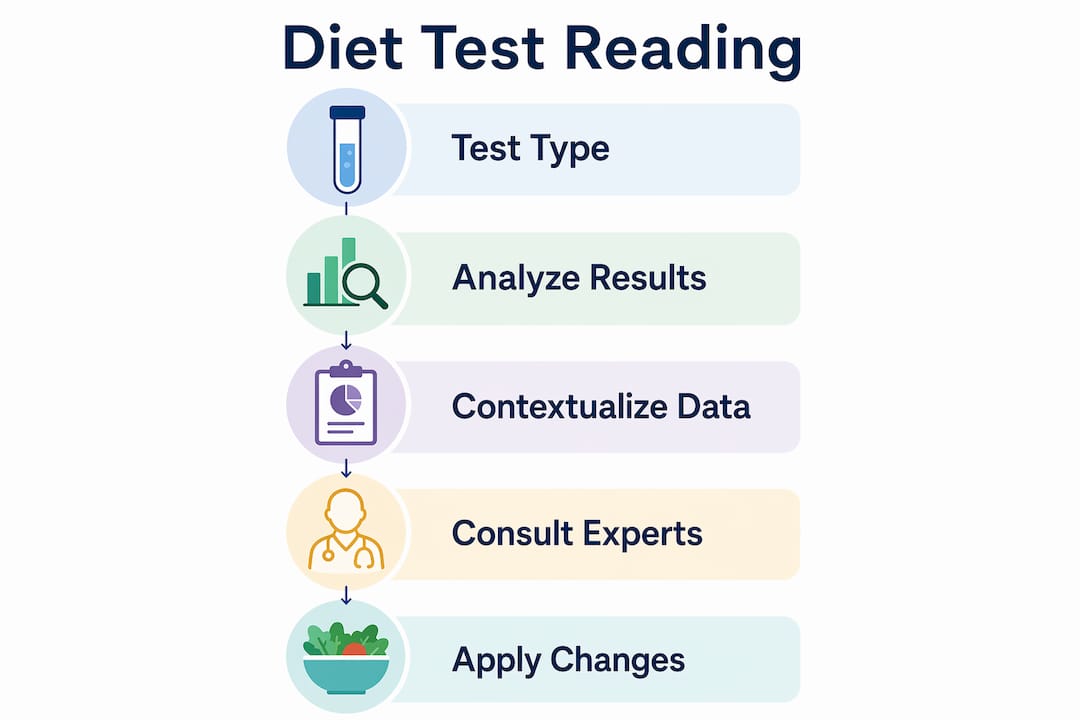
Common misunderstandings when reading dietary test results
The most expensive mistake in nutritional analysis for diets is acting on results that do not mean what you think they mean.
“IgG blood tests for food intolerance are not reliable and can lead to unnecessary food restriction, raising the risk of nutritional deficiencies, especially in children.” — Bahee Van de Bor, Paediatric Dietitian
The NHS and the British Dietetic Association do not support IgG food intolerance testing. IgG antibodies reflect exposure to a food, not an adverse reaction to it. A positive IgG result for eggs simply means you eat eggs regularly. Acting on it by cutting eggs from your diet removes a high-quality protein source for no clinical benefit.
Microbiome diversity scores carry a similar problem. Diversity scores are not a direct health diagnosis; meaningful interpretation must account for your reference population, current medications, recent diet, and clinical symptoms. Many variations are entirely normal. Microbiome reports also infer function from DNA presence rather than directly measuring metabolic activity. Functional claims in these reports are predictions, not confirmed readings.
The four most common misunderstandings when reading diet test results are:
- Treating IgG positives as confirmed intolerances: they are not; elimination without clinical justification risks deficiency
- Reading a single diversity score as good or bad: context, medications, and symptoms all change the picture
- Assuming genetic variants are fixed dietary rules: they indicate likelihoods, not certainties
- Ignoring pre-test conditions: recent food intake affects lab test accuracy, so fasting or dietary standardisation before testing is sometimes necessary
A single test result is a snapshot. It captures one moment in a constantly changing biological system. Treating it as a permanent verdict leads to unnecessary restriction and, in some cases, genuine nutritional harm.
How to use dietary test results to improve your nutrition
Understanding how to read diet test results is only half the work. Applying them correctly is where the real benefit lies.
-
Start with a targeted question. Direct-to-consumer tests deliver the most value when you enter the process with a specific health question. “Why do I feel bloated after meals?” produces more useful test choices than a vague desire to “eat better.”
-
Use elimination diets with professional supervision. If your intolerance test or symptom diary points to a trigger food, work with a registered dietitian to remove it systematically and reintroduce it in a controlled way. Unsupervised elimination diets frequently cut too many foods at once, making it impossible to identify the actual trigger.
-
Track symptoms alongside results. A single microbiome or genetic test snapshot lacks sufficient context. Repeated measures over 6–12 weeks, combined with a symptom diary, give you longitudinal data that is far more reliable than a one-off reading.
-
Integrate genetic insights into daily habits. DNA nutrition tests provide a stable biological baseline that must be connected to daily habits, such as food choices and supplementation, to have any clinical utility. Your genetic predisposition is fixed; your blood levels and gut function change daily. Use genetic results to guide long-term patterns, not short-term meal swaps.
-
Balance results with your full clinical picture. Medications, stress levels, sleep quality, and existing health conditions all influence how your body responds to food. A test result that ignores these factors is incomplete. Share your results with your GP or a registered nutritionist before making significant dietary changes.
Pro Tip: Keep a simple weekly log of energy, digestion, skin, and sleep quality alongside any dietary changes. After four weeks, patterns become visible that no single test can reveal on its own.
For a practical walkthrough of the testing process itself, the at-home testing workflow guide from Ukfoodintolerance covers each step clearly.
How do you choose a reliable diet testing service?
Not all diet tests are equal, and the difference between a clinically validated test and a commercially packaged one is significant.
The table below summarises the main test types, their reliability, and their most appropriate uses:
| Test Type | Reliability | Best Used For |
|---|---|---|
| Elimination and reintroduction diet | High (gold standard) | Confirming specific food intolerances |
| Hydrogen breath test | High (clinically validated) | Lactose intolerance, SIBO |
| IgG blood test | Low (not clinically supported) | Not recommended for diagnosis |
| Microbiome analysis | Moderate (context-dependent) | Gut health monitoring over time |
| Nutrigenomics panel | Moderate to high (single-gene) | Long-term dietary predisposition |
| Hair sample sensitivity testing | Varies (bio-resonance method) | Identifying potential sensitivities for elimination trials |
| Standard blood biomarkers | High | Vitamin deficiencies, metabolic markers |
When evaluating a provider, look for these signs of credibility:
- Clear explanation of the methodology used and its scientific basis
- Transparent reporting of what the test does and does not measure
- Interpretation support included with results, not sold separately
- UK-based laboratory processing with documented quality standards
Direct-to-consumer genetic tests vary widely in scope. Some cover disease risk, carrier status, lifestyle factors, or nutrition response based on a limited number of gene variants. Always ask a provider which specific variants they test and what the evidence base is for the dietary recommendations they generate.
For a broader look at interpreting intolerance results, Ukfoodintolerance provides a dedicated 2026 guide that walks through the reporting format and what each sensitivity level means in practice.
Key takeaways
Interpreting test results for diets requires matching each result type to its correct clinical context, using professional guidance for elimination protocols, and tracking symptoms over time rather than acting on a single snapshot.
| Point | Details |
|---|---|
| IgG tests are unreliable | NHS and British Dietetic Association do not support IgG testing; positives reflect exposure, not intolerance. |
| Microbiome scores need context | Diversity scores are clues, not diagnoses; medications, diet, and symptoms all affect interpretation. |
| Genetic results are probabilistic | Nutrigenomics panels guide long-term habits but cannot predict individual dietary outcomes with certainty. |
| Longitudinal tracking matters | Repeat testing over 6–12 weeks combined with symptom logs produces far more reliable insights than one-off results. |
| Professional supervision is necessary | Elimination diets without dietitian oversight risk nutritional deficiency and rarely identify the true trigger. |
Why most people get diet test interpretation wrong
I have spent years watching people receive detailed test reports and then make the same avoidable errors. The most common one is treating a commercial test result as a clinical diagnosis. It is not. A report that flags 40 foods as potential sensitivities does not mean you should cut all 40 from your diet. It means you have a starting point for a structured investigation.
The IgG testing issue frustrates me most. These tests are widely marketed, reasonably priced, and feel authoritative because they involve a blood sample and a laboratory. But the science simply does not support using them to diagnose food intolerance. I have seen people cut dairy, gluten, eggs, and soy simultaneously based on IgG results, develop nutritional deficiencies within months, and still not resolve their original symptoms. That outcome is worse than doing nothing.
Microbiome testing is genuinely useful, but only when you treat the report as a conversation starter rather than a verdict. The diversity score your report highlights is calculated against a reference population that may not reflect your age, ethnicity, or dietary background. A “low” score in one reference framework can be entirely normal in another.
My honest advice is this: use tests to generate hypotheses, not conclusions. Pair every result with a symptom diary. Work with a professional before cutting any major food group. And if a test provider cannot clearly explain what their methodology measures and what it does not, that is a reason to look elsewhere. The best test is the one that answers a specific question you already have, not the one with the longest list of items tested.
— Rob
How Ukfoodintolerance can help you take the next step
If you are ready to move from uncertainty to clarity about your dietary sensitivities, Ukfoodintolerance makes the process straightforward. Their non-invasive at-home tests use bio-resonance technology to analyse a hair sample against over 1,100 food and environmental items, with detailed digital reports delivered within 48–72 hours.

The reports are designed to be readable and practical, with clear sensitivity levels that connect directly to elimination diet planning. Ukfoodintolerance also provides supporting resources to help you understand what your results mean and how to act on them safely. Browse the full range of food intolerance testing kits to find the option that fits your needs and budget.
FAQ
What is the most reliable test for food intolerance?
Elimination and reintroduction diets, supervised by a registered dietitian, are the gold standard for confirming food intolerances. Hydrogen breath tests are clinically validated for lactose intolerance specifically.
Are IgG food intolerance blood tests worth taking?
IgG tests are not recommended by the NHS or the British Dietetic Association for diagnosing food intolerance. A positive result indicates exposure to a food, not an adverse reaction, and acting on it can lead to unnecessary dietary restriction.
How do i read a microbiome test result accurately?
Look at species depletion rather than single-species presence, and treat your diversity score as a clue rather than a diagnosis. Meaningful interpretation requires your clinical symptoms, medication history, and dietary context alongside the report.
Can genetic nutrition tests tell me exactly what to eat?
No. Nutrigenomics panels indicate predispositions, not certainties. Single-gene tests such as lactose tolerance carry high accuracy, but polygenic scores for broader traits like weight management account for only a small proportion of variance and should guide long-term habits rather than specific meal decisions.
How often should i retest to track dietary progress?
Repeated measures over 6–12 weeks, combined with a symptom diary, provide far more reliable insight than a single test. Microbiome composition in particular changes with diet and lifestyle, so longitudinal tracking is the most practical approach to monitoring improvement.










Leave a Reply
Want to join the discussion?Feel free to contribute!