

Bloating after breakfast, brain fog before lunch, and a rash in the afternoon can leave you second-guessing every meal without clear answers. For many adults across the UK, these symptoms often blur the line between daily discomfort and something more specific. Distinguishing true food sensitivities from allergies and other conditions helps you get closer to real relief. This article explains how to recognise food sensitivity symptoms, why timing and patterns matter, and how bio-resonance home testing offers clarity without the stress of hospital appointments.
Table of Contents
- Defining Food Sensitivity Symptoms Clearly
- Common Types and Triggers of Sensitivities
- How Symptoms Manifest in the Body
- Bio-Resonance Testing for Food Sensitivities
- Managing Triggers and Improving Wellbeing
Key Takeaways
| Point | Details |
|---|---|
| Understanding Symptoms | Food sensitivities present gradual responses rather than immediate reactions, making identification challenging. Recognising consistent patterns following specific foods is essential for diagnosis and management. |
| Common Triggers | Major food sensitivity triggers include dairy, wheat, eggs, and histamine-rich items. Individual responses vary, highlighting the need for personalised assessments. |
| Bio-Resonance Testing | This non-invasive method provides rapid insights into food intolerances, offering clear data on specific triggers. It’s a practical alternative to traditional testing for identifying sensitivities. |
| Management Strategies | Effective management involves strategic avoidance and meal planning to maintain nutritional balance while avoiding triggers. Tracking symptoms and improvements can help reinforce healthy dietary choices. |
Defining Food Sensitivity Symptoms Clearly
Food sensitivity symptoms can feel confusing because they’re not always straightforward or immediately obvious. Unlike food allergies, which trigger immediate immune responses affecting the skin, respiratory system, and digestive tract, food sensitivities operate differently in your body. A food sensitivity is a delayed reaction to specific foods that manifests through various physical symptoms without involving the classical immune response mechanisms. Understanding this distinction is crucial because it changes how you approach identifying and managing what your body is reacting to.
Food sensitivities commonly present through a range of digestive and systemic symptoms that develop gradually or intermittently. You might experience:
- Bloating and abdominal discomfort after eating
- Irregular bowel movements (diarrhoea, constipation, or alternating patterns)
- Nausea or stomach pain that appears hours after eating
- Brain fog, difficulty concentrating, or fatigue
- Headaches or migraines triggered by certain foods
- Skin reactions including rashes, eczema flare-ups, or itching
- Joint pain or general inflammation throughout your body
- Anxiety or mood changes linked to specific foods
The key difference is timing: food sensitivities often develop gradually or appear delayed, sometimes hours after eating, making the food-symptom connection harder to spot than immediate allergic reactions.
Another layer of complexity involves chemical sensitivities within foods. Histamine sensitivity and other vasoactive amine reactions create symptoms including flushing, itching, swelling, rashes, nasal congestion, irregular heartbeat, abdominal pain, nausea, diarrhoea, headaches, and even anxiety. These reactions occur because your body struggles to process certain naturally occurring chemicals in foods rather than responding to the foods themselves. This is fundamentally different from food allergies and represents a chemical sensitivity mechanism rather than an immune disorder.
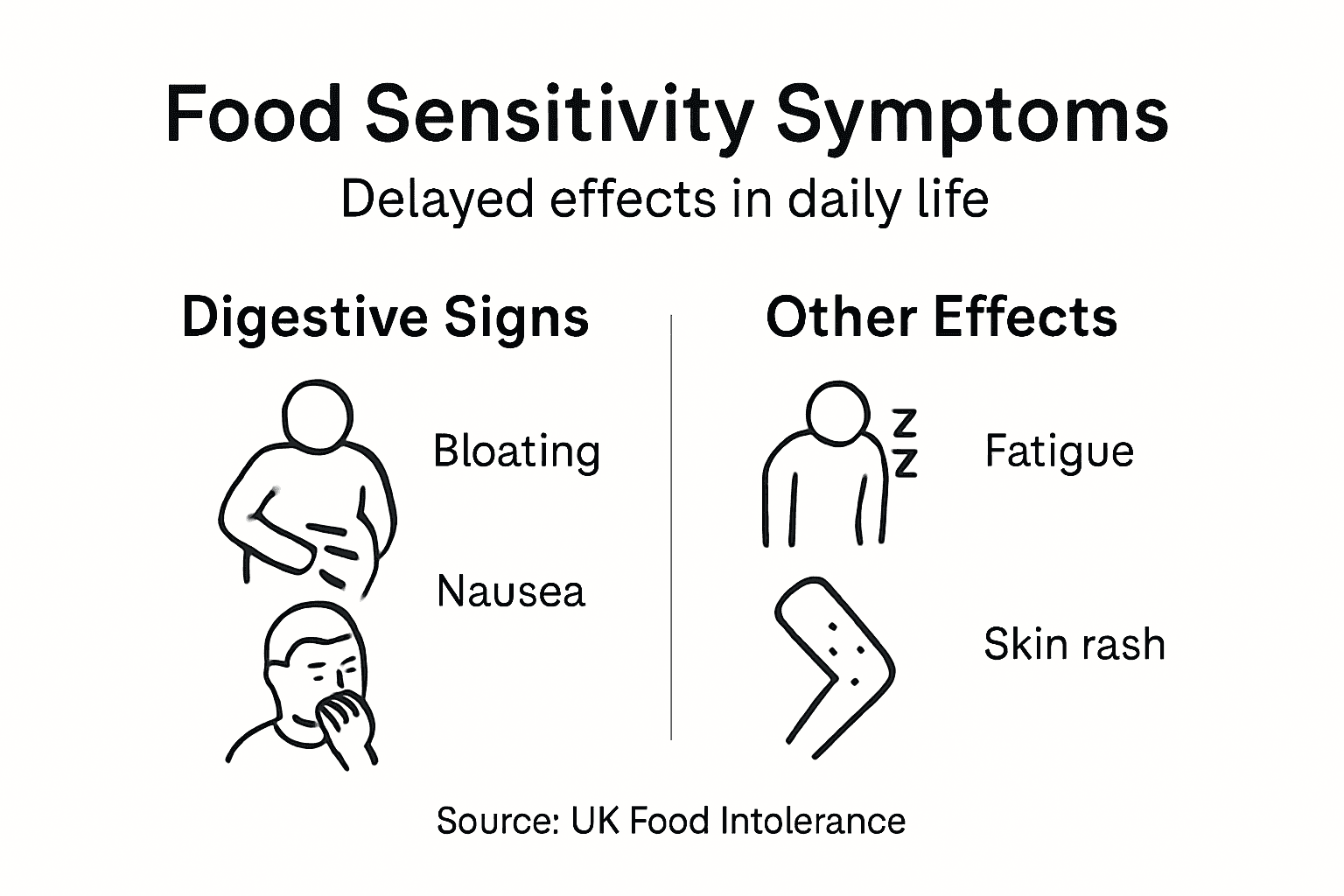
The challenge many people face is that food sensitivity symptoms overlap with numerous other health conditions. A persistent headache might be a weather change, stress, or dehydration rather than something you ate last night. Bloating could relate to eating speed, portion size, stress levels, or food combinations rather than a specific sensitivity. Your energy crash at 3 p.m. might stem from sleep quality, work stress, or blood sugar rather than that sandwich you had for lunch. This overlap means you can’t reliably identify sensitivities through guesswork alone.
What makes symptoms “food sensitivity” symptoms specifically is their consistent pattern with particular foods or food groups. When you notice the same digestive upset, skin reaction, or fatigue appearing repeatedly after eating similar items, you’re tracking a genuine sensitivity pattern. The symptoms resolve when you avoid the triggering food and return when you reintroduce it. They’re reproducible, they’re specific to food intake, and they follow a recognisable pattern rather than appearing randomly.
For UK residents experiencing unexplained symptoms, understanding what food sensitivity actually is provides the foundation for effective investigation. Rather than assuming any uncomfortable symptom is food-related, you can learn to distinguish genuine sensitivities from coincidental timing or other health factors. This clarity becomes essential when you’re ready to identify your personal triggers.
Here’s how food sensitivities and food allergies differ in their effects:
| Aspect | Food Sensitivity | Food Allergy |
|---|---|---|
| Reaction Timing | Delayed (hours after eating) | Immediate (minutes after eating) |
| Immune Response | Non-classical, often absent | Classical immune activation |
| Common Symptoms | Bloating, fatigue, brain fog | Hives, swelling, shortness of breath |
| Risk of Anaphylaxis | None | Present, can be life-threatening |
| Management Approach | Identify and avoid specific triggers | Strict avoidance, emergency plan |
Pro tip: Start tracking your meals and symptoms in a simple food diary for one week before testing, noting not just what you ate but how you felt 30 minutes, 2 hours, and 4 hours afterwards—this pattern data helps distinguish genuine sensitivities from random symptoms.
Common Types and Triggers of Sensitivities
Food sensitivity triggers vary widely from person to person, but certain foods appear far more frequently than others in creating problems. The most commonly problematic foods include dairy products, wheat, eggs, nuts, shellfish, and soya. Beyond these classics, people also struggle with sensitivities to histamine-rich foods, caffeine, additives, and various processed ingredients. What makes one person’s trigger different from another’s comes down to individual body chemistry, gut health, genetics, and how your immune system responds to specific proteins or chemicals in foods.
Common food sensitivity triggers include:
- Dairy products (milk, cheese, yoghurt, butter)
- Wheat and gluten-containing grains
- Eggs and egg-based products
- Tree nuts and peanuts
- Shellfish and seafood
- Soya and soya-based products
- Histamine-rich foods (aged cheeses, cured meats, fermented vegetables, alcohol)
- Food additives (artificial colours, preservatives, MSG)
- Caffeine from coffee, tea, or energy drinks
- Sulphites and other chemical preservatives
Dairy sensitivities are particularly common in the UK, especially among adults whose lactose tolerance naturally declines after childhood. Cow’s milk represents a significant trigger for many people, though the reaction mechanism differs depending on whether you’re sensitive to the protein, the lactose, or other components. Someone with dairy sensitivity might experience bloating within an hour of consuming milk, whilst another person might develop skin reactions hours later. This unpredictability makes dairy one of the trickiest sensitivities to self-diagnose without proper testing.
Gluten sensitivity affects a substantial portion of the population, though it’s distinct from coeliac disease. Gluten sensitivity causes digestive discomfort, fatigue, brain fog, and inflammation without the autoimmune intestinal damage that characterises coeliac disease. People with gluten sensitivity often report that eliminating wheat, barley, and rye foods dramatically improves their energy levels and digestive function. The widespread availability of gluten-free alternatives has made this elimination much easier than it was a decade ago.
Your triggers might be completely unique—what causes bloating in your friend might cause no reaction in you, and vice versa. This personalised nature of sensitivities is why broad dietary recommendations rarely work; you need to identify your specific triggers.
Environmental factors can amplify food sensitivities even when the food itself isn’t the root problem. Stress, poor sleep, high histamine load from other foods, and gut infections can all lower your sensitivity threshold temporarily. This means you might tolerate a food perfectly well on a relaxed weekend but react badly to the same food during a stressful work week. Your digestive system has a cumulative load capacity, and exceeding it triggers symptoms regardless of which individual food pushed you over the edge.
Histamine sensitivity deserves special attention because it’s often overlooked. Histamine naturally occurs in aged foods—mature cheeses, cured meats, fermented products, and alcohol all contain substantial amounts. If your body struggles to break down histamine using the enzyme DAO, these foods accumulate histamine in your system, triggering flushing, headaches, irregular heartbeat, anxiety, and digestive upset. Unlike traditional food allergies, histamine sensitivity is a chemical sensitivity, meaning it responds to the histamine content rather than an immune reaction to a protein.
The challenge is that trigger foods differ dramatically between individuals. Testing plays a critical role because identifying your personal food triggers through trial and error can take months, whilst bio-resonance analysis delivers comprehensive results in days. Rather than eliminating entire food groups blindly, you gain clarity about which specific items your body struggles with, allowing you to maintain maximum dietary variety whilst avoiding genuine triggers.
Pro tip: When you suspect a trigger food, temporarily eliminate it completely for two weeks rather than just reducing it—this allows your symptoms to fully resolve, making the difference obvious when you eventually reintroduce it.
How Symptoms Manifest in the Body
Food sensitivity symptoms don’t announce themselves with a single dramatic event. Instead, they unfold gradually across different body systems, sometimes within minutes and sometimes hours after eating. Understanding how your body communicates distress helps you connect symptoms to triggers rather than dismissing them as unrelated health issues. Your digestive system might feel the reaction first, but the cascade of effects often extends far beyond your stomach.
Digestive symptoms represent the most direct manifestation because your gut encounters the trigger food first. Common digestive responses include:
- Bloating and abdominal distension that makes your stomach visibly expand
- Cramping or sharp pain in the lower abdomen
- Irregular bowel movements ranging from constipation to urgent diarrhoea
- Nausea or a queasy feeling in your stomach
- Excessive gas production and discomfort
- Reflux or heartburn sensations
- General stomach discomfort that lingers for hours
These digestive symptoms often appear within 30 minutes to two hours of eating, making them easier to connect to specific foods. A meal that causes bloating becomes memorable, especially when it happens repeatedly after the same foods. However, some people experience delayed reactions where symptoms don’t emerge until 4-6 hours later, making the food-symptom connection much harder to spot.
Skin and inflammatory responses provide another clear channel for symptom manifestation. Your skin often reacts to food sensitivities before other systems catch up. Eczema flare-ups, persistent rashes, hives, or unexplained itching can all stem from food sensitivities rather than allergies or external irritants. Some people develop facial flushing or redness after eating trigger foods, whilst others notice their acne worsens when consuming certain items. These skin changes happen because your immune system perceives the food as problematic and triggers inflammation throughout your body, including at skin level.
Skin symptoms are often the most visually obvious, but they’re also among the most commonly misattributed to other causes—people rarely suspect their breakfast is causing their afternoon eczema flare-up.
Systemic and neurological symptoms extend the impact further into daily functioning. Many people with food sensitivities experience brain fog, difficulty concentrating, or mental fuzziness hours after eating trigger foods. This isn’t fatigue from sleep deprivation; it’s an inflammatory response affecting your cognitive function. You might notice that certain meals leave you struggling to focus through afternoon meetings, whilst other meals keep you sharp and productive. Some people report mood changes including irritability, anxiety, or depression linked to specific foods—these aren’t psychological responses but biochemical reactions affecting neurotransmitter production.
Joint pain and generalised inflammation represent another manifestation pathway. People with food sensitivities often report waking with stiff joints, experiencing arthritis-like pain, or noticing increased muscle soreness. This inflammation stems from your immune system’s overreaction to the food trigger, causing widespread inflammatory responses throughout your body rather than localised reactions. Eliminating trigger foods often reduces this inflammation dramatically—people frequently report joint pain resolving within days or weeks of avoiding problematic items.

Respiratory symptoms can also occur, though they’re typically milder than those associated with severe allergic reactions requiring emergency treatment. Some people experience mild wheezing, a tight throat sensation, or nasal congestion triggered by food sensitivities. These symptoms differ from anaphylaxis—they develop gradually rather than suddenly, and they resolve once the food passes through your system. Distinguishing between mild respiratory sensitivity symptoms and something requiring emergency intervention is critical for your safety.
The systemic nature of food sensitivities means multiple body systems react simultaneously. You might experience bloating, brain fog, and joint stiffness all appearing after the same meal. This multi-system involvement makes food sensitivities harder to identify than localised reactions, because the symptoms feel like unrelated health problems rather than a coordinated response to one food. A person with digestive bloating might see their doctor about that issue, whilst never connecting it to the cognitive changes and skin inflammation happening simultaneously.
Pro tip: Track not just your digestive symptoms but also energy levels, mood, skin condition, and joint pain in your food diary—seeing all symptoms clustered around specific foods creates undeniable evidence of your personal triggers.
Bio-Resonance Testing for Food Sensitivities
Bio-resonance testing represents a non-invasive approach to identifying food sensitivities without requiring blood draws, elimination diets, or weeks of symptom tracking. Unlike traditional allergy testing that measures immune responses, bio-resonance analysis works by detecting energetic imbalances in your body’s response to various substances. The technology measures how your biological system resonates with different food frequencies, identifying which items create stress responses in your body. For people in the UK frustrated by unexplained symptoms and conventional medical investigations that find nothing wrong, bio-resonance offers a practical alternative that delivers results quickly.
The process is remarkably simple and fits seamlessly into your life. You provide a hair sample from home—no needles, no appointments with phlebotomists, no sitting in medical waiting rooms. You collect a small sample, seal it in the provided envelope, and post it to the UK laboratory. Within 48-72 hours, you receive a detailed digital report identifying which foods and environmental factors trigger responses in your body. This speed transforms how you approach identifying sensitivities; rather than months of trial-and-error elimination, you gain clarity in days.
Bio-resonance testing works by analysing your body’s frequency patterns in response to over 1,100 different food and environmental items (depending on which test you choose). The analysis identifies substances that create energetic stress in your system—essentially, foods your body struggles to process efficiently. Your report arrives as a clear, easy-to-read digital document that categorises items into reaction levels, helping you understand not just what triggers you, but how severely each item affects your system. This granular information allows you to prioritise eliminations strategically rather than cutting out entire food groups unnecessarily.
Bio-resonance testing delivers what elimination diets promise but can’t reliably produce: clear, comprehensive identification of your personal triggers without months of guesswork and nutritional restriction.
The advantages of bio-resonance testing for UK residents experiencing food sensitivity symptoms include:
- Speed: Results arrive within 72 hours rather than weeks of testing
- Comprehensiveness: Tests cover over 1,100 items in a single analysis
- Non-invasiveness: No blood tests, needles, or medical procedures required
- Affordability: Significantly cheaper than multiple private allergy tests
- Accessibility: Complete testing from your home without hospital appointments
- Clarity: Detailed reports ranking reaction severity for each item
- Actionable: Results provide immediate guidance for elimination diet planning
Understanding how bio-resonance testing detects food intolerances helps you appreciate why the results are so specific to your individual physiology. Your body has unique frequency patterns, genetic sensitivities, and immune responses that standard testing often misses. Bio-resonance doesn’t rely on immune markers or delayed reactions; it identifies genuine energetic stress patterns that correlate with the symptoms you’re experiencing. This makes it particularly valuable for people whose sensitivity symptoms don’t fit neatly into traditional allergy or intolerance categories.
The practical application of bio-resonance results transforms your approach to food management. Instead of avoiding multiple food groups blindly, you eliminate only substances identified as problematic for your specific system. A person might discover they tolerate dairy fine but react strongly to gluten, or they might find that only aged cheeses trigger histamine sensitivity whilst fresh dairy poses no problem. This personalised insight allows you to maintain nutritional variety whilst avoiding genuine triggers—a stark contrast to the restrictive broad elimination diets many people attempt without guidance.
For UK health-conscious adults frustrated by unexplained digestive issues, persistent inflammation, or mysterious symptoms that doctors can’t explain, bio-resonance testing provides the clarity you’ve been seeking. The combination of speed, comprehensiveness, non-invasiveness, and affordability makes it an ideal first step before attempting elimination diets or making significant dietary changes. You gain evidence-based information about your personal triggers rather than relying on assumptions, coincidence, or generic dietary advice that doesn’t apply to your unique physiology.
Pro tip: Order your test when you’re not in the middle of an acute symptom flare—your results will be most accurate when your system isn’t actively inflamed, allowing the testing to identify chronic sensitivities rather than temporary reactions.
Managing Triggers and Improving Wellbeing
Once you’ve identified your food sensitivity triggers through testing or careful tracking, the real work begins: actually managing them in daily life. This isn’t about rigid restriction or suffering through a bland diet. Instead, it’s about strategic avoidance of problematic foods whilst maintaining nutritional balance and genuine enjoyment of eating. The goal is improved wellbeing, not deprivation—you should feel better, have more energy, clearer thinking, and less inflammation as you eliminate triggers.
Managing food sensitivity involves identifying your specific triggers and deliberately avoiding them in your everyday diet. This sounds straightforward, but it requires attention because trigger foods hide in unexpected places. Gluten lurks in soy sauce, worcestershire sauce, and many processed foods. Dairy sneaks into bread, cured meats, and chocolate. Histamine-rich foods include not just aged cheeses but also tomato sauce, soy products, and fermented items. Reading labels becomes essential, and communication with restaurants or family members cooking for you becomes crucial.
The first week after eliminating triggers can feel challenging as your body adjusts and you learn where hidden ingredients appear. However, most people report noticeable improvements within 7-14 days. Bloating diminishes, energy increases, brain fog clears, and inflammatory symptoms reduce. These changes motivate continued avoidance because you experience direct evidence that elimination works. Your joint pain might resolve, your skin might clear, your digestion might normalise—tangible improvements that reinforce your commitment to avoiding triggers.
The transformation isn’t always dramatic, but it’s consistent: people rarely return to eating trigger foods once they experience how much better they feel without them.
Practical strategies for managing triggers include:
- Meal planning: Design weekly menus avoiding known triggers before shopping
- Label reading: Check ingredients on packaged foods, particularly for hidden trigger items
- Restaurant communication: Inform restaurants of your sensitivities and ask about preparation methods
- Substitute identification: Find replacement foods you genuinely enjoy for eliminated items
- Kitchen organisation: Dedicate separate utensils or preparation areas if cooking for others
- Social navigation: Discuss your sensitivities with family and friends in advance of meals
- Emergency alternatives: Carry safe snacks when attending events or travelling
Nutritional adequacy matters significantly when eliminating foods. Removing dairy requires ensuring adequate calcium and vitamin D from alternative sources. Eliminating gluten demands replacing grain nutrition with other carbohydrates and fibre sources. Working with a dietitian or using reliable nutritional guidance prevents nutritional gaps that could undermine your wellbeing improvements. Your goal is eliminating triggers, not creating new health problems through incomplete nutrition.
The following table summarises strategies for maintaining nutrition while managing common food sensitivities:
| Trigger Food | Key Nutrients Missed | Substitute Sources |
|---|---|---|
| Dairy | Calcium, Vitamin D | Fortified plant milks, greens |
| Wheat/Gluten | Fibre, B vitamins | Quinoa, oats, rice |
| Eggs | Protein, choline | Tofu, pulses, seeds |
| Nuts | Healthy fats, magnesium | Seeds, olive oil, avocados |
Household dynamics shift when you identify and manage food sensitivities. If you’re the only person with sensitivities, educating family members about trigger avoidance prevents accidental exposures and simplifies meal preparation. Some households adopt universal elimination of major triggers to simplify cooking, whilst others maintain separate options. What matters is establishing systems that work for your specific situation—there’s no single “correct” approach that suits everyone.
Tracking your improvement over weeks and months reinforces the connection between trigger avoidance and wellbeing. Document changes in energy levels, symptom frequency, digestive function, skin clarity, mood stability, and physical discomfort. Many people discover that benefits extend beyond their original symptoms. Someone who tested for sensitivity because of bloating might discover that eliminating triggers also resolves their chronic headaches or improves their sleep quality. These secondary benefits create powerful motivation for long-term adherence.
Long-term management becomes increasingly effortless as trigger avoidance becomes automatic. You learn where your triggers appear, which substitutes satisfy you, and how to navigate social situations without feeling restricted. Rather than viewing this as permanent deprivation, most people reframe it as permanent improvement—you’re not giving up foods you love, you’re eliminating foods that make you feel terrible. The distinction matters psychologically and practically.
Pro tip: Introduce one new trigger-free food weekly during your first month of elimination rather than trying to overhaul your entire diet instantly—this approach prevents food boredom, maintains nutritional variety, and makes the lifestyle change feel sustainable rather than overwhelming.
Discover Your Hidden Food Sensitivities and Regain Control of Daily Life
Struggling with unexplained symptoms like bloating, brain fog, or skin irritation after meals can be frustrating and confusing. If you recognise these as common food sensitivity symptoms interfering with your wellbeing, it is time to take action. Understanding your unique triggers is essential for breaking free from the cycle of discomfort and inflammation. Our Food Sensitivities Archives – UK Food Intolerance offer expert insights and resources to support your journey.

Take the first step today with a simple at-home bio-resonance test from UK Food Intolerance. Collect a small hair sample, send it to our UK laboratory and receive a detailed digital report within 72 hours. Learn which foods and environmental factors may be impacting your health and start tailoring your diet for clearer digestion, improved energy, and reduced inflammation. Visit our IBS & Gut Health – Symptoms, Triggers and Food Intolerance Links page to understand how your gut wellness connects to food choices. Do not wait for symptoms to take over—empower yourself with clarity and nutritional freedom today.
Frequently Asked Questions
What are the common symptoms of food sensitivity?
Common symptoms of food sensitivity include bloating, abdominal discomfort, irregular bowel movements, nausea, brain fog, headaches, skin reactions, joint pain, and mood changes. These symptoms can develop gradually after eating certain foods.
How do food sensitivity symptoms differ from food allergy symptoms?
Food sensitivity symptoms are usually delayed and involve non-classical immune responses, while food allergy symptoms are immediate and can trigger severe reactions, such as hives or anaphylaxis. Understanding this difference can help in proper identification and management.
How can I identify my food sensitivity triggers?
To identify food sensitivity triggers, it’s recommended to maintain a food diary, tracking what you eat and how you feel over time. Alternatively, bio-resonance testing can also provide clear insights into specific food triggers, allowing for more targeted dietary adjustments.
What steps can I take to manage food sensitivity symptoms in daily life?
To manage food sensitivity symptoms, it is important to avoid known trigger foods, read labels carefully, communicate with others about your sensitivities, and plan meals that ensure nutritional balance. Working with a dietitian can also be helpful in maintaining a varied diet without compromising your health.










Leave a Reply
Want to join the discussion?Feel free to contribute!