

Digestive discomfort and persistent inflammation can leave even the most health-conscious people in the United Kingdom searching for answers. With a growing market for at-home intolerance tests, many are hoping for quick solutions without clinical appointments. It matters because understanding what triggers your symptoms directly influences your everyday wellbeing. This guide clarifies what these tests really offer, how they work, and why it is important to approach their results with care.
Table of Contents
- Defining At-Home Intolerance Tests And Their Methods
- Types Of Home Intolerance Tests On The UK Market
- How Sample Collection And Lab Analysis Work
- Bio-Resonance Technology And Digital Report Features
- Practical Uses: Guiding Elimination Diets And Wellbeing
- Limitations, Safety, And Alternatives To Home Testing
Key Takeaways
| Point | Details |
|---|---|
| At-home intolerance tests offer convenience | These tests allow individuals to identify dietary sensitivities without needing clinical visits. |
| Scientific validity varies by method | Many testing methodologies lack robust validation, making professional medical advice essential before interpreting results. |
| Potential dietary management strategies | Results can guide targeted elimination diets and wellness management, improving individual health outcomes. |
| Consult professionals for accuracy | Always seek expert guidance to ensure safe and informed dietary changes based on test results. |
Defining at-home intolerance tests and their methods
At-home intolerance tests are non-invasive diagnostic tools designed to help individuals identify potential dietary sensitivities without requiring clinical visits. These tests typically involve collecting small biological samples like hair or blood at home, which are then analysed using specialised laboratory techniques to detect potential immune responses or physiological reactions to specific food items.
Currently, several testing methodologies exist, though their scientific validity varies significantly. Food intolerance testing methods include techniques such as IgG blood testing, hair analysis, applied kinesiology, leukocytoxic, and Vega electrodermal tests. However, it is crucial to understand that many of these approaches lack robust scientific validation, with professional medical bodies recommending traditional elimination diets and clinical evaluations as more reliable diagnostic strategies.
The primary goal of at-home intolerance tests is to provide individuals with personalised insights into potential dietary triggers that might be causing unexplained symptoms like digestive discomfort, inflammation, or systemic reactions. These tests typically screen for immune responses against a comprehensive range of food items, environmental substances, and potential allergens, offering a convenient alternative to traditional clinical testing processes.
Pro tip: Always consult a healthcare professional before making significant dietary changes based on at-home test results to ensure comprehensive and safe health management.
Types of home intolerance tests on the UK market
The United Kingdom offers several categories of at-home intolerance tests designed to help individuals identify potential dietary sensitivities. These tests range from comprehensive screening methods to more targeted approaches, catering to different health concerns and budgetary requirements. At-home food intolerance testing has become increasingly popular as consumers seek convenient and accessible health screening options.
The primary types of home intolerance tests available in the UK market include:
- Hair Analysis Tests: These examine hair samples to detect potential immune responses and sensitivity patterns
- Blood-Based IgG Tests: Measure immunoglobulin G antibody reactions to specific food proteins
- Comprehensive Elimination Panel Tests: Screen multiple food groups for potential inflammatory responses
- Bioresonance Screening Tests: Utilise electromagnetic frequency analysis to identify potential dietary triggers
Each testing method offers unique advantages and limitations. While hair analysis provides a non-invasive option, blood-based tests offer more direct immunological insights. The comprehensive elimination panel tests are particularly useful for individuals experiencing complex or multiple symptomatic responses to dietary substances.
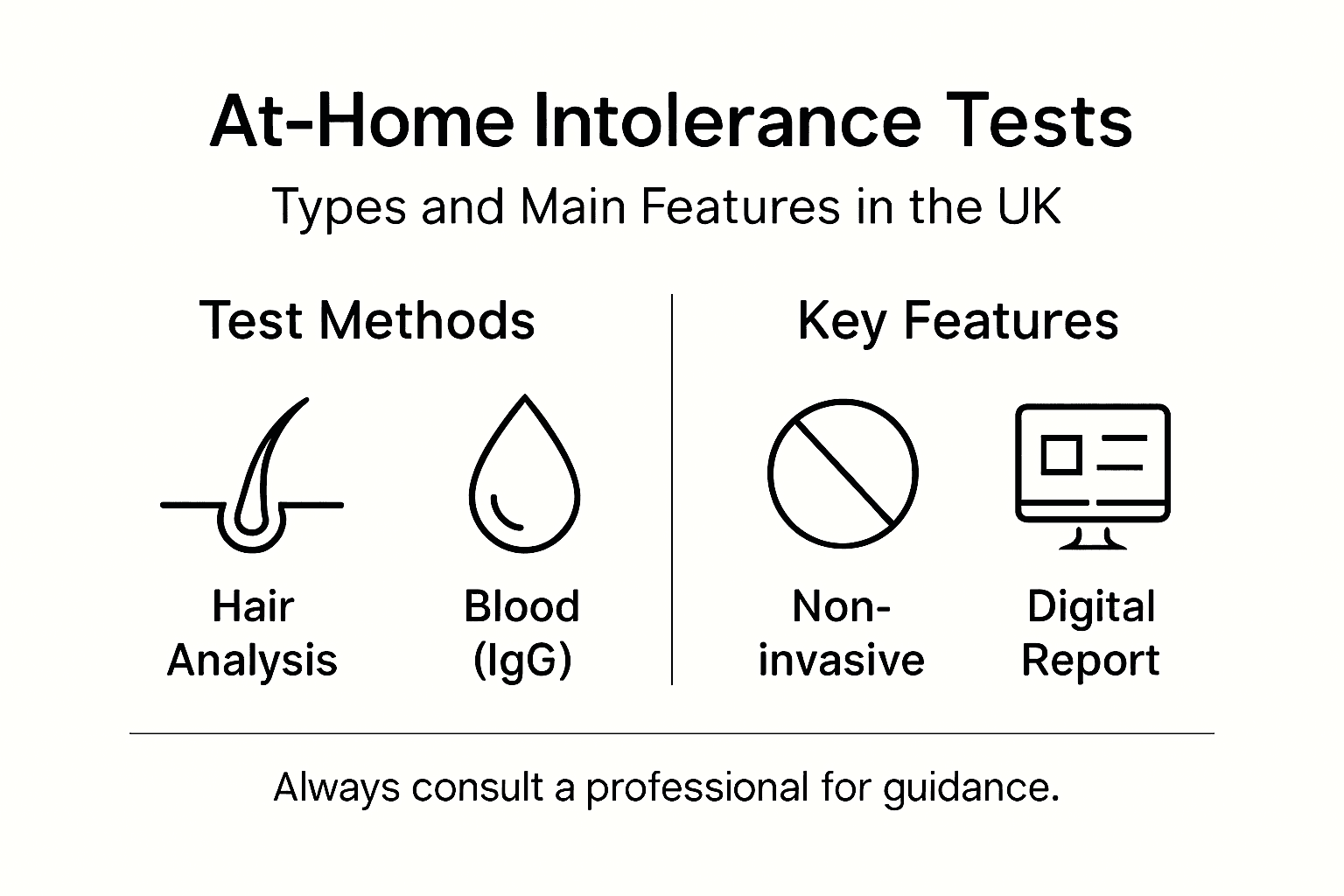
Here is a summary comparing the main at-home intolerance test types available in the UK:
| Test Type | Sample Collected | Main Advantage | Scientific Support |
|---|---|---|---|
| Hair Analysis | Hair strands | Simple and non-invasive | Limited evidence |
| IgG Blood Test | Finger-prick blood | Direct immune response data | Questioned by professionals |
| Elimination Panel | Hair or blood | Broad screening of foods | Variable, depends on method |
| Bioresonance Screening | Hair or blood | Innovative technology approach | Not clinically validated |
Pro tip: Consider consulting a nutritional healthcare professional to help interpret your intolerance test results and develop a personalised dietary management strategy.
How sample collection and lab analysis work
At-home intolerance tests utilise a streamlined process designed to make diagnostic screening convenient and accessible for individuals across the United Kingdom. How intolerance tests work begins with a carefully packaged testing kit that arrives directly at the customer’s home, containing all necessary materials for sample collection and submission.
The sample collection process typically involves two primary methods:
-
Hair Sample Collection:
- Requires 5-10 hair strands pulled from the root
- Samples should be clean and free from hair products
- Collected hair placed in a sterile collection envelope
-
Blood Sample Collection:
- Uses finger-prick blood collection technique
- Requires a few droplets on a specially designed collection card
- Minimal discomfort and quick procedure
Once collected, samples are dispatched to specialised laboratory facilities equipped with advanced bioresonance and immunological screening technologies. These laboratories employ sophisticated analytical techniques to assess potential immune responses, molecular interactions, and sensitivity markers across multiple food groups and environmental substances.

Pro tip: Ensure your sample is collected according to the kit’s precise instructions to guarantee accurate and reliable test results.
Bio-resonance technology and digital report features
Bio-resonance technology represents an innovative approach to understanding individual physiological responses, offering a non-invasive method for detecting potential dietary sensitivities. Bioresonance research explores how electromagnetic frequencies emitted by biological tissues can provide insights into potential health challenges and immune system interactions.
The digital reporting system associated with these intolerance tests typically includes several key features:
-
Comprehensive Sensitivity Mapping:
- Detailed breakdown of potential food and environmental triggers
- Colour-coded risk categorisation
- Personalised reactivity scores for each identified substance
-
Interactive Digital Dashboard:
- Accessible through secure online platform
- Downloadable PDF report options
- Clear visualisation of test results
- Potential dietary recommendations based on findings
These advanced digital reports go beyond traditional testing methods by providing contextualised information that helps individuals understand their unique physiological responses. The technology analyses subtle electromagnetic frequency variations, translating complex biological data into user-friendly insights that can guide personalised nutritional and lifestyle decisions.
Pro tip: Save and regularly review your digital reports, as they can serve as a valuable longitudinal reference for tracking changes in your body’s sensitivity patterns over time.
Practical uses: guiding elimination diets and wellbeing
At-home intolerance tests provide a strategic approach to personalising dietary choices and improving overall health management. Food intolerance testing benefits offer individuals detailed insights into potential dietary triggers that might be impacting their wellness and physiological functioning.
The primary practical applications of intolerance test results include:
-
Targeted Elimination Diets:
- Precisely identify problematic food groups
- Create personalised dietary modification plans
- Reduce inflammatory responses
- Minimise unexplained systemic symptoms
-
Wellness Management Strategies:
- Track potential immune system responses
- Understand individual nutritional sensitivities
- Develop proactive health management approaches
- Support digestive system optimisation
By providing a nuanced understanding of individual physiological responses, these tests enable individuals to make informed dietary decisions. The detailed reports help people develop targeted nutrition strategies that can potentially reduce inflammation, improve digestive comfort, and enhance overall metabolic wellbeing.
Pro tip: Collaborate with a nutritional healthcare professional to translate your intolerance test results into a comprehensive, sustainable dietary approach that supports your long-term health goals.
Limitations, safety, and alternatives to home testing
At-home intolerance tests offer convenience, but come with significant scientific and methodological limitations. Food intolerance testing challenges highlight critical considerations about reliability, interpretation, and potential health risks associated with unsupervised testing approaches.
Key limitations of home testing include:
-
Scientific Validity Concerns:
- Lack of robust clinical validation
- High probability of false positive results
- Potential for unnecessary dietary restrictions
- Risk of misinterpreting complex physiological responses
-
Safety and Interpretation Risks:
- Potential nutritional imbalances from inappropriate elimination
- Limited understanding of complex immune system interactions
- Absence of professional healthcare guidance
- Potential psychological stress from unclear results
Healthcare professionals consistently recommend alternative diagnostic approaches, such as professionally supervised elimination diets, comprehensive symptom tracking, and clinical consultations. These methods provide more reliable, contextualised insights into an individual’s potential food sensitivities while ensuring nutritional safety and comprehensive health management.
This table highlights key risks versus benefits of at-home intolerance testing:
| Benefit | Associated Risk | Professional Recommendation |
|---|---|---|
| Personalised dietary insights | Misinterpreting results | Always seek expert guidance |
| Convenient home sampling | False positive findings | Confirm with clinical tests |
| Broad screening options | Potential for unnecessary restriction | Use elimination diets for accuracy |
Pro tip: Always consult a registered nutritionist or healthcare professional before making significant dietary changes based on home testing results to ensure safe and accurate health management.
Discover Your Food Sensitivities with Confidence and Ease
If unexplained digestive discomfort or inflammation affects your daily life the article’s insights into at-home intolerance tests highlight both the opportunities and challenges of self-directed dietary discovery. Many people seek clear guidance to identify hidden food triggers without invasive procedures or lengthy clinical visits. Our Digestive Health Archives – UK Food Intolerance offer practical resources aligned with these goals to support your wellbeing journey.
Unlock personalised, reliable results by choosing UK Food Intolerance’s specialised at-home testing solutions. With straightforward hair sample collection and precise bio-resonance analysis in UK-based labs your detailed digital report arrives within 72 hours to help you make informed elimination diet decisions safely. Don’t settle for uncertainty or confusion about your health. Visit UK Food Intolerance now for accessible testing options and expert guidance. Take control of your health today and transform your diet based on trustworthy insights from our proven intolerance tests. Learn more about specific sensitivities including Egg Intolerance – Symptoms, Allergy Difference & How to Test to tailor your approach further.
Frequently Asked Questions
What are at-home intolerance tests?
At-home intolerance tests are non-invasive diagnostic tools that help individuals identify potential dietary sensitivities by collecting small biological samples like hair or blood from home.
How do at-home intolerance tests work?
These tests involve collecting a sample at home, which is then sent to a lab for analysis. The lab uses various methods to detect immune responses and reactions to specific food items.
What are the different types of at-home intolerance tests?
The main types include hair analysis tests, blood-based IgG tests, comprehensive elimination panel tests, and bioresonance screening tests, each with its own advantages and limitations.
Can at-home intolerance tests provide reliable results?
While at-home intolerance tests offer convenience, many lack robust scientific validation, leading to concerns about false positives and misinterpretation. Consulting a healthcare professional is recommended for accurate dietary management.










Leave a Reply
Want to join the discussion?Feel free to contribute!