

Every british parent knows the worry when a child complains of persistent tummy aches or unexplained fatigue. With more than 60 percent of british families reporting digestive concerns in children, finding non-invasive, affordable answers is a priority. This guide explores practical steps parents can take to prepare for at-home intolerance assessments, offering clear strategies to help your family feel healthier and more confident in everyday food choices.
Table of Contents
- Step 1: Prepare For An At-home Intolerance Assessment
- Step 2: Track And Document Symptoms Effectively
- Step 3: Collect And Submit A Hair Sample For Testing
- Step 4: Interpret Digital Test Results Accurately
- Step 5: Implement Changes Based On Identified Triggers
Quick Summary
| Main Insight | Explanation |
|---|---|
| 1. Maintain a food and symptom diary | Document everything you eat and any reactions to help identify food intolerances effectively. |
| 2. Track symptoms meticulously | Use a detailed method to log food intake and symptoms, noting timing and intensity for accurate pattern recognition. |
| 3. Collect hair samples carefully | Follow precise instructions for collecting hair samples to ensure accurate results in food intolerance testing. |
| 4. Interpret test results thoughtfully | Review results with a focus on potential triggers and consult a professional for dietary recommendations. |
| 5. Implement dietary changes strategically | Remove identified trigger foods slowly and monitor your body’s response for effective management of intolerances. |
Step 1: Prepare for an at-home intolerance assessment
Successfully preparing for an at-home food intolerance assessment starts with understanding your body’s unique response to different foods. Your goal is to gather comprehensive information that will help identify potential dietary triggers affecting your wellbeing.
To begin, start maintaining a detailed food and symptom diary documenting everything you consume and any physical reactions. This systematic approach allows you to track potential connections between specific ingredients and uncomfortable symptoms like bloating, headaches, or digestive discomfort. Record the time of day, exact foods eaten, portion sizes, and note any symptoms experienced within 24-48 hours after consuming each meal.
As you compile your dietary data, focus on recognising patterns that might indicate food sensitivities. Some individuals experience delayed reactions, so patience and meticulous documentation are crucial. Look for recurring symptoms such as digestive issues, skin reactions, fatigue, or unexplained mood changes that could signify an underlying food intolerance. Consider consulting your general practitioner to discuss your findings and determine the most appropriate next steps in your assessment journey.
Here’s a summary of common symptoms and their possible links to food intolerances:
| Symptom | Possible Food Triggers | Average Onset Time |
|---|---|---|
| Bloating | Dairy, gluten, legumes | 1-8 hours after eating |
| Headaches | Aged cheese, chocolate | 2-24 hours post meal |
| Skin reactions | Nuts, eggs, shellfish | Minutes to several hours |
| Fatigue | Wheat, caffeine, sugar | Within 24 hours |
| Digestive issues | Lactose, fructose | 1-48 hours |
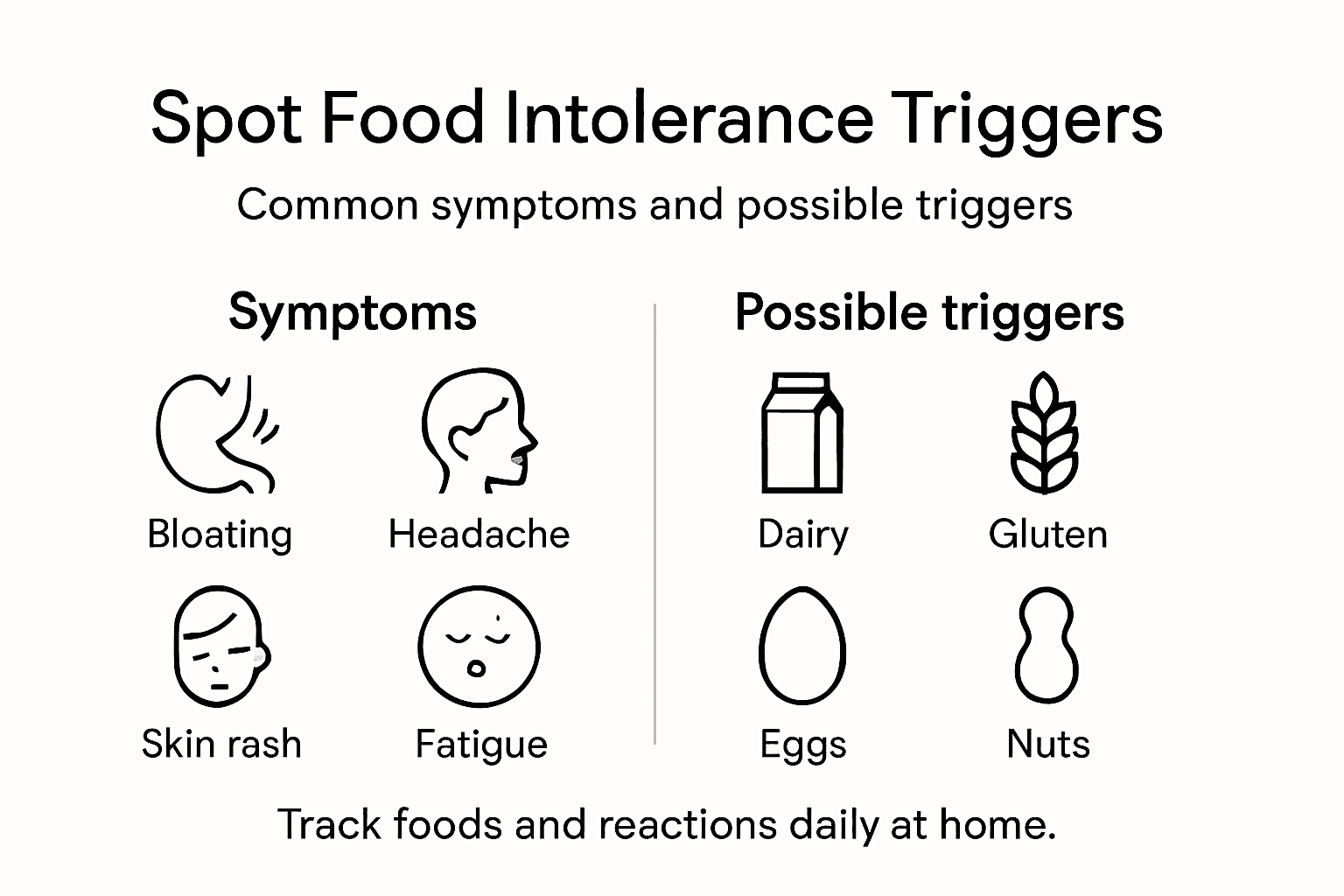
Top Tip: Keep your food diary digital or in a dedicated notebook to ensure consistent and organised tracking of your dietary experiences and bodily responses.
Step 2: Track and document symptoms effectively
Tracking and documenting your symptoms systematically is crucial for uncovering potential food intolerances. By creating a comprehensive food and symptom tracking method, you will transform your health investigation into a precise scientific process.
Start by selecting a detailed tracking method that allows you to record comprehensive information. Your symptom diary should capture every relevant detail including the type of food consumed, portion size, time of consumption, and specific symptoms experienced. Pay close attention to timing and intensity of reactions like bloating, skin changes, digestive discomfort, headaches, or energy levels. Note both immediate and delayed responses, as food intolerances can manifest hours or even days after consuming a trigger ingredient.
To enhance your tracking accuracy, consider using a digital spreadsheet or specialised health tracking app that allows for easy data entry and pattern recognition. Create consistent categories such as date, meal details, ingredients, portion sizes, symptom type, symptom severity, and duration. This structured approach will provide clear evidence to discuss with healthcare professionals and help you identify potential dietary triggers more effectively.

Top Tip: Photograph your meals and record symptoms immediately after eating to create a visual and written record that supports your investigation.
Step 3: Collect and submit a hair sample for testing
Collecting and submitting a hair sample for food intolerance testing requires precision and careful attention to detail. While traditional clinical testing methods differ, home hair sampling offers an alternative approach to understanding potential dietary sensitivities.
Begin by selecting a clean, quiet area with good lighting and a mirror. Use sharp, clean scissors and choose hair strands from the back of your head where growth is most consistent. Cut approximately 2 to 3 centimetres of hair as close to the scalp as possible, ensuring you collect hair from multiple sections to provide a representative sample. Aim for around 10 to 15 strands, which should be roughly the thickness of a pencil when bundled together.
Prepare your hair sample by gently cleaning your hands and ensuring the hair is free from styling products, oils, or residues. Place the collected hair into the provided sample envelope or container, taking care to follow the specific instructions included with your testing kit. Double check that you have included all necessary documentation and sealed the package securely before sending it to the designated laboratory for analysis.
Compare at-home hair testing with traditional clinical food intolerance methods:
| Method | Sample Required | Speed of Results | Involvement of Healthcare Professional |
|---|---|---|---|
| Home hair sample test | Hair strands | 1-2 weeks | Not required |
| Clinical testing | Blood/skin tests | Same day to weeks | Required for both testing and analysis |
Top Tip: Wear light coloured clothing during sample collection to prevent any potential hair contamination and ensure the most accurate testing results.
Step 4: Interpret digital test results accurately
Understanding your digital food intolerance test results requires careful analysis and a strategic approach. Digital health services provide comprehensive reports that require thoughtful interpretation to gain meaningful insights into your dietary sensitivities.
When reviewing your test results, focus on identifying specific food categories or ingredients marked as potential triggers. Each result typically includes intensity levels ranging from mild to severe reactions. Pay close attention to the categorisation of foods green (safe), amber (moderate sensitivity), or red (high reactivity). Cross reference these results with your previously maintained symptom diary to validate the findings and understand how specific ingredients might correlate with your experienced health symptoms.
Consult with a healthcare professional or nutritional expert to help translate the scientific data into practical dietary recommendations. They can provide context about which identified sensitivities require immediate dietary modifications and which might represent temporary or manageable reactions. Remember that test results are guidance tools, not definitive medical diagnoses, and should be considered part of a broader health assessment strategy.
Top Tip: Create a personalised spreadsheet categorising your test results to track and manage your dietary adjustments effectively.
Step 5: Implement changes based on identified triggers
Implementing dietary changes following your food intolerance test results requires a strategic and methodical approach. Lifestyle and diet modifications are essential for managing your newfound nutritional sensitivities effectively.
Begin by systematically removing the identified trigger foods from your diet. Start with red and amber category ingredients, creating meal plans that exclude these specific items. Gradually replace problematic foods with nutritionally equivalent alternatives that do not provoke adverse reactions. For instance, if dairy appears as a trigger, explore plant based milk options, calcium fortified alternatives, or other protein rich substitutes that maintain balanced nutrition.
Monitor your body’s response during this transition carefully. Keep updating your symptom diary to track improvements or potential new reactions. Consider consulting a registered dietitian who can help design a personalised nutrition plan that ensures you receive all necessary nutrients while avoiding identified triggers. Remember that dietary changes are a journey of discovery your body will adapt and respond differently over time, so remain patient and attentive to your individual health signals.
Top Tip: Introduce replacement foods one at a time and wait at least one week between new introductions to accurately track your body’s specific reactions.
Discover Your Food Intolerances with Confidence from Home
If you have been struggling with unexplained symptoms such as bloating, fatigue, or skin reactions, this article’s step-by-step guide to identifying food intolerances naturally at home can be your first step towards relief. Understanding your body’s unique responses and maintaining a detailed symptom diary are essential, but precise testing can offer the clarity you need to move forward. By combining self-tracking with advanced at-home testing, you can uncover hidden triggers affecting your wellbeing without invasive procedures or lengthy clinic visits.
Take control of your health with UK Food Intolerance’s reliable and user-friendly testing services. Our Ultimate Single Intolerance Test screens over 1,100 foods and environmental items to give you comprehensive insights, while the Core Single Intolerance Test offers a more affordable option with 500 items tested. Collect your hair sample easily at home, send it to our UK-based laboratory, and receive detailed digital results within 72 hours to guide your diet changes confidently. Start your journey today by visiting UK Food Intolerance for fast, accurate testing designed to help you regain balance and wellbeing.
Frequently Asked Questions
How can I start an at-home food intolerance assessment?
Begin by maintaining a detailed food and symptom diary. Document everything you consume, along with any physical reactions, over a 3 to 4-week period to identify potential dietary triggers.
What key symptoms should I look for in food intolerances?
Common symptoms of food intolerances include bloating, headaches, skin reactions, fatigue, and digestive issues. Track these symptoms in your diary to help pinpoint any connections with specific foods.
How do I collect a hair sample for food intolerance testing?
To collect a hair sample, choose a clean area and use sharp, clean scissors to cut approximately 2 to 3 centimetres of hair close to the scalp. Gather around 10 to 15 strands for the test and follow the instructions provided with your testing kit.
How do I interpret the results from a food intolerance test?
When reviewing your test results, look for specific food categories or ingredients that may cause reactions. Pay attention to intensity levels and cross-reference these findings with your symptom diary to understand potential dietary triggers.
What steps should I take after identifying food intolerances?
Remove the identified trigger foods from your diet gradually, starting with those marked as red or amber on your test. Monitor your body’s response and continue documenting your symptoms, adjusting your diet as necessary for optimal wellbeing.
How long does it typically take to see improvements after dietary changes?
You may start noticing improvements within just a few weeks after eliminating trigger foods from your diet. Continue tracking your symptoms closely to determine how your body responds during this transition period.










Leave a Reply
Want to join the discussion?Feel free to contribute!