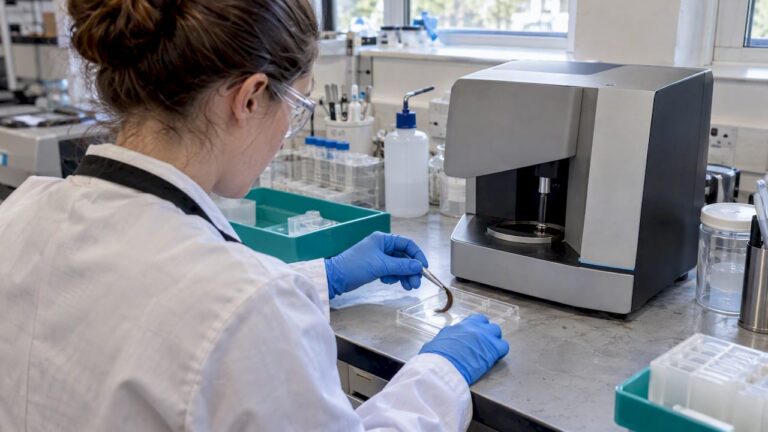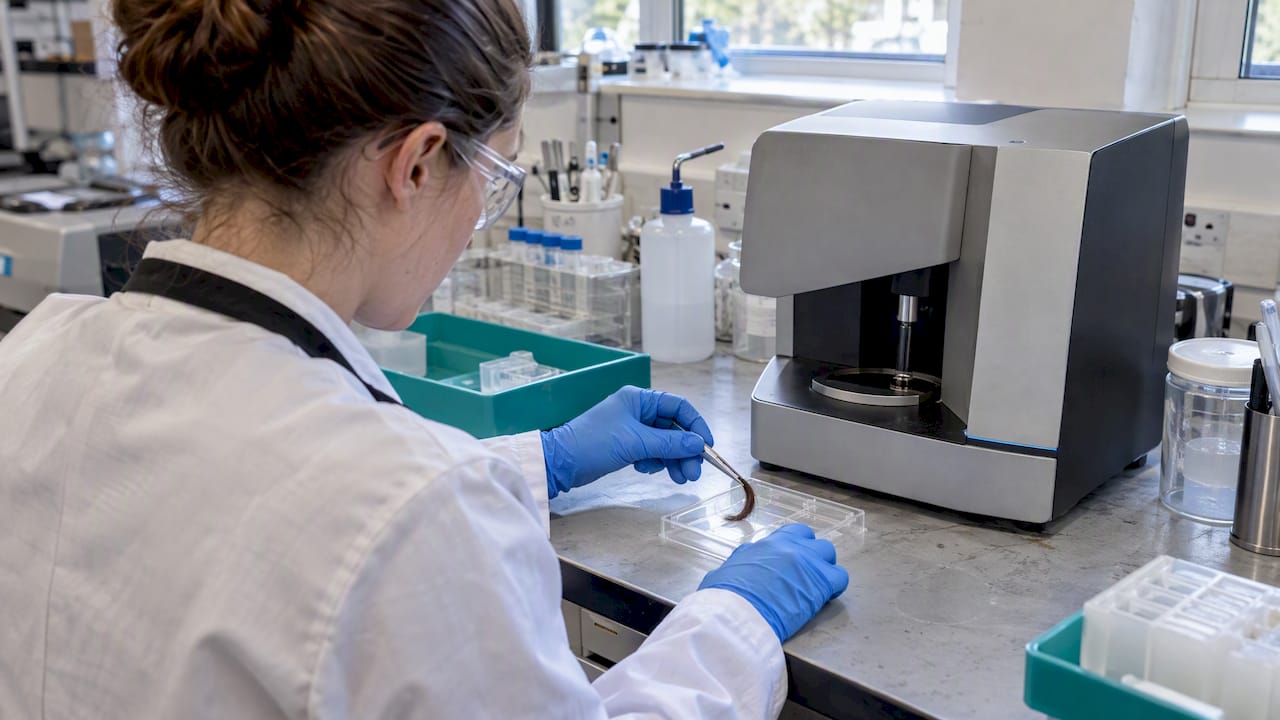
Short answer: there is no robust scientific evidence that hair sample tests can diagnose a food intolerance. That includes bioresonance tests like ours. UK health bodies such as Guts UK and the British Dietetic Association don’t recommend them for that, and the reliable way to confirm an intolerance is to remove a food and then reintroduce it.
What a hair sample test can do is give you a structured list of items to look at first. Some people find that a practical starting point for an elimination diet, and that is how we suggest you use ours. This guide explains what the evidence says, what a hair test can and can’t tell you, and how to use one sensibly.
What does the evidence say about hair intolerance tests?
Hair sample intolerance tests, including ours, use bioresonance. This is a complementary and alternative (CAM) method based on the idea that substances have characteristic frequencies the body responds to. It sits outside mainstream medicine and has not been shown in good-quality clinical studies to identify food intolerances. Our guide what is bioresonance? explains the method in more detail.
Here is what independent UK sources say:
- Guts UK, the digestive health charity, says hair analysis has no good evidence as a way to identify food intolerance, and calls removing a food and reintroducing it the gold standard. Read the Guts UK guidance.
- The British Dietetic Association says home allergy and intolerance test kits are poorly supported by science and can do more harm than good, and describes hair analysis as unreliable. Read the BDA article.
- NICE advises against alternative tests, including hair analysis, for diagnosing food allergy in children. Read the NICE guidance.
- The Advertising Standards Authority requires a robust body of evidence before a test can be advertised as able to indicate food intolerances. Read the ASA advice.
It is worth knowing that the same criticism applies to finger-prick IgG blood intolerance tests, which Guts UK also says lack strong evidence. Our guide to hair vs blood intolerance tests compares the two.
What can a hair test tell you, and what can’t it?
| A hair sample test can | A hair sample test can’t |
|---|---|
| Give you a list of items grouped into high, medium and low response, so you can decide what to look at first | Diagnose a food intolerance or prove that a food is causing your symptoms |
| Cover hundreds of foods and, with some tests, non-food items in one go | Test for allergies, coeliac disease or lactose intolerance |
| Be done at home from a few strands of hair, with no needles | Replace advice from your GP, a dietitian or an allergy specialist |
| Come with a plan and food diary to help you run an elimination diet | Tell you how much of a food you can eat without symptoms |
Why do people use a hair test if it can’t diagnose?
Most people who order one already suspect food is behind their bloating, tiredness or skin flare-ups, but don’t know where to start. Cutting out lots of foods at once is hard to stick to and makes it impossible to tell what helped.
A hair test gives some people a structured, low-effort place to begin: a shortlist of items to try removing first, plus a plan to follow. Whether a food really affects you is then shown by what happens when you remove it and bring it back, not by the report itself.
How to use a hair test sensibly
- Rule out medical causes first. See your GP if you haven’t already. If wheat or bread seems to be a problem, ask for a coeliac blood test before cutting out gluten, because the test only works while you’re still eating it.
- Keep a food diary. Two weeks of notes on what you eat and how you feel is useful with or without a test. Our food and symptom diary shows you what to record.
- Pick one to three items to try first. Use your report and your diary together. Start with foods you eat often that also appear in your diary before bad days.
- Remove them for two to four weeks. Change one thing at a time so you know what made the difference.
- Bring them back one at a time. This is the step that tells you whether a food affects you. Our reintroduction schedule sets out how.
- Don’t cut out whole food groups for long. If you need to avoid several foods, ask your GP to refer you to a dietitian so your diet stays balanced.
Our step-by-step guide to running an elimination diet goes into more detail.
When should you see a doctor instead?
- Swelling of the lips, mouth or throat, hives, vomiting or difficulty breathing soon after eating. This could be an allergic reaction and needs urgent medical help.
- Losing weight without trying, blood in your poo, or a lasting change in your bowel habits.
- Symptoms that are severe, getting worse or affecting a child’s growth.
A hair test is not a substitute for medical advice in any of these situations. Our guide to food intolerance vs allergy explains the difference.
Where our test fits
We have offered hair sample testing since 2015. We describe it as a complementary starting point, not a diagnosis, and we say so on every product page. Your report groups items into high, medium and low response and comes with an elimination plan and food diary, so you can test what matters to you in the way health bodies recommend: by removing foods and bringing them back.
The Core Intolerance Test covers 500 food items. The Ultimate Intolerance Test covers 1,100 items, including non-food items such as pollens and E-numbers. You can see exactly what you’d get in our example report before you order, and every test comes with a 30-day money-back guarantee.
Frequently asked questions
Are hair intolerance tests a scam?
Hair tests are not scientifically proven to diagnose food intolerance, which is why many health professionals are critical of them. We describe ours as a complementary starting point for an elimination diet, not a diagnosis, show an example report before you buy, and offer a 30-day money-back guarantee.
How accurate is a hair food intolerance test?
There are no good-quality published studies showing that hair or bioresonance tests accurately identify food intolerances. Treat the results as a list of items to look at first, and confirm whether a food affects you by removing it and reintroducing it.
Can a hair test detect food allergies?
No. Allergies involve the immune system and can be serious. They are diagnosed by a GP or allergy specialist, usually with skin-prick or IgE blood tests. If you have swelling, hives or breathing problems after eating, get urgent medical help.
Does the NHS test for food intolerances?
The NHS doesn’t use hair tests. Your GP can test for coeliac disease and allergies, and some hospitals use breath tests for problems such as lactose intolerance. For most food intolerances, the NHS approach is a food diary and an elimination diet, often with a dietitian.
Is a hair test or a blood test better for food intolerance?
Neither hair tests nor finger-prick IgG blood tests have strong evidence for diagnosing food intolerance. Hair tests are simpler to do at home and usually cover more items. Whichever you choose, an elimination diet is what confirms a problem food.
This guide is general wellness information, not medical advice. Our test uses bioresonance, a complementary (CAM) method; it does not diagnose allergies, coeliac disease or any medical condition. Speak to a GP if you have severe or ongoing symptoms.