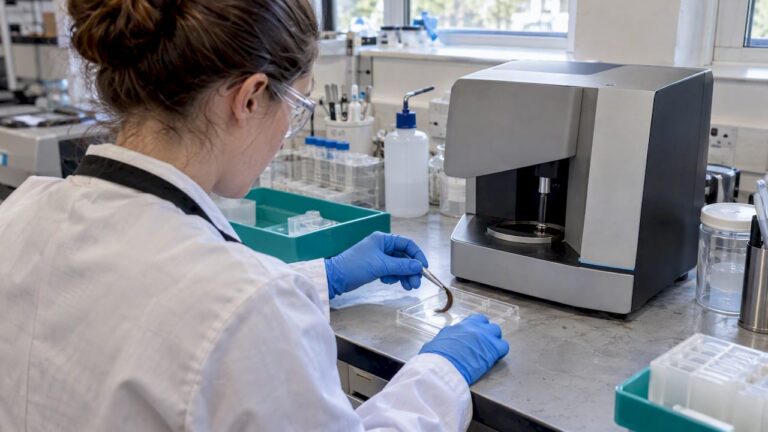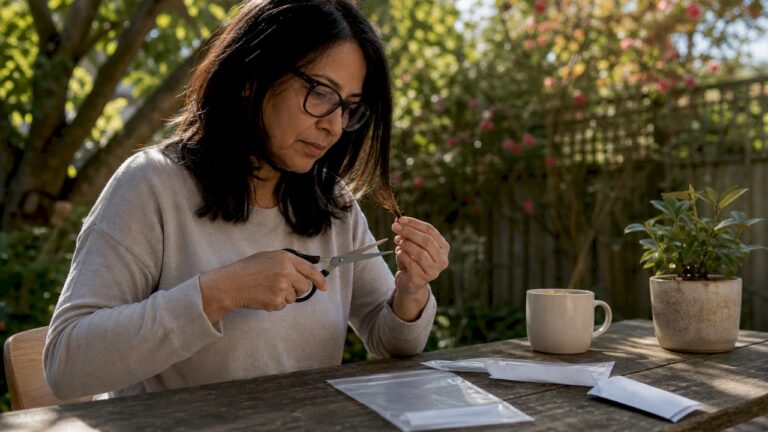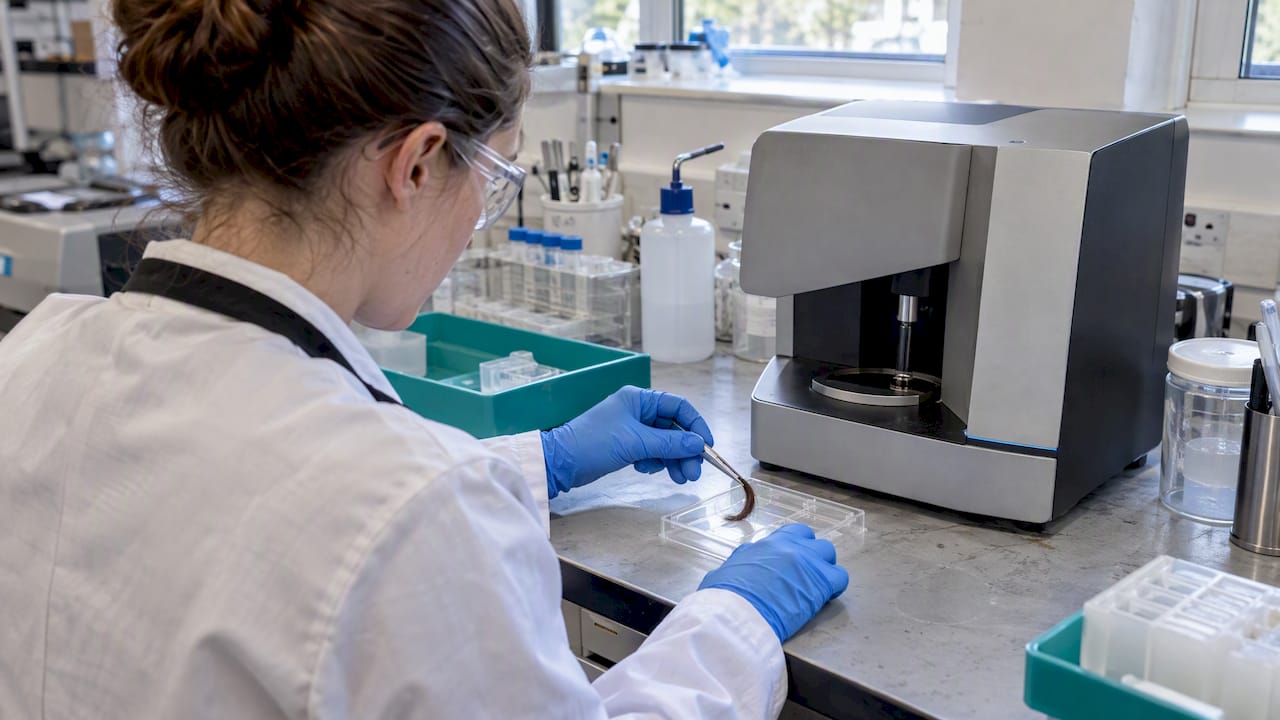
The main difference between hair and blood intolerance tests is the sample and what is looked at. Hair sample testing uses a few strands of hair and a bioresonance method to test hundreds of items, while finger-prick blood intolerance tests use a few drops of blood, usually to measure IgG antibodies to food proteins.
Both are private tests you can do at home, and both are meant to help you decide which foods to look at more closely. They suit different preferences, so the right one depends on what matters most to you.
This guide compares the two side by side so you can pick the one that suits you.
How do hair and blood intolerance tests compare?
| Factor | Hair sample testing (our tests) | Finger-prick blood tests (typical) |
|---|---|---|
| Sample | 4–5 strands of hair cut close to the scalp | A few drops of blood from a finger-prick |
| What is looked at | The response to each item, using bioresonance, a complementary (CAM) method | Usually IgG antibody levels to food proteins |
| Getting started | Instructions and form arrive by email straight away; nothing is posted to you | A collection pack is usually posted to you first |
| Sending it back | Standard envelope; hair doesn’t need to be kept cold | Supplied packaging; blood samples usually need posting soon after collection |
| Items covered | 500 to 1,450 items, including non-food items on larger tests | Usually food panels; size varies by test |
| Results | Digital report within 3–5 working days of arrival, or 48 working hours with priority | Varies by provider |
| Children | From age 6, with an adult ordering | Varies by provider |
Prices for both types vary mainly with the number of items covered. Our guide to how much a food intolerance test costs in the UK explains what to compare.
What does a hair sample test look at?
A hair sample test compares your sample against every item on the test and records the response to each one. Items are then grouped into high, medium and low response, and human tests come with a 6–8 week elimination plan and a printable food diary.
Bioresonance is a complementary approach that sits outside mainstream medicine, so the report is best used as a starting point for diet changes rather than a diagnosis. Our plain-English guide to bioresonance explains the method in more detail.
What do finger-prick blood intolerance tests look at?
Most home blood intolerance tests measure IgG, a type of antibody the immune system makes in response to food proteins. The lab reports a level for each food on the panel, usually grouped into bands from low to high.
Some home blood tests measure IgE instead, which is the antibody involved in allergies. If allergy is your concern, it is best looked into with your GP, who can arrange the right tests and help you understand the results.
Which is easier to do at home?
Both are designed for home use, but the practical experience is different:
- Needles: a hair sample needs only scissors. A blood test needs a finger-prick with a lancet, which some people find easy and others, including many children, would rather avoid.
- Getting enough sample: cutting 4–5 strands is quick. Collecting enough drops of blood can take a few attempts, especially with cold hands.
- Timing: hair can be posted whenever suits you. Blood samples often need to be posted soon after collection, sometimes only on certain days.
Our guide to taking your hair sample shows how simple the hair route is.
What if you think you have a food allergy?
Food allergies are different from intolerances. They involve the immune system reacting quickly, and they can be serious.
If you get swelling of the lips, face or throat, hives or breathing difficulty after eating, get urgent medical help. Intolerance testing of any kind is not a substitute for allergy testing, which is arranged through your GP or an allergy clinic, usually with skin-prick or blood tests. The NHS explains food allergy symptoms and how they are diagnosed.
For a fuller explanation, read our guide to food intolerance vs allergy.
How do you choose between hair and blood?
- You want a needle-free option, or you are testing a child: a hair sample is the simpler choice.
- You want to look beyond food: our Ultimate and Ultimate Plus tests include non-food, environmental and nutritional items.
- You are comfortable with a finger-prick and want an antibody-based food panel: a blood test may suit you.
- You suspect an allergy or coeliac disease: speak to your GP first, as both need medical tests.
What to look for in any home intolerance test
- A clear explanation of what is measured and what the results mean.
- Practical next steps, such as an elimination plan and a food diary, not just a list.
- Support you can reach if you have a question about your report.
- Honest wording that presents the result as a starting point, not a diagnosis.
Whichever you choose, the result is most useful when you pair it with a food diary and change one thing at a time.
For a straight answer on what the evidence says, read our guide do hair intolerance tests work?
Where hair sample testing fits
Hair sample testing fits people who want a simple, needle-free way to get a broad starting point for diet changes. You order online, post a few strands of hair, and receive a report with a ready-made elimination plan and food diary.
The Ultimate Intolerance Test tests 1,100 items, including foods, pollens and airborne items, metals, vitamins and minerals, and E-numbers. For a food-only test, the Core Intolerance Test covers 500 food items. To see how the whole process works, read our guide to at-home hair intolerance testing.
Frequently asked questions
Is a hair test more accurate than a blood test?
They look at different things, so they are not directly comparable. A hair sample test uses bioresonance to show which items had the strongest response, while most blood intolerance tests measure IgG antibodies. Both work best as a starting point for a food diary and elimination plan.
Do hair or blood intolerance tests check for coeliac disease?
No. Coeliac disease is diagnosed with a GP blood test taken while you are still eating gluten. If you suspect it, get that checked before making changes to your diet.
Which is better for children?
Many parents prefer hair because it needs only a quick snip and no finger-prick. Our tests are suitable from age 6, with an adult ordering. Speak to your GP before removing foods from a child’s diet.
Can a home blood test tell me if I have an allergy?
Some home blood tests measure IgE, the antibody involved in allergies, but allergy is best investigated with your GP, who can arrange skin-prick or blood tests and explain the results.
This guide is general wellness information, not medical advice. Our test uses bioresonance, a complementary (CAM) method; it does not diagnose allergies, coeliac disease or any medical condition. Speak to a GP if you have severe or ongoing symptoms.