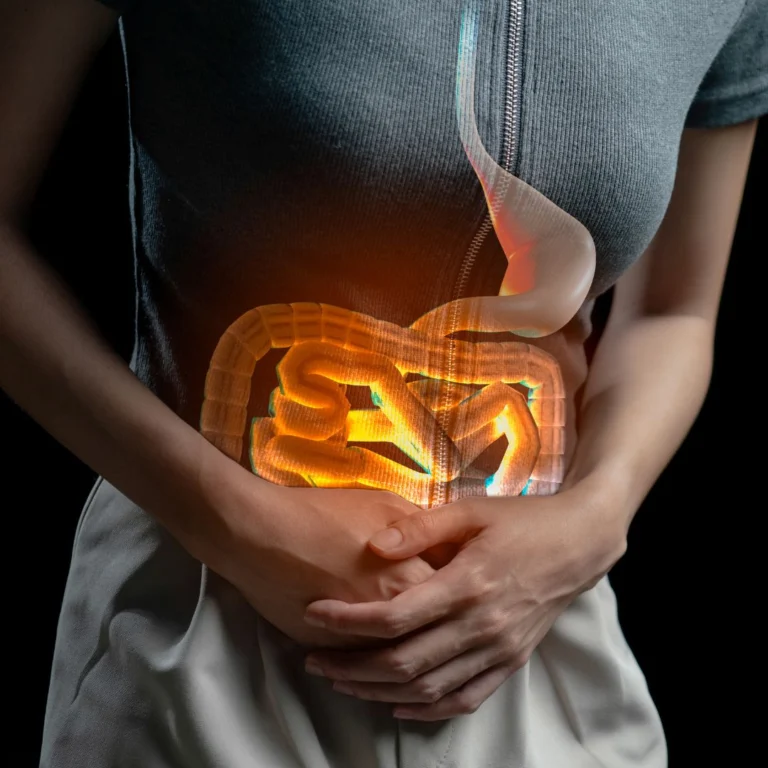
Christmas bloating usually comes from a very large meal eaten quickly, with lots of gas-producing and rich foods on one plate: sprouts and cabbage, onions and garlic in the stuffing and gravy, bread, cream, dried fruit and fizzy drinks. For most people it settles within a day.
You don’t need to skip your favourites. A few small changes to how you eat, and one or two swaps in the kitchen, can make the day much more comfortable.
Why do you feel so bloated after Christmas dinner?
- Portion size. Christmas dinner is often the biggest meal of the year, and a stretched stomach feels tight and heavy.
- Fat. Roast potatoes, pigs in blankets, gravy and cream slow down how quickly your stomach empties.
- Fermentable foods. Sprouts, onions, bread and dried fruit contain carbohydrates that gut bacteria ferment, which makes gas a few hours later.
- Fizz and alcohol. Bubbles add gas, and alcohol can irritate the gut.
- Sitting still. Long afternoons on the sofa slow everything down.
Our main guide to bloating after eating explains the causes in more detail.
Which Christmas foods are most likely to cause bloating?
| Food | Why it can bloat you | Easy swap |
|---|---|---|
| Sprouts, cabbage, cauliflower | Contain sugars that ferment into gas | A smaller serving, with more carrots and parsnips |
| Stuffing, gravy and bread sauce | Usually packed with onion and garlic | Make them with garlic-infused oil and chives |
| Bread, stuffing and pastry | Wheat is high in fructans, a common trigger | Roast potatoes or rice-based stuffing |
| Cream, brandy butter, soft cheese | Lactose can cause wind and cramps | Lactose-free cream, hard cheese |
| Christmas pudding, mince pies, dried fruit | Dried fruit is rich in fruit sugars that ferment | A small slice, later in the evening |
| Chocolates and sugar-free sweets | Sugar alcohols in “sugar-free” sweets can bloat you | A few regular chocolates instead |
| Prosecco, beer, mulled wine | Bubbles add gas, and alcohol irritates the gut | Alternate with still water |
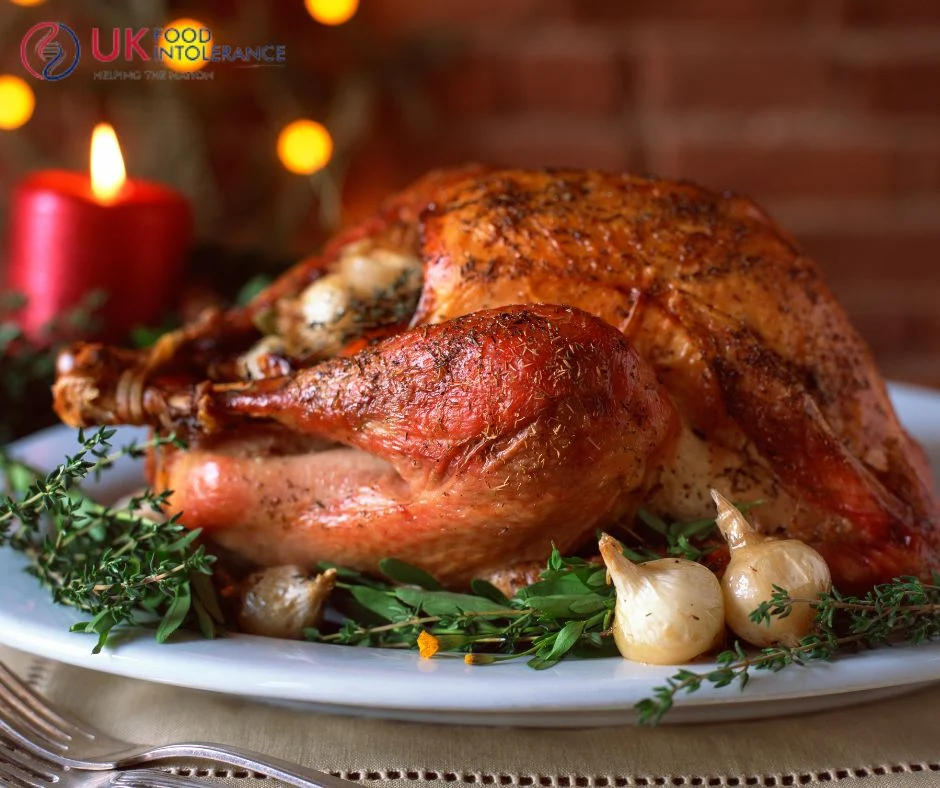
Turkey itself is rarely the problem. It’s usually what comes with it.
If you react to particular items every year, our guides to garlic and onion intolerance, alcohol intolerance and artificial sweeteners go into each one.
How can you enjoy Christmas dinner without the bloat?
- Don’t arrive starving. Have a normal breakfast, so you’re not tempted to eat as fast as possible.
- Start smaller. Take a modest first helping. You can always go back.
- Eat slowly. Talk between mouthfuls and put your knife and fork down now and then.
- Balance the plate. More turkey, carrots and parsnips, fewer sprouts if they usually bother you.
- Drink water alongside the fizz. One glass of still water for each glass of bubbles helps.
- Leave a gap before pudding. An hour gives your stomach time to settle.
- Go for a walk. A gentle walk after dinner helps gas move through.
- Try peppermint tea in the evening rather than another coffee.
Hosting someone with a food intolerance?
A little planning makes Christmas easier for guests with a sensitive gut, and they’ll appreciate being asked.
- Ask in advance which foods they avoid, rather than guessing on the day.
- Make the gravy without onion, or keep a small onion-free pan aside.
- Check stock cubes and gravy granules, which often contain onion, wheat and yeast extract.
- Cook a little stuffing separately, or make one with rice or gluten-free breadcrumbs.
- Label puddings and sauces, so people can choose without asking about every dish.
Food allergies are different and need extra care. If a guest has an allergy, for example to nuts, keep their food separate, use clean utensils and check every label. Swelling, hives or difficulty breathing after eating need urgent medical help.
Is it just Christmas, or could it be a food intolerance?
Feeling bloated after the biggest meal of the year is normal. Feeling bloated on ordinary days, after ordinary meals, is worth looking into.
A good place to start is two weeks of notes in January. Our food and symptom diary shows you what to record, so you can see whether bloating follows the same foods. If you’re bloated most days, or it doesn’t go away, speak to a GP.
Where hair sample testing fits
If your diary doesn’t show a clear pattern, testing can give you a starting point for the new year. The Ultimate Intolerance Test tests 1,100 items, including foods, drinks, alcohol and E-numbers, and groups them into high, medium and low response. If you just want to look at food, the Core Intolerance Test covers 500 food items.
It’s a digital service, so there’s no kit to post out. Your instructions arrive by email straight away, which also makes it an easy gift. If several of you want to test, there’s a multibuy saving when you order two or more, and our guide to testing for couples and families explains how it works.
Testing is a complementary approach and not a medical diagnosis. It doesn’t test for allergies or coeliac disease.
Frequently asked questions
How long does bloating after Christmas dinner last?
For most people it eases within a few hours to a day, as the meal and the gas it produces move through. Drinking water, a walk and a lighter breakfast the next day all help. Bloating that keeps coming back after ordinary meals is worth looking into.
Why do sprouts make you bloated?
Sprouts, like cabbage and cauliflower, contain sugars that your small intestine can’t fully digest. Gut bacteria ferment them further down, which produces gas. Smaller portions, and cooking them well, usually help.
What can I eat at Christmas if I have a sensitive gut?
Turkey, roast potatoes, carrots, parsnips and green beans are usually well tolerated. Ask for gravy and stuffing made without onion, keep portions of sprouts, bread sauce and pudding small, and swap some fizz for still water.
Is a food intolerance test a good Christmas present?
It can be, for someone who has been asking about their symptoms. Our tests are digital, so the instructions arrive by email straight away, and there’s a multibuy saving if more than one person wants to test.
This guide is general wellness information, not medical advice. Our test uses bioresonance, a complementary (CAM) method; it does not diagnose allergies, coeliac disease or any medical condition. Speak to a GP if you have severe or ongoing symptoms.