

If you get bloating, wind, cramping or diarrhoea after eating fruit, honey or sugary drinks, your symptoms are consistent with fructose intolerance, most often the common dietary form rather than the rare inherited one. Dietary fructose malabsorption affects a sizeable share of adults in Europe, while hereditary fructose intolerance is far rarer and more serious. Before you cut fruit or sugar from your diet long term, see your GP: they can rule out other causes and point you towards proper testing.
TL;DR:
- A breath test commonly uses 25 grams of fructose, but clinic protocols vary, and positive results can occur without symptoms or with bacterial overgrowth.
- Glucose alongside fructose can improve absorption, so pair fruit with toast or cereal; bananas, strawberries, and citrus are often better tolerated.
- A supervised trial, followed by testing one food at a time for several days and keeping a symptom diary, can reveal personal triggers and tolerated portions.
- Vomiting, feeding problems, or poor growth after fruit or sucrose is introduced in infancy can signal rare hereditary fructose intolerance and require urgent specialist assessment.
- Seek prompt medical care for severe or persistent vomiting, dehydration, blood in stools, sudden weight loss, or an infant’s feeding difficulties or poor growth.
Table of Contents
- What symptoms does fructose intolerance cause?
- Types of fructose intolerance and how they differ
- How fructose causes symptoms in the gut
- Diagnosis: breath tests, their limits, and when to see a GP
- Foods high in fructose and sensible lower-fructose alternatives
- How to manage symptoms: staged dietary trial and reintroduction
- When to seek urgent help or specialist review
- Beyond the gut: fatigue, headaches and skin changes
- How at-home intolerance testing works, step by step
- Turning test results into a working elimination diet
- Author perspective: practical reassurance and next steps
- Where at-home testing fits alongside your GP
- FAQ
- Sources
What symptoms does fructose intolerance cause?
The main symptoms sit squarely in the gut and usually show up within a few hours of eating something fructose-rich, according to hospital patient information. How bad they get often depends on how much fructose you have eaten and whether it came with other foods.
- Bloating and a feeling of fullness or distension
- Excessive wind
- Abdominal cramps or pain
- Diarrhoea or looser, more frequent stools
- Nausea, in some people
Children tend to absorb fructose less efficiently than adults, so the same amount of fruit juice or sweetened drink can cause more noticeable symptoms in a child than in an adult eating the same portion. The trouble is that this symptom pattern overlaps heavily with irritable bowel syndrome, coeliac disease and other gut conditions, which is exactly why self-diagnosis is unreliable and a GP review matters before you change your diet.
Types of fructose intolerance and how they differ
Two conditions get lumped together under “fructose intolerance”, and they are not the same thing. Dietary fructose malabsorption is common and happens when the small intestine cannot absorb fructose efficiently, letting it pass through to the colon. Hereditary fructose intolerance (HFI) is a genetic condition caused by a deficiency in a liver enzyme, and it is rare, usually appearing in infancy when fruit or sucrose is introduced.
- Dietary fructose malabsorption affects an estimated 20 to 30% of people in Europe and is not genetic in the way HFI is
- Hereditary fructose intolerance occurs in roughly 1 in 25,000 people and involves a specific enzyme defect
- Infant feeding problems, vomiting and failure to thrive point towards HFI rather than ordinary malabsorption, and need urgent specialist assessment
If your symptoms started in adulthood after fruit, juice or sweetened food, you are almost certainly dealing with the common dietary form.
How fructose causes symptoms in the gut
Fructose is absorbed in the small intestine through a transporter called GLUT5, and the amount of GLUT5 activity varies from person to person. When you eat more fructose than your gut can absorb, the surplus travels on to the large bowel, where gut bacteria ferment it. That fermentation produces hydrogen and carbon dioxide, and the unabsorbed sugar also draws fluid into the bowel, which together explain the bloating, wind and diarrhoea many people recognise.
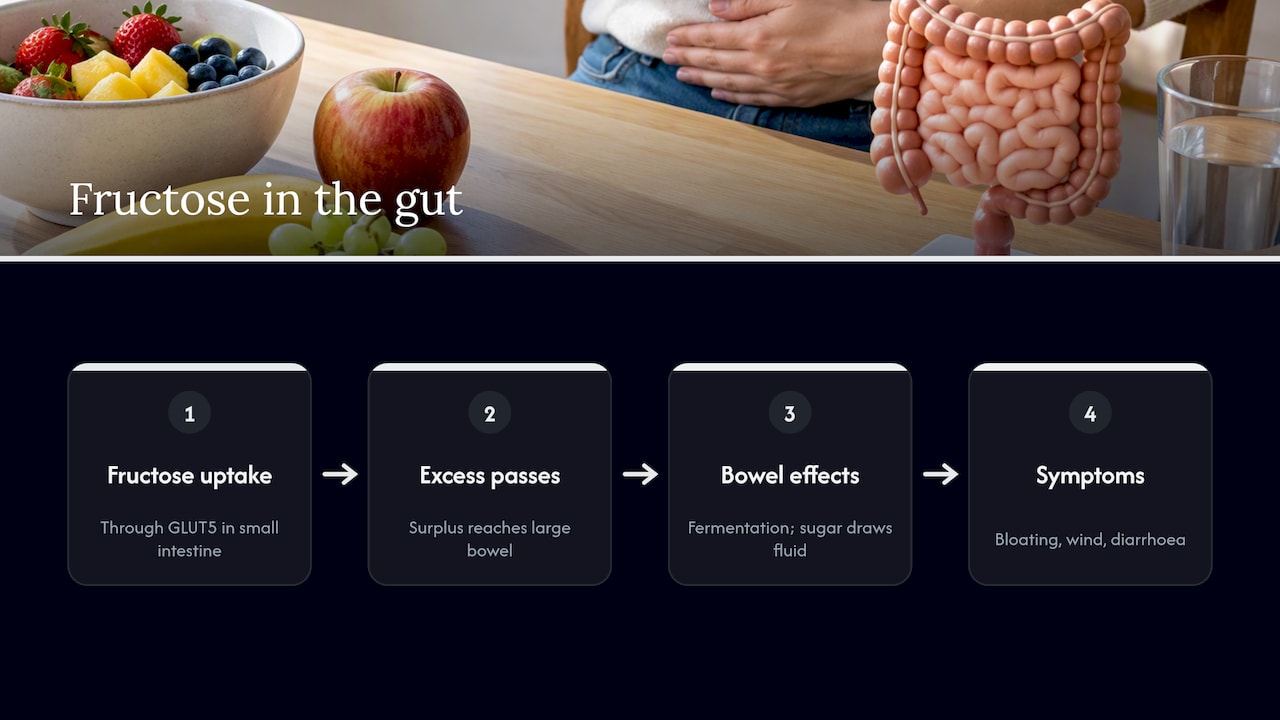
Research into fructose malabsorption commonly uses a 25 gram dose to test absorption capacity, and larger single doses are more likely to overwhelm the gut than smaller ones spread across a day. One detail worth knowing: glucose eaten in the same meal tends to improve fructose absorption, which is partly why an apple eaten alone can cause more trouble than the same apple eaten with toast or cereal.
Diagnosis: breath tests, their limits, and when to see a GP
The standard test for fructose malabsorption is a hydrogen and methane breath test. You drink a measured fructose solution, commonly 25 grams, then breathe into a collection device at intervals over a few hours while a clinic measures the gases your gut bacteria produce.
A rise in breath hydrogen of around 20 parts per million is commonly used to flag malabsorption, though cut-offs and protocols vary between clinics, and there is no single agreed positive threshold.
- Protocols for dose, timing and interpretation differ from one centre to another
- A positive result can happen in people with no symptoms at all, and small intestinal bacterial overgrowth can produce a false positive
- A paediatric study found many symptomatic children with a positive test improved on a low-fructose diet, but positive results were also common in healthy children, which limits how much weight any single test result should carry
Because of these limitations, many clinicians treat a supervised dietary trial as just as useful as the breath test itself. See your GP first: they can arrange testing where appropriate and, importantly, rule out coeliac disease, inflammatory bowel disease and other conditions that cause similar symptoms before you commit to any long-term diet change.
Foods high in fructose and sensible lower-fructose alternatives
Some foods carry much more fructose than others, and knowing which ones tend to cause trouble makes a supervised trial far easier to follow.
- High-fructose foods to watch: apples, pears, mangoes, fruit juice, honey, jam, fruit concentrates and anything listing high-fructose corn syrup or invert sugar on the label
- Lower-fructose fruit choices: bananas, strawberries, citrus fruit and grapes, generally better tolerated in a palm-sized portion
- Mixed meals help: eating fruit alongside a starchy food or other glucose source can reduce symptoms because glucose supports fructose absorption
Checking ingredient labels for “fructose”, “high-fructose corn syrup”, “fruit juice concentrate” and “invert sugar” catches a lot of hidden sources in sauces, cereal bars and soft drinks that you might not otherwise suspect.
How to manage symptoms: staged dietary trial and reintroduction
A structured, supervised trial gives you much clearer answers than cutting foods at random. The approach your GP or a dietitian is likely to recommend follows a similar shape to NHS reintroduction guidance for fructose malabsorption:
- Follow a low-fructose diet for a short period under the guidance of your GP or a dietitian
- Note whether your typical symptoms (bloating, wind, pain, diarrhoea) improve during that window
- Once settled, reintroduce one high-fructose food at a time, giving it several days before judging the result
- Record your intake and symptoms in a diary so patterns become obvious rather than guessed at
- Work out your personal threshold, since many people can tolerate small or mixed portions even if a large one causes problems
Pro Tip: Reintroduce foods one at a time rather than several together, otherwise you will not know which one caused a flare-up.
A dietitian is especially useful for children, since restrictive diets in young, growing bodies need careful balancing to avoid missing out on key nutrients.
When to seek urgent help or specialist review
Most fructose-related symptoms are uncomfortable rather than dangerous, but a few signs need prompt medical attention rather than home management.
- Severe or persistent vomiting
- Signs of dehydration
- Blood in the stools
- Sudden or unexplained weight loss
- Failure to thrive or feeding difficulties in a baby
Hereditary fructose intolerance in infants is a medical emergency once fruit or sucrose enters the diet, and it needs specialist paediatric care, not a wait-and-see approach at home.
Beyond the gut: fatigue, headaches and skin changes
Fructose intolerance is mostly discussed as a digestive problem, but many people also notice symptoms outside the gut, and these can be the harder ones to connect back to diet. Fatigue after eating, low energy in the afternoon, headaches and skin flare-ups such as itching or breakouts are commonly reported alongside the classic bloating and wind.
The likely explanation ties back to what happens in the bowel: unabsorbed fructose ferments and alters the gut environment, and a narrative review of the current evidence notes that high-fructose intake may influence gut bacteria, though long-term effects on the microbiome are still being studied. Fermentation byproducts, disrupted sleep from night-time discomfort and the general strain of ongoing gut symptoms can plausibly contribute to tiredness and headaches, even though the research connecting fructose specifically to these non-digestive effects is less settled than the evidence for bloating and diarrhoea.
This is one more reason not to self-diagnose from symptoms alone. Fatigue, headaches and skin issues have many possible causes, from sleep quality to other food sensitivities to unrelated health conditions, so they are worth mentioning to your GP alongside your digestive symptoms rather than treating as proof of fructose intolerance on their own. A broader intolerance test can sometimes help you see whether a pattern of symptoms lines up with more than one food group, which is useful context to bring into that conversation.
How at-home intolerance testing works, step by step
At-home intolerance testing services, including our own, follow a broadly similar process designed to be simple enough to complete in your kitchen. You order a kit online, collect a small hair sample at home following the instructions provided, and post it back for analysis, no blood draw or clinic visit required.
Once your sample reaches the laboratory, it goes through bio-resonance analysis, a method that screens your sample against a panel of food and environmental items. Our Ultimate Plus Intolerance Test screens against a large panel and returns a digital report after processing. The report lists each item tested along with your result, usually presented as a clear rating so you can see at a glance which foods came back flagged.
Interpreting the report is meant to be straightforward: you are looking for patterns, not a single definitive answer, and the results are designed to highlight foods worth investigating further rather than a diagnosis in themselves. That distinction matters when fructose-containing foods show up on a report, since a flagged result points you towards a food group to examine more closely during a supervised dietary trial, not a confirmed medical condition.
Turning test results into a working elimination diet
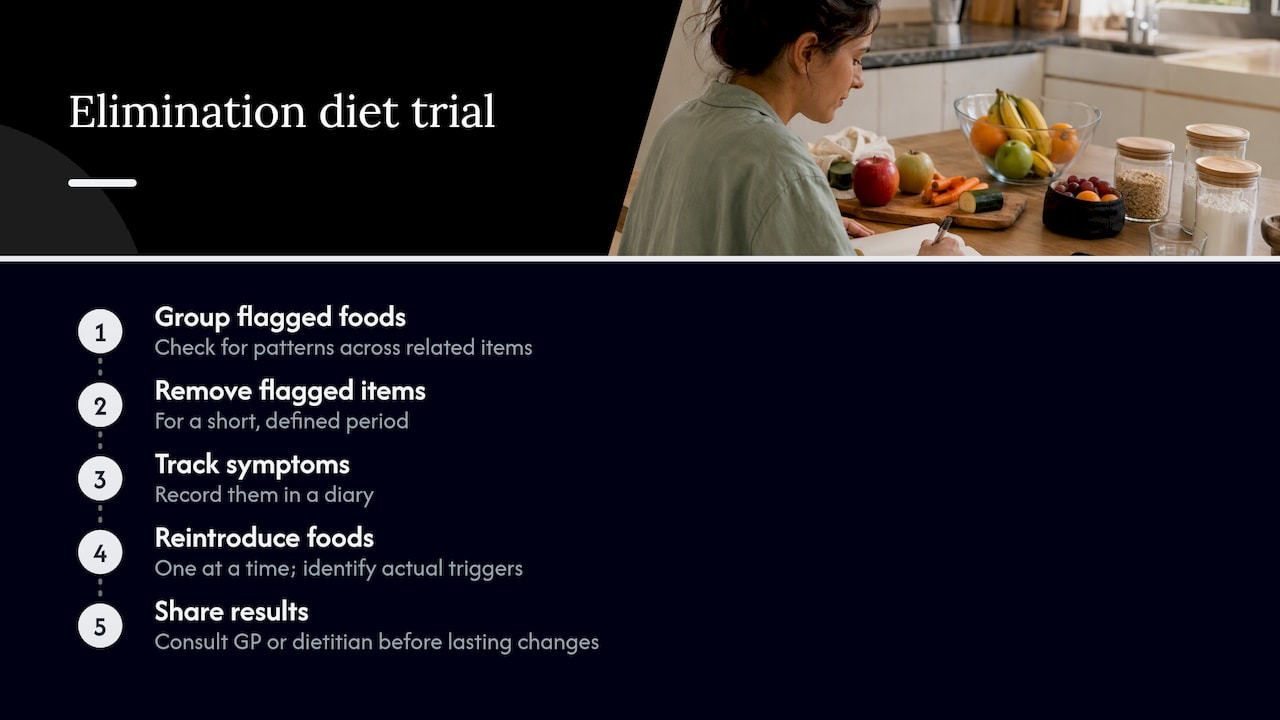
A list of flagged foods is only useful once you know what to do with it. The practical next step is to group your results by food category, fructose-containing fruits, honey, certain sweeteners, and check whether they cluster together, since a pattern across several related items is more informative than a single flagged food sitting on its own.
From there, the same staged approach described earlier applies: remove the flagged items for a short, defined period, track your symptoms in a diary, then reintroduce them one at a time to see which specific foods actually trigger a reaction versus which were flagged but cause no noticeable symptoms in practice. This keeps the diet from becoming more restrictive than it needs to be, since cutting food groups you do not actually react to brings no benefit and can make everyday eating harder than necessary.
Results are a starting point for that structured trial, not a replacement for it, and sharing them with your GP or a dietitian before making lasting changes helps keep your diet nutritionally balanced, particularly if several items come back flagged at once.
Author perspective: practical reassurance and next steps
Fructose symptoms are manageable once you know what you are dealing with. Professional assessment first, targeted testing and a structured diet trial after, tends to bring relief without unnecessary restriction.
— Rob
Where at-home testing fits alongside your GP
Once you and your GP have ruled out other causes, an at-home intolerance test can give you a practical head start on narrowing down food triggers. We process every sample in a UK laboratory using non-invasive hair sample collection, so there is no blood draw and no clinic appointment, just a kit you complete at home and post back.

Our Ultimate Plus Intolerance Test screens a wide panel of food and non-food items and returns your digital report after processing, giving you a clear starting point for a supervised elimination diet rather than a guessing game. We always recommend discussing your results with your GP or a dietitian before making any long-term dietary changes, especially if you are testing on behalf of a child. If you want to see the full range of options, including smaller panels, visit our intolerance test range to find the test that matches your situation.
This article is general information, not a substitute for advice from a qualified doctor. Consult a qualified healthcare professional about your own circumstances before acting on anything here.
FAQ
Which fruits are high in fructose?
Apples, pears, mangoes and grapes tend to sit towards the higher end of fructose content, along with dried fruit and fruit juice concentrates. Bananas, strawberries and citrus fruits are generally lower in fructose and better tolerated by people with malabsorption.
What are the symptoms of problems digesting fructose?
The main symptoms are bloating, excessive wind, abdominal cramps or pain, and diarrhoea, usually appearing within a few hours of eating fructose-rich food. Some people also report nausea, fatigue or headaches alongside the digestive symptoms.
What foods are examples of high-fructose items?
Honey, jam, fruit juice, fruit concentrates and foods or drinks sweetened with high-fructose corn syrup or invert sugar are common high-fructose items. Certain fruits, including apples, pears and mangoes, also carry relatively high fructose content.
What foods should I avoid if I have fructose intolerance?
During a supervised trial, you would typically limit high-fructose fruits, fruit juice, honey, and products containing high-fructose corn syrup or invert sugar. A GP or dietitian can help you tailor this list and plan a staged reintroduction so you avoid cutting out more than necessary.
Can a breath test confirm fructose intolerance on its own?
Not reliably on its own. Breath test protocols and cut-offs vary between clinics, and positive results can occur in people without symptoms, so clinicians usually interpret the result alongside a supervised dietary trial rather than treating the test as definitive.
Sources
- Hereditary fructose intolerance: MedlinePlus Genetics
- Pubmed
- Dietary advice for children with fructose malabsorption | CUH
- Hydrogen and Methane-Based Breath Testing in Gastrointestinal Disorders: The North American Consensus
- Fructose malabsorption in asymptomatic children and in patients with functional chronic abdominal pain: a prospective comparative study









Leave a Reply
Want to join the discussion?Feel free to contribute!