

If your symptoms start within minutes, think allergy. If they build up over hours or even days, you’re more likely looking at an intolerance or a non-IgE reaction. Either way, the first step is the same: stop eating the suspected food, seek emergency care if you notice breathing or circulation problems, and start a symptom diary so a GP has something useful to work with.
TL;DR:
- Egg allergy symptoms typically appear within minutes to two hours, including hives, breathing difficulties, vomiting, and circulatory signs, requiring immediate medical attention.
- Food intolerance causes symptoms hours or days after eating, such as digestive discomfort and fatigue, making pattern recognition difficult without a detailed symptom diary.
- Well-baked eggs are less likely to trigger reactions compared to lightly cooked or raw eggs due to heat-labile proteins, and some children can tolerate baked egg while reacting to other forms.
- Diagnosis relies on history, skin-prick or blood tests, elimination diets, and hospital food challenges, with professional guidance essential for safe reintroduction.
- Managing symptoms includes starting a food diary, avoiding the suspected food temporarily, and knowing when to escalate to healthcare providers or emergency services.
Table of Contents
- Immediate allergic symptoms to watch for
- Delayed digestive and skin reactions that point to intolerance
- Why baked egg is sometimes fine when boiled or scrambled egg isn’t
- How egg allergy and intolerance get properly diagnosed
- Practical next steps: what to do now
- What tests show: limitations and the role of professional support
- A short note on getting this right
- FAQ
- Sources
Immediate allergic symptoms to watch for
A true egg allergy is driven by your immune system (specifically IgE antibodies), and the signs usually show up fast. According to a patient leaflet from Allergy North West, immediate reactions typically begin within minutes and up to two hours after eating egg.
- Hives or angioedema: raised, itchy welts on the skin, or swelling of the lips, eyelids, tongue or throat.
- Breathing changes: wheezing, a tight or hoarse throat, or a persistent cough.
- Vomiting: sudden and often within minutes of eating.
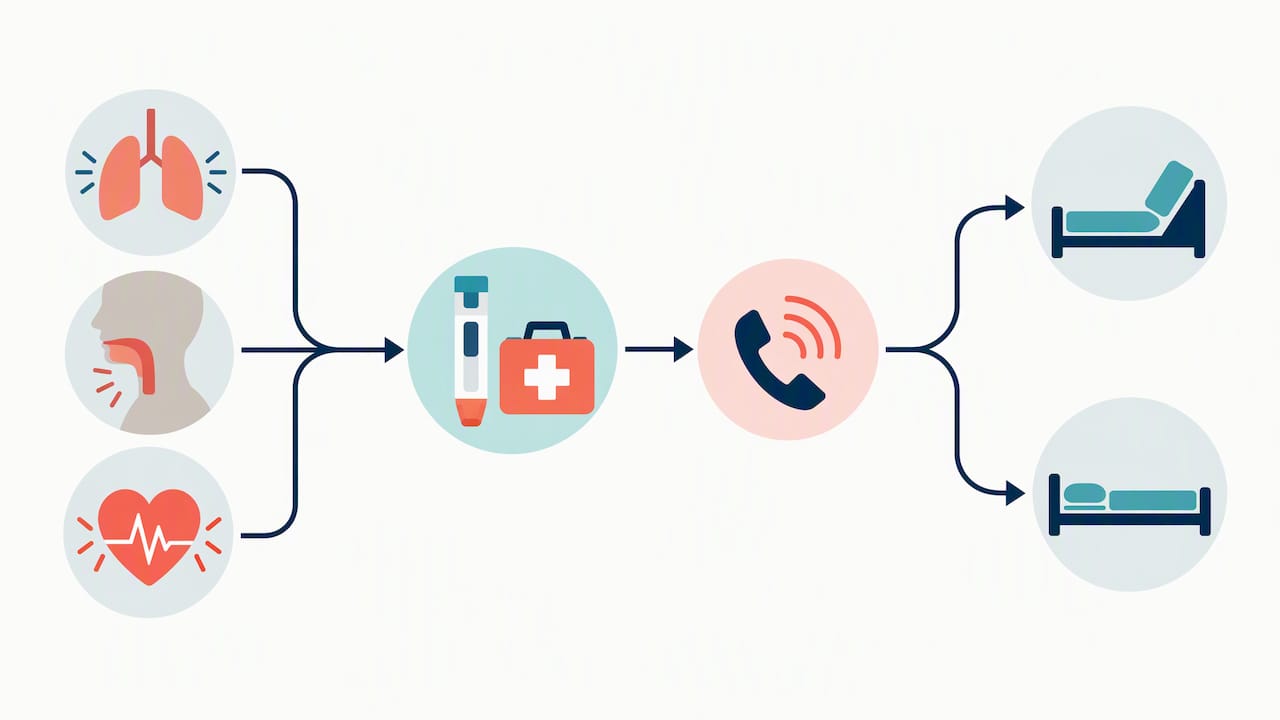
- Circulatory signs: dizziness, fainting or a racing heartbeat, which can signal anaphylaxis.
Egg allergy affects around 2% of children and roughly 0.1% of adults, and adult-onset egg allergy is uncommon, so most new cases of this kind appear in early childhood.
If you or your child shows breathing difficulty, swelling of the throat or tongue, or signs of circulatory collapse, this is a medical emergency. Use an adrenaline auto-injector if one has been prescribed, call 999, and lie the person flat with their legs raised unless breathing is difficult, in which case sitting up helps more. Antihistamines only help with mild, skin-only reactions such as isolated hives, never with breathing or circulatory symptoms.
Delayed digestive and skin reactions that point to intolerance
Intolerance symptoms work on a different clock. Rather than minutes, they tend to appear hours after eating, sometimes not until the next day, which makes them far harder to connect to a specific meal.
- Digestive discomfort: bloating, wind, stomach pain, nausea, or a change in bowel habit (constipation or diarrhoea).
- Fatigue: an unexplained slump in energy after eating egg-containing foods.
- Skin flares: worsening eczema, particularly in children who already have a tendency towards it.
The same Allergy North West leaflet notes that non-IgE reactions can take hours to days to appear, often showing up as eczema flares or gastrointestinal upset rather than the dramatic signs seen in allergy.
These symptoms rarely threaten life, but they can wear you down. Chronic bloating, irregular bowel habits or constant tiredness affect sleep, mood and daily function, and they’re easy to mistake for irritable bowel syndrome, a stomach bug, or simple stress, especially when the trigger food was eaten a day or two earlier. This is exactly why a diary matters: without one, egg can hide in plain sight for months.
Pro Tip: Note the time, the exact food and the portion size every time symptoms appear, even if you’re not sure egg is involved. Patterns show up faster than guesswork.
Why baked egg is sometimes fine when boiled or scrambled egg isn’t
Heat changes egg proteins. Some of the proteins responsible for allergic reactions are heat-labile, meaning prolonged baking at high temperatures breaks them down enough that the immune system no longer recognises them as a threat in the same way. Others are heat-stable and survive cooking, which is why reactions vary so much between forms of egg.
- Well-baked egg (in cakes, muffins or biscuits, baked for a reasonable time) is the least likely to trigger a reaction.
- Lightly cooked egg (scrambled, boiled, fried) retains more of the original proteins and is more likely to provoke symptoms.
- Raw egg carries the highest protein load and the highest reaction risk.
According to the Allergy North West leaflet, many children who react to scrambled or boiled egg can tolerate baked egg, and eating it regularly, where tolerated, may support outgrowing the allergy over time. This staged approach, often called an egg ladder, moves a person from well-baked forms towards less-cooked ones under observation. It’s worth attempting at home only for mild, non-anaphylactic histories; anyone with a history of a severe reaction should have reintroduction guided by a specialist rather than trying it alone, and our guide for parents on child intolerance testing covers this in more depth.
How egg allergy and intolerance get properly diagnosed
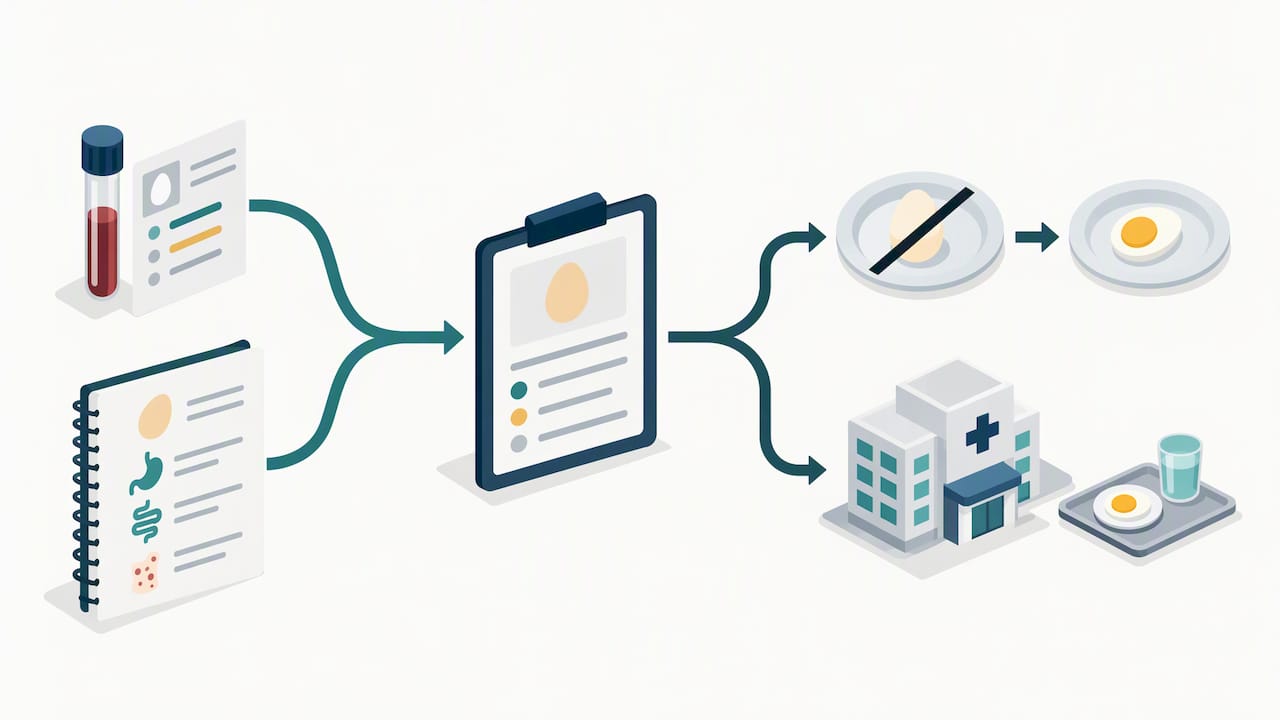
Diagnosis starts long before any test. A detailed history, how reproducible the reaction is, how quickly it comes on, which form of egg was involved and how much was eaten, does most of the work. The BSACI egg allergy guideline states that a clear clinical history will confirm the diagnosis in most cases.
- Skin-prick and specific IgE blood tests help confirm suspected allergy, particularly in moderate or uncertain cases, though they measure sensitisation rather than guaranteed reaction.
- Structured elimination, typically lasting two to six weeks, followed by supervised reintroduction, is the standard route for suspected intolerance.
- Oral food challenge, carried out in hospital under supervision, remains the diagnostic gold standard when allergy needs confirming.
- Referral is warranted for severe reactions, asthma alongside suspected allergy, an unclear history, or symptoms suggesting FPIES, a rare non-IgE condition.
Our guide to sensitivity versus allergy testing breaks down which test suits which question, since allergy tests and intolerance screening answer very different things.
Practical next steps: what to do now
- Start a food and symptom diary today, logging timing, portion and food form rather than waiting until a pattern seems obvious.
- Avoid the suspected food short-term while you record symptoms, but don’t commit to long-term restriction without professional input, particularly for children who need the nutrients egg provides.
- Check any adrenaline auto-injector is in date and within reach if anaphylaxis has been diagnosed; antihistamines are only for mild, skin-only reactions.
- Know when to escalate: a GP for recurring or unclear symptoms, an allergy referral for suspected IgE-mediated reactions, or A&E for breathing or circulatory symptoms.
- Read labels carefully and adapt recipes (egg replacers in baking, for instance) to keep meals varied while avoiding egg.
Pro Tip: Keep a written elimination plan rather than relying on memory. Our elimination diet checklist gives you a structure to follow so nothing gets missed.
For food introduction in babies and toddlers specifically, this guide to introducing new foods safely walks through practical, parent-tested steps for watching for reactions.
What tests show: limitations and the role of professional support
Skin-prick and IgE tests confirm sensitisation, not certainty of reaction, and they need interpreting alongside your history rather than read in isolation. No routine blood test exists for intolerance, which is why elimination and reintroduction remain the standard approach. Oral food challenges are definitive but need hospital supervision because of the small risk of a severe reaction during testing. Working with a GP, dietitian or allergy specialist reduces the chance of cutting out egg unnecessarily and helps plan a reintroduction that’s actually safe to attempt.
A short note on getting this right
Delayed digestive symptoms after eggs are uncomfortable, sometimes miserable, but they’re rarely dangerous. That doesn’t mean ignore them. A diary, a short period of avoidance, and a referral when the picture stays unclear will get you further than guessing ever will. Testing, paired with a guided reintroduction plan, tends to be the most useful next move for working out what your body can actually tolerate, and for separating a genuine egg problem from something else entirely, such as a cooking method, a portion size, or an unrelated digestive issue sharing the stage.
— Rob
This article is general information, not a substitute for advice from a qualified doctor. Consult a qualified healthcare professional about your own circumstances before acting on anything here.
FAQ
Can you develop an egg intolerance later in life?
Yes, intolerance can appear at any age, unlike true egg allergy, which is uncommon in adults and affects roughly 0.1% of them compared with about 2% of children. A new intolerance in adulthood is usually investigated through history and a supervised elimination diet rather than allergy testing.
Why do eggs suddenly upset my stomach?
A sudden reaction can reflect a new intolerance, a change in how much egg you’re eating, or another digestive issue appearing at the same time, such as a bug or a flare of an existing gut condition. A symptom diary over a few weeks usually clarifies whether egg itself is the trigger.
How to heal egg intolerance?
There’s no quick fix, but a structured elimination diet (commonly two to six weeks) followed by careful reintroduction helps confirm the trigger and establish what level you can tolerate. Many people manage intolerance long-term through portion control or avoiding specific cooking forms rather than total exclusion.
How can I treat an egg allergy at home?
Mild, skin-only reactions may respond to antihistamines, but a true egg allergy with breathing or circulatory symptoms is a medical emergency requiring adrenaline and a 999 call, not home treatment. Anyone diagnosed with egg allergy should have an emergency plan and auto-injector ready rather than relying on home remedies.
Sources
- Prevalence of egg allergy (PubMed)
- Egg allergy patient leaflet (Allergy North West)
- NHS: Food allergy and intolerance guidance
- BSACI egg allergy guideline 2021









Leave a Reply
Want to join the discussion?Feel free to contribute!