

Bottom line: IgG food-antibody tests are not a validated diagnostic tool for food intolerance under UK clinical guidance, according to the NHS, BSACI and Allergy UK. That does not make every private option worthless, but it does mean the results need to be treated as a starting point, not a verdict. Services like UK Food Intolerance are upfront about this: their tests are a screening step, best followed by a GP visit or a structured elimination diet.
TL;DR:
- UK clinical bodies and the NHS recommend against using IgG blood tests and at-home bioresonance kits as diagnostic tools for food intolerance, emphasizing they are only screening aids.
- IgG antibodies simply indicate prior food exposure and are present in healthy individuals, not proof of harmful intolerance, leading to many false positives from wide-panel tests.
- The official guidance advises structured elimination diets supervised by a dietitian and prioritizes IgE testing or oral food challenges for suspected allergies.
- At-home tests provide quick reports mainly for initial screening, but results should always be discussed with a healthcare professional before making dietary changes.
- Eliminating foods based solely on positive IgG results risks nutritional gaps and unnecessary food restrictions without clinical confirmation.
Table of Contents
- How IgG tests and at-home bioresonance kits actually work
- What UK research and clinical reviews say about accuracy
- Official UK guidance: what the NHS, BSACI and Allergy UK recommend
- What to do if you have symptoms: a safer path forward
- Choosing a private IgG or bioresonance test responsibly
- A sensible way to read a mixed or positive result
- Using UK Food Intolerance as a screening step, not a diagnosis
- Sources
- FAQ
How IgG tests and at-home bioresonance kits actually work
An IgG test measures how much immunoglobulin G your blood carries against specific foods. The catch is that having IgG antibodies to a food is common and often just shows your body has met that food before, not that it is causing you harm. This is the central problem with using IgG results as a stand-alone diagnosis.
It helps to separate the terms people mix up:
- IgG antibodies relate to food exposure over time and are present in many healthy people who eat normally.
- IgE antibodies are the ones linked to genuine allergic reactions, and IgE testing sits within proper allergy diagnosis when a clinician suspects a true allergy.
- Oral food challenge is the clinical gold standard for confirming or ruling out a food allergy, carried out under medical supervision, according to the BSACI expert guide.
- Hair sample and bioresonance testing, used by some UK at-home providers, works differently again: a small hair sample is sent to a lab, and the report flags foods and substances the technology associates with a sensitivity response.
A typical at-home workflow looks simple: you order a kit, snip a small hair sample, post it off, and get a digital report back within a few days. That convenience is real. What it cannot replace is a clinical assessment when symptoms are severe, persistent or unexplained.
What UK research and clinical reviews say about accuracy
The clearest statement on this comes from hospital allergy services. Leeds Teaching Hospitals NHS Trust states plainly that there are no validated blood or skin tests for food intolerance, and names hair analysis and IgG testing specifically as methods it does not recommend. That is not a minor caveat buried in small print. It is a direct line from an NHS trust to patients and referring clinicians.
The specialist allergy community takes the same view. BSACI and EAACI, through Choosing Wisely, advise against using IgG or IgG4 tests against foods as a diagnostic tool, warning they can mislead rather than clarify. Their preferred approach is testing that is targeted and led by a patient’s clinical history, not a broad panel that screens hundreds of foods at once.
That distinction matters because of how false positives happen. Since IgG simply reflects exposure, a large panel will almost always flag a long list of ordinary foods—bread, eggs, dairy, common vegetables—as “reactive.” Faced with that list, many people cut out far more than they need to. The likely harms include:
- Unnecessary elimination of foods that were never actually causing symptoms.
- Nutritional gaps when whole food groups are dropped without dietetic guidance.
- Ongoing anxiety about eating, driven by a report rather than by symptoms.
None of this means every private test is a scam. It means the report is a prompt for further investigation, not a finished diagnosis, and that framing should guide how anyone reads their results.
Official UK guidance: what the NHS, BSACI and Allergy UK recommend
UK clinical guidance is consistent across the main bodies, even though they each approach the topic from a slightly different angle.
- NHS and hospital services state there is no validated blood or skin test for food intolerance, and GPs are guided to focus on clinical history rather than commercial panels, as set out by Leeds Teaching Hospitals NHS Trust.
- BSACI and EAACI recommend against IgG and IgG4 testing as a diagnostic method and favour testing that is targeted to a compatible history rather than a wide, unfocused screen.
- Allergy UK confirms there are no reliable tests to diagnose most food intolerances, lactose and coeliac disease being notable exceptions with their own established tests, and instead recommends structured elimination and reintroduction under dietetic supervision.
Put together, this is a clear signal: no UK body treats IgG testing as diagnostic. The recommended route runs through your GP, a dietitian where needed, and a structured process rather than a single test result. If you want to understand the practical difference between an intolerance and an allergy before your next step, our guide on food intolerance versus allergy breaks down the symptoms side by side.
What to do if you have symptoms: a safer path forward
If certain foods seem to be triggering bloating, fatigue, skin flare-ups or digestive upset, there is a more reliable route than any single test.
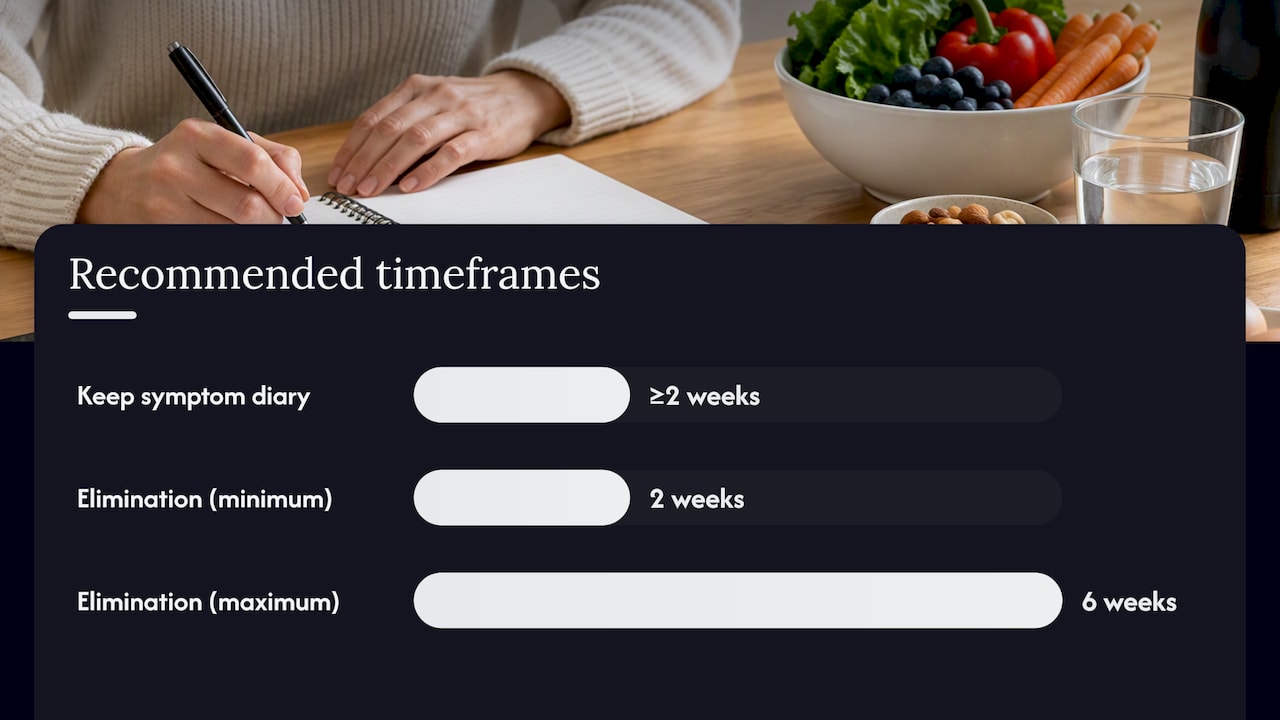
- Book a GP appointment and bring a symptom diary. Note what you ate, when symptoms started, how long they lasted and any patterns across weeks.
- Ask about referral to a dietitian if your GP suspects intolerance rather than allergy, since dietitians are trained to run elimination diets safely.
- Follow a structured elimination and reintroduction plan, typically removing a suspected food for two to six weeks before reintroducing it under supervision, a timeframe consistent with the approach Allergy UK recommends.
- Ask about IgE testing, a skin prick test or an oral food challenge if there is any suspicion of true allergy, since these are the tests with an established evidence base for that purpose.
Pro Tip: Keep your food and symptom diary for at least two weeks before your GP appointment. Patterns are far easier to spot with real data than with memory alone.
Dietetic supervision matters here because removing entire food groups without support risks nutritional shortfalls, something worth avoiding whether the trigger turns out to be gluten, dairy or something else entirely.
Choosing a private IgG or bioresonance test responsibly
Plenty of people want to try an at-home test alongside, or before, seeing a GP. If that is you, a few checks separate a reasonable screening tool from an overclaiming one.
Watch for these red flags:
- Promises of a definitive diagnosis rather than a screening indication.
- Reports that flag dozens of foods at once with no explanation of what that means practically.
- Claims that the test can cure or resolve a condition on its own.
- No clear information about which UK lab processes the samples.
Before ordering, check the provider states its sample type, turnaround time and method limitations clearly, and offers guidance on using results alongside dietetic or GP follow-up rather than instead of it.
Pro Tip: Treat any at-home report as a conversation starter with your GP or dietitian, not as the final word on what you should or should not eat.
A sensible way to read a mixed or positive result

I would treat a positive IgG result the way I would treat a hunch worth checking, useful as a starting point, not proof on its own. If a report flags several foods, the sensible move is to trial eliminating one or two of the most plausible culprits with dietetic support, then reintroduce them slowly to see what actually changes.
What I would avoid is cutting out a long list of foods indefinitely based on a single report. That risks nutritional gaps and turns a screening exercise into unnecessary long-term restriction. A prudent workflow after a mixed result looks like: note the top two or three flagged foods, discuss them with a GP or dietitian, eliminate briefly, then reintroduce and monitor.
— Rob
Using UK Food Intolerance as a screening step, not a diagnosis
One at-home testing option uses a hair sample, processed at a laboratory, with digital reports delivered within a few days. The Ultimate Plus Intolerance Test screens a wide panel for a one-off fee per person, alongside other options on the full test range.
We are clear that these reports work best as a screening prompt: a way to narrow down which foods to explore first, ideally alongside your GP or a dietitian, and our research and methodology page sets out exactly how the process works so you can judge it for yourself before ordering.
This article is general information, not a substitute for advice from a qualified doctor. Consult a qualified healthcare professional about your own circumstances before acting on anything here.
Sources
- Adverse reactions to food – Leeds Teaching Hospitals NHS Trust
- Choosing Wisely on the use of alternative testing in the diagnosis of food allergy and Food intolerance (BSACI)
- Allergy vs intolerance | Allergy UK
FAQ
Are IgG food intolerance tests accurate in the UK?
No UK clinical body validates IgG tests as a diagnostic method for food intolerance, since IgG presence often just reflects normal food exposure rather than a genuine problem. The NHS and BSACI both advise against relying on them for diagnosis.
What does the NHS recommend instead of IgG testing?
The NHS recommends a clinical history taken by a GP, followed by referral to a dietitian for a structured elimination and reintroduction plan where intolerance is suspected. Where true allergy is suspected, IgE testing, skin prick tests or an oral food challenge are the appropriate route, according to Leeds Teaching Hospitals NHS Trust.
Can an at-home IgG or bioresonance test cause harm?
Yes, mainly through unnecessary elimination of foods that were never the real trigger, which can lead to nutritional gaps and added anxiety around eating. Allergy UK recommends any elimination be done under dietetic supervision to avoid these risks.
How long does a UK Food Intolerance report take?
Hair samples are processed at a laboratory and digital reports typically arrive within a few days. Details on the testing panels and pricing are listed on the full test range page.
Should I see a GP before or after taking a private intolerance test?
Either order works, but a private test result should always be discussed with your GP rather than acted on alone. If symptoms are severe, persistent or suggest a true allergy, see a GP first, since IgE testing or an oral food challenge may be needed, as outlined in the BSACI expert guide.










Leave a Reply
Want to join the discussion?Feel free to contribute!