

For some people, dairy worsens acne. For most, it does not, or the effect is small enough that other factors matter more. A large meta-analysis found that milk and yoghurt carry the strongest links, but the evidence is mostly observational. Try a documented six to eight week elimination trial first, and speak to your GP if your acne is moderate, severe, or leaving scars.
TL;DR:
- Cutting fluid milk and whey protein for six to eight weeks can help determine if dairy is contributing to your acne, especially if you notice breakouts near your jaw or chest.
- Replacing dairy with fortified plant milks and ensuring enough iodine intake from other sources can prevent nutrient gaps during your elimination trial.
- A personal, structured elimination and reintroduction trial is more reliable than guessing or symptom-based assumptions about dairy’s impact on your skin.
- Medical treatment with topical or systemic therapies should run alongside dietary changes, especially for moderate to severe or scarring acne cases.
- Using at-home hair testing for dairy sensitivity can guide your elimination trial but should be supplemented by professional medical advice and reintroduction to confirm any sensitivities.
Table of Contents
- What the research says: systematic reviews, meta-analyses and limits
- How dairy might affect skin: IGF-1, hormones, whey and insulin signalling
- Which dairy products are most likely to be associated with acne
- How to tell whether dairy is triggering your acne
- Medical acne management: treatments that should not be delayed
- How to reduce or eliminate dairy safely: nutritional substitutions and monitoring
- When to see a GP, dermatologist or allergy specialist
- At-home intolerance testing and UK Food Intolerance: what the tests measure and how to use them
- Balancing evidence, patient experience and safe practice
- How UK Food Intolerance testing can help explore dairy sensitivity
- Sources
- FAQ
What the research says: systematic reviews, meta-analyses and limits
The best available evidence comes from pooled analyses of many smaller studies, not from trials where researchers randomly assigned people to cut dairy and watched what happened. That distinction matters because it limits how confidently anyone can say dairy causes acne rather than simply appearing alongside it.
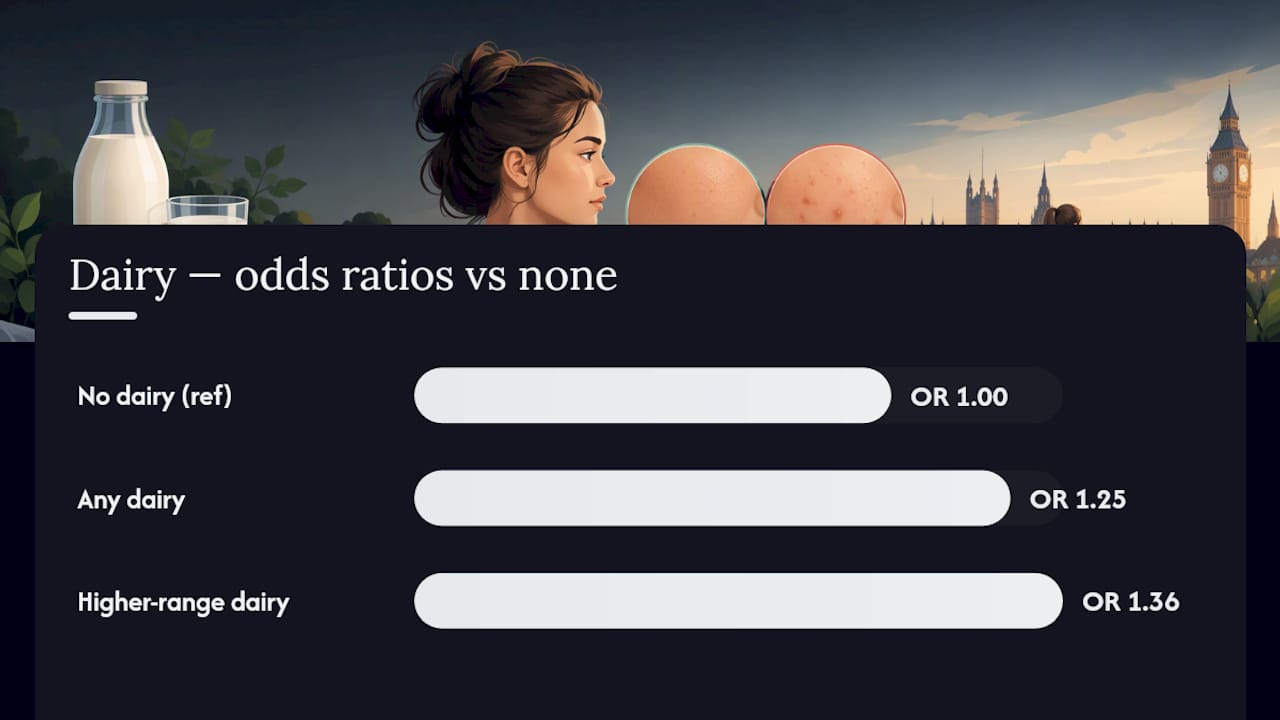
A meta-analysis of 78,529 children, adolescents and young adults calculated the odds of acne associated with different dairy exposures in people aged 7 to 30. The associations were modest, not dramatic.
Any dairy was associated with modestly increased odds of acne, meaning people who consumed it had about 25% higher odds of acne than those who did not, based on this pooled observational data.
- Any dairy: odds ratio approximately 1.25.
- Milk specifically: a slight increase in the odds of acne.
- Yoghurt: a somewhat higher association with acne than other dairy types.
A separate systematic review of diet and acne reached a similar, cautious conclusion: dairy may be pro-acnegenic in Western populations, but the picture is mixed and the results vary by sex and ethnicity. High glycaemic-load diets showed an independent link to acne in the same body of evidence, which complicates the picture further. Someone eating a lot of dairy alongside white bread, sugary drinks and processed snacks may be reacting to the whole pattern rather than the milk alone.
Study quality also varies by region. Populations eating a Western-style diet show more consistent associations than those on traditional or less processed diets, which suggests the relationship is environmental and dose-dependent rather than fixed. None of this proves dairy is harmless for everyone, and it does not prove it is guilty for everyone either. An odds ratio of 1.25 to 1.36 describes a group-level tendency, not a certainty for any one person reading this.
How dairy might affect skin: IGF-1, hormones, whey and insulin signalling
Milk is not just a food, it is a hormonal signalling system built for a growing calf. That is part of why researchers keep circling back to a handful of biological explanations for why some people’s skin reacts to it.
- Milk naturally contains IGF-1 and steroid hormones, which can influence oil (sebum) production and how skin cells inside hair follicles shed and clump together, both processes involved in spot formation.
- Whey protein, the fast-digesting protein fraction of milk, can raise insulin and IGF-1 levels more than casein, which may explain why whey-based supplements come up often in reports of adult-onset breakouts.
- Fermented dairy such as yoghurt and cheese goes through microbial and enzymatic changes that alter its protein and sugar content, which may partly explain why some people tolerate cheese better than milk, even though the meta-analysis found yoghurt carried the highest odds ratio of the three.
- Much of this mechanistic picture is plausible rather than proven. Researchers have proposed these pathways, but the strength and consistency of the mechanism varies between studies, and cause and effect has not been nailed down.
Pro Tip: If you use a whey-based protein powder and notice new breakouts along your jaw or chest, try switching to a plant-based protein for a few weeks before touching your regular dairy intake.
Which dairy products are most likely to be associated with acne
If you are planning a reduction rather than a full exclusion, it helps to know where to start.
- Fluid milk shows the most consistent association with acne across the evidence base, more so than cheese.
- Skimmed and low-fat milk have been flagged in several studies, which is counterintuitive given that low-fat products are often marketed as the “healthier” choice.
- Whey protein powders and bars are a concentrated, easy-to-overlook source of the same insulinogenic components found in milk.
- Hidden dairy turns up in bread, processed meats, flavoured crisps and some medications, so a trial that only cuts the obvious glass of milk may miss the real exposure.
If you are going to prioritise cutting anything first, fluid milk and whey supplements are the most evidence-backed places to start, ahead of cheese or fermented yoghurt.
How to tell whether dairy is triggering your acne
Guessing rarely settles this. A structured trial gives you an actual answer instead of a suspicion that lingers for months.
- Set a baseline. Take clear, consistently lit photos of your skin and count active lesions before you change anything.
- Remove all dairy for six to eight weeks. This includes milk, cheese, yoghurt, butter, and hidden sources in processed foods, in line with the timeframe systematic reviews suggest is long enough to judge a genuine effect.
- Keep everything else the same. Skincare, medication, sleep and stress levels should stay as stable as possible so dairy is the only variable that changed.
- Track weekly. Repeat photos and lesion counts at the same time each week, along with a short symptom diary.
- Reintroduce one item at a time. Add back milk on its own for a few days, watch your skin, then move to cheese or yoghurt separately rather than all at once.
- Interpret honestly. A clear flare within days of reintroducing one product is meaningful; a vague, gradual change is harder to attribute to diet alone.
It is worth separating two different problems people often confuse. Lactose intolerance causes digestive symptoms such as bloating and diarrhoea, not skin reactions, so eliminating lactose specifically will not affect acne caused by a reaction to milk protein. Paediatric guidance on cow’s milk protein allergy is clear that lactose-free products do not treat a true milk protein allergy, and that exclusion trials should be followed by a supervised reintroduction or challenge to confirm the diagnosis. Where allergy is suspected rather than a general sensitivity, hydrogen breath testing, IgE testing or a supervised oral food challenge are the recognised routes to a firm answer, not a home elimination alone.
Pro Tip: Keep your tracking simple: a weekly photo and a one-line note beat a complicated spreadsheet you abandon after ten days. For a step-by-step version of this process, our guide to identifying food triggers safely walks through common pitfalls people hit during elimination trials.
Medical acne management: treatments that should not be delayed
Diet trials are worth running, but they should sit alongside proper acne treatment, not instead of it. NHS guidance on acne sets out topical retinoids, benzoyl peroxide and systemic therapies as the standard first-line options, and it is explicit that diet should not replace medical treatment for moderate to severe cases.
- Topical treatments such as retinoids and benzoyl peroxide are typically the starting point for mild to moderate acne.
- Systemic options, including oral antibiotics or hormonal treatments where appropriate, are used for more widespread or resistant acne.
- Referral to dermatology is recommended for severe, scarring or psychologically distressing acne rather than waiting to see if dietary changes help first.
A dairy elimination trial and evidence-based medical treatment are not competing options. NHS guidance supports running both together: start or continue prescribed treatment while you track a dairy trial, rather than pausing medication to “test” diet alone. If your acne is already scarring or affecting your confidence and daily life, book a GP appointment now and treat the food trial as a parallel project, not a replacement plan.
How to reduce or eliminate dairy safely: nutritional substitutions and monitoring
Cutting dairy without a plan can leave gaps in calcium, vitamin D and iodine, three nutrients dairy supplies reliably in a typical UK diet. A few sensible swaps close most of that gap.
- Choose fortified plant milks (oat, soya, almond) that list added calcium and vitamin D on the label, since unfortified versions do not match dairy’s nutrient profile.
- Get iodine from fish, eggs or iodised salt if dairy was a main source in your diet, as many plant milks do not contain meaningful amounts.
- Read labels for hidden dairy, including whey, casein, lactose and milk solids, which appear in bread, processed meats and some snack bars.
- Swap your usual breakfast and snacks gradually rather than overhauling every meal at once, which makes the trial easier to sustain for the full six to eight weeks.
Pro Tip: Batch-cook a few dairy-free dinners at the start of your trial so you are not improvising every evening. Wild Foodz’s lactose-free meal options are a practical starting point if you want ready-made ideas rather than building a shopping list from scratch.
If you are avoiding dairy for a child, during pregnancy, or for longer than eight to twelve weeks, get input from a dietitian rather than relying on guesswork. Our practical guide to dietary adjustments for food sensitivity covers substitution strategies and supplement guidance in greater depth.
When to see a GP, dermatologist or allergy specialist
Self-managed trials work for many people, but some situations call for clinical input rather than another few weeks of waiting.
- Acne that is severe, widespread, or leaving scars needs dermatology input rather than diet changes alone.
- Any systemic allergic reaction, such as swelling, hives or breathing difficulty after dairy, needs urgent medical assessment, not a home elimination trial.
- Persistent gut symptoms alongside skin changes may point to a genuine allergy or intolerance that benefits from proper testing.
- Concerns about nutrition after cutting a major food group are a reason to see a dietitian, particularly for children or during pregnancy.
Bring your documented elimination and reintroduction log to any appointment. A dated record of what you cut, when symptoms changed and what happened on reintroduction gives your GP or dermatologist something concrete to work from, rather than a general impression.
At-home intolerance testing and UK Food Intolerance: what the tests measure and how to use them
If you want a screening step alongside your own elimination trial, UK Food Intolerance offers at-home tests that use a small hair sample rather than blood or a clinic visit. Samples are processed at a UK laboratory and reports typically arrive within 48 to 72 hours.
- The Ultimate Test and other panels screen a broad range of items using bioresonance technology, a non-invasive method that flags potential sensitivities for you to investigate further.
- Bioresonance screening is not a diagnostic test for allergy: it is a starting point for narrowing down what to try eliminating, not a substitute for the allergy testing pathways described earlier.
- Results are most useful when you use them to focus your elimination trial, then discuss what you find with your GP or a dietitian, especially if symptoms persist.
Our guide to at-home hair testing and dairy intolerance explains the method and its limitations in more detail if you want to understand how the panels work before ordering one.
Balancing evidence, patient experience and safe practice
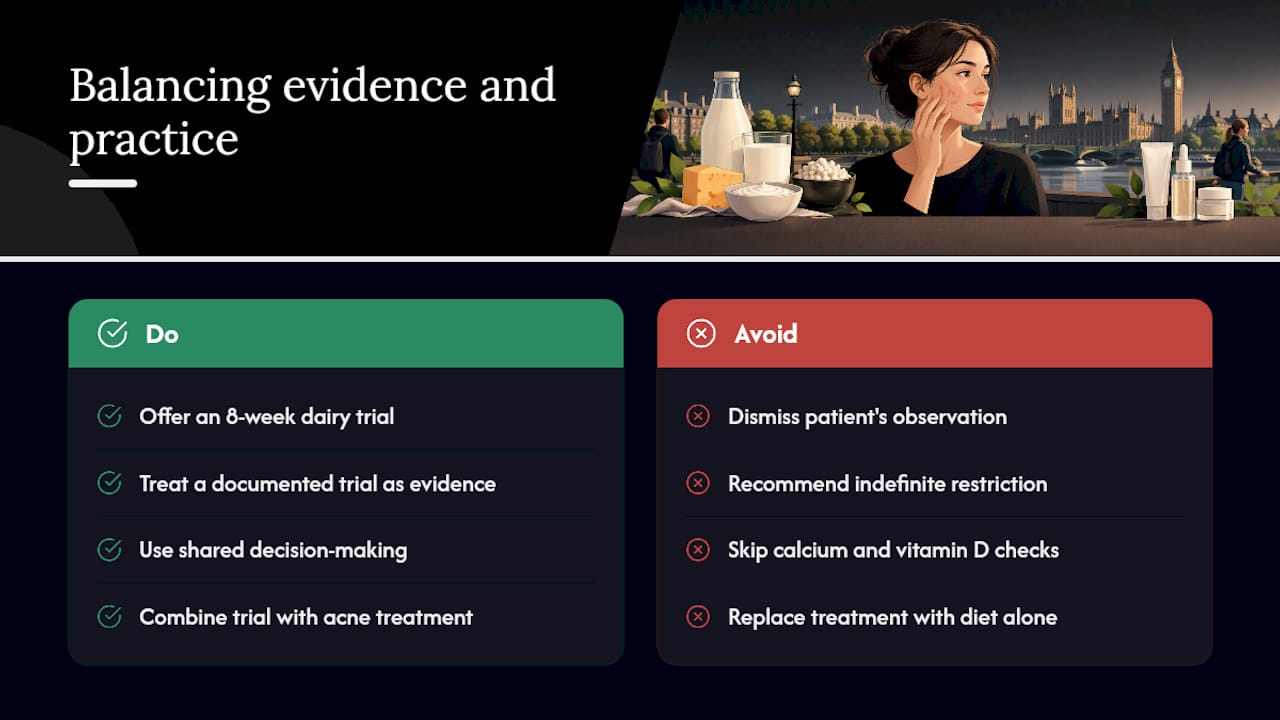
I think the honest position sits between two extremes: dairy is not a universal acne trigger, but dismissing a patient’s own observation because a meta-analysis shows only a modest odds ratio is a mistake too. Shared decision-making means taking a documented trial seriously as evidence, even when it is one person’s data rather than a study.
What worries me more is the drift into indefinite, unsupervised restriction. Cutting dairy for eight weeks with a plan is reasonable. Cutting it for a year without checking calcium and vitamin D intake is not the same thing, and I would rather see people combine a genuine dietary trial with proper acne treatment than choose one over the other.
— Rob
How UK Food Intolerance testing can help explore dairy sensitivity
If you would rather narrow your elimination trial down before you start cutting whole food groups, a hair-sample test gives you a starting point without a GP referral or a blood draw. UK Food Intolerance processes samples at a UK laboratory and reports typically land within 48 to 72 hours, covering a broad panel that includes dairy alongside other common triggers.

- The site offers tests that focus on dairy-related sensitivities for those who prefer a targeted option instead of a full panel.
- The Ultimate Plus Intolerance Test, priced at £140.99 one-off per person, screens a wide range of items in one report for a broader picture.
- Every result is a screening tool, not a diagnosis, so pairing it with a documented elimination trial and your GP’s input gives you the fullest picture.
Browse the full range on our tests page, and check our guide to collecting hair samples at home before you order so your sample is usable the first time.
Sources
- Dairy Intake and Acne Vulgaris: A Systematic Review and Meta-Analysis of 78,529 Children, Adolescents, and Young Adults
- Diet and acne: A systematic review
- NHS: Acne
- Cow’s Milk Protein Allergy (CMPA) — paediatric guideline
FAQ
Why does dairy trigger my acne?
Dairy contains hormones such as IGF-1 and, in whey, proteins that can raise insulin and IGF-1 levels, both of which may influence oil production and skin cell turnover in hair follicles. Not everyone reacts this way, which is why a personal elimination trial is more useful than a general rule.
What do dairy pimples look like?
There is no single distinct appearance for dairy-linked breakouts, though many people report deeper, inflamed spots along the jawline, chin and chest rather than surface blackheads. The only reliable way to link a specific pattern to dairy is to track lesions during an elimination and reintroduction trial.
Can quitting dairy reduce acne?
For some people it helps, since a meta-analysis found modestly higher odds of acne linked to milk and yoghurt intake, but the effect is not universal. A structured six to eight week trial with reintroduction is the most reliable way to find out if it will help you specifically.
What does B12 acne look like?
Reports linking B12 supplementation to acne describe small, inflamed breakouts that appear after starting high-dose B12, though this is a separate issue from dairy sensitivity. If you suspect a supplement is involved, stopping it and monitoring your skin over a few weeks, ideally with your GP aware, is the sensible next step.










Leave a Reply
Want to join the discussion?Feel free to contribute!