

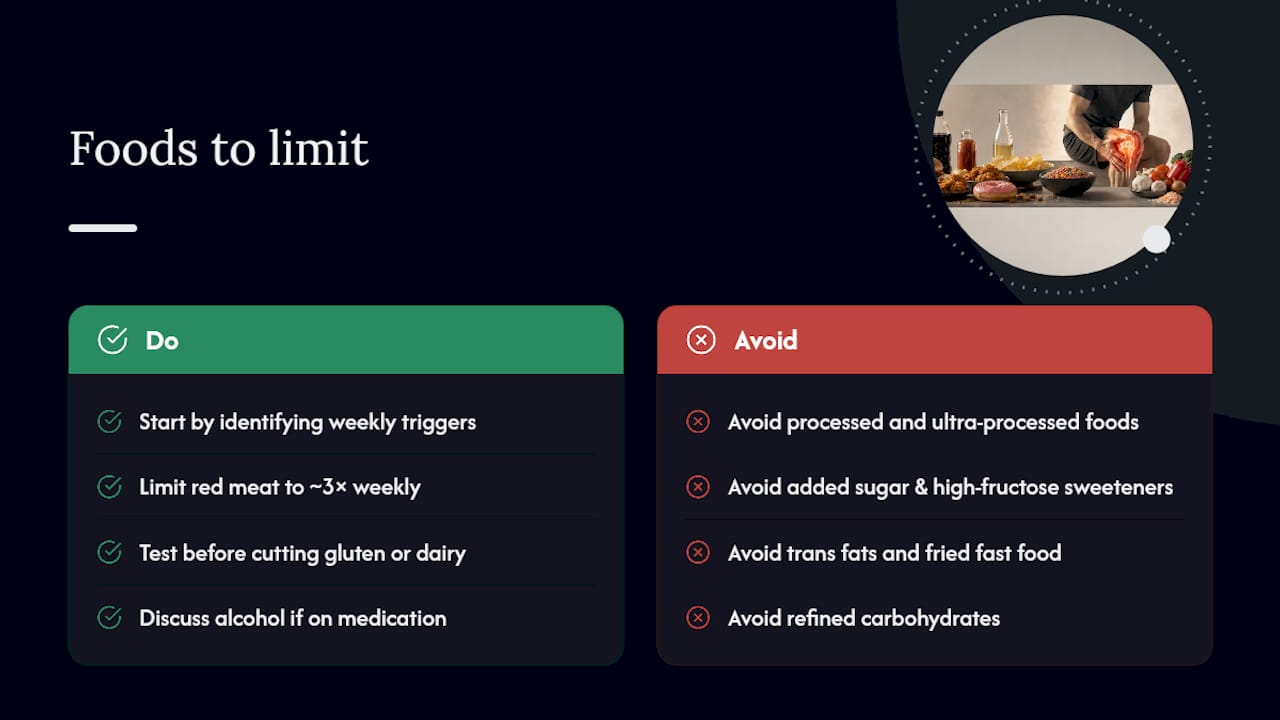
Processed foods, added sugar, red and processed meat, trans fats, refined carbohydrates, certain seed oils, and excessive alcohol carry the strongest links to worse joint inflammation. Nightshades, dairy, and gluten make headlines but lack consistent evidence for most people. The practical first step is simple: cut back on ultra-processed food and sugar, lean towards a Mediterranean-style pattern, and speak to your GP or a dietitian before trying anything more restrictive.
TL;DR:
- Limiting processed foods, added sugars, trans fats, refined carbs, and excess alcohol can help reduce joint inflammation for most individuals.
- A Mediterranean-style diet rich in fruits, vegetables, oily fish, and whole grains is associated with lower inflammatory markers and better joint health.
- Food sensitivity testing combined with a structured elimination and reintroduction process can help identify personal triggers, but blanket exclusions like dairy and gluten are often unnecessary.
- Weight management plays a crucial role, as excess body fat and mechanical load exacerbate joint pain and inflammation, making overall diet patterns more significant than individual foods.
- Changes take weeks or months to show measurable effects, so sustainable dietary shifts and professional guidance are recommended over quick fixes or guessing.
Table of Contents
- Top joint pain food triggers to limit
- How these foods drive joint inflammation
- What clinical evidence and UK guidance actually say
- How to test if a food is triggering your symptoms
- Practical swaps and a shopping checklist
- Why weight and overall diet pattern matter more than any single food
- Additives worth watching: MSG, sweeteners, and hidden extras
- Nutrients that may help reduce joint pain
- Does when and how much you eat affect joint inflammation?
- A realistic look at what diet can and can’t do for your joints
- Where at-home testing fits into your elimination plan
- Sources
- FAQ
Top joint pain food triggers to limit
You don’t need to overhaul your entire kitchen overnight. Start by recognising the categories that show up again and again in the research, then work out which ones actually feature in your week.
Processed and ultra-processed foods sit at the top of most lists for good reason. Ready meals, packaged biscuits, sugary breakfast cereals, and fizzy drinks are often engineered for shelf life and taste rather than nutrition, and regularly eating them is linked to weight gain and cardiometabolic risk, both of which put extra strain on joints.
Added sugar and high-fructose sweeteners show a fairly consistent association with raised inflammatory markers, including CRP. That morning pastry or can of cola isn’t just empty calories; it’s a small, repeated hit to your inflammatory load.
Red and processed meat deserves a nuanced view rather than a total ban. Evidence supporting the 2021 EULAR recommendations suggests limiting red meat to about three times weekly, largely because of saturated fat content and, in processed forms, nitrites.
Trans fats and fried fast food remain some of the clearest dietary red flags in nutrition science generally, arthritis included. Industrially produced trans fats in some baked goods and deep-fried takeaways are worth cutting almost entirely rather than just moderating.
Refined carbohydrates like white bread, white pasta, and pastries spike blood sugar quickly, and that glycaemic swing is thought to contribute to low-grade inflammation over time.
High omega-6 vegetable oils, such as corn and sunflower oil, aren’t inherently harmful, but most people already eat plenty of omega-6 and too little omega-3. The ratio matters more than any single oil.
Excessive alcohol affects immune function and is a well-known trigger for gout flares specifically. If you’re on methotrexate or other arthritis medication, alcohol can also interact badly, so this is worth discussing directly with your prescriber.
High-purine foods matter chiefly if gout is your diagnosis rather than rheumatoid arthritis or osteoarthritis. Organ meats, certain seafood, and some pulses raise uric acid, and NHS gout guidance treats this as a distinct dietary picture from general inflammatory joint disease.
Then there’s the trio everyone asks about: nightshades, dairy, and gluten. Tomatoes, peppers, and aubergines get blamed constantly in online forums, but clinical evidence doesn’t support universal exclusion, and any improvement after cutting them may reflect a broader shift in diet quality rather than the vegetables themselves, according to the British Nutrition Foundation. Gluten and dairy sensitivities are real for some individuals, but they’re not blanket arthritis triggers, and testing before eliminating either makes more sense than guessing.
Pro Tip: Before cutting an entire food group, check food labels for hidden sugar under names like glucose syrup, dextrose, and maltodextrin. Manufacturers rotate these terms to avoid “sugar” appearing too high on the ingredients list.
How these foods drive joint inflammation
Diet influences joints through a handful of measurable pathways, not magic. Certain foods prompt your immune system to release cytokines like IL-6 and TNF-α, the same signalling molecules involved in rheumatoid arthritis flares. Fat tissue itself isn’t inert storage: it actively secretes inflammatory mediators, which is one reason weight management shows up in nearly every clinical guideline on joint health.
The omega-3 to omega-6 balance matters because these fats compete for the same enzymes that produce eicosanoids, hormone-like compounds that can be pro-inflammatory or protective depending on their source. Your gut microbiome adds another layer. Fibre-fermenting bacteria produce short-chain fatty acids that help regulate immune responses, so a fibre-poor, processed diet may blunt that regulatory effect.

None of this means one biscuit will trigger a flare. Individual responses vary enormously, which is exactly why rigid universal “trigger lists” oversimplify a genuinely personal picture.
What clinical evidence and UK guidance actually say
The strongest evidence sits behind Mediterranean-style and anti-inflammatory dietary patterns, not single “banned” foods. Systematic reviews informing the 2021 EULAR lifestyle recommendations found that diet can modestly but measurably reduce inflammatory biomarkers in rheumatic and musculoskeletal diseases, particularly with omega-3 intake and Mediterranean-pattern eating.
A small trial found that a three-month diet excluding meat, gluten, and lactose reduced pain scores and hs-CRP levels in a subset of rheumatoid arthritis patients, though the sample size was small and results can’t be generalised to everyone with joint pain.
Randomised interventions using anti-inflammatory or portfolio-style eating patterns have shown reductions in systemic inflammation markers in some RA cohorts, though trial size and duration vary considerably. NHS guidance, the British Dietetic Association, and EULAR converge on the same message: diet is a genuine adjunct to treatment, weight control matters, and any exclusion diet should be supervised rather than self-directed. Set your expectations around weeks to months, not days, before you notice a measurable difference.
How to test if a food is triggering your symptoms
Guessing rarely works. A structured approach does.
- Keep a food-symptom diary. Record what you ate, when, portion size, and rate your joint pain on a simple 0 to 10 scale, noting the timing between eating and any flare.
- Try a time-limited elimination. If a pattern emerges, remove the suspected food under the guidance of a GP or registered dietitian, typically for up to three months, to protect your intake of protein and key nutrients.
- Reintroduce one food at a time. Add the food back individually and score your symptoms again over several days before drawing conclusions.
- Escalate when warranted. Severe or immediate reactions, unexplained weight loss, or persistent symptoms deserve allergy testing, coeliac screening, or specialist referral rather than more DIY elimination.
Our guide on identifying food triggers safely walks through this process in more depth if you want a fuller framework to follow.
Pro Tip: A screening test can help you prioritise which foods to eliminate first, but it works best alongside this diary-and-rechallenge method, not instead of it.
Practical swaps and a shopping checklist
Small, repeatable changes beat dramatic short-lived ones. Try these swaps before attempting a full diet overhaul:
- Swap sugary drinks for water or herbal tea to cut a major hidden sugar source.
- Replace frequent red meat dinners with oily fish or legumes two or three times a week.
- Aim for around two portions of oily fish weekly and at least five portions of fruit and vegetables daily.
- Check labels for hidden salt and sugar in sauces, dressings, and “healthy” snack bars.
- Batch-cook simple meals in advance if joint pain makes daily cooking difficult.
Our practical guide to dietary adjustments covers meal planning options for people managing limited mobility alongside dietary change.
Why weight and overall diet pattern matter more than any single food
Fixating on one “bad” food misses the bigger picture. Excess body weight adds direct mechanical load to weight-bearing joints like knees and hips, and fat tissue also releases inflammatory compounds that circulate throughout the body. Losing even a modest amount of weight reduces both effects simultaneously, which is why weight management ranks among the most important dietary factors for joint health in patient guidance.
The overall pattern of your diet outweighs any individual ingredient. A Mediterranean-style approach, built around vegetables, fruit, whole grains, oily fish, olive oil, and legumes, consistently correlates with lower inflammatory markers compared with a typical Western diet heavy in processed food and red meat. Mendelian randomisation research even suggests that regular oily fish and wholegrain cereal intake may offer some protective effect against rheumatoid arthritis risk, while evidence for many single-food causal claims stays weak or mixed.
This is why dietitians rarely recommend chasing one culprit ingredient. Shifting your whole eating pattern towards Mediterranean-style choices tends to produce more reliable, sustained improvements than eliminating a single food and hoping for the best.
Additives worth watching: MSG, sweeteners, and hidden extras
Beyond the major food groups, certain additives get raised repeatedly by people managing joint pain, even where the evidence base is thinner. Monosodium glutamate (MSG) has a longstanding, largely anecdotal reputation for triggering symptoms in sensitive individuals, though robust trial data specific to joint inflammation is limited. Artificial sweeteners carry similar uncertainty: some people report symptom changes after cutting them, but causation is hard to establish given how often sweeteners appear alongside other processed ingredients.
The more practical concern is what these additives tend to accompany. MSG shows up heavily in processed savoury snacks and ready meals; artificial sweeteners cluster in diet sodas, low-calorie desserts, and “sugar-free” products that are often still highly processed. Rather than treating either as a confirmed trigger, treat their presence as a marker of a food worth scrutinising more broadly.
If you want to test whether a specific additive affects you, the same diary-and-elimination method described earlier applies. Note the additive specifically, not just the product name, since reformulations happen often and a food you tolerated last year may contain something new.
Nutrients that may help reduce joint pain
Omega-3 fatty acids, found in oily fish like salmon, mackerel, and sardines, act as raw material for less inflammatory signalling compounds and specialised molecules that help resolve inflammation. Effect sizes vary between trials, and benefits typically build over months rather than days. Fish oil supplements have shown some reduction in joint pain and morning stiffness in clinical guidance, though results across trials remain inconsistent enough that food-first advice still applies before reaching for a supplement bottle.
Antioxidant-rich fruits and vegetables, particularly berries, leafy greens, and colourful peppers, help counter oxidative stress that contributes to joint tissue damage. Extra virgin olive oil, a Mediterranean diet staple, contains oleocanthal, a compound with anti-inflammatory properties similar in mechanism to some over-the-counter pain relievers, though at far lower potency; for Belgian home cooks interested in healthier cooking fats, choosing the right seasoning oils is important (Seasoning Oils for Belgian Home Cooks).
Vitamin D and calcium support bone health around affected joints, and many people with limited sun exposure run low without realising it. None of these nutrients replace prescribed medication, but they build a dietary foundation that supports whatever treatment your rheumatologist or GP has already put in place.
Does when and how much you eat affect joint inflammation?
Portion size and timing matter more than most people assume. Large, infrequent meals cause bigger blood sugar swings than smaller, regular ones, and that glycaemic volatility feeds into the same inflammatory pathways triggered by refined carbohydrates. Consistently overeating, regardless of food quality, also drives weight gain over time, compounding the mechanical and inflammatory load on joints discussed earlier.
Some people with inflammatory arthritis report that eating late at night worsens next-morning stiffness, though this is based on patient-reported patterns rather than robust trial evidence. It’s plausible given how digestion and inflammatory markers fluctuate across the day, but it isn’t a fixed rule for everyone.
The more actionable takeaway is consistency. Regular meal timing, moderate portions, and avoiding the extremes of skipping meals then overeating later, gives your metabolism and inflammatory response fewer sharp swings to react to. This fits naturally within a Mediterranean-style pattern, which tends to favour balanced, unhurried meals over grazing on processed snacks throughout the day.
A realistic look at what diet can and can’t do for your joints
Diet can meaningfully support joint health, but it won’t replace medication your rheumatologist has prescribed for a reason. The evidence base here is real but modest: expect gradual improvement over weeks and months, not a dramatic turnaround.
Keep changes sustainable and track them honestly. If you’re curious whether food sensitivities play a role, a screening test can be a useful adjunct to a supervised elimination plan, provided you treat it as one input among several rather than a standalone diagnosis.
— Rob
Where at-home testing fits into your elimination plan
If you’ve read this far and you’re still unsure which foods to prioritise cutting first, that uncertainty is exactly the gap at-home testing kits can help to narrow. Such tests use hair samples screened against large panels of items and return digital results from a UK laboratory within 48 to 72 hours, giving you a starting shortlist to bring into a supervised elimination plan.

This isn’t a diagnostic replacement for allergy testing or a rheumatologist’s assessment. It’s a screening tool designed to help you and your GP or dietitian prioritise which foods to test first, rather than trialling everything at once. Panel sizes range from the more affordable Core Test up to the more extensive Ultimate Plus Intolerance Test, priced at £140.99 per person as a one-off. Browse the full range of available test panels to find the coverage that suits your situation, and pair your results with our guide on how a food intolerance test can matchmake your body with the right diet to interpret what comes back.
Sources
For deeper clinical detail, the EULAR lifestyle recommendations systematic review covers the meta-analysis evidence, the British Dietetic Association’s RA diet guidance offers patient-facing clinical advice, and NHS gout guidance addresses purine-specific triggers.
This article is general information, not a substitute for advice from a qualified doctor. Consult a qualified healthcare professional about your own circumstances before acting on anything here.
- Effects of diet on the outcomes of rheumatic and musculoskeletal diseases (RMDs): systematic review and meta-analyses informing the 2021 EULAR recommendations for lifestyle improvements in people with RMDs
- Improvement of inflammation and pain after three months’ exclusion diet in rheumatoid arthritis patients
- NHS – gout guidance
FAQ
What foods should you avoid if you have arthritis?
Prioritise cutting processed and ultra-processed foods, added sugar, red and processed meat, trans fats, refined carbohydrates, and excessive alcohol, since these show the most consistent links to raised inflammatory markers. Gout sufferers should also watch high-purine foods like organ meats and certain seafood, per NHS guidance. Nightshades, dairy, and gluten are commonly blamed but lack strong evidence as universal triggers.
What could be causing sudden pain in all your joints?
Sudden widespread joint pain can stem from an inflammatory flare, an infection, a new medication reaction, or in some cases, an undiagnosed food sensitivity affecting your inflammatory load. It’s worth seeing a GP promptly to rule out infection or an autoimmune trigger before assuming diet is the sole cause.
How can you reduce joint inflammation quickly?
There’s no genuinely fast fix through diet alone, since dietary changes typically take weeks to months to show measurable effects on inflammatory markers. The most evidence-backed approach is shifting towards a Mediterranean-style pattern rich in oily fish, vegetables, and olive oil while cutting processed food and added sugar.
Can food intolerance testing help identify my joint pain food triggers?
A screening test can highlight foods worth prioritising in a supervised elimination diet, though it works as an adjunct rather than a standalone diagnosis. At-home kits can return digital results within 48 to 72 hours from a UK laboratory, which you can then discuss with a GP or dietitian.
Is dairy a common trigger for joint pain?
Dairy is frequently suspected but not consistently proven as a universal joint pain trigger in clinical evidence. Some individuals do have genuine sensitivities worth testing for, but eliminating dairy without a clear reason risks losing valuable calcium and protein sources unnecessarily.









Leave a Reply
Want to join the discussion?Feel free to contribute!