
Reproducible clinical evidence for at-home bioresonance hair testing does not currently exist. No peer-reviewed trial has shown these tests identify food or environmental triggers better than chance, and validated routes like breath testing, IgE/skin prick testing, and supervised oral food challenges remain the reference standard. That doesn’t make hair testing worthless as a starting point. It means you should treat a report as a hypothesis to explore, not a diagnosis to act on blindly, and the guidance below explains exactly how.
TL;DR:
- Hair samples lack the immune markers necessary to reliably detect food sensitivities, and controlled studies show bioresonance tests perform no better than chance.
- Validated methods like breath tests, IgE blood tests, and supervised food challenges are the only reliable ways to diagnose true allergies or intolerances.
- Use bioresonance reports as hypotheses for further testing, focusing on eliminating a few flagged items at a time with professional guidance during an elimination diet.
- Removing large food groups based solely on a home test can cause nutrient deficiencies and delay accurate diagnosis of conditions like coeliac disease or IgE allergy.
- At-home tests may be useful as a starting point if combined with ongoing medical consultation, but they are not suitable for severe or emergency allergy symptoms.
Table of Contents
- What does the clinical evidence say about bioresonance and hair testing?
- How should you use a bioresonance report safely?
- What are the risks of trusting an unverified report?
- What does Ukfoodintolerance actually offer?
- When does an at-home test actually make sense?
- Ready to start narrowing down your triggers?
- Sources
- FAQ
What does the clinical evidence say about bioresonance and hair testing?
Clinical reviewers are consistent on one point: there’s no reproducible evidence that hair samples can detect food sensitivities through bioresonance or similar frequency-based methods. Reviews summarised by Advanced Food Intolerance Labs note that when these tests have been examined under controlled conditions, results perform no better than chance.
The biology explains why. Hair lacks circulating immunoglobulins, the antibodies that define a genuine immune reaction to food. Without those markers present in the sample, there’s no plausible mechanism for a strand of hair to reveal how your gut or immune system responds to wheat, dairy, or pollen. That’s the gap between what bioresonance devices claim to measure and what a hair follicle can physically contain.
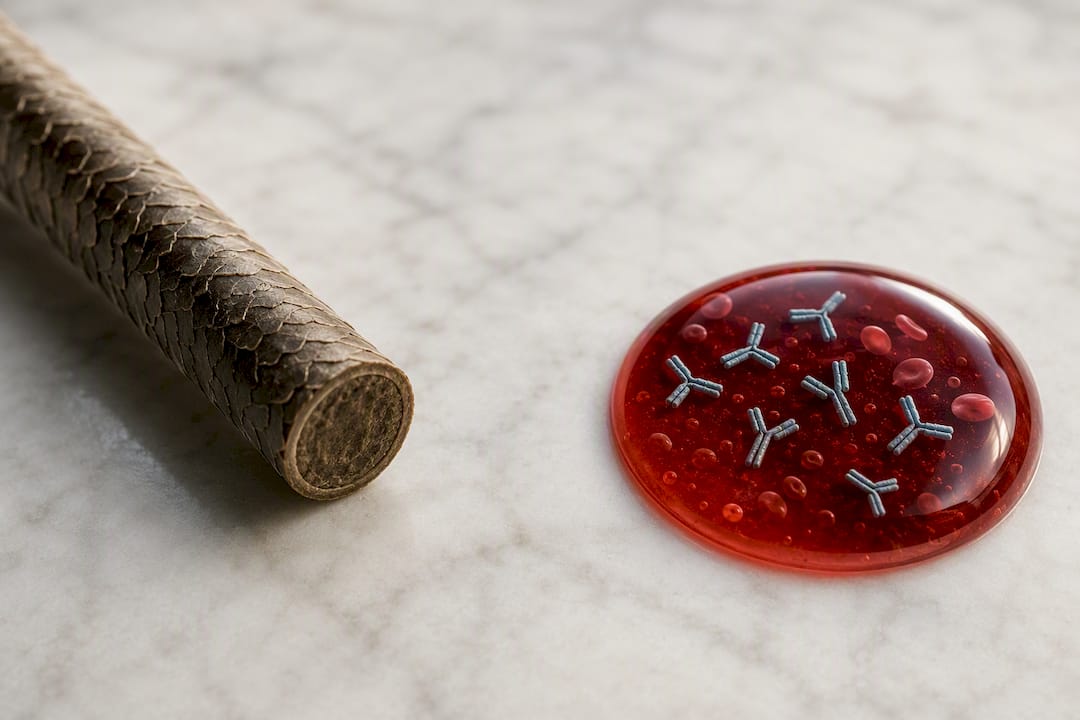
A Skeptic investigation into commercial hair analysis services examined real consumer reports and found long reactive lists with no transparent explanation of how the readings were generated. The investigators were blunt: these tests should sit in the complementary or alternative category, not the diagnostic one.
Compare that with what’s actually validated:
- Hydrogen breath tests measure gas produced when unabsorbed sugars ferment in the gut, useful for lactose or fructose intolerance.
- IgE blood tests and skin prick tests detect the specific antibody response linked to true allergy.
- Oral food challenges, done under medical supervision, remain the gold-standard method for confirming whether a food genuinely causes symptoms.
- Structured elimination and reintroduction, guided by a clinician or dietitian, builds a personal evidence base rather than relying on a single snapshot report.
Statistic callout: Investigators reviewing commercial bioresonance and hair testing services found the tests generate extensive “reactive” lists, sometimes dozens or hundreds of items flagged per person, without any transparent scientific mechanism to justify the readings, according to The Skeptic’s analysis.
None of this means bioresonance testing is useless as a conversation starter. It means the science behind it doesn’t yet meet the bar clinicians use to diagnose intolerance, so any results need a second layer of verification before you overhaul your diet.
How should you use a bioresonance report safely?
Start from one principle: a report gives you a hypothesis, not a verdict. The convenience of a hair-sample test is real, and it’s harmless to collect a hair sample, but convenience doesn’t equal accuracy. Treat flagged items as things worth testing methodically, not foods to cut immediately and forever.
Here’s a workable protocol if you want to explore results through an elimination diet:
- Pick two or three flagged items, not the whole list. Trying to eliminate everything at once makes it impossible to identify which food actually caused which symptom.
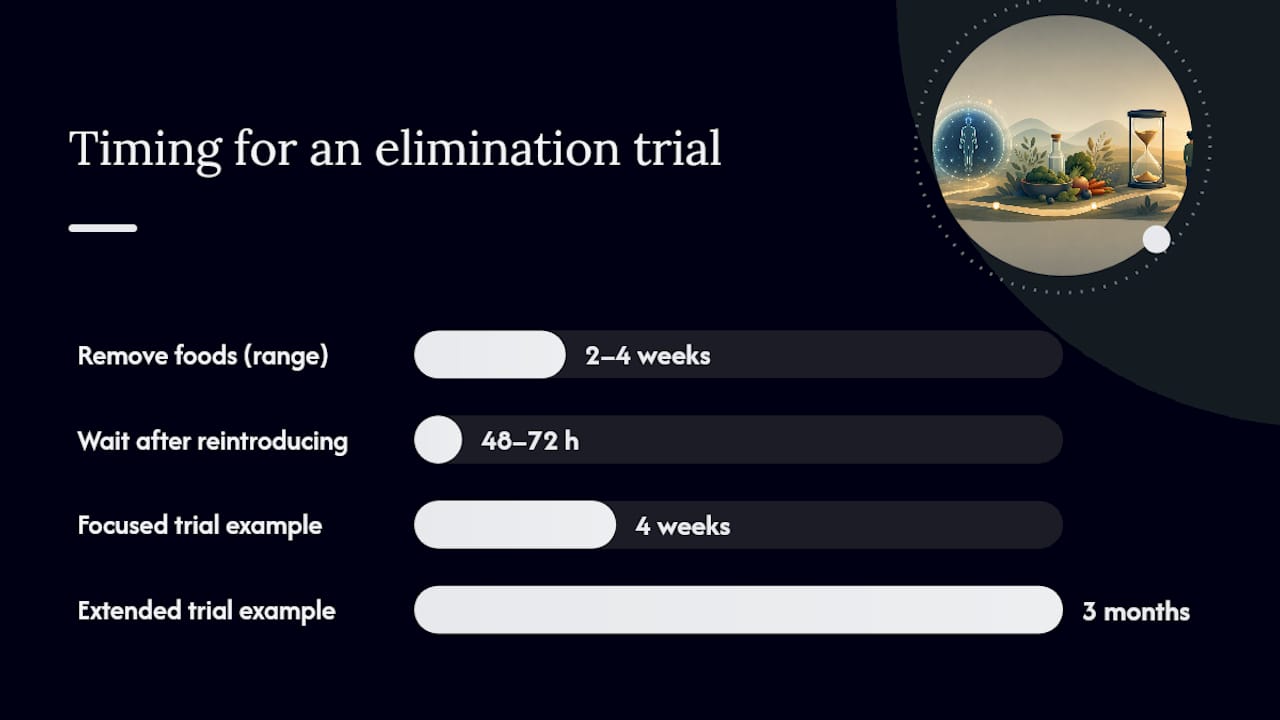
- Remove them completely for two to four weeks, tracking symptoms daily in a simple diary.
- Reintroduce one food at a time, waiting 48 to 72 hours between each, watching for the return of symptoms.
- Keep meals otherwise stable during the trial so you’re not introducing other variables.
- Loop in a GP or registered dietitian before removing entire food groups, especially dairy or gluten, which carry nutritional weight.
Our elimination diet checklist walks through this process step by step if you want a structured version to follow.
Pro Tip: Keep the elimination phase short and specific. Four weeks of cutting one food gives you clearer data than three months of cutting ten.
If symptoms include hives, swelling, breathing difficulty, or anything resembling a true allergic reaction, skip the elimination process altogether and get an IgE or skin prick test arranged through your GP. For parents managing a child’s diet, or pet owners investigating a dog’s itching or digestive upset, pace changes slowly and never remove entire nutritional categories without professional input. A vet should always be involved for animals showing persistent symptoms.
What are the risks of trusting an unverified report?
The main harm isn’t the test itself. It’s what people do after reading it. Removing a dozen foods based on a single report can lead to nutrient deficiencies, especially in children, and it can delay a real diagnosis if the underlying cause is something a hair test was never going to catch, such as coeliac disease or a genuine IgE allergy.
Watch for these signals in a report or its marketing:
- Extremely long “reactive” lists covering many items, with no explanation of methodology.
- Precise percentage scores presented as if they carry diagnostic certainty.
- Any suggestion that the test can replace a doctor’s diagnosis rather than support a broader picture.
- Recommendations to cut entire food groups without any professional guidance attached.
If symptoms worsen after starting an elimination plan, if a child shows signs of poor growth or fatigue, or if you notice swelling, breathing changes, or repeated vomiting in a pet, stop the home approach and speak to a clinician or vet promptly. Home testing was never designed for emergencies, and recognised allergy pathways exist precisely because urgent reactions need urgent, validated assessment.
What does Ukfoodintolerance actually offer?
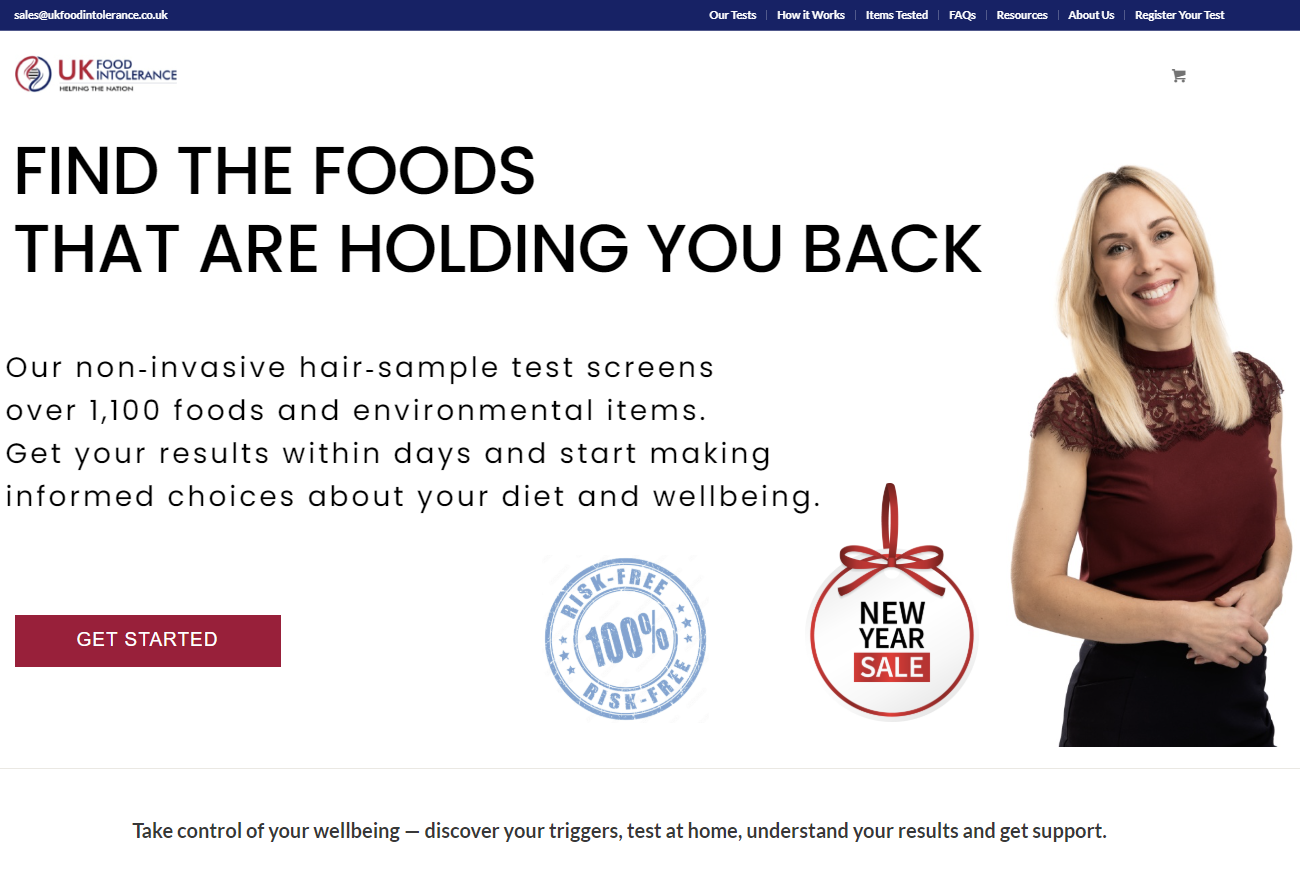
Ukfoodintolerance runs a straightforward at-home process: you send a small hair sample to a UK laboratory, and a digital report arrives within 48 to 72 hours. Two test tiers are available depending on how much detail you want.
- The Ultimate Single Intolerance Test screens over 1,100 items, covering food, environmental, and nutritional categories.
- The Core Single Intolerance Test covers around 500 items, at a more accessible price point.
- Both come with supportive resources, including an elimination diet checklist and FAQ guidance for interpreting results.
- The research and methodology page explains how the company frames its bioresonance approach for readers who want the technical background.
None of this replaces clinical testing for suspected allergy. It’s designed as a starting point for people trying to narrow down triggers before, or alongside, a conversation with a GP or dietitian.
When does an at-home test actually make sense?
An at-home bioresonance test can be a reasonable, low-risk adjunct if you’re already working with a GP or dietitian and simply want a starting shortlist to structure an elimination trial around. It’s the wrong tool if you suspect true allergy, especially anaphylaxis, or if symptoms are severe and unexplained. In those cases, validated testing and professional oversight should come first, every time.
— Rob
Ready to start narrowing down your triggers?
If you’re weighing up an at-home test against waiting weeks for a GP referral, some services offer a faster, more affordable starting point, without needing a clinic appointment just to get a shortlist of foods worth investigating. The Ultimate and Core tests both use a simple hair sample you collect at home, and both come back with a digital report inside 48 to 72 hours.
Every report links to our elimination diet checklist, so you’re not left guessing what to do with the results. Parents managing a child’s diet, or anyone unsure how food introductions should be paced, may also find this practical guide to introducing foods safely useful alongside your report.
To be clear: this is a supportive tool, not a medical diagnosis. If you have symptoms that concern you, especially anything suggesting a true allergy, speak to your GP first. If you’re ready to explore your own triggers, browse the full range of intolerance tests and get your sample kit on its way.
Sources
- Oral Food Challenges and Elimination Diets — NCBI Bookshelf
- Hair analysis and bioresonance food sensitivity tests are simply junk science — The Skeptic
- Foodallergy
This article is general information, not a substitute for advice from a qualified doctor. Consult a qualified healthcare professional about your own circumstances before acting on anything here.
FAQ
Is there scientific proof bioresonance testing works?
No controlled study has shown bioresonance or hair analysis reliably detects food sensitivities; clinical reviewers describe the evidence as absent or no better than chance.
What’s the difference between bioresonance and an IgE test?
An IgE test measures a specific antibody response in blood, a mechanism with clear biological grounding, while bioresonance and hair analysis have no established mechanism linking a hair sample to immune reactivity.
Can I use a bioresonance report to start an elimination diet?
Yes, cautiously. Treat flagged items as a shortlist to test one at a time through structured elimination and reintroduction, ideally with a dietitian or GP involved.
How long does UK Food Intolerance take to deliver results?
Digital reports typically arrive within 48 to 72 hours of the lab receiving your hair sample.
When should I skip home testing and see a doctor instead?
If you notice hives, swelling, breathing difficulty, or any signs of a severe allergic reaction, seek clinical assessment immediately rather than relying on any at-home test.










Leave a Reply
Want to join the discussion?Feel free to contribute!