

A runny or blocked nose after eating is usually gustatory rhinitis, a non-allergic reflex to certain foods, or a similar food-related trigger. It typically involves a neurogenic reflex, vasodilation, or a histamine response rather than a true allergy. Try a saline rinse or avoid the trigger food first, and see your GP if symptoms are severe, persistent, or come with breathing difficulty.
TL;DR:
- Most cases of food-related runny nose are caused by gustatory rhinitis, triggered by spicy, hot, or alcohol-rich foods through nerve reflexes, not allergies.
- Foods like aged cheese, cured meats, and high-salicylate fruits can worsen symptoms, especially in people with nasal polyps or sinus disease.
- Timing of symptoms, limited to the duration of a meal, helps distinguish gustatory rhinitis from allergies or sinus infections.
- Simple remedies include saline rinses, cooler foods, and short-term decongestants; avoiding known triggers can prevent episodes.
- Keeping a symptom diary and trying elimination diets are effective initial strategies, with GP or ENT review recommended for persistent or severe symptoms.
Table of Contents
- What is gustatory rhinitis, and how is it different from other types?
- Which foods trigger sinus congestion, and why?
- Is it an allergy, an intolerance, or something else?
- How can you get quick relief and prevent it happening again?
- Can elimination diets and at-home testing help you find your trigger?
- When should you see your GP or an ENT specialist?
- A realistic next step, honestly
- Where an at-home intolerance test fits into your plan
- Sources
What is gustatory rhinitis, and how is it different from other types?
Gustatory rhinitis is a non-allergic condition where eating, particularly spicy or hot food, sets off an almost immediate watery, runny nose. It’s defined by clear timing: symptoms start during the meal or within minutes, not hours later.
That timing is the giveaway. Compare it with:
- IgE food allergy: symptoms often include hives, swelling, or breathing trouble, and can involve multiple body systems, not just the nose.
- Chronic rhinosinusitis: congestion, facial pain, and thick or coloured discharge persist for weeks, well beyond any single meal.
- Gustatory rhinitis: clear, watery discharge that appears with food and settles once eating stops, with congestion rarely the dominant feature.
Older adults seem to report it more often, and it tends to run alongside a sensitive nose generally, though anyone can develop it after a particularly fiery curry or hot soup.
Which foods trigger sinus congestion, and why?
Certain foods provoke a physical reflex rather than an immune reaction, and the mechanism behind each one is different.
- Spicy or very hot food: capsaicin and heat stimulate the trigeminal nerve, which triggers mucus production and vasodilation to flush the perceived irritant from the nasal lining.
- Alcohol: wine, beer, and spirits dilate blood vessels in the nose directly.
- Histamine-rich foods: aged cheese, cured meats, and fermented foods can provoke congestion in people with a reduced ability to break down dietary histamine, sometimes called histamine intolerance.
- High-salicylate foods: wine and certain fruits worsen symptoms specifically in people who already have nasal polyps or chronic sinus disease.
- Dairy, sugar, and processed foods: the evidence here is far weaker and largely anecdotal. Some people report thicker mucus after dairy, but controlled studies haven’t confirmed a consistent mechanism.
Alcohol-induced rhinitis affects a measurable share of otherwise healthy people, and is much higher among those with aspirin-exacerbated respiratory disease (AERD), according to research on alcohol-induced rhinitis and AERD. If a glass of red wine reliably blocks your nose, you’re far from alone.
Salicylates deserve a closer look too: a UK study on chronic rhinosinusitis with nasal polyps found that patients reported significantly more symptom flare-ups after salicylate-rich foods than people without polyps. If you already have polyps or CRSwNP, that morning glass of wine or bowl of strawberries may be doing more than you think.

Is it an allergy, an intolerance, or something else?
Working out which category you fall into shapes everything from treatment to how worried you should be. Run through this practical sequence:
- Check the timing and scope of symptoms. Hives, lip or throat swelling, or breathing difficulty within minutes point towards an IgE allergy, which needs proper allergy testing, not guesswork.
- Look for a pattern with specific foods. If it’s only spicy or hot food, and only your nose reacts, gustatory rhinitis is the most likely explanation.
- Consider histamine intolerance if reactions cluster around aged, fermented, or cured foods. Objective confirmation matters here, since clinical correlation is essential before assuming histamine is the culprit.
- Rule out chronic sinus disease if congestion lingers for weeks, with facial pain or coloured discharge. That pattern needs a GP assessment, not dietary tweaks.
- Keep a symptom diary for two to three weeks, noting what you ate, when symptoms started, and how long they lasted. This alone often reveals the trigger.
Understanding this distinction matters for treatment choice, and our guide on spotting the difference between allergy and intolerance walks through the practical differences in more depth.
How can you get quick relief and prevent it happening again?
For symptoms that flare mid-meal, a few simple steps usually help within minutes:
- Rinse with a saline nasal spray or use a saline irrigation. This is a first-line recommendation from the Mayo Clinic for non-allergic rhinitis, and it works quickly with no real downside.
- Switch to cooler food and drink if you’re mid-meal and symptoms start; this can blunt the trigeminal reflex before it fully kicks in.
- Use short-term decongestants cautiously, only for a few days at a time.
For recurring problems, your GP might suggest ipratropium bromide nasal spray, which specifically targets the watery discharge of gustatory rhinitis, or an intranasal corticosteroid if there’s an inflammatory component. Both are standard treatment options worth discussing rather than self-prescribing.
Pro Tip: Overusing decongestant nasal sprays for more than a few days can cause rebound congestion, where your nose gets worse once you stop. If you’re reaching for a spray most days, that’s a signal to see your GP rather than buy another bottle.
Simple prevention goes a long way too: eating slower, avoiding known triggers, staying hydrated, and steering clear of smoke or strong fumes that irritate the nasal lining further.
Can elimination diets and at-home testing help you find your trigger?
A symptom diary paired with a structured elimination diet is still the most practical way to isolate a food trigger. You remove suspect foods for a set period, then reintroduce them one at a time while tracking what happens.
At-home intolerance testing can add a useful layer here. It typically works by analysing a hair sample against a wide panel of food and environmental items, giving you a starting shortlist rather than a final diagnosis.
- Use test results to prioritise which foods to remove first, rather than eliminating everything at once.
- Reintroduce foods gradually and under some clinical guidance, especially with children or where reactions have been severe.
- Treat any test as a supporting tool alongside your GP, not a replacement for one.
- If you ever experience breathing difficulty or swelling, seek urgent care immediately. No test result overrides that.
Our elimination diet checklist sets out this process step by step, and if you’re reintroducing foods with a young family, this guide to introducing new foods safely is worth reading alongside it.
When should you see your GP or an ENT specialist?
Most food-triggered nasal symptoms are manageable at home, but certain signs mean you shouldn’t wait.
Seek urgent care if you notice breathing difficulty, swelling of the lips or throat, severe facial pain, a high fever, or discharge that’s persistently green or blood-streaked.
Book a routine GP appointment if symptoms after eating happen repeatedly over weeks, if you suspect a true allergy rather than a reflex reaction, or if you have ongoing congestion that suggests chronic sinusitis rather than a one-off reaction.
- A GP will typically ask about timing, review your symptom diary, and examine your nose.
- You may be referred for allergy testing if an IgE reaction seems likely.
- Persistent or severe cases, especially with polyps or structural issues, usually warrant an ENT referral for a closer look.
A realistic next step, honestly
Start with a symptom diary, then trial avoidance before spending money on tests. Testing helps once you need structure, but persistent or severe symptoms deserve a GP or ENT review, not just dietary tweaks.
— Rob
Where an at-home intolerance test fits into your plan
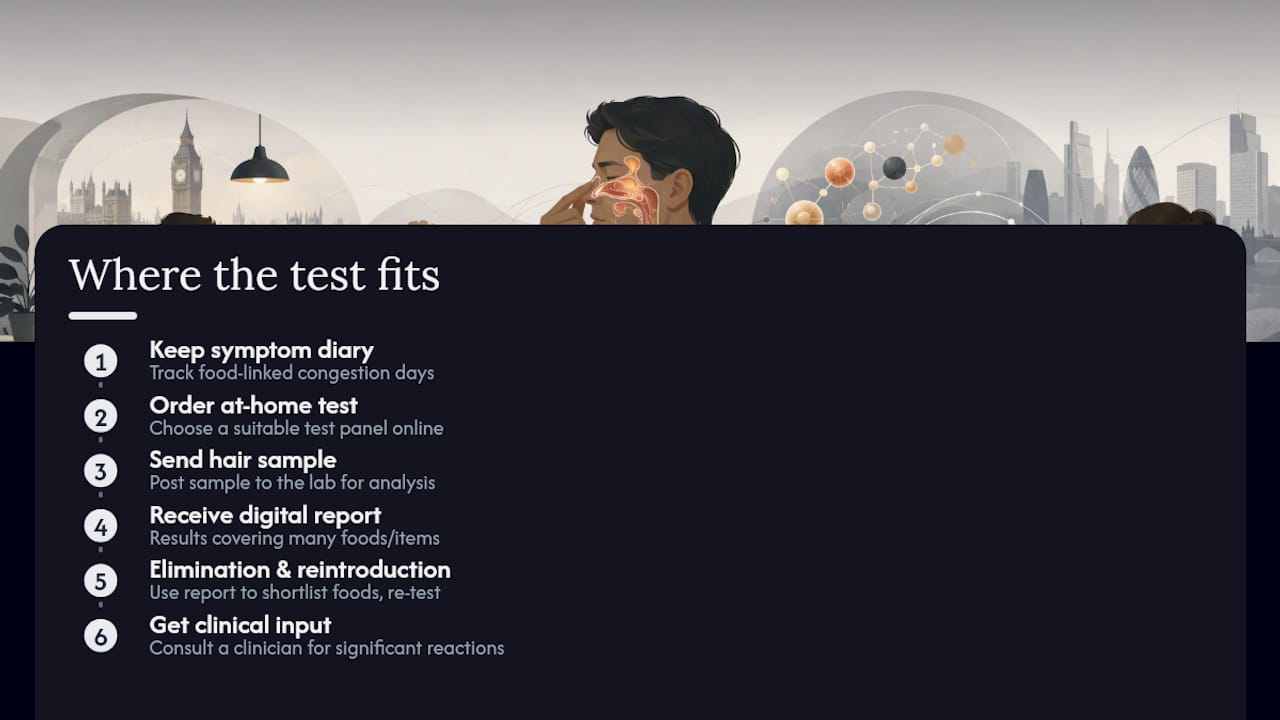
If your symptom diary keeps pointing at food but you’re struggling to narrow it down, that’s exactly where structured testing earns its place. At-home tests typically work from a simple hair sample, sent to a laboratory, with a digital report delivered within a few days covering a wide panel of food and environmental items.

This isn’t a substitute for allergy testing or urgent medical care. Think of it as an adjunct: a way to build a practical shortlist for your elimination diet rather than guessing which of dozens of foods might be behind your congestion. The report gives you a structured starting point, which you then work through with reintroduction and, ideally, some clinical input if reactions have been significant.
Browse the full range of intolerance tests to see which panel suits your situation, or check the practical testing workflow guide first if you want to understand the process before you order.
This article is general information, not a substitute for advice from a qualified doctor. Consult a qualified healthcare professional about your own circumstances before acting on anything here.
Sources
- Gustatory rhinitis study (2021) DOI record
- Alcohol‑induced rhinitis / AERD study
- UK study linking CRSwNP symptom exacerbation to salicylate‑rich foods
- Mayo Clinic: nasal congestion causes and management








Leave a Reply
Want to join the discussion?Feel free to contribute!