

No robust, peer‑reviewed evidence currently shows that bioresonance can diagnose or treat medical conditions, and UK regulators have said as much repeatedly. The Medicines and Healthcare products Regulatory Agency (MHRA) requires any device making such claims to be properly registered, while the Advertising Standards Authority (ASA) has upheld multiple rulings against adverts that promised more than the science supports. If you’re dealing with a serious health concern, see your GP first and treat any advert promising a cure with healthy suspicion.
TL;DR:
- Bioresonance lacks credible peer-reviewed evidence for diagnosing or treating medical conditions, and most studies are small, non-replicated, or methodologically weak.
- UK regulators, the MHRA and ASA, have repeatedly stated that bioresonance devices cannot be clinically proven and should not be promoted with unsubstantiated claims.
- Claims about diagnosis, energy reading, or efficacy are considered misleading unless supported by high-quality, independent research, which currently does not exist.
- The risks are mostly indirect, including delayed proper medical care and financial costs, especially if promotional claims discourage seeing healthcare professionals.
- For self-monitoring or elimination diets, bioresonance tests may help identify triggers but should not replace professional medical advice for serious or ongoing health issues.
Table of Contents
- What does the evidence on bioresonance actually show?
- How do MHRA and the ASA regulate bioresonance in the UK?
- Do the claims made about bioresonance match the science?
- What are the safety risks and possible harms?
- How should you evaluate a bioresonance test or practitioner?
- How does Ukfoodintolerance use bioresonance testing?
- Where does the evidence actually leave you?
- Want a structured intolerance test that’s upfront about its limits?
- Sources
What does the evidence on bioresonance actually show?
Search “does bioresonance work” and you’ll find plenty of enthusiastic marketing but very little that would satisfy a peer reviewer. The clinical literature on bioresonance is thin, and what exists tends to be small, inconsistently designed, and rarely repeated by independent teams.
One of the more frequently cited pieces of bioresonance research UK readers come across is a 2022 clinical study on bioresonance for mild to moderate depression, published on PMC. It’s often held up as evidence the therapy works. Look closer, though, and the picture is more complicated: like much of the wider bioresonance clinical trials literature, this kind of study tends to involve modest participant numbers and design choices that make it hard to rule out placebo response or other confounding factors.
That pattern repeats across the field. When trials do turn up on databases like PubMed, several recurring problems limit what conclusions anyone can draw:
- Small sample sizes that make chance findings hard to distinguish from genuine effects.
- Non‑blinded designs, where participants and sometimes researchers know who received the “real” treatment.
- Surrogate outcomes measured instead of clear, clinically meaningful endpoints.
- Lack of replication, meaning a promising result in one small trial is rarely confirmed by a larger, independent one.
Healthline’s overview of bioresonance reaches a similarly cautious verdict, concluding there’s no sound scientific evidence bioresonance plays a role in diagnosing or treating medical conditions, and that far more rigorous research is needed before that changes.
Put plainly, the effectiveness of bioresonance for any specific medical condition sits at an evidence grade of “insufficient” to “low” by the standards used to judge clinical treatments. That matters because low-grade evidence cannot support diagnostic or treatment claims, no matter how confidently a product is marketed. It’s a different question from whether bioresonance testing might help someone structure an elimination diet, which is a self-monitoring exercise rather than a medical diagnosis.
How do MHRA and the ASA regulate bioresonance in the UK?
Two separate systems govern this space in Great Britain, and understanding both explains why some sellers use careful, hedged language while others don’t.
The MHRA determines a device’s legal status by the manufacturer’s intended purpose, not by the words “bioresonance” on the box. If a device claims to diagnose or treat a medical condition, it must be registered as a medical device and conform to the UK Medical Devices Regulations 2002. The MHRA’s own borderlines guidance exists precisely because products like these sit in a grey area, and regulators look at labelling, instructions, and promotional material to work out what a device is really claiming to do.
Regulatory snapshot: There is no single “bioresonance” category under UK law. Every device is assessed on its claimed purpose, and enforcement leans on cooperation between the MHRA, Trading Standards, and online platforms, which can make action slow against sellers who use vague or shifting language.
The ASA and its sister body, the Committee of Advertising Practice (CAP), police the claims made in adverts rather than the devices themselves. The ASA has stated plainly that it has not seen evidence bioresonance devices can diagnose existing or future medical conditions, or prevent or treat disease. Rulings against advertisers including Y&M Holistic Clinic, Wayne Hardwick, and Na’vi Organics have found efficacy claims unsubstantiated and misleading.
Practically, this means:
- A CE or UKCA mark shows a product meets certain manufacturing and safety standards, not that it’s clinically effective.
- Enforcement is real but constrained by resources, so a lack of visible action against a seller doesn’t equal regulatory approval.
- Consumers checking legitimacy should look for an actual MHRA registration number where medical claims are made, not just professional‑looking branding.
Do the claims made about bioresonance match the science?
Marketing language around bioresonance treatment evidence often leans on scientific-sounding phrases that don’t hold up under scrutiny. Here’s how the common claims stack up against what regulators and researchers have actually found:
- “This device can diagnose food intolerances, allergies, or disease.” The ASA has found no substantiating evidence for diagnostic claims of this kind, and treats them as misleading when used in advertising.
- “It reads your body’s energy fields or cell voltage.” These are descriptive, technical-sounding phrases, not measurable clinical outcomes. Regulators judge claims by whether they’re backed by trial data, not by how scientific the vocabulary sounds.
- “It’s CE or UKCA marked, so it’s proven safe and effective.” A conformity mark relates to manufacturing standards and general safety, not to whether a device does what marketing claims it does.
- “Studies prove it works.” As covered above, the studies that exist are typically small and methodologically limited. Citing a study isn’t the same as citing a well-replicated, high-quality one.
The common thread in ASA rulings on this topic is that advertisers pointed to testimonials, technical jargon, or isolated small studies, and none of it met the bar of credible, peer‑reviewed clinical evidence for the specific claims being made. That’s a useful filter to apply yourself: if a claim can’t be traced to a properly conducted trial, treat it as marketing, not medicine.
What are the safety risks and possible harms?
Bioresonance devices themselves carry limited direct risk when handled properly, but the harms tend to be indirect. Financial cost adds up, especially if repeat sessions are recommended. False reassurance is the bigger concern: a comforting result can quietly delay someone from seeking proper diagnosis or treatment for a genuine medical issue.
- Direct risks: device misuse, poor electrical safety on cheaper equipment, treatment given without qualified supervision.
- Indirect harms: delayed medical care, ongoing expense, a false sense that a health problem has been “resolved” when it hasn’t.
- Red flags: absolute cure claims, advice to stop or avoid conventional treatment, and no published evidence anywhere on the provider’s own site.
Pro Tip: If a practitioner or seller discourages you from also seeing your GP, treat that as a serious warning sign rather than confidence in their product.
How should you evaluate a bioresonance test or practitioner?
Before booking a session or buying a kit, run through a short checklist. It takes minutes and tells you a great deal about what you’re actually paying for.
- Ask for peer‑reviewed evidence, ideally published in an indexed journal, not just testimonials or in-house case notes.
- Request the MHRA registration number if any diagnostic or treatment claim is being made.
- Check the practitioner’s qualifications and whether medical conditions are managed under proper supervision.
- Ask about lab accreditation if you’re sending off a sample for analysis, so you know it’s processed to a recognised standard.
- Compare the answer to the question. Vague reassurance (“thousands of happy customers”) is marketing; a specific citation or registration number is verifiable.
If a medical condition is involved, especially anything persistent, painful, or worsening, NHS care or a second opinion from a GP should always take priority over an unregulated therapy.
Pro Tip: Keep a copy of any claims made to you in writing. If they turn out to be misleading, that record is exactly what the ASA needs to investigate a complaint.
How does Ukfoodintolerance use bioresonance testing?
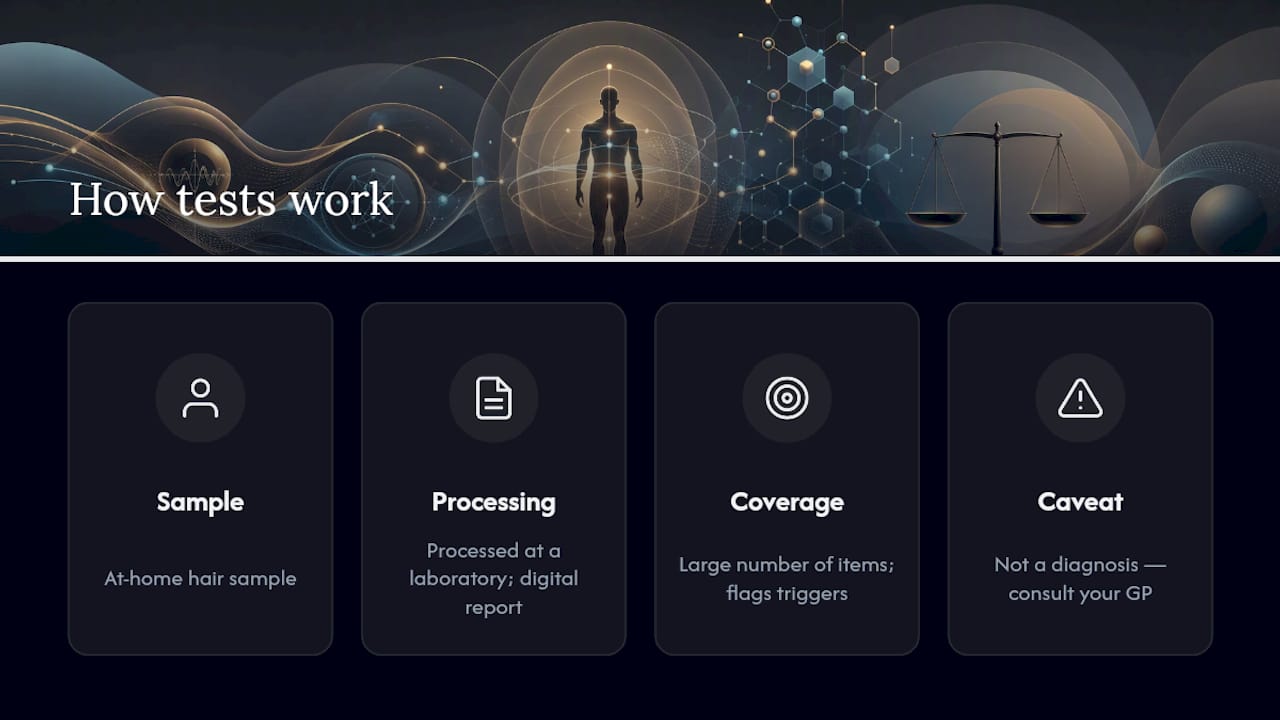
Some providers offer at‑home bioresonance-based tests using a hair sample, processed at a laboratory, with digital reports covering a large number of items and turnaround typically within 48 to 72 hours. Reports are designed to support elimination diets and personal self‑monitoring, flagging possible dietary or environmental triggers worth investigating further.
These reports are a starting point for exploring patterns in your diet and wellbeing, not a medical diagnosis. Anyone with a suspected allergy, ongoing symptoms, or a diagnosed condition should still involve their GP. Full detail on the technology and methodology behind the reports is available for readers who want to look under the hood before ordering.
Where does the evidence actually leave you?
The honest reading of the science on bioresonance is that it hasn’t cleared the bar for diagnosing or treating medical conditions, and pretending otherwise does readers a disservice. What gets lost in most coverage of this topic is the false choice it presents: either bioresonance “works” and deserves your trust, or it’s worthless and deserves dismissal. Neither framing is accurate.
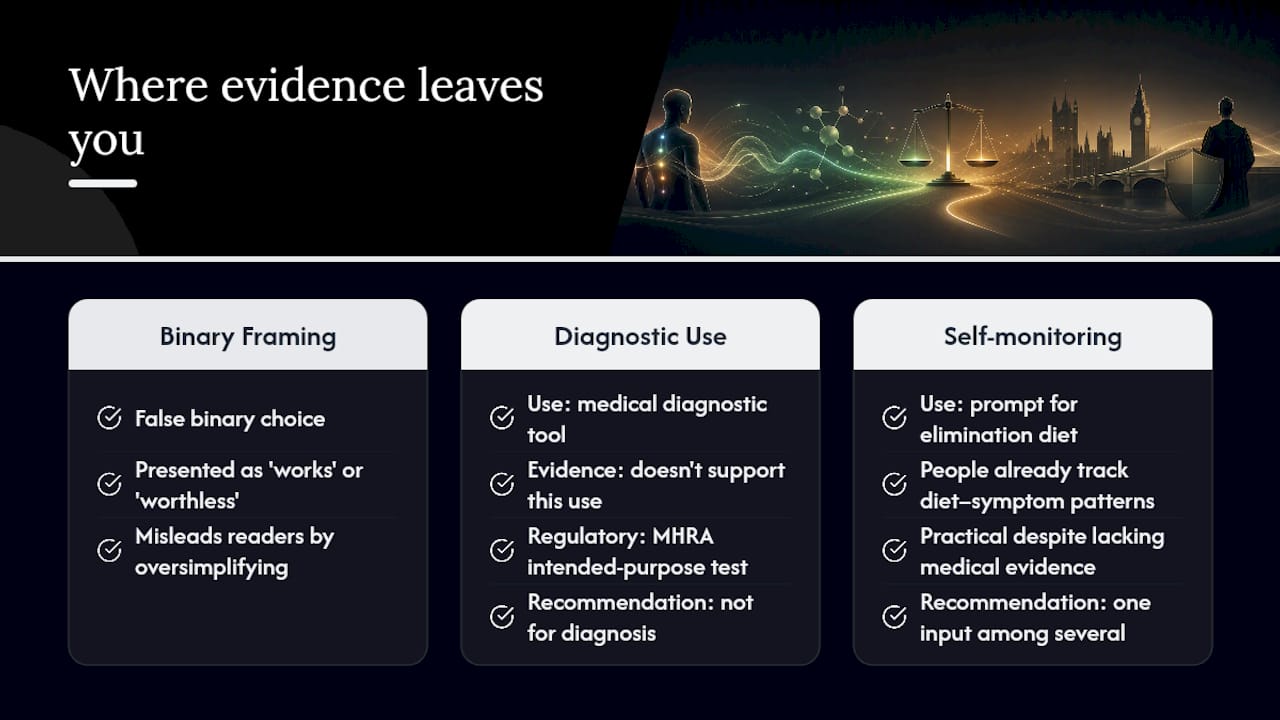
The more useful question is what a test is actually being used for. As a rigid medical diagnostic tool, the evidence doesn’t support it. As a structured prompt for an elimination diet, tracking patterns between diet and symptoms is something people already do informally, just less systematically.
Where conventional advice on this topic usually falls short is in offering only two options: blind trust or blanket rejection. Readers deserve the regulatory detail (MHRA’s intended-purpose test, the ASA’s substantiation rulings) alongside a plain acknowledgement that self-monitoring tools can still have practical value without medical-grade evidence behind them. Prioritise your GP for anything serious. Use everything else as one input among several.
— Rob
Want a structured intolerance test that’s upfront about its limits?
If you’re weighing up bioresonance testing against other options, some services provide an affordable route to structured dietary data without booking a clinic appointment or waiting weeks for results. The Core and Ultimate Single Intolerance Tests cover from 500 up to over 1,100 items, processed at a UK lab, with digital reports back in 48 to 72 hours.
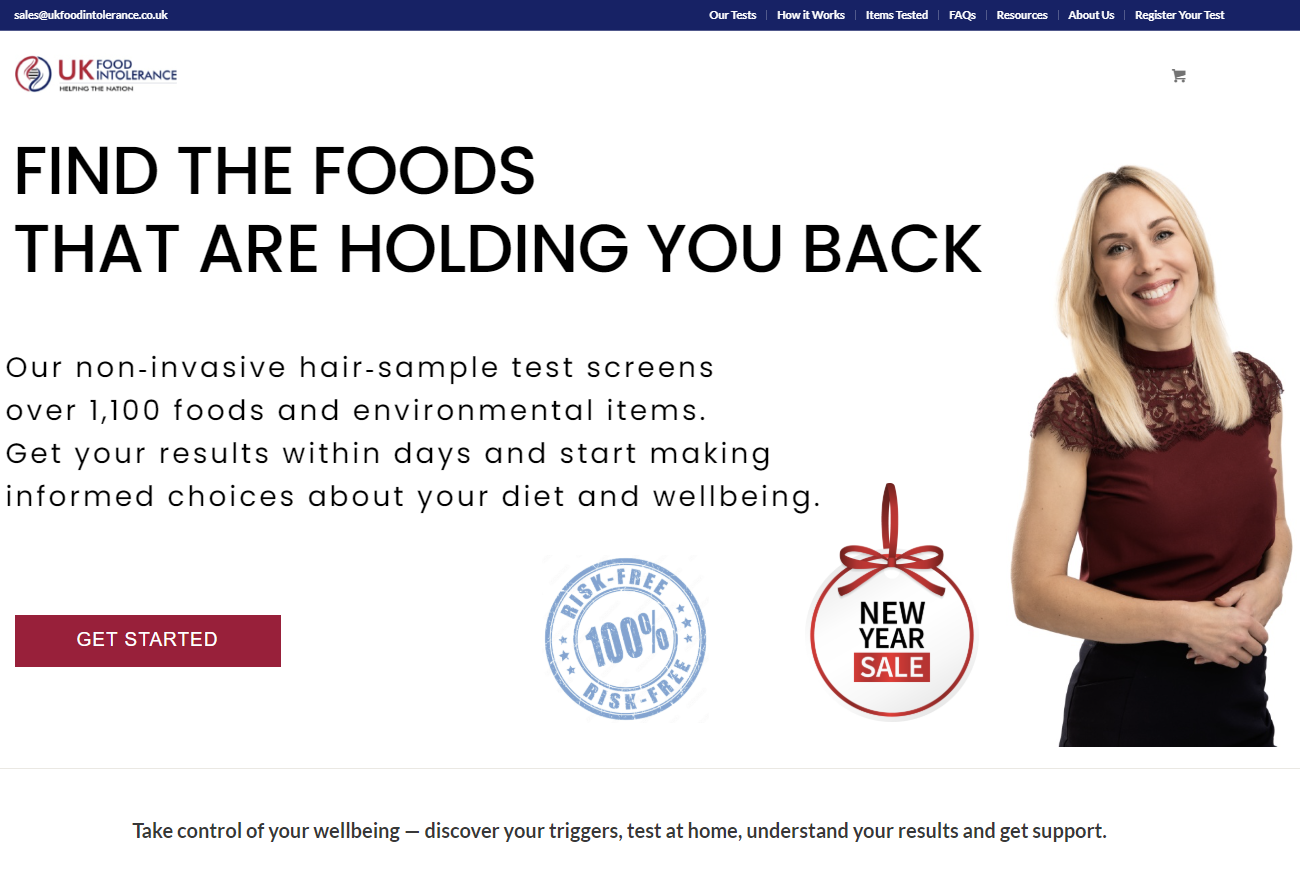
These reports are built to support elimination diets and highlight possible triggers worth investigating, not to replace a GP visit or formal allergy testing. If you’ve read this far and want a straightforward, evidence-aware way to start narrowing down what might be affecting your digestion or energy levels, browse the full range of intolerance tests and pick the option that matches how many items you want covered.
This article is general information, not a substitute for advice from a qualified doctor. Consult a qualified healthcare professional about your own circumstances before acting on anything here.
Sources
- Bioresonance Therapy
- Regulating medical devices in the UK
- Bioresonance, an alternative therapy for mild and moderate depression
- What Is Bioresonance and Does It Work? — Healthline










Leave a Reply
Want to join the discussion?Feel free to contribute!