

The clearest signs of dog food intolerance are chronic itching around the ears, paws and belly, alongside digestive upset such as vomiting, diarrhoea or excess wind. If your dog shows both skin and gut symptoms together, book a vet appointment rather than switching foods on your own. Ask about a vet-supervised elimination diet, which remains the only reliable way to confirm what’s causing the problem.
TL;DR:
- The most common dietary triggers are beef, dairy, and chicken, with regional differences influencing the likelihood of certain ingredients causing reactions.
- Proper elimination diets require strict rules, including avoiding treats, flavored medications, and cross-contamination, to prevent invalidating results.
- Dogs with both skin and gastrointestinal symptoms are more likely to have a true food sensitivity, but secondary infections should be treated first before testing.
- At-home allergy tests lack reliability and should only be used as a supplementary tool to guide more structured vet-led elimination trials.
- Early and consistent management of food intolerance prevents chronic skin, ear, and gut problems, and ongoing monitoring helps detect new triggers later in life.
Table of Contents
- Skin and ear signs of dog food intolerance
- Gastrointestinal and systemic symptoms
- How vets diagnose food allergy and intolerance
- Common causes and dietary triggers
- Treatment and long-term management
- Testing options and where at-home tests fit in
- Differences between food allergy and food intolerance
- Telling food intolerance apart from other conditions
- What happens if food intolerance goes untreated
- Long-term outlook and ongoing monitoring
- A note from Rob
- Using an at-home test alongside your vet’s advice
- Sources
Skin and ear signs of dog food intolerance
Itching from a food problem rarely looks the same in every dog. Some show generalised scratching across the whole body. Others focus obsessively on specific spots: the ear flaps (pinnae), the paws, the belly (ventrum) or the face. That focal pattern, especially around the ears and feet, is one of the more recognisable dog food allergy signs vets look for during a consultation.
What tends to follow is often worse than the itching itself. Persistent scratching opens the door to secondary problems that owners frequently mistake for the primary issue:
- Recurring ear infections (otitis externa), sometimes with a yeasty smell or dark discharge
- Bacterial skin infections, often smelling faintly sour or showing pustules
- Malassezia yeast overgrowth, which leaves skin greasy and inflamed
- Hair loss in patches from constant licking or chewing
- Raw, scabbed skin from scratch injuries
Secondary infections such as staphylococcal or Malassezia dermatitis are common companions to adverse food reactions, and the Merck Veterinary Manual notes that treating them properly is often necessary before you can judge whether an elimination diet is actually working.
Start keeping a simple diary now, before your vet appointment. Note the time of day symptoms flare, what your dog ate that day, which specific areas look inflamed, and whether there’s any ear discharge. A few photos taken weekly, in consistent lighting, give your vet something concrete to compare over time.

Pro Tip: Photograph the ears, paws and belly weekly rather than only when things look bad. A photo taken on a “good” day gives your vet a baseline to measure flare-ups against.
Gastrointestinal and systemic symptoms
Digestive symptoms tend to point more towards intolerance than a classic allergic reaction, because they’re usually dose-dependent rather than immune-triggered. The most common signs include:
- Vomiting — occasional or recurring, sometimes containing undigested food
- Diarrhoea — loose, watery, or intermittently soft stools
- Chronic flatulence — persistent wind that’s noticeably worse than normal
- Increased bowel frequency — passing stools more than three times a day
- Abdominal discomfort — restlessness, a tucked posture, or a tender belly to touch
Timing matters here. True intolerance symptoms often build gradually over hours to days after eating a trigger food, whereas an immune-mediated allergic reaction can appear far more quickly. This distinction is one reason vets ask detailed questions about when symptoms start relative to meals.
Dogs presenting with both skin and gut signs together are considerably more likely to have a genuine food sensitivity than dogs with skin symptoms alone. If your dog is vomiting repeatedly, passing blood, or seems lethargic and dehydrated, that combination warrants an urgent vet visit rather than a wait-and-see approach.
How vets diagnose food allergy and intolerance
A strict elimination diet followed by a controlled challenge is the only method veterinary literature accepts as reliable for confirming a food allergy. It typically runs for 8 to 12 weeks using a novel protein or hydrolysed diet your dog has never eaten before.
That trial only works if it’s run properly. Owners routinely undermine it without realising:
- No treats, dental chews, or flavoured toys during the trial period
- Check every medication for flavoured coatings, including monthly parasite preventatives
- Transition to the new diet gradually over several days to avoid masking GI signs
- Everyone in the household needs to follow the same rules, including visiting relatives
Even a single flavoured tablet or a stray biscuit from a well-meaning neighbour can invalidate weeks of careful work and produce a false negative result.
Once symptoms improve, vets reintroduce the original diet as a “challenge” to confirm the trigger. Reactions to this challenge often appear within 3 to 14 days, though the University of Minnesota’s veterinary dermatology programme notes that some dogs react within hours. Food-related reactions account for 9 to 40% of dogs referred to dermatology specialists for itching, though far fewer cases are diagnosed in general practice.
Other tests exist, including serum IgE panels and intradermal skin testing, but none of them replace a validated elimination trial. Before your appointment, bring a full diet history (including treats and supplements), a symptom diary, and a list of every product your dog has eaten in the past three months.
Common causes and dietary triggers
Certain proteins turn up again and again in veterinary case histories. Reviews consistently identify beef, dairy and chicken as the leading culprits, with wheat, soy, lamb and eggs also frequently implicated.
Geography plays a role too. Regional studies from Malaysia, Singapore and Indonesia found chicken responsible for up to 65% of confirmed cases in those referral populations, a notably higher rate than seen in some Western cohorts. That variation matters: it means there’s no single “safe” protein that applies to every dog, and any ingredient can theoretically become a trigger.
Not every trigger is a protein. Consider these possibilities too:
- Artificial colourings, preservatives, or flavour enhancers
- Lactose intolerance from dairy-based treats or table scraps
- Dietary indiscretion (bin-raiding, scavenging) mimicking a food reaction
- Grain components such as wheat or soy in commercial kibble
A detailed diet history, going back at least three months, helps your vet narrow the suspect list before starting a formal trial.
Treatment and long-term management
Getting symptoms under control before you start an elimination trial matters more than most owners expect. Secondary skin and ear infections need treating with antimicrobials or antifungal medication first, and itch relief may be needed short-term, because untreated infections make it impossible to judge whether the new diet is actually helping.
Once your dog is stable, your vet will usually recommend one of two dietary approaches:
- Novel-protein diets — using a protein and carbohydrate source your dog has never eaten, such as venison or duck
- Hydrolysed prescription diets — where proteins are broken down into fragments too small to trigger an immune response, often preferred for dogs with extensive dietary histories
Longer term, small habits protect the progress you’ve made:
- Read every label carefully; “natural flavouring” can hide the exact protein you’re avoiding
- Avoid cross-contamination from shared bowls, multi-pet households, or the same scoop used for different foods
- Only add supplements with your vet’s sign-off, since some contain hidden animal derivatives
- Keep feeding consistent portions and timing to avoid confusing symptom tracking
Successful management usually looks like a stable dog on a defined diet, with occasional vet check-ins rather than repeated flare-ups. Some dogs need lifelong avoidance of a specific trigger; others tolerate small reintroductions later once things have settled.
Pro Tip: Keep a printed copy of your dog’s “safe” ingredient list somewhere visible, like on the fridge. It stops well-meaning family members accidentally undoing months of progress with the wrong treat.
Testing options and where at-home tests fit in
Evidence on at-home hair and saliva allergy tests is not encouraging. A controlled study found these tests produced results no better than chance, with poor reproducibility when the same sample was tested twice. Serum IgG tests fare no better as standalone diagnostic tools; they’re not validated for confirming a food allergy or intolerance.
That doesn’t mean every at-home test is worthless, but it does mean expectations need to be realistic. Ukfoodintolerance’s bioresonance-based hair sample tests are designed as a screening and diet-planning aid, not a clinical diagnosis, covering over 1,450 items with digital reports back within 48 to 72 hours. Used correctly, a report can help you:
- Shortlist ingredients worth avoiding during an elimination trial
- Structure a more targeted trial rather than guessing at random novel proteins
- Track patterns across multiple pets or family members in one household
Test results work best as a starting point for conversation with your vet, not a replacement for their diagnosis. Pair a report with a proper elimination trial, and you get structure without giving up on the gold-standard process.
Treat any at-home result as one input among several, not a verdict.
Differences between food allergy and food intolerance
The terms get used interchangeably, but they describe different mechanisms. A food allergy involves the immune system mounting a response against a specific protein, similar to how pollen allergies work in humans. Food intolerance doesn’t involve the immune system at all; it’s typically a digestive or metabolic reaction, such as lactose intolerance, where the body simply can’t process an ingredient properly.
This distinction affects timing and symptoms. Allergic reactions can appear suddenly and dramatically, sometimes within hours. Intolerance tends to build more gradually, often triggered by dose (a small amount causes mild symptoms; a larger amount causes worse ones). Skin symptoms lean more towards allergy, while gastrointestinal symptoms often point towards intolerance, though there’s considerable overlap in practice.
Veterinary dermatology literature is clear that food allergy is actually less common than environmental atopy (reactions to pollen, dust mites or mould), so owners shouldn’t automatically assume food is the culprit without a structured trial to confirm it. That’s precisely why the elimination diet, rather than a symptom checklist alone, carries so much weight in veterinary practice. For a fuller breakdown of the mechanisms involved, see this guide on spotting the difference between intolerance and allergy.
Telling food intolerance apart from other conditions
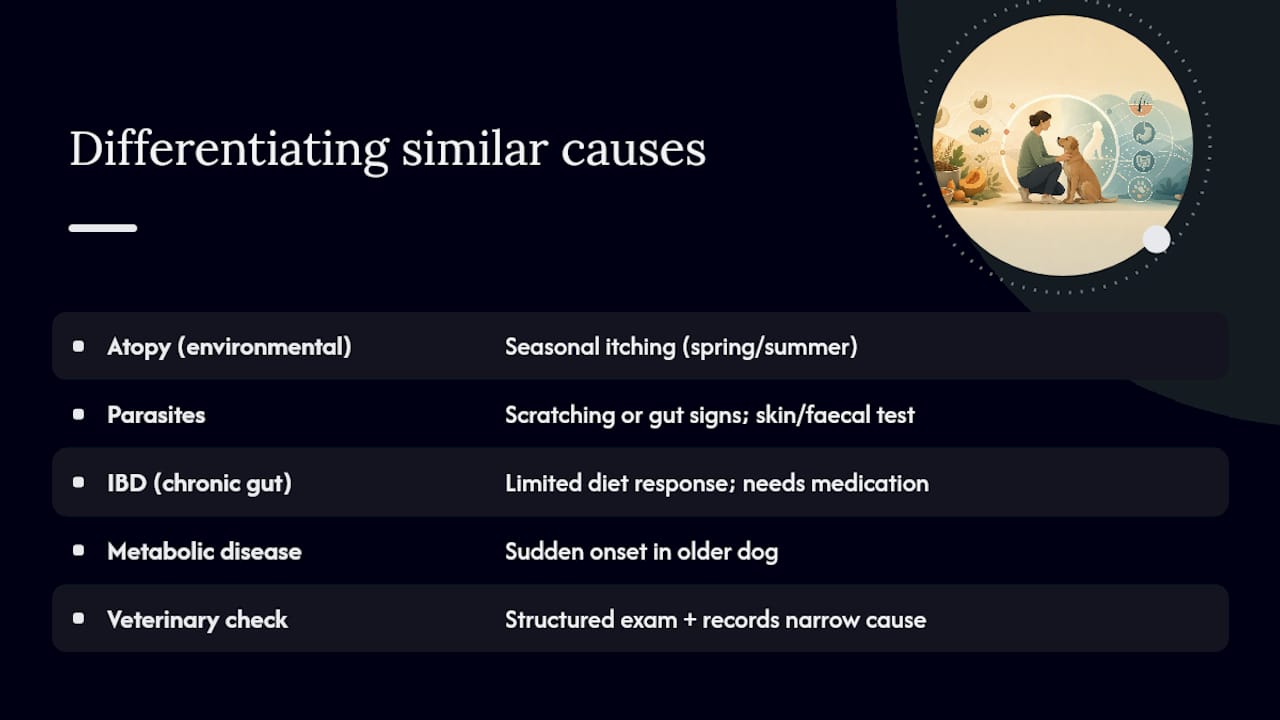
Several conditions mimic food intolerance closely enough to cause real diagnostic confusion. Environmental allergies (atopy) produce near-identical itching patterns, but they’re usually seasonal, flaring in spring or summer and easing in winter, whereas food-related itching tends to be constant year-round.
Parasites deserve a mention too. Fleas, mites (particularly Sarcoptes or Demodex), and even intestinal worms can produce scratching or digestive upset that looks remarkably similar to a food problem on the surface. Your vet will typically rule these out with a skin scrape or faecal test before considering a dietary cause.
Inflammatory bowel disease and other chronic gut conditions can also mirror food intolerance symptoms, particularly the vomiting and diarrhoea. The key differentiator is usually response to treatment: true food intolerance improves noticeably during a proper elimination trial, while IBD often needs additional medication alongside diet changes to settle.
A dog’s age and symptom onset offer clues too. Sudden symptoms in an older dog with no prior history might point towards something unrelated to diet entirely, such as a metabolic disease. This is exactly why self-diagnosis at home, however well-intentioned, tends to miss the mark. Structured veterinary assessment, ideally alongside the record-keeping described earlier, narrows down the real cause far faster than guesswork.
What happens if food intolerance goes untreated
Leaving a food intolerance unmanaged rarely stays a minor issue. Chronic scratching and licking damage the skin barrier over time, creating an open door for recurring bacterial and yeast infections that become progressively harder to clear.
Ear infections left untreated can, in more serious cases, lead to chronic changes in the ear canal, sometimes requiring surgical intervention if scarring narrows the canal permanently. That’s a genuinely avoidable outcome with early dietary management.
On the gastrointestinal side, ongoing inflammation from an unidentified trigger can affect nutrient absorption over months, occasionally contributing to weight loss or poor coat condition even when the dog is eating normally. Persistent gut inflammation has also been linked, in some cases, to broader digestive sensitivities developing over time, making the original problem harder to isolate the longer it’s left unaddressed.
There’s a welfare cost too, one that’s easy to overlook amid the clinical details. A dog with constant itching or digestive discomfort isn’t just physically affected; chronic discomfort tends to show up as irritability, disrupted sleep, and reduced tolerance for normal handling or play. Addressing the root cause early spares your dog months, sometimes years, of low-grade discomfort that’s entirely manageable with the right diet.
Long-term outlook and ongoing monitoring
Dogs with confirmed food intolerance generally do very well once the trigger is identified and consistently avoided. The prognosis is genuinely good, provided the elimination diet was run properly and the challenge phase clearly confirmed the culprit ingredient.
Monitoring doesn’t stop once symptoms settle, though. Recheck ears and skin periodically, even when things look stable, since new triggers can occasionally develop later in life as a dog’s immune system changes with age. Keep a simple log of any new foods, treats, or supplements introduced, so if symptoms return, you have an immediate list of suspects rather than starting from scratch.
Annual or biannual vet check-ins help catch subtle changes before they become full flare-ups. Weight, coat condition, and stool quality are all easy indicators to track between visits, and most owners find that a five-minute check every few weeks becomes second nature fairly quickly.
Some dogs stay on their elimination diet indefinitely; others tolerate gradual reintroduction of previously avoided ingredients once symptoms have been stable for a long stretch, though this should always happen under veterinary guidance rather than trial and error at home. Either way, the dogs that do best long-term tend to belong to owners who kept detailed records early on and stayed consistent with the diet, rather than switching foods repeatedly out of frustration.
A note from Rob
Start an elimination trial properly or not at all. Half-measures waste months and confuse the results. Pair whatever you learn from testing with your vet’s guidance, and never let curiosity about a diagnosis override your dog’s actual nutrition and comfort.
— Rob
Using an at-home test alongside your vet’s advice
Ukfoodintolerance gives you a practical starting point when your vet suggests narrowing down suspect ingredients before a formal trial, rather than guessing blindly at novel proteins. The pet intolerance test uses a simple at-home hair sample, checked against over 1,450 items, with a digital report back in 48 to 72 hours, considerably faster than waiting weeks for a specialist referral.

It suits owners who want structure before committing to a full elimination diet, or who are juggling multiple pets and want to prioritise which ingredients to test first. Once you’ve collected a sample using this step-by-step collection guide, pair your report with a proper elimination diet checklist and this external step-by-step guide to elimination diets to run the trial correctly alongside your vet. Browse the full range of available tests to find the one that matches your dog’s situation, and take that report to your next vet appointment as a genuine head start, not a replacement for their diagnosis.
Sources
- PubMed entry on common food allergens in dogs
- PMC review on prevalence of adverse food reactions
- Merck Veterinary Manual: cutaneous food allergy in animals
- Study on unreliability of hair and saliva allergy tests










Leave a Reply
Want to join the discussion?Feel free to contribute!