

Histamine intolerance occurs when your body accumulates more histamine than it can break down, causing a wide range of symptoms that can feel confusing and hard to pin down. The British Dietetic Association describes it as a “disequilibrium of accumulated histamine and the capacity for degradation,” with normal plasma histamine sitting at tightly regulated low levels. When that balance tips, symptoms follow. There is no universally accepted laboratory test to confirm it, so the practical UK standard is a short-term low-histamine elimination period followed by careful reintroduction, ideally with a dietitian.
If your symptoms are severe, unexplained, or include breathing difficulties, see your GP first. For milder, food-related patterns, a supervised elimination trial is the most reliable starting point.
At a glance:
- Histamine intolerance is a chemical sensitivity, not an IgE-mediated allergy
- The enzyme diamine oxidase (DAO) normally breaks down histamine in the gut; reduced DAO activity is central to most cases
- No blood test or single lab marker is accepted as a diagnostic gold standard by the NHS or BDA
- The recommended approach is a short-term low-histamine elimination period, then gradual reintroduction under dietetic supervision
Table of Contents
- What are the symptoms of histamine intolerance?
- Why does histamine intolerance happen?
- How is histamine intolerance diagnosed in the UK?
- What can at-home tests tell you about histamine sensitivity?
- How to manage histamine intolerance practically
- When should you see a GP or dietitian?
- Key takeaways
- A note on working with uncertainty
- Useful sources and further reading
What are the symptoms of histamine intolerance?
Symptoms tend to appear within 30 minutes to a few hours of eating high-histamine foods, though the delay can vary. What makes histamine intolerance particularly tricky is that it affects multiple body systems at once, so the pattern rarely points to one obvious cause.
Common symptoms include:
- Gut: bloating, nausea, abdominal pain, diarrhoea
- Skin: hives, flushing, itching (pruritus), swelling of the face or lips
- Head and nervous system: headaches, migraines, dizziness, anxiety, insomnia
- Respiratory: blocked or runny nose, wheezing, shortness of breath
- Cardiovascular: fast or irregular heartbeat, low blood pressure
Symptom spotlight: Clinical summaries report bloating in up to 92% of subjects in some study datasets, with pruritus (itching) commonly reported. These figures vary between studies, so treat them as indicators of how common gut and skin involvement are, not as fixed prevalence rates.
Crucially, Allergy UK is clear that histamine intolerance is not a true allergy. It mimics allergic symptoms but carries a different risk profile: anaphylaxis is not a typical feature. That distinction matters for how you manage it and who you see for help.
You can read more about symptom timing after exposure to understand why reactions can feel delayed or unpredictable.
Why does histamine intolerance happen?
Histamine is a naturally occurring chemical found in your body and in many foods. It plays a role in immune responses, digestion, and brain signalling. The gut enzyme diamine oxidase (DAO) is your primary defence against dietary histamine. When DAO activity is low, histamine from food passes into the bloodstream and triggers symptoms.
Common dietary sources of histamine:
- Aged and fermented foods: mature cheese, sauerkraut, kimchi, soy sauce, vinegar
- Oily and tinned fish: tuna, mackerel, sardines, anchovies
- Processed and cured meats: salami, pepperoni, smoked ham
- Alcohol, particularly red wine and beer
- Some fruits: strawberries, citrus, tomatoes, pineapple, bananas
Histamine levels in food vary greatly depending on storage and processing. Fish left at room temperature for even a short period can accumulate histamine rapidly. Freshness genuinely matters.
DAO activity can be reduced by genetics, gut damage (such as from coeliac disease or inflammatory bowel conditions), alcohol, and certain medications. Research notes that around 20% of the European population takes medications that could decrease DAO activity, including some antihistamines, antidepressants, and antibiotics.

Tolerance is also threshold-based. A small amount of aged cheese on its own might cause no reaction, but combine it with a glass of red wine, a stressful week, and a hormonal shift, and you tip over your personal threshold. Day-to-day tolerance fluctuates with stress, illness, gut microbiota, and hormonal cycles.
Pro Tip: Track your symptoms alongside your menstrual cycle and note any medication changes or periods of illness. Patterns that emerge across these variables are often more revealing than a single food diary.
How is histamine intolerance diagnosed in the UK?
Diagnosis is genuinely difficult. There is no universally accepted clinical test for histamine intolerance recognised by the NHS or BDA. DAO blood tests and single plasma histamine measurements exist, but neither has been validated as a definitive diagnostic marker. A low DAO result tells you something about enzyme activity at one point in time; it does not confirm that histamine is causing your symptoms.
“There are currently no reliable tests to diagnose a histamine intolerance. The best way to find out if these are a problem is to try cutting out foods that are high in them for 2–4 weeks, then reintroduce them one at a time to see what is tolerated and in what amount.”
— Allergy UK
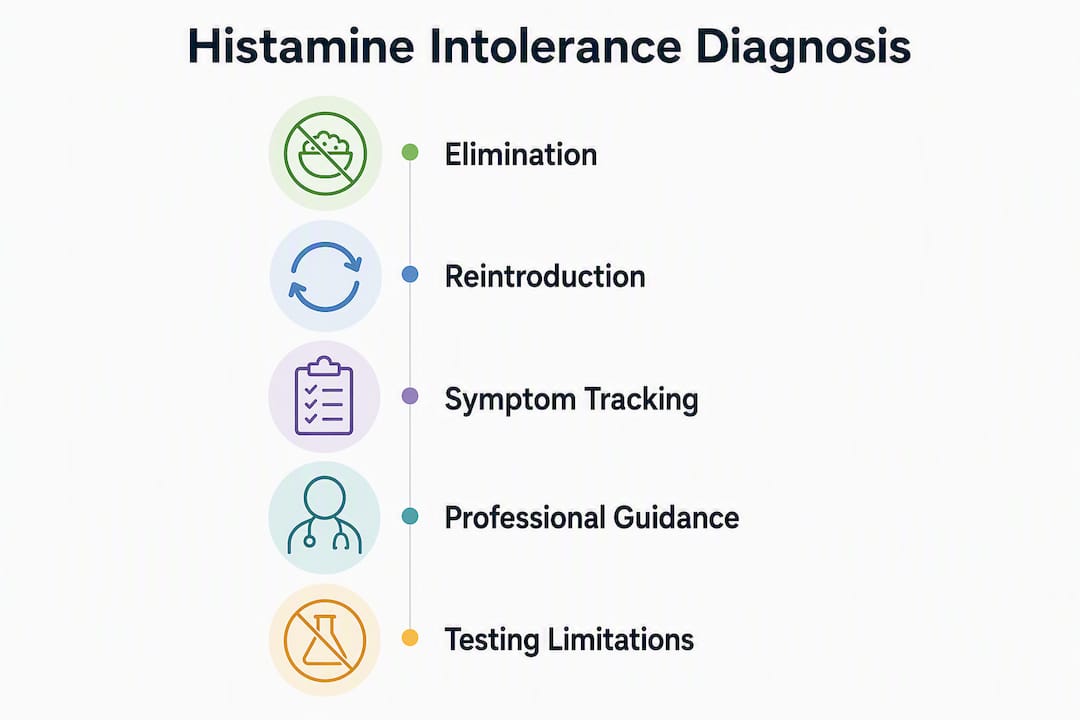
The UK practical standard is a structured elimination and reintroduction protocol. You remove high-histamine foods for 2–4 weeks, note whether symptoms improve, then reintroduce foods one at a time to identify your personal triggers. The BDA strongly recommends doing this with a registered dietitian, who can help you identify triggers while keeping your diet nutritionally balanced.
Avoid long-term, unsupervised food exclusion. Cutting out entire food groups without professional input risks nutritional deficiencies and can make your diet unnecessarily restrictive. A dietitian’s role is precisely to prevent that.
What can at-home tests tell you about histamine sensitivity?
At-home bioresonance tests, such as those offered by Ukfoodintolerance, analyse a hair sample and produce an itemised report of potential food and environmental sensitivities. Reports typically cover hundreds of items, giving you a structured starting point for identifying candidate triggers. You can explore the bioresonance methodology Ukfoodintolerance uses and what the testing process involves.
These tests are best understood as hypothesis generators. They do not replace clinical evaluation or confirm a diagnosis of histamine intolerance. What they can do is narrow down the list of foods worth investigating in a structured elimination trial.
Appropriate uses of at-home bioresonance results:
- Informing which foods to prioritise in an elimination phase
- Identifying environmental triggers alongside dietary ones
- Giving you something concrete to discuss with a GP or dietitian
Uses to avoid:
- Treating a sensitivity flag as a confirmed diagnosis
- Permanently removing foods based on a single test result without reintroduction
- Skipping clinical assessment when symptoms are severe or unexplained
DAO tests and plasma histamine measures available through some private labs carry the same caveat: a single result is a data point, not a verdict.
Pro Tip: Before you start an elimination phase, write down exactly which symptoms you want to track and score them daily. That baseline makes it far easier to judge whether removing a food has genuinely made a difference.
How to manage histamine intolerance practically
A stepwise approach keeps things safe and gives you clear answers.
Step-by-step:
- Keep a detailed food and symptom diary for at least one week before making any changes
- See your GP to rule out other conditions (coeliac disease, IBS, mast cell activation syndrome, or food allergy)
- Request a dietitian referral, or see one privately, to supervise a short-term low-histamine elimination period
- Follow the elimination phase, then reintroduce foods one at a time, leaving a few days between each
- Use your diary to record reactions and build a personalised picture of your tolerance threshold
Practical food guidance:
- Prioritise fresh over aged, fermented, or tinned foods
- Eat fish on the day of purchase; avoid leftovers that have been stored for more than a day
- Alcohol, particularly red wine and beer, is one of the most consistent triggers
- Histamine-releasing foods (citrus, strawberries, tomatoes) can worsen symptoms even when they contain little histamine themselves
Beyond diet, review your medications with your GP. Some common drugs reduce DAO activity. Managing coexisting conditions such as asthma also helps, since uncontrolled respiratory conditions can amplify reactions. Antihistamines can provide short-term symptom relief when accidental exposure occurs, but use them on clinical advice rather than as a long-term substitute for dietary management.
What to bring to your GP or dietitian:
- A food and symptom diary covering at least one week
- A list of current medications and supplements
- Any at-home test results, clearly labelled as sensitivity indicators rather than diagnoses
- Notes on whether symptoms vary with your menstrual cycle, stress levels, or illness
The elimination diet checklist from Ukfoodintolerance walks you through each phase in detail.
When should you see a GP or dietitian?
Some symptoms need urgent attention. Others are well suited to a GP or dietitian appointment. Knowing which is which saves time and keeps you safe.
Seek urgent care if you experience:
- Breathing difficulties or wheezing that comes on suddenly
- Swelling of the face, lips, or throat
- Fainting or a sudden drop in blood pressure
- Chest pain or a very rapid heartbeat
These symptoms may indicate a true allergic reaction or another serious condition. Do not wait for a dietitian appointment.
See your GP when:
- Symptoms are persistent, affect multiple body systems, or are getting worse
- You have unexplained weight loss or severe gastrointestinal symptoms
- You want a medication review to check whether any drugs are reducing your DAO activity
- You need a referral to an NHS dietitian or allergy clinic
The BDA recommends dietitian involvement for any elimination and reintroduction trial, to prevent unnecessary long-term food exclusion and to identify true triggers safely.
Request a dietitian referral when:
- You want to run a safe, structured 2–4 week elimination and reintroduction
- You are already restricting multiple foods and need nutritional support
- You have at-home test results and want professional help interpreting them in context
Understanding the role of intolerance testing in UK healthcare can help you have a more informed conversation with your GP.
Key takeaways
Histamine intolerance is a threshold-based chemical sensitivity with no gold-standard blood test; the UK standard remains a supervised 2–4 week elimination and reintroduction under dietetic guidance.
| Point | Details |
|---|---|
| Core mechanism | Histamine builds up when DAO enzyme activity is too low to break it down efficiently. |
| No diagnostic blood test | Neither DAO tests nor plasma histamine measures are accepted as definitive by the NHS or BDA. |
| UK standard protocol | A short elimination period low-histamine diet followed by supervised reintroduction is the practical diagnostic approach. |
| Tolerance fluctuates | Stress, hormones, illness, and medications all shift your daily threshold, so reactions vary. |
| At-home tests: use carefully | Bioresonance results are useful for informing an elimination plan, not for permanent food bans. |
A note on working with uncertainty
Histamine intolerance sits in genuinely uncertain clinical territory. The science is still developing, the symptoms overlap with several other conditions, and no single test gives you a clean answer. That can feel frustrating when you are trying to work out what is making you unwell.
What I find most useful to keep in mind is this: a test result, whether from a private lab or an at-home kit, is a starting point, not a conclusion. The value of Ukfoodintolerance’s at-home bioresonance testing lies in giving you a structured, itemised list of candidate triggers to investigate, delivered within 48–72 hours from a UK laboratory. That kind of specific, organised information makes the elimination and reintroduction process more focused and less overwhelming. You can explore the full range of intolerance tests to see which option suits your needs.
The step that matters most is what you do with those results: pair them with a food and symptom diary, take them to a dietitian, and run a proper elimination trial. That combination of at-home data and professional support is where real clarity tends to come from.
Useful sources and further reading
The following UK sources informed this article and are worth bookmarking if you want to read further:
- Sensitivity to Histamine and other Vasoactive Amines — BDA 2025 update: the most current UK dietetic guidance, covering definition, symptoms, diagnosis, and the elimination/reintroduction protocol
- Histamine intolerance — Allergy UK: clear patient-facing explanation of the allergy vs intolerance distinction and symptom management
- Food intolerance — NHS: NHS overview of food intolerance, including how it differs from IgE-mediated allergy
- Plain English guide to sensitivity to histamines — University Hospitals Plymouth NHS Trust: accessible patient leaflet covering testing limits and the elimination diary approach
If you are ready to explore at-home sensitivity testing, Ukfoodintolerance offers hair sample-based bioresonance tests covering over 1,450 items, with digital reports returned within 48–72 hours. Browse the intolerance test range or read the elimination diet checklist to prepare for your next steps. For any elimination or reintroduction plan, working with a registered dietitian remains the safest and most effective approach.
This article is general information, not medical or dietetic advice. Confirm any dietary changes or clinical decisions with your GP or a registered dietitian.










Leave a Reply
Want to join the discussion?Feel free to contribute!