

TL;DR:
- A structured elimination and reintroduction diet supervised by a paediatric professional is the only validated method to identify food intolerances in children in the UK.
- Parents should keep a detailed food and symptom diary for 2 to 4 weeks before starting any testing process.
- Using unvalidated tests like IgG blood panels and hair analysis can lead to unnecessary restrictions and misdiagnoses.
A successful parent workflow for child intolerance testing begins with one critical fact: no validated clinical test for food intolerance exists in UK paediatric practice as of 2026. The gold standard is a structured elimination and reintroduction diet, lasting 2–4 weeks per phase, directed by a GP or paediatric dietitian. This guide walks you through every stage of that process, from understanding what intolerances actually are, to preparing your symptom diary, executing the elimination phase safely, and avoiding the commercial tests that can do more harm than good. Follow this child food intolerance process carefully, and you give your child the best chance of a clear, safe answer.
What are food intolerances and how do they differ from allergies?
Food intolerance and food allergy are not the same condition. Mixing them up leads to the wrong tests, the wrong treatment, and months of unnecessary worry.
A food allergy triggers an immune response. The body produces IgE antibodies against a specific food protein, and reactions can be rapid and severe. A food intolerance, by contrast, does not involve the immune system in the same way. Symptoms tend to be slower, more diffuse, and harder to pin down. Common signs include bloating, loose stools, skin rashes, and fatigue appearing hours or even days after eating.
The distinction matters enormously when you are deciding how to test. NHS tests for allergies use skin prick tests and IgE blood tests. These detect immune-mediated allergies, not intolerances. A negative allergy test does not rule out an intolerance. Parents who receive a clear allergy result sometimes assume their child has no food problem at all, which delays the correct investigation.
A useful example is the difference between cow’s milk protein allergy and lactose intolerance. Cow’s milk protein allergy is immune-mediated and affects roughly 2% of infants. Most children outgrow it by 3–5 years old. Lactose intolerance, on the other hand, is a digestive issue caused by insufficient lactase enzyme. Both involve dairy. Both cause gut symptoms. But they require completely different management approaches.
Misinterpreting these categories leads to delays and ineffective treatments. Getting this distinction right before you start testing saves time and protects your child’s nutrition.
- Food allergy: immune-mediated, fast onset, detectable via IgE blood test or skin prick test
- Food intolerance: non-immune, slow onset, diagnosed through elimination and reintroduction
- Lactose intolerance: enzyme deficiency, causes bloating and loose stools after dairy
- Cow’s milk protein allergy: immune reaction, managed with strict dairy avoidance and the milk ladder reintroduction protocol
Pro Tip: If your child’s allergy test comes back negative but symptoms persist, do not stop there. Ask your GP specifically about food intolerance and request a dietitian referral.
How to prepare before starting the testing process
Preparation is the part most parents skip. It is also the part that determines whether the whole process produces useful information or just confusion.
The single most important preparation tool is a detailed food and symptom diary. Log foods, behaviour, sleep, bowel habits, skin, and energy over 2–4 weeks before you change anything. Patterns only become visible across time. A diary kept for three days tells you very little. One kept for three weeks gives your GP or dietitian something concrete to work with.
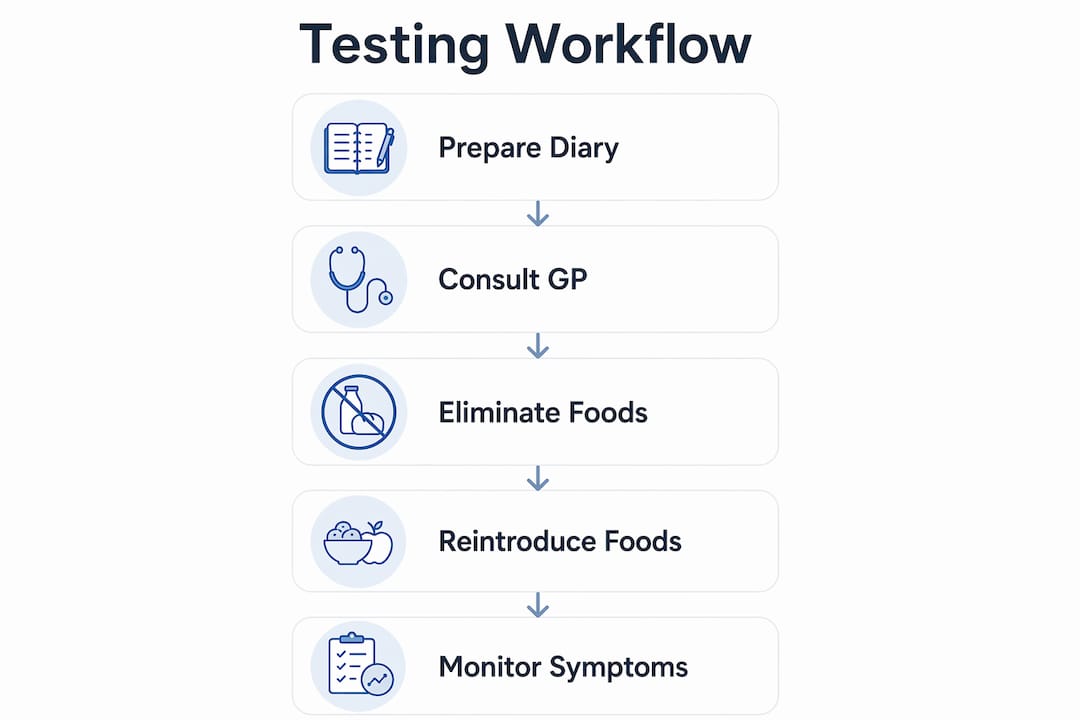
Building a thorough symptom and food history is foundational to effective healthcare advice and referral pathways in the UK. Without it, a GP cannot advise meaningfully, and a dietitian cannot design a safe elimination plan. You are not just keeping notes for yourself. You are creating the clinical evidence your healthcare team needs.
Before you begin, gather these resources:
- A food and symptom diary template (paper or digital, whichever you will actually use consistently)
- A list of your child’s current symptoms with approximate timing after meals
- Contact details for your GP and a referral request for a paediatric dietitian
- A basic understanding of common intolerance triggers: gluten, dairy, eggs, soya, and certain food additives
- Reliable educational resources, such as those available through Ukfoodintolerance’s parent guides
One step many parents skip is asking for professional support before starting. A paediatric dietitian does not just advise on what to remove. They protect your child’s nutritional intake throughout the process and interpret ambiguous results accurately.
Unvalidated commercial tests such as IgG blood panels and hair analysis are not recommended by the NHS or the British Dietetic Association. These tests can mislead parents and cause unnecessary dietary restrictions. Avoid them at the preparation stage. They are not a shortcut. They are a detour.
Pro Tip: Download a free food diary template from a reputable NHS-linked resource and use it for at least two weeks before your first GP appointment. The more detail you bring, the faster the process moves.
| Preparation step | Why it matters |
|---|---|
| 2–4 week food and symptom diary | Creates the clinical evidence base for your GP and dietitian |
| GP appointment with diary in hand | Enables appropriate referral and rules out other conditions |
| Paediatric dietitian referral | Protects nutrition and guides safe elimination planning |
| Avoid IgG and hair analysis tests | Prevents misleading results and unnecessary food restrictions |
| List of suspected trigger foods | Focuses the elimination phase and reduces over-restriction |
How to execute the elimination and reintroduction process
The elimination and reintroduction diet is the recognised method for identifying food intolerances in children. No reliable test exists for conditions like IBS or functional tummy pain. Diet modification is the mainstay of diagnosis and management.
The elimination phase
- Identify one or two suspected trigger foods based on your symptom diary. Do not eliminate six foods at once. Over-restriction makes it impossible to identify the actual cause and risks nutritional deficiency.
- Remove the suspected food completely for 2–4 weeks. Even small amounts can mask results, so read ingredient labels carefully.
- Monitor symptoms daily using your diary. Note any changes in bowel habits, skin, sleep, energy, and behaviour. Symptom improvements can take 1–6 weeks depending on the symptom type.
- Maintain nutritional balance throughout. If you remove dairy, replace calcium through fortified plant milks, green vegetables, or dietitian-recommended supplements.
- Do not extend the elimination phase beyond four weeks without professional guidance. Prolonged restriction without clear benefit is not appropriate for a growing child.
The reintroduction phase
Reintroduction is where the real diagnostic work happens. It is also the stage parents most often rush or abandon.
- Reintroduce one food at a time, in small amounts, over 3–5 days per food
- Keep all other variables constant during each reintroduction
- Record any returning symptoms within 48–72 hours of reintroduction
- If symptoms return clearly, that food is a likely trigger. Remove it again and allow symptoms to settle before testing the next food
- If no symptoms return, the food is likely tolerated. Keep it in the diet
For dairy specifically, the milk ladder protocol offers a structured, evidence-based reintroduction sequence. It starts with baked milk in small quantities and progresses gradually to fresh milk. This approach is NHS-endorsed and reduces the risk of reaction during reintroduction.
Seek professional support immediately if your child shows any signs of an allergic reaction during reintroduction, including hives, swelling, or breathing difficulty. These are allergy symptoms, not intolerance symptoms, and require urgent medical attention.

Statistic to note: Elimination phases last 2–4 weeks, and symptom improvements vary from 1–6 weeks depending on the symptom type. This means patience is not optional. It is built into the process.
You can find a detailed parent checklist for intolerance tests and a full elimination diet guide to support each stage of this workflow.
Common challenges and how to handle them
The testing process is rarely straightforward. Knowing the common pitfalls in advance helps you stay on track.
- Relying on unvalidated tests. Children’s diets were severely restricted after IgG or hair testing, yet symptoms persisted until correct identification via elimination diet. These tests do not diagnose intolerances. They create false certainty and delay proper investigation.
- Over-restriction causing nutritional gaps. Removing multiple food groups simultaneously puts a growing child at risk of deficiencies in calcium, iron, and essential vitamins. Always work with a dietitian if you are removing more than one major food group.
- Ambiguous symptoms. Some children improve partially during elimination but not completely. This may indicate multiple triggers, an unrelated condition, or a need to extend the diary period. Bring ambiguous results back to your dietitian rather than guessing.
- Child resistance. Children notice when their food changes. Involve them age-appropriately. Explain that you are trying to help them feel better. Focus on what they can eat, not what they cannot.
- Stopping too early. Parents sometimes reintroduce foods after one week of symptom improvement. The full 2–4 week elimination phase is necessary to produce reliable results.
“Parents should prioritise restoring and expanding their child’s diet to promote gut health rather than maintaining permanent exclusion diets. Focusing on gut restoration prevents the malnutrition risks linked to overly restrictive eating patterns.” — Paediatric dietitian guidance
The goal of the entire process is not a list of foods to avoid forever. It is a clear picture of which specific foods cause symptoms, so your child can eat as widely and nutritiously as possible. You can explore common childhood food intolerances in the UK to better understand what triggers are most frequently identified in children.
If you are concerned about allergens beyond the UK, resources covering allergen awareness in other regions can also help families living or travelling abroad understand local food labelling and risk.
Pro Tip: If your child’s symptoms are not improving after four weeks of careful elimination, do not add more restrictions. Go back to your GP. There may be an underlying condition that the elimination diet cannot address.
Key takeaways
A structured elimination and reintroduction diet, supervised by a paediatric dietitian, is the only validated method for identifying food intolerances in children in the UK.
| Point | Details |
|---|---|
| No validated intolerance test exists | Elimination and reintroduction diet is the NHS-endorsed gold standard for diagnosis. |
| Symptom diary is non-negotiable | Log food, behaviour, sleep, and bowel habits for 2–4 weeks before making any dietary changes. |
| Avoid IgG and hair analysis tests | These are not endorsed by the NHS or British Dietetic Association and can cause harmful over-restriction. |
| Reintroduce one food at a time | Testing foods individually over 3–5 days each produces reliable, usable results. |
| Expand diet after testing | The goal is the widest safe diet possible, not permanent exclusion. |
What I have learned from watching parents go through this process
The parents who get the clearest answers are almost never the ones who acted fastest. They are the ones who slowed down, kept detailed records, and worked with a professional rather than around one.
The most common mistake I see is the rush to remove foods based on a commercial test result. A parent receives a long list of “reactive” foods from an IgG panel, removes eight things from their child’s diet overnight, and then spends six months managing a nutritionally depleted child whose symptoms have not actually improved. The test felt like progress. It was not.
What actually works is less exciting but far more effective. Two weeks of careful diary-keeping. One GP appointment. A referral to a dietitian. A focused elimination of one or two foods. Four weeks of monitoring. Then a slow, structured reintroduction. That process, done properly, gives you real answers.
The other thing I would say is this: do not let the process become the whole story. Your child’s wellbeing is bigger than their food diary. Keep mealtimes as normal and enjoyable as possible. Children pick up on parental anxiety around food, and that anxiety can create its own problems. The testing process has a beginning and an end. Keep that in mind.
If you are at the start of this and feeling uncertain, that is completely normal. The process is genuinely unfamiliar. But it is also genuinely manageable, especially with the right support around you.
— Rob
How Ukfoodintolerance supports parents at every stage
Ukfoodintolerance provides parents with practical tools to support the child food intolerance process, from initial symptom identification through to understanding results.

The food intolerance tests available through Ukfoodintolerance use bio-resonance technology to screen over 900 food and non-food items from a simple hair sample collected at home. Results arrive within 48–72 hours as a clear digital report. For parents working alongside a GP or dietitian, these reports can provide a useful starting point for focusing the elimination phase on the most likely triggers. Ukfoodintolerance also offers expert guidance on interpreting results so you know exactly what your child’s report means and what to do next.
FAQ
What is the gold standard for diagnosing food intolerance in children?
The gold standard is a structured elimination and reintroduction diet supervised by a paediatric dietitian or GP. No validated clinical test for food intolerance exists in UK paediatric practice.
Are IgG blood tests or hair analysis reliable for child intolerance testing?
No. The NHS and the British Dietetic Association do not endorse IgG or hair analysis tests for food intolerance. These tests can mislead parents and cause unnecessary dietary restrictions.
How long does the elimination phase last?
The elimination phase typically lasts 2–4 weeks. Symptom improvements may take 1–6 weeks to appear, depending on the type of symptom involved.
What is the milk ladder?
The milk ladder is an NHS-endorsed reintroduction protocol for children with cow’s milk protein allergy. It gradually reintroduces dairy, starting with baked milk, to safely test tolerance over time.
When should I see a GP rather than testing at home?
See your GP before starting any elimination diet, and immediately if your child shows signs of an allergic reaction such as hives, swelling, or breathing difficulty. These symptoms require urgent medical assessment, not dietary adjustment.










Leave a Reply
Want to join the discussion?Feel free to contribute!