

TL;DR:
- Intolerance technology includes various diagnostic methods targeting immune responses, gas production, and gut mucosal responses to foods. While breath tests and elimination diets are clinically validated, IgG panels mainly measure exposure and are not recommended for diagnosis. Using tests alongside professional guidance and structured dietary reintroduction offers the most reliable approach to managing food sensitivities.
Intolerance technology is defined as the collection of diagnostic methods used to detect physiological reactions to foods, including immune responses, gas production, and gut mucosal changes. Explaining intolerance technology clearly matters because millions of people in the UK experience symptoms like bloating, fatigue, and skin reactions without a confirmed diagnosis. The main testing categories are IgG antibody panels, hydrogen breath tests, and cellular imaging techniques such as CellTolerance®. Each works differently, carries different levels of clinical validation, and suits different diagnostic situations. Understanding which method does what helps you make informed decisions rather than spending money on tests that may not answer your actual question.
What are the main types of intolerance technology?
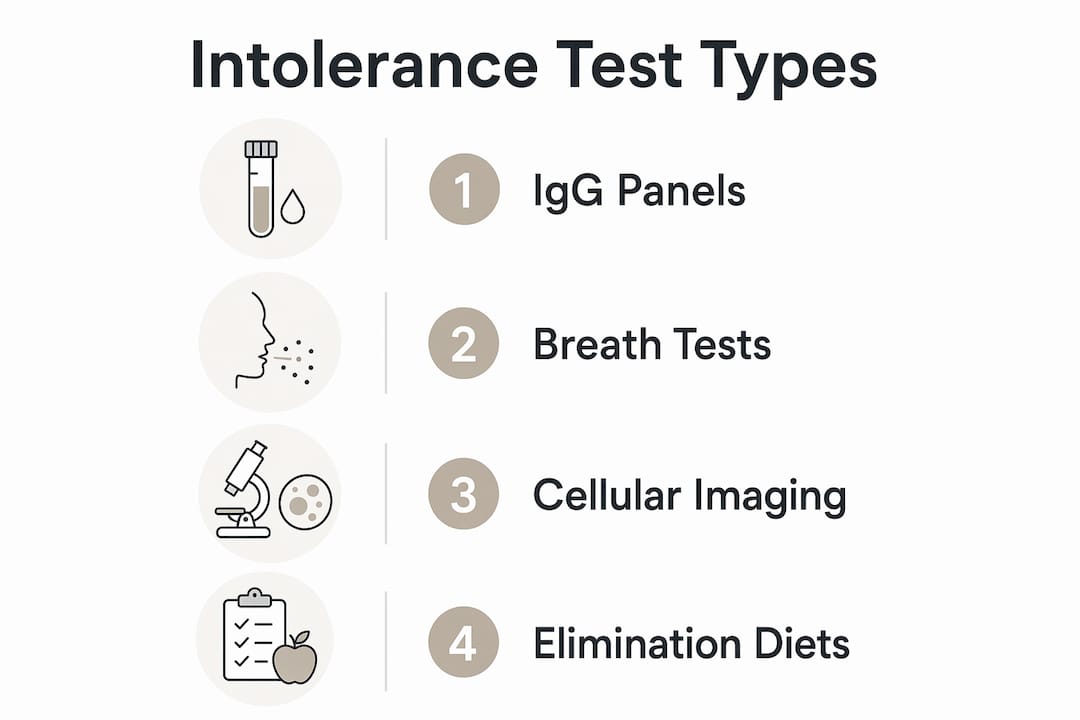
Intolerance testing methods fall into three broad categories, each targeting a different biological mechanism. Knowing how each one works is the foundation for evaluating whether a test is right for you.

IgG and IgG4 antibody panels measure food-specific immunoglobulin G antibodies in a blood sample. These antibodies are produced when your immune system encounters food proteins. The critical point is that IgG antibodies indicate exposure, not intolerance. Eating wheat regularly will raise your wheat IgG levels whether or not wheat causes you any symptoms. This distinction is why major allergy organisations do not recommend IgG panels as a diagnostic tool for food intolerance.
Hydrogen and methane breath tests are non-invasive and measure gases produced when gut bacteria ferment unabsorbed carbohydrates. You ingest a specific sugar solution, then provide breath samples at regular intervals over two to three hours. Breath testing diagnoses lactose and fructose intolerance as well as small intestinal bacterial overgrowth (SIBO). The choice of sugar substrate matters: lactulose, glucose, lactose, and fructose each probe different gut regions or processes, so different substrates measure different processes depending on what your clinician suspects.
Cellular imaging represents the most advanced end of the spectrum. CellTolerance® uses confocal laser endomicroscopy during an upper endoscopy procedure. Food antigens are sprayed directly onto the duodenal mucosa, and a clinician observes epithelial responses in real time. CellTolerance® tests up to five foods per session in a procedure lasting approximately 20 to 25 minutes. This provides direct, in vivo visualisation of gut responses rather than an indirect blood or breath marker.
There is also a fourth, less-discussed concept worth understanding: oral tolerance. Oral tolerance is an active immune process in which regulatory T cells instruct the immune system to accept common food proteins rather than react to them. This is not passive indifference. It is an actively maintained state, which explains why immune responses to food can shift over time and why test results are not always static.
- IgG panels: Blood-based, widely available, measures antibody levels, limited clinical validity for intolerance diagnosis
- Breath tests: Non-invasive, gas-based, clinically validated for carbohydrate malabsorption and SIBO
- Cellular imaging (CellTolerance®): Endoscopy-based, direct gut visualisation, limited food scope per session, specialist setting only
- Bio-resonance testing: Hair or skin-based, non-invasive, used in at-home and commercial settings including services like Ukfoodintolerance
How reliable are intolerance technology tests?
Reliability varies considerably across testing methods, and this is where understanding intolerance tech becomes genuinely useful rather than just academic.
| Test type | Clinical validation | Limitations |
|---|---|---|
| IgG antibody panels | Not recommended by major allergy bodies | Measures exposure, not intolerance; high false-positive rate |
| Hydrogen breath tests | Clinically validated for specific conditions | Requires strict preparation; substrate choice affects results |
| CellTolerance® cellular imaging | Emerging clinical evidence | Invasive, limited to five foods, specialist access only |
| Elimination and reintroduction diet | Gold standard per NHS and UK clinical guidance | Time-intensive, requires dietitian supervision |
The NHS and UK clinical guidance are clear: elimination diets supervised by a dietitian remain the validated approach for identifying food intolerances. No blood panel or breath test replaces the structured process of removing a suspected food and then reintroducing it under controlled conditions to observe symptom changes.
Breath tests hold up well scientifically when preparation is followed correctly. Standardised patient preparation including dietary restrictions and avoidance of antibiotics and probiotics before testing is what separates a reliable result from a misleading one. Skipping preparation steps is the single most common reason breath test results are inconsistent between patients with similar symptoms.
CellTolerance® shows genuine promise for targeted diagnostics, but its practical constraints are significant. It requires an endoscopy suite, a trained specialist, and can only assess a handful of foods per procedure. For most people, it is not a first-line option.
Pro Tip: If you are considering a breath test, ask your clinician specifically which substrate will be used and why. Lactulose tests for SIBO in the small intestine, while glucose tests are more specific to the proximal small bowel. Knowing the difference helps you interpret your results accurately.
Common misconceptions about intolerance test results
Misinterpreting intolerance technology results is one of the most common and consequential mistakes people make when investigating food sensitivities. The consequences range from unnecessary dietary restriction to masking the real trigger entirely.
The most widespread misconception involves IgG panels. A positive result for ten or fifteen foods does not mean you are intolerant to all of them. IgG panels can lead to over-restrictive diets because the elevated antibodies simply reflect what you eat regularly. If you consume eggs, dairy, and wheat daily, those foods will likely appear on your panel regardless of whether they cause symptoms. Eliminating all of them simultaneously makes it impossible to identify which food, if any, was the actual trigger.
“Clinicians favour elimination-rechallenge protocols over broad IgG-based restrictions to accurately identify triggers and avoid nutritional harm from unnecessary food removal.”
Breath test results carry their own interpretation pitfalls. Inconsistent preparation leads to variable results even in patients with identical symptoms. A positive SIBO result from a poorly prepared test may prompt antibiotic treatment that was never needed. This is why clinical context, including your symptom history and recent medication use, must accompany any breath test result.
A few other misconceptions worth addressing directly:
- A positive IgG result is not a diagnosis. It is a signal that requires clinical interpretation, not a banned food list.
- Removing multiple foods at once based on panel results can cause nutritional deficiencies, particularly in protein, calcium, and B vitamins.
- Bio-resonance and hair-based tests operate on different principles from IgG panels and should be understood within their own framework, not conflated with blood antibody testing.
- No single test replaces a full clinical assessment. Intolerance testing works best as one input among several, including symptom diaries, dietary history, and professional review.
Understanding allergy versus intolerance distinctions is also critical before interpreting any result, since the two involve different immune mechanisms and require different management approaches.
Practical applications of intolerance technology in managing sensitivities
Knowing how intolerance technology works is only useful if you can translate results into a practical health plan. The applications of intolerance technology are most effective when tests are used as a starting point rather than a final verdict.
-
Start with a symptom diary. Before any test, document your symptoms, their timing, and their relationship to meals for at least two weeks. This gives a clinician the context needed to choose the right test and interpret results meaningfully.
-
Use breath testing for specific carbohydrate suspects. If you suspect lactose or fructose intolerance, or if your GP suspects SIBO, a hydrogen breath test is the appropriate first step. It is non-invasive, clinically validated, and produces results that directly inform dietary changes.
-
Follow a structured elimination diet under professional supervision. The elimination and reintroduction approach is the gold standard for confirming food triggers. Remove one suspected food at a time, wait two to four weeks, then reintroduce it and observe symptom changes. A registered dietitian should oversee this process.
-
Reserve cellular imaging for complex or unresolved cases. CellTolerance® is best suited to patients who have not found answers through standard testing and whose symptoms point strongly to a gut mucosal response. It requires referral to a specialist gastroenterology unit.
-
Integrate results with broader health assessments. Always rule out coeliac disease and IgE-mediated food allergies before attributing symptoms to intolerance. These conditions require different management and carry different health risks.
Pro Tip: When using an at-home test such as those offered by Ukfoodintolerance, treat your results as a personalised starting point for an elimination trial rather than a definitive diagnosis. The report tells you where to look. The elimination process confirms what you find.
Oral tolerance biology adds an important layer here. Immune response modulation takes time and is not instantly reversible by diet alone. If you have been avoiding a food for months, reintroducing it may trigger a response that was not present before the elimination period. This is normal immune behaviour, not evidence that the food has become newly problematic.
For guidance on identifying food triggers safely, combining test results with a structured reintroduction plan gives you the clearest picture of what your body is actually responding to.
Key takeaways
Intolerance technology is most effective when the right test is matched to the right clinical question, and results are interpreted alongside professional guidance rather than in isolation.
| Point | Details |
|---|---|
| IgG panels measure exposure | Elevated IgG antibodies reflect dietary habits, not confirmed intolerance, so positive results need clinical interpretation. |
| Breath tests are clinically validated | Hydrogen breath testing reliably diagnoses lactose, fructose intolerance, and SIBO when preparation protocols are followed correctly. |
| Elimination diets remain the gold standard | NHS guidance supports structured elimination and reintroduction as the most reliable method for confirming food triggers. |
| Cellular imaging is specialist-only | CellTolerance® provides direct gut visualisation but requires endoscopy and is limited to five foods per session. |
| Professional supervision prevents harm | Removing multiple foods without dietitian guidance risks nutritional deficiency and obscures the actual trigger. |
My honest view on where intolerance technology actually stands
I have spent considerable time reviewing the evidence behind intolerance testing, and the picture is more nuanced than most commercial messaging suggests. The science is genuinely interesting. The problem is that the most accessible tests are often the least validated, while the most validated methods are the least accessible.
IgG panels are everywhere because they are easy to sell and easy to take. But the immunology does not support their use as a diagnostic tool. Food tolerance is an active immune adaptation, not a passive state, and a raised IgG level tells you your immune system has noticed a food, not that it is fighting one. Treating a long list of IgG positives as a dietary prescription is one of the most common ways people end up with unnecessarily restricted diets and no clearer answers than before.
Breath testing is genuinely useful, but only when preparation is taken seriously and the right substrate is chosen for the right question. I have seen cases where patients received conflicting results from the same test at different clinics, simply because preparation protocols were not standardised. The test is sound. The execution is where things go wrong.
Cellular imaging excites me scientifically. Watching a gut respond to a food antigen in real time is a meaningful step forward. But it is a long way from being a routine diagnostic tool, and the five-food-per-session limit means it will remain a specialist option for complex cases for the foreseeable future.
What I find most encouraging is the evolving research into oral tolerance and regulatory T cells from institutions like Stanford. Understanding why the immune system tolerates food, and what disrupts that tolerance, will eventually produce better diagnostics than anything currently available. We are not there yet, but the direction is right.
For now, the most honest advice is this: use technology as a guide, not a verdict. Combine whatever test you choose with a structured dietary approach and professional input. That combination consistently outperforms any single test used alone.
— Rob
Discover Ukfoodintolerance’s testing options
If you are ready to take the next step, Ukfoodintolerance offers a range of non-invasive, at-home testing options designed to give you a clear starting point for understanding your food sensitivities. The service uses bio-resonance technology with hair samples, covering over 1,100 items in the Ultimate Single Intolerance Test and 500 items in the Core Single Intolerance Test. Results are delivered digitally within 48 to 72 hours, with clear guidance on how to use them. You can explore the full range of intolerance tests or read more about the bio-resonance methodology behind the service. For help interpreting your results, the sensitivity report guide walks you through every section in plain language.
FAQ
What does intolerance technology actually test for?
Intolerance technology tests for physiological reactions to foods, including immune antibody responses (IgG panels), gas production from carbohydrate malabsorption (breath tests), and direct gut mucosal reactions (cellular imaging). Each method targets a different biological mechanism, so the right test depends on your specific symptoms and clinical history.
Are IgG food intolerance tests reliable?
IgG tests are not recommended by major allergy organisations for diagnosing food intolerance because elevated IgG antibodies reflect food exposure rather than a confirmed intolerance reaction. They can be a useful starting point for discussion with a clinician, but should not be used to create a list of foods to eliminate without professional guidance.
How does a hydrogen breath test work?
A hydrogen breath test measures gases produced when gut bacteria ferment unabsorbed sugars. You drink a sugar solution, then provide breath samples at intervals over two to three hours. Raised hydrogen or methane levels indicate malabsorption or bacterial overgrowth, depending on the substrate used.
What is the gold standard for diagnosing food intolerance?
The gold standard is a structured elimination and reintroduction diet supervised by a registered dietitian, as recommended by the NHS and UK clinical guidance. This process removes a suspected food, waits for symptoms to settle, then reintroduces it to confirm whether it is the trigger.
Can at-home intolerance tests replace clinical testing?
At-home tests, including bio-resonance hair tests offered by services like Ukfoodintolerance, provide a practical and accessible starting point for identifying potential sensitivities. They work best when used to guide an elimination trial rather than as a standalone diagnosis, particularly for complex or persistent symptoms that warrant clinical review.










Leave a Reply
Want to join the discussion?Feel free to contribute!