

TL;DR:
- Using intolerance results for family meal planning involves separating confirmed intolerances from preferences to create a clear, shared reference. Implementing a modular meal approach and smart ingredient swaps simplifies cooking while maintaining nutritional balance and family togetherness. Regular tracking and reintroduction help refine the plan, reducing stress and expanding safe food options over time.
You’ve received the intolerance test results. Now what? Knowing how to use intolerance results for family meal planning is where most parents get stuck. The results sit on the kitchen table while mealtimes become a source of anxiety rather than connection. Get this step wrong and you risk over-restricting everyone’s diet, cooking three separate meals every evening, or missing nutritional gaps that build up quietly over months. Get it right and you have a clear, repeatable system that keeps the whole family eating well together. This guide walks you through exactly that, from reading the results to building a weekly plan that works.
Table of Contents
- Key takeaways
- How to use intolerance results for family meal planning
- Mapping your family’s intolerance profiles
- Executing the plan: recipes, swaps, and kitchen safety
- Verifying and refining your meal plan
- My honest take on managing family meals with intolerances
- Start with the right test
- FAQ
Key takeaways
| Point | Details |
|---|---|
| Separate hard exclusions from preferences | Build your meal plan around confirmed intolerances first, then layer in personal food preferences. |
| Map every family member’s profile | Collect each person’s results into one reference document before selecting a single recipe. |
| Use modular meal building | Choose one safe base recipe and add individual components on top to avoid cooking multiple separate meals. |
| Track symptoms after changes | Keep a simple food and symptom journal to catch reactions and refine your plan over time. |
| Reintroduction prevents over-restriction | Elimination is temporary. Structured reintroduction widens your family’s safe food options safely. |
How to use intolerance results for family meal planning
Before you can plan a single meal, you need to understand what your results actually mean. Not everything flagged in an intolerance report requires permanent removal from the family diet. That distinction matters enormously.
Food intolerances are dose-dependent sensitivities. They differ from true allergies, which trigger an immune response and can be life-threatening. An intolerance means the body struggles to process a food in certain amounts, often causing digestive discomfort, fatigue, or skin reactions. A food allergy requires strict, lifelong avoidance. A preference is simply something a family member dislikes. These three categories need to sit in separate columns when you start meal planning with intolerance results, because treating them all the same leads to unnecessary restriction.
Within the results themselves, it helps to think in terms of hard safety constraints and preference constraints. A hard safety constraint is a confirmed intolerance or allergy that must be excluded. A preference constraint is flexible. Coordinating these two layers across family members is how you identify the pool of recipes everyone can share safely.
The other concept parents often misunderstand is the elimination phase. An elimination diet is temporary by design. You remove suspected triggers, monitor symptoms, then reintroduce foods methodically to identify what actually causes a problem and at what quantity. Reintroduction is non-negotiable for avoiding unnecessarily broad long-term restrictions. Skipping it means your family may avoid perfectly tolerable foods for years without reason.
- Confirmed intolerance: exclude during the elimination phase, then reintroduce under guidance
- Confirmed allergy: exclude permanently and consult a healthcare professional
- Mild sensitivity: monitor portion size rather than removing the food entirely
- Preference: accommodate where practical but do not treat as a safety issue
Pro Tip: Keep a copy of your intolerance test results in a shared digital folder so all caregivers, including grandparents and childminders, are working from the same information.
Mapping your family’s intolerance profiles
Once you understand what each result means, the next step is organising the data so it is useful at a glance. One family member’s intolerance results alone can feel manageable. Two or three sets of results quickly become complicated without a clear reference system.
Start by creating a simple table. List each family member across the top row and their confirmed exclusions down the side. Then add a separate column for preferences. This gives you a single page that answers the question: what can everyone eat?
| Family member | Hard exclusions | Preferences to avoid |
|---|---|---|
| Parent A | Gluten, cow’s milk | Shellfish |
| Parent B | None confirmed | Red meat |
| Child (age 8) | Egg, soy | Mushrooms |
| Child (age 5) | Lactose | None |
With this table in front of you, recipe filtering becomes straightforward. You look for recipes that naturally exclude gluten, cow’s milk, egg, and soy, then adapt where needed. Household-level recipe filtering like this cuts planning time significantly and prevents the daily scramble of checking every ingredient.

Nutritional gaps are the hidden risk when multiple intolerances overlap. Removing dairy affects calcium intake. Removing gluten can reduce B vitamins and fibre if not replaced thoughtfully. Removing egg and soy together limits key protein sources. A nutrient checklist for children with intolerances is a practical tool here. A registered dietitian can also review your plan to confirm nutritional adequacy, particularly for growing children.
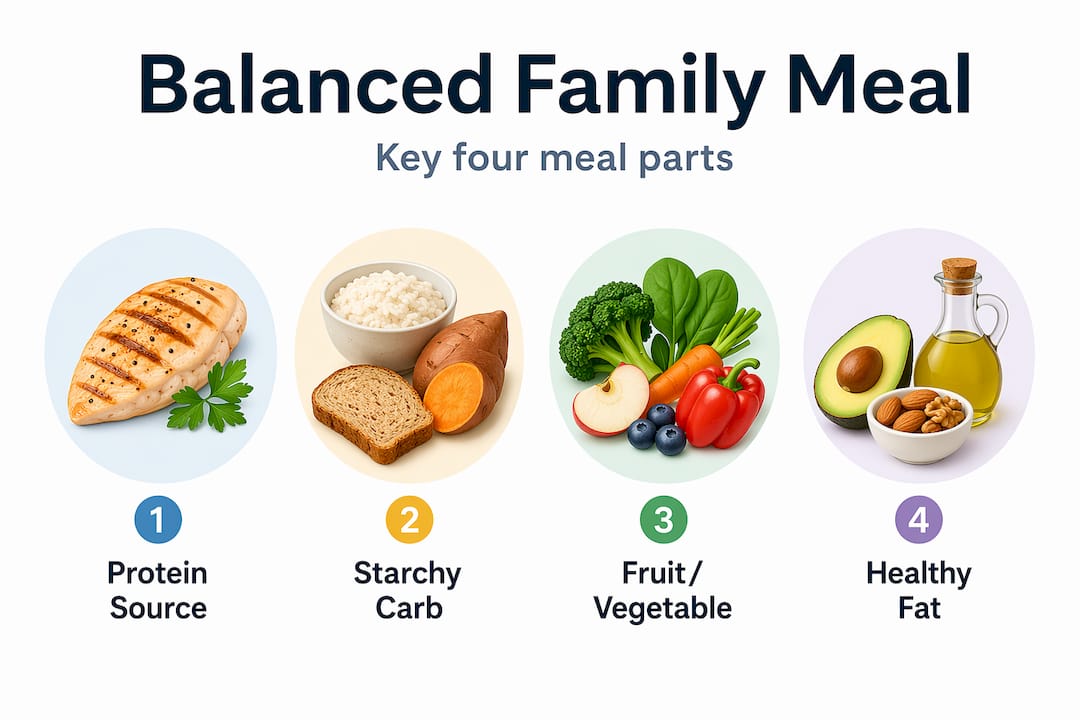
Balanced meals for families managing dietary restrictions should include all four components: a protein source, a starchy carbohydrate, fruit or vegetables, and a healthy fat. Planning three meals a day around this framework prevents nutritional gaps and reduces decision fatigue across the week.
Pro Tip: Use a free app or a shared spreadsheet to log each person’s exclusions. When you search for recipes, you can filter by ingredient and immediately spot conflicts before committing to a meal.
Executing the plan: recipes, swaps, and kitchen safety
With your profiles mapped and nutritional needs understood, you move into the practical work of building actual meals. This is where most parents worry they will end up cooking four different dinners every night. You do not have to.
Choosing and adapting recipes
Start with the overlapping safe zone from your family profile table. Search for recipes that naturally exclude your hard constraints rather than adapting recipes that heavily rely on them. A Thai green curry made with coconut milk instead of cream, served with rice, is naturally free of dairy and gluten. A lentil and vegetable soup is free of egg, soy, and dairy by default. These recipes require little adaptation and work for everyone at the table.
When you do need to adapt a recipe, ingredient swaps are your main tool. Lactose-free dairy products preserve the texture and taste of familiar meals without requiring a separate dish. Lactose-free cheese melts the same way. Lactose-free milk works in sauces, pancakes, and baked goods. For egg-free cooking, flax eggs (one tablespoon of ground flaxseed mixed with three tablespoons of water) bind well in baked goods. Tamari is a straightforward soy-free alternative to soy sauce.
Batch cooking and modular meals
Batch cooking allergy-safe meals and storing individual portions is one of the most time-effective strategies available to busy parents. Spend two to three hours on a Sunday preparing base components and you remove the daily pressure of creating safe meals from scratch.
The modular meal approach works particularly well for families with multiple intolerances. Cook one safe base, then offer separate add-on components:
- Prepare a core base: grilled chicken, roasted vegetables, and rice cooked in stock
- Set out add-ons in small bowls: grated dairy-free cheese, a standard cheese, sliced avocado, and toasted seeds
- Each family member builds their own plate using the shared base plus their permitted add-ons
- One meal. One cooking session. No separate plates required.
This approach also works for taco nights, rice bowls, pasta dishes (using gluten-free pasta for the base), and jacket potatoes. The key is that the base is safe for everyone and the variation happens at the table, not at the hob.
Kitchen practices to prevent cross-contact
Cross-contact is the transfer of an allergen or intolerant ingredient from one food or surface to another. It is a serious consideration, particularly for confirmed allergies. Allergen proteins are not destroyed by cooking, which is why physical separation and proper cleaning matter far more than most people realise.
- Use dedicated chopping boards, utensils, and pots for allergen-free preparation
- Wash equipment with soap and water, not just a wipe or hand sanitiser
- Store allergen-free ingredients on a higher shelf to prevent drips or spills
- Prepare allergen-free dishes first, before introducing other ingredients into the kitchen session
Pro Tip: Colour-code your chopping boards. One colour per major allergen constraint. It takes seconds to grab the right board and removes the risk of absent-minded cross-contact during a busy weeknight.
Verifying and refining your meal plan
A meal plan built on intolerance results is not a finished document. It is a starting point. The only way to know whether it is working is to track what happens after meals.
Keeping a simple food and symptom journal does not need to be complicated. A notes app on your phone works perfectly. Log what the family ate, note any symptoms in the hours that follow, and look for patterns across two to three weeks. This data is what allows you to refine the plan with confidence rather than guesswork.
The reintroduction phase follows the elimination period, usually after four to six weeks. Done properly, it reveals which foods genuinely cause symptoms and at what quantity. Phase-based reintroduction introduces one food at a time over a few days, watches for reactions, then moves to the next. This is how families discover that a small amount of a flagged food is actually tolerable, which opens up far more recipe options.
- Introduce one food at a time, not multiple new additions in the same week
- Wait three to five days before introducing the next food, to allow any delayed reactions to appear
- Record portion sizes alongside symptoms, because threshold matters with intolerances
- If a reaction occurs, remove the food and discuss next steps with a healthcare professional
Many parents are surprised to find that avoiding long-term over-restriction actually expands their family’s meal options significantly. Foods they assumed were permanently off the table turn out to be well-tolerated in moderate amounts. That knowledge directly reduces mealtime stress and improves dietary variety.
If symptoms persist despite careful planning, or if reactions are severe, speak to your GP or a registered dietitian. Professional support is not a last resort. It is simply part of managing intolerances well.
Pro Tip: Take a photo of each meal alongside a short note about how everyone felt afterwards. A visual record is far easier to review than a written list when you’re spotting patterns across several weeks.
My honest take on managing family meals with intolerances
I’ve seen families tie themselves in knots trying to be perfect about every meal from day one. In my experience, that approach creates more stress than the intolerances themselves. The first week of planning meals with dietary restrictions feels genuinely hard. By week three, most families tell me it feels like a new normal.
What I’ve learned is that the biggest mistake parents make is treating the initial exclusion list as permanent. It rarely is. The intolerance report is a starting point, not a life sentence. I’ve watched families remove seven or eight foods from their diet indefinitely when careful reintroduction would have shown them that three were the real culprits.
The other thing I’d push back on is the instinct to cook separate meals for different family members. I understand the reasoning, but it quietly separates the family at mealtimes and adds enormous effort to your day. One shared meal, built on a safe base, does more for family wellbeing than perfectly tailored individual plates. The modular approach I’ve described above achieves both safety and togetherness. That combination is what actually sticks long-term.
Stay flexible. Intolerance knowledge evolves, your children’s tolerances may shift as they grow, and your confidence in the kitchen will build faster than you expect.
— Rob
Start with the right test

Planning meals with intolerance requires clear, reliable results to work from. At Ukfoodintolerance, the family intolerance tests cover up to 1,100 food and non-food items per person, with results delivered digitally within 48 to 72 hours. You collect a small hair sample at home, post it to the UK laboratory, and receive a detailed report ready to feed directly into your meal planning system. Ukfoodintolerance also provides step-by-step guidance on interpreting your results so you understand exactly what to act on. Explore the full range of tests and find the right fit for your family’s needs.
FAQ
What is the first step in using intolerance results for meal planning?
Separate each family member’s confirmed intolerances from preferences and create a single reference table. This gives you a clear view of the overlapping safe ingredients before you search for recipes.
How do I avoid nutritional gaps when planning meals with intolerances?
Build every meal around four core components: a protein source, starchy carbohydrate, fruit or vegetables, and a healthy fat. Where intolerances remove common sources, identify safe alternatives for calcium, B vitamins, and protein.
Can I use the same meal for the whole family even with multiple intolerances?
Yes. A modular meal approach uses one safe base recipe and separate add-on components at the table. This keeps cooking simple and ensures everyone shares the same meal experience.
How long should an elimination phase last before reintroduction?
Most elimination phases last four to six weeks, followed by structured reintroduction of one food at a time. This process identifies genuine triggers and establishes which foods are tolerated in normal portions.
How do I prevent cross-contact when cooking for food sensitivities?
Use dedicated utensils and chopping boards for allergen-free preparation, clean equipment with soap and water rather than hand sanitiser alone, and prepare allergen-free components first in any cooking session.










Leave a Reply
Want to join the discussion?Feel free to contribute!