

TL;DR:
- Food intolerance is distinct from allergy, involving dose-dependent physiological reactions that are rarely life-threatening. Advances in objective testing, including hydrogen breath tests and home kits, improve diagnosis but require professional guidance to prevent nutritional deficiencies. The rising awareness in 2026 is driven by better education, social trends, and improved testing, though many reported intolerances lack clinical confirmation.
Food intolerance is one of the most talked about yet most misunderstood areas of health in the UK right now. More people than ever are reporting symptoms they suspect are food related, yet explaining food intolerance trends 2026 requires cutting through a tangle of conflicting information, social media noise, and genuine clinical advances. The picture is more nuanced than headlines suggest. This guide gives you a clear, grounded view of what is actually happening, how diagnosis is changing, and what the 2026 dietary changes mean for you practically.
Table of Contents
- Key takeaways
- Explaining food intolerance: definitions and common types
- Testing trends: diagnosis in the UK in 2026
- Social and epidemiological trends driving food intolerance awareness 2026
- Practical dietary strategies for managing intolerances in 2026
- My take on where all this is heading
- How Ukfoodintolerance can help you in 2026
- FAQ
Key takeaways
| Point | Details |
|---|---|
| Intolerance differs from allergy | Food intolerance is not immune-mediated, meaning it is dose-dependent and rarely life-threatening. |
| Testing options are expanding | Hydrogen breath tests and home intolerance kits now offer more accessible routes to objective diagnosis. |
| Social trends are driving awareness | Rising free-from food availability reflects demand, but not all reported intolerances are clinically confirmed. |
| Diet changes need professional support | Eliminating food groups without guidance risks nutritional deficits, particularly calcium from dairy. |
| Home testing empowers early action | Non-invasive hair sample tests can help you identify potential triggers before seeking clinical referral. |
Explaining food intolerance: definitions and common types
Before you can make sense of any trend, you need a solid foundation. Food intolerance and food allergy are not the same thing. This distinction matters enormously, yet the two terms are still used interchangeably in everyday conversation and, frustratingly, across much of the media.
A food allergy triggers an immune system response, sometimes severe and rapid, as seen with peanut or shellfish reactions. Food intolerance is different. It is a physiological reaction that does not involve the immune system in the same way. Instead, it typically relates to the body’s inability to digest or process a particular substance properly. Crucially, reactions are usually dose-dependent. You might tolerate a small amount of the offending food without any symptoms at all, while a larger portion causes significant discomfort.
The most commonly reported intolerances in the UK include:
- Lactose intolerance. Caused by reduced lactase enzyme activity after weaning. Lactose intolerance affects around 5 to 15% of Northern European populations, making it one of the most prevalent intolerances in the UK.
- Non-coeliac gluten sensitivity. Distinct from coeliac disease, which is an autoimmune condition. Gluten sensitivity causes digestive and systemic symptoms without the small intestinal damage seen in coeliac disease.
- Histamine intolerance. An increasingly recognised condition where the body struggles to break down histamine found in aged cheeses, wine, and fermented foods. Histamine intolerance may affect approximately 1 to 3% of the global population, and its symptoms can closely mimic those of a true allergy.
- FODMAP sensitivity. A broad category involving fermentable carbohydrates that can trigger bloating, gas, and discomfort in those with irritable bowel syndrome.
Symptoms of food intolerance generally include bloating, wind, abdominal pain, diarrhoea, and fatigue. They tend to appear hours after eating rather than within minutes, which makes pinpointing the cause significantly harder.
Pro Tip: If you suspect a food intolerance, keep a detailed food and symptom diary for at least two weeks before drawing conclusions. Timing, portion size, and food combinations all affect how symptoms present.
Testing trends: diagnosis in the UK in 2026
How intolerances are diagnosed is changing, and 2026 food sensitivity insights show a clear shift toward more objective, physiology-based methods rather than symptom assessment alone.

Historically, diagnosis started with a clinical consultation, followed by an elimination diet supervised by a dietitian. You remove the suspected food, monitor symptoms, then reintroduce it in a structured way. This remains the gold standard in many cases. However, it is time-consuming, requires discipline, and depends heavily on the patient’s ability to record and report symptoms accurately.
Hydrogen breath testing
Hydrogen breath testing has become an increasingly used tool for investigating lactose and other carbohydrate malabsorption. NHS breath testing measures the gases produced when undigested sugars are fermented by gut bacteria. You drink a solution containing the test sugar, then breathe into a device at timed intervals. A rise in hydrogen above a certain threshold suggests malabsorption. It is objective, non-invasive, and one of the clearest indicators of what the body is genuinely struggling to process.
NHS versus private testing
| Route | Cost | Wait time | Accessibility |
|---|---|---|---|
| NHS (GP referral) | Free | Weeks to months | Requires referral; not always offered |
| Private clinic | £145 to £500 | Days to weeks | Wide availability; no referral needed |
| Home intolerance test kit | Lower cost | 48 to 72 hours | Immediate; postal sample submission |
The NHS route is free but comes with waiting times and referral thresholds that mean many people with mild to moderate symptoms do not qualify. Private hydrogen breath testing is accessible but can be costly. Home testing kits, particularly those using bioresonance technology with hair samples, have filled a significant gap for people who want clear information quickly and affordably. You can read more about home intolerance testing trends to understand how reliability and methodology have developed.
Pro Tip: If you are planning a hydrogen breath test, be aware that recent antibiotic use can cause false negatives by disrupting the gut bacteria needed to produce detectable hydrogen. Always inform your clinician or testing provider beforehand.
Social and epidemiological trends driving food intolerance awareness 2026
The perceived rise in food intolerance is real, but the reasons behind it are layered. Understanding them helps you separate genuine clinical trends from social phenomena.
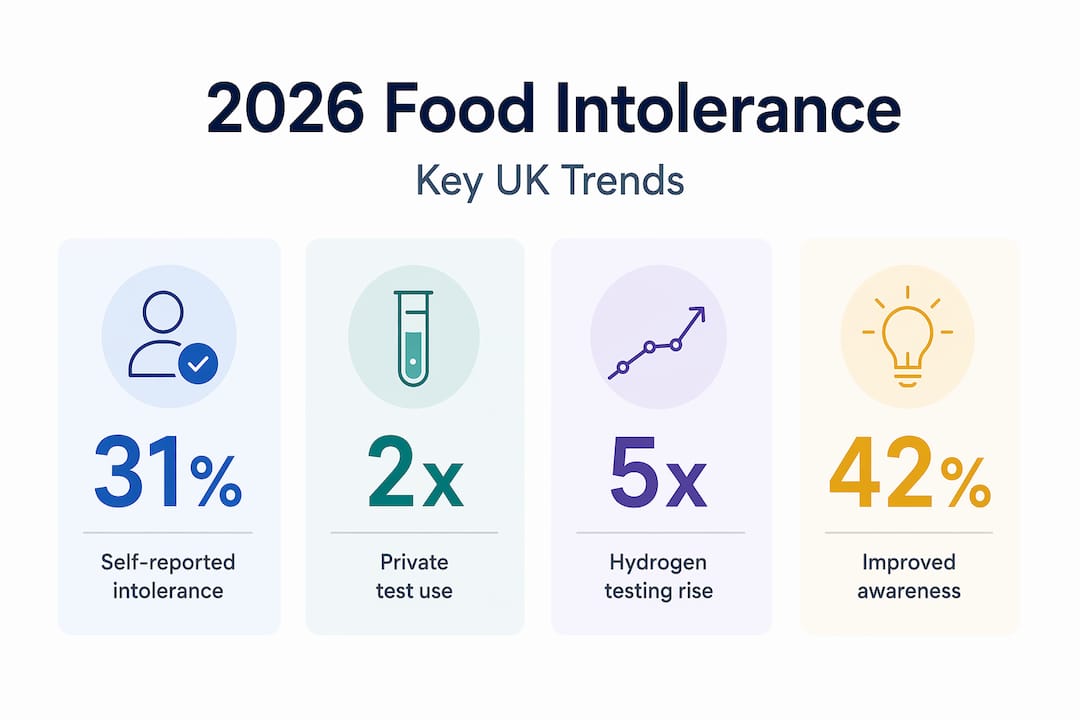
There is genuine evidence that food allergy prevalence is increasing substantially. Proposed explanations include changes to gut microbiome diversity driven by antibiotic overuse, ultra-processed food consumption, and reduced early exposure to environmental microbes. Climate change is also implicated, with altered pollen seasons affecting immune system sensitisation.
For food intolerances specifically, the picture is more complex:
- Better awareness leads to more reporting. People are more informed than ever, and symptoms previously dismissed as “just stress” or “a sensitive stomach” are now being attributed, sometimes correctly, to specific foods.
- Public health communications are improving. There is a concerted effort to educate on allergy vs intolerance so that people seek appropriate testing rather than blanket elimination diets.
- Free-from food is now mainstream. Every major UK supermarket dedicates substantial shelf space to dairy-free, gluten-free, and low-FODMAP options. This reflects genuine demand but also a broader cultural shift toward dietary self-management.
- Social media amplifies both good information and misinformation. Trends like eliminating histamine or going carnivore attract large followings, some of which are based on legitimate sensitivity research and some of which are not.
The caution worth repeating is this. Not every reported intolerance is a confirmed one. Many reported intolerances lack objective confirmation, which risks people eliminating nutritious foods unnecessarily. This is one reason why the trends in dietary restrictions being observed across the UK in 2026 carry both promise and risk in equal measure.
Practical dietary strategies for managing intolerances in 2026
Once you have a clearer picture of what your body is reacting to, the next step is adapting your diet in a way that is both effective and nutritionally sound. Here is a structured approach that reflects current best practice.
-
Test before you eliminate. Guessing at intolerances and removing multiple food groups at once makes it nearly impossible to identify the actual trigger. Use a credible test to narrow down candidates first. Explore the options for non-invasive intolerance testing before committing to any elimination approach.
-
Protect nutritional balance during dairy reduction. Calcium is the most common casualty of dairy elimination. Fortified oat milk, calcium-set tofu, and leafy greens like kale can compensate, but you need to be deliberate about it. Professional guidance alongside testing is strongly recommended to avoid deficits that can take months to present but cause real harm.
-
Introduce reductions gradually. If lactose is the issue, you may not need to eliminate it entirely. Many people with lactose intolerance can tolerate hard cheeses and yoghurt in moderate amounts because these contain lower lactose levels. Start by reducing, not removing.
-
Build a personal tolerance profile. This is where testing really earns its value. Rather than following a generic elimination plan, knowing your specific sensitivities allows you to make targeted adjustments. Keep track of portion sizes, food combinations, and symptom timing as you reintroduce foods one at a time.
-
Work with a registered dietitian if symptoms persist. Self-management is empowering, but it has limits. If symptoms continue after dietary adjustment, clinical support is the appropriate next step, particularly to rule out conditions like coeliac disease or inflammatory bowel disease that require medical management.
Pro Tip: When reintroducing a suspect food after elimination, do it on a day with minimal other variables. Avoid alcohol, stress, and other dietary changes on the same day so you can attribute any reaction clearly.
My take on where all this is heading
I have spent considerable time watching how the food intolerance space has evolved, and I think we are at a genuinely interesting inflection point. The move toward objective testing is overdue. For too long, intolerance management relied on self-reported symptoms and broad elimination diets that often removed far more than necessary.
What concerns me is the gap between what testing can tell you and what people expect it to tell them. A test result is a starting point, not a final answer. I have seen people receive a list of reactive foods and immediately cut all of them without any dietary support, only to end up nutritionally depleted and no clearer on which items were actually causing problems.
The food intolerance awareness 2026 conversation is moving in the right direction overall. More accurate diagnostics, better education on the allergy versus intolerance distinction, and more accessible home testing options all represent real progress. But the societal pressure to have a special diet, to identify with a food restriction, is creating noise that makes it harder to find the signal.
My honest view is that the technology is ahead of the public’s ability to interpret it wisely. The answer is not less testing. It is more support alongside testing, better information, and a willingness to sit with a result that might be subtler than you expected.
— Rob
How Ukfoodintolerance can help you in 2026
If you have been reading about 2026 dietary changes and wondering where to start, Ukfoodintolerance offers a practical, affordable entry point. Their at-home tests use bioresonance technology with a simple hair sample to screen for sensitivities across hundreds of food and environmental items, with results delivered digitally within 48 to 72 hours.

You can browse their full range of available intolerance tests to find the option that suits your needs and budget, whether that is the Core Single Intolerance Test covering 500 items or the Ultimate Single Intolerance Test covering over 1,100. Each report comes with clear guidance to help you understand your results and use them to shape a sensible, targeted dietary approach. For those who want convenient testing at home, their home test kits are a straightforward starting point.
FAQ
What is the difference between food intolerance and food allergy?
Food intolerance does not involve the immune system in the way that a food allergy does. Reactions tend to be dose-dependent and delayed, whereas allergies can cause rapid and potentially severe immune responses.
How is lactose intolerance diagnosed in the UK?
Diagnosis typically begins with clinical symptoms, and secondary care may offer hydrogen breath testing. The NHS advises caution around premature elimination, particularly in young children, to avoid unnecessary dietary restriction.
Are home intolerance test kits reliable?
Home tests using bioresonance technology provide a non-invasive way to screen for potential sensitivities across a broad range of items. They are best used as an informative starting point to guide dietary investigation rather than as a standalone clinical diagnosis.
Why are more people reporting food intolerances in 2026?
Increased public awareness, improved reporting, dietary industry growth, and changes to gut microbiome health all contribute to rising reported rates. However, many reported intolerances remain unconfirmed by objective testing, which underlines the value of proper assessment before eliminating foods.
Is it safe to eliminate foods without professional guidance?
Removing food groups without support carries real nutritional risks. Calcium deficiency from unguided dairy elimination is one of the most common consequences. Working with a dietitian or using a structured testing approach helps you make targeted changes without compromising your overall nutrition.










Leave a Reply
Want to join the discussion?Feel free to contribute!