

TL;DR:
- Reliable identification of food triggers requires detailed tracking and professional guidance.
- Supervised elimination diets are the gold standard for diagnosing food intolerances.
- Commercial non-invasive tests often lack scientific validity and can lead to unnecessary restrictions.
Living with unexplained bloating, fatigue, skin flares, or digestive discomfort is exhausting, especially when you cannot point to a clear cause. Millions of people in the UK experience these symptoms daily without ever realising that food could be the culprit. The good news is that there is a clear, methodical route to identifying your triggers safely, without invasive procedures or endless guesswork. This article walks you through every stage, from preparation and tracking to testing and interpreting results, so you can take confident steps towards feeling better.
Table of Contents
- What you need before starting: preparation and safety
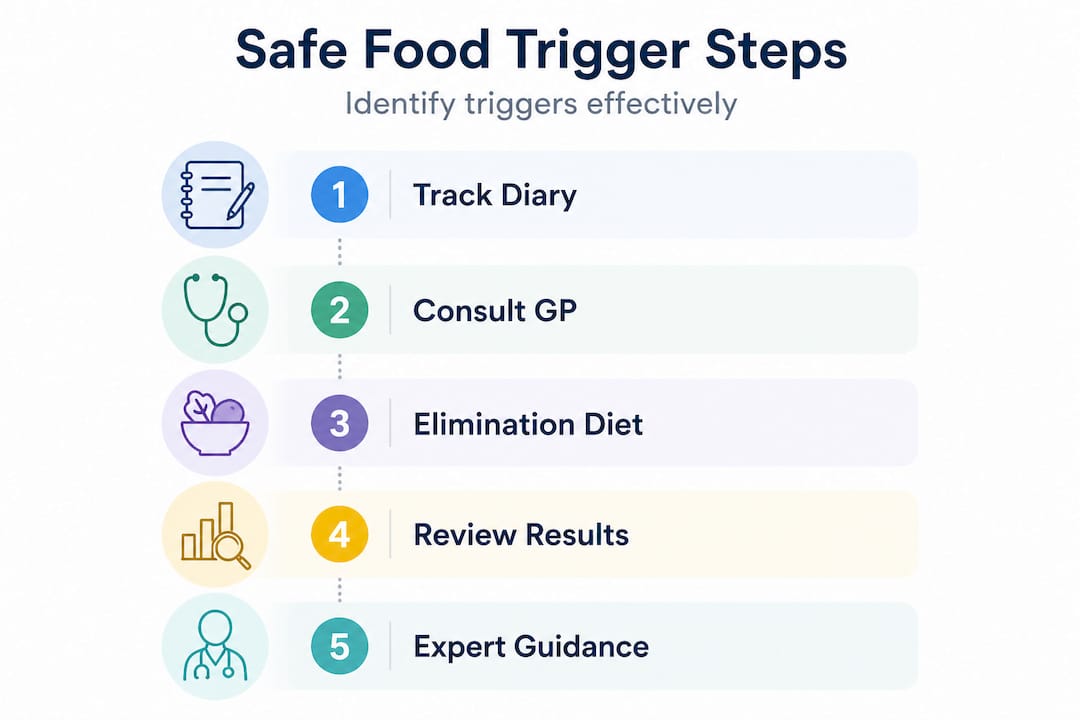
- Step 1: Record your diet and symptoms
- Step 2: The elimination diet explained
- Non-invasive tests: what works and what to avoid
- Interpreting results and next steps
- Why diary and expert guidance matter more than any test
- Get expert support for your food trigger journey
- Frequently asked questions
Key Takeaways
| Point | Details |
|---|---|
| Begin with diary and GP | Always consult your GP and start with a detailed food and symptom diary for safety and clarity. |
| Supervised elimination works best | The gold standard is a supervised elimination and reintroduction diet to identify triggers. |
| Not all tests are equal | Stick to NHS-recommended, non-invasive tests and be wary of unsupported commercial kits. |
| Interpretation is crucial | Expert help ensures your findings turn into better long-term health outcomes. |
What you need before starting: preparation and safety
Before jumping into action, it is crucial to be prepared and safe. Rushing into elimination diets or commercial tests without proper groundwork can lead to nutritional gaps, wasted money, or worse, a missed diagnosis of something more serious.
The single most important first step is speaking to your GP. Always consult your GP first to rule out serious conditions like coeliac disease, IBS, or allergies before self-testing or attempting an elimination diet. Conditions such as coeliac disease require a specific blood test and gut biopsy for confirmation, and beginning a gluten-free diet before testing can actually skew results.
Once you have had that conversation, gather the tools and mindset you need:
- A food and symptom diary (paper notebook or a dedicated app)
- A realistic time commitment of at least four to eight weeks for the full process
- Awareness of your current diet, including any supplements or medications that could affect digestion
- A basic understanding of what non-invasive means in this context: no needles, no procedures, just observation and dietary adjustment
“Self-diagnosis without professional oversight carries real risks. A methodical, evidence-based approach not only protects your health but gives you far more reliable results in the long run.”
It is worth knowing the difference between supported and unsupported methods before you spend any money. You can read more about natural intolerance identification to understand which approaches have genuine value and which are worth skipping.
| Method | Supported by evidence? | Requires GP involvement? |
|---|---|---|
| Food and symptom diary | Yes | Recommended |
| Supervised elimination diet | Yes | Yes |
| NHS hydrogen breath test | Yes | Yes |
| IgG blood tests (commercial) | No | No |
| Bioresonance (wellness use) | Limited | No |
| Muscle testing (kinesiology) | No | No |
Using diet and symptom tracking as a starting point is consistently one of the most cost-effective and low-risk approaches available.
Pro Tip: Before your GP appointment, write down every symptom you experience along with rough timings. This makes the consultation more productive and helps your doctor understand the pattern you are dealing with.
Step 1: Record your diet and symptoms
Once you are prepared, the next step is to build your evidence through careful tracking. A food diary is not just about writing down what you eat. It is about capturing the full picture.
The primary non-invasive method recommended by UK health authorities is keeping a detailed food and symptom diary, followed by a supervised elimination diet. Done properly, the diary phase alone can reveal patterns you would never spot otherwise.
Here is how to set it up effectively:
- Choose your format. A physical notebook works well for many people. Apps such as mySymptoms or Cara Care are also excellent for tracking and generating visual reports.
- Record every meal and snack. Include the specific foods, portion sizes, cooking methods, and any sauces, seasonings, or additives.
- Note the timing. Write down when you ate and when any symptoms appeared. Food intolerance reactions can be delayed by up to 48 hours, which is why precise timing matters.
- Describe your symptoms clearly. Be specific: bloating versus cramping, loose stools versus urgency, a rash versus general skin irritation.
- Track wider factors too. Stress levels, sleep quality, exercise, and hormonal changes can all influence how your gut behaves.
Here is an example week of tracking to illustrate the kind of detail that reveals useful patterns:
| Day | Meal | Key ingredients | Symptoms noted | Timing |
|---|---|---|---|---|
| Monday | Lunch | Pasta, cream sauce, salad | Bloating, fatigue | 2 hours later |
| Tuesday | Breakfast | Porridge, banana, oat milk | None | N/A |
| Wednesday | Dinner | Pizza, mozzarella, tomato | Bloating, stomach cramps | 1 hour later |
| Thursday | Lunch | Rice, grilled chicken, veg | None | N/A |
| Friday | Snack | Yoghurt, honey | Loose stools | 3 hours later |
You can see from the table above that dairy-containing meals appear consistently before symptoms, while dairy-free meals do not. That is the kind of pattern you are looking for. Our workflow for managing sensitivities outlines the full process in a practical, easy-to-follow structure.
Most health professionals recommend tracking for at least two weeks before drawing any conclusions. Four weeks is even better, as it accounts for variability in diet and external factors. If you want to understand more about what to look for, our guide on how to track intolerance symptoms provides deeper detail.
Pro Tip: Use colour coding in your diary. Highlight meals that preceded symptoms in red and symptom-free meals in green. After two weeks, the pattern becomes visually obvious.
Step 2: The elimination diet explained
With a clear diary in hand, you can move onto a structured dietary approach to narrow down the culprits. The elimination diet is considered the gold standard for identifying non-IgE-mediated food intolerances. It works by removing suspect foods entirely from your diet and then reintroducing them carefully to confirm whether they cause a reaction.

A supervised elimination diet involves eliminating suspect foods such as dairy, gluten, and eggs for two to six weeks under dietitian guidance, then reintroducing one food at a time every three to five days, monitoring for symptom return. The structure matters. Doing this haphazardly leads to confusion.
Here is a practical step-by-step breakdown:
- Identify your suspect foods from your diary. Focus on the two or three foods that most consistently preceded symptoms.
- Remove those foods entirely for a minimum of two weeks and ideally up to six weeks. This gives your system time to settle.
- Maintain an otherwise balanced diet. Work with a dietitian to ensure you are not creating nutritional gaps, particularly if you are removing major food groups like dairy or gluten.
- Reintroduce one food at a time. After the elimination phase, bring back a single food and eat it in a normal portion for two days, then wait three to five days while monitoring your response.
- Document everything during reintroduction. If symptoms return within a few days of reintroducing a food, that is a strong indicator of intolerance. If nothing happens, move on to the next food.
“Do not rush the reintroduction phase. Many people feel so well during the elimination phase that they reintroduce multiple foods at once, which makes it impossible to identify which one caused the reaction.”
Common mistakes include eating out during the elimination phase (hidden ingredients are everywhere), using elimination as a long-term restrictive diet rather than a diagnostic tool, and giving up too early when symptoms improve only partially. For more guidance on living through this process day to day, our article on managing food intolerance symptoms is a helpful companion read. You will also find our practical guide to dietary adjustments useful for meal planning during the elimination phase.
Pro Tip: Prepare a list of safe, enjoyable meals before you start the elimination phase. Having go-to options ready reduces the temptation to eat trigger foods when you are busy or tired.
Non-invasive tests: what works and what to avoid
Testing options can be confusing. Here is how to separate reliable methods from those to avoid.
Specific non-invasive clinical tests such as the hydrogen breath test for lactose intolerance or blood tests for coeliac disease may be ordered by GPs after an initial assessment to rule out other conditions. These are evidence-based, standardised, and interpreted by medical professionals.
Tests worth considering (via your GP):
- Hydrogen breath test for lactose intolerance or small intestinal bacterial overgrowth (SIBO)
- Blood tests for coeliac disease (tissue transglutaminase antibody, or tTG-IgA)
- Skin prick test or IgE blood test for true allergies (arranged by an allergy clinic)
Tests to approach with caution:
- IgG food sensitivity panels: These measure past exposure to foods, not intolerance. A high IgG simply means you have eaten that food regularly, not that it is causing your symptoms.
- Bioresonance testing for clinical diagnosis: This technology is not currently supported by mainstream medical evidence for diagnosing food intolerances, though it is used in wellness settings.
- Kinesiology muscle testing: Not validated by robust clinical research for food intolerance diagnosis.
Reading expert advice on food intolerance from physicians confirms that commercial tests are often misleading and lead to unnecessary dietary restriction. Understanding how intolerance tests work helps you ask the right questions before spending money, and our guide to choosing intolerance tests sets out the key factors to weigh up.
Interpreting results and next steps
Once your data and test results are in, interpretation is key for making lasting changes. This stage is where many people get stuck, particularly if the patterns are not crystal clear.
Start by reviewing your diary holistically:
- List foods that preceded symptoms three or more times during your tracking period. These are your primary suspects.
- Compare with your elimination results. Did your symptoms reduce significantly during the elimination phase? Did they return during reintroduction? If yes to both, that food is very likely a trigger.
- Review any clinical test results with your GP. A positive hydrogen breath test, for instance, confirms lactose intolerance clearly and gives you a firm basis for dietary change.
- Look for patterns beyond individual foods. Sometimes it is a food category (fermented foods, high-FODMAP foods) or an additive (preservatives, artificial sweeteners) rather than a single ingredient.
If patterns are unclear, consider these next steps:
- Request a referral to a registered dietitian through your GP
- Keep tracking for a further two to four weeks before drawing conclusions
- Rule out non-food triggers such as stress, poor sleep, or medication side effects
- Consider whether the issue may be an eating pattern rather than a specific food
Expert clinical insight confirms that patient history and diary evidence are more important than test results alone. The gold standard for non-IgE-mediated intolerances is elimination and re-challenge, not a commercial panel. IgG simply measures exposure, not intolerance.
Once you have identified your triggers, use the results to plan a sustainable diet that avoids those foods without being unnecessarily restrictive. Our article on finding the right diet offers practical ideas for doing exactly that.
Pro Tip: Share your completed diary and test results with a registered dietitian rather than a general practitioner alone. Dietitians are specifically trained to interpret food-symptom relationships and create tailored meal plans.
Why diary and expert guidance matter more than any test
Here is an honest perspective: too many people invest in commercial tests hoping for a definitive answer without the effort of sustained tracking. It is understandable. Keeping a detailed diary for four weeks feels tedious compared to posting a hair sample and waiting for a report. But the diary is irreplaceable.
No test, however detailed, can capture the full context of your symptoms. It cannot account for the meal you ate at a restaurant with a hidden sauce, the period of high stress at work, or the fact that you reacted to wheat bread but not sourdough because of how fermentation breaks down certain proteins. Your diary captures all of that. A test cannot.
Commercial tests that are not clinically validated often create more anxiety than clarity. People eliminate foods unnecessarily, sometimes restricting their diet so much that their nutritional intake suffers. We have seen this pattern repeatedly. The result is people who are scared of eating rather than empowered by understanding.
Expert-guided elimination, paired with thorough natural methods for intolerance, consistently produces the most meaningful and lasting outcomes. It takes longer. It requires patience and consistency. But it gives you real answers and a sustainable path forward, rather than a list of foods to fear.
The people who make the most progress are not those who find the most sophisticated test. They are those who commit to the process, track diligently, seek qualified guidance, and use any testing as a supplement to their own detailed observations. That is the approach that genuinely changes lives.
Get expert support for your food trigger journey
Having steps and insights is essential, but ongoing support can make all the difference. Understanding your triggers is one thing. Knowing what to do next, and having reliable resources at hand, is what sustains progress.
At UK Food Intolerance, we offer accessible at-home testing using bio-resonance technology (a non-invasive method that analyses energetic responses from a hair sample) to screen over 1,100 food and environmental items. Our tests are designed to complement your diary and elimination process, giving you an additional layer of information to work with.

You can browse our food intolerance tests to find the right option for your needs. If you want to understand how results can support your dietary planning, our guide to how a test can match your diet is a great starting point. For more detail on the science and method behind our service, read our full explanation of bio-resonance testing. We are here to support you every step of the way.
Frequently asked questions
Can I identify food triggers without eliminating foods?
It is highly recommended to use both a food diary and an elimination diet to reliably identify triggers, as tracking alone may miss subtle connections between foods and delayed symptoms.
Which foods should I eliminate first?
Focus on foods eaten frequently or those your diary links most clearly to symptoms. Common starting points include dairy, gluten, and eggs, but always prioritise foods your own records highlight, ideally with professional advice.
Are over-the-counter intolerance tests accurate?
Many commercial tests, particularly IgG panels, are not supported by NHS guidance. As clinical experts confirm, IgG measures exposure rather than intolerance, which can lead to unnecessary food restrictions.
Should I consult a doctor before starting?
Yes, always speak to your GP first. Ruling out serious conditions like coeliac disease, IBS, or true food allergies is essential before making any significant dietary changes or undertaking self-testing.










Leave a Reply
Want to join the discussion?Feel free to contribute!