

Bloating, headaches, or sudden fatigue after a meal can leave you second-guessing what is really triggering your symptoms. For many British adults, hidden food intolerances develop quietly, often causing discomfort that goes unconnected to what is on their plate. Since symptoms can show up hours later and standard allergy tests often miss them, finding answers feels impossible. Learn how adverse reactions to foods can be the silent root of ongoing issues and discover non-invasive testing options that help uncover your true triggers.
Table of Contents
- What Are Hidden Food Intolerances?
- Symptoms and Types Commonly Missed
- How Bio-Resonance Testing Detects Triggers
- Advantages and Limitations in the UK
- Implications for Health and Diet Choices
Key Takeaways
| Point | Details |
|---|---|
| Understanding Hidden Food Intolerances | They are adverse reactions that develop slowly and go undiagnosed, making symptoms difficult to connect to specific foods. |
| Symptoms May Vary and Delay | Symptoms can appear hours or days after consuming trigger foods, complicating identification without structured tracking. |
| Bio-Resonance Testing Benefits | This non-invasive method detects food intolerances by measuring energetic imbalances, providing insights that standard tests may miss. |
| Early Identification Advantages | Recognising intolerances can prevent chronic health issues and improve overall wellbeing through targeted dietary changes. |
What Are Hidden Food Intolerances?
Hidden food intolerances are adverse reactions to foods that develop gradually and often go undiagnosed for months or even years. Unlike allergies, which trigger immediate immune responses, intolerances cause subtle symptoms that creep up on you over time, making them difficult to connect to specific foods.
These reactions typically stem from difficulty digesting certain foods or ingredients, rather than a full immune system attack. The symptoms can be vague and scattered across different body systems, which is why so many people suffer in silence without understanding what’s causing their discomfort.
What makes hidden intolerances particularly tricky is that adverse food reactions often lack standardized testing methods and robust scientific evidence. Well-documented intolerances like lactose intolerance have clear mechanisms, but others—such as non-coeliac gluten sensitivity—remain less understood by the medical community.
Common characteristics of hidden food intolerances
Hidden intolerances share several distinctive patterns:
- Symptoms appear hours or days after eating the trigger food, not immediately
- Reactions can vary in intensity depending on portion size and food combinations
- Multiple foods may trigger similar symptoms, creating confusion
- Symptoms may worsen gradually if you keep consuming the problematic food
- Standard allergy tests (skin prick or IgE blood tests) often come back negative
Why they’re called “hidden”
These intolerances earn their name because they’re genuinely difficult to spot. The delay between eating a trigger food and experiencing symptoms means your brain doesn’t naturally connect the two events. You might eat wheat on Monday and experience bloating on Tuesday evening—by then, you’ve consumed dozens of other foods, making the culprit nearly impossible to identify.
Additionally, hidden intolerances can involve reactions to allergens not included in standard priority lists, such as additives, preservatives, or ingredients in modern plant-based products. This means even careful food label reading might not help you identify problematic items.
Hidden food intolerances develop silently over time, unlike allergies, making early identification essential before symptoms become chronic health problems.
Key differences from allergies
Many people confuse food intolerances with allergies, but they’re distinctly different:
- Allergies involve the immune system and can be life-threatening; intolerances affect digestion and cause discomfort
- Allergic reactions happen within minutes; intolerances may take hours or days to manifest
- Standard allergy tests can identify allergies; most intolerances require different diagnostic approaches
Understanding this distinction is crucial because it determines how you address the problem. Identifying the specific trigger foods through methods like elimination diets or bioresponance testing provides relief in ways that antihistamines simply cannot.
Pro tip: Keep a detailed food and symptom diary for at least two weeks, noting not just what you ate but also timing, portion sizes, and any digestive or physical symptoms—this creates a clear pattern that helps narrow down hidden triggers before testing.
Symptoms and Types Commonly Missed
Many people live with food intolerance symptoms for years without realising a food trigger is responsible. The problem is that symptoms often appear hours or even days after eating the problem food, breaking the mental connection your brain naturally makes between cause and effect.

You ate something on Monday, felt fine, then Wednesday afternoon you develop a headache or bloating. By then, you’ve consumed dozens of foods, making it nearly impossible to pinpoint the culprit without structured investigation.
Digestive symptoms that get overlooked
The most commonly missed symptoms are digestive ones, partly because people assume they’re normal or temporary:
- Bloating that appears after meals
- Diarrhoea or loose stools
- Constipation (often alternating with diarrhoea)
- Stomach pain or cramping
- Excessive wind or gas
- Nausea after eating
These symptoms are so common that many people assume they’re just part of life. You might think everyone experiences this level of discomfort, so you never mention it to anyone or investigate further.
Non-digestive symptoms that puzzle doctors
What makes hidden intolerances particularly tricky is that food intolerance symptoms extend far beyond the stomach and digestive system. Your body can react in unexpected ways that seem completely unrelated to food.
Common non-digestive symptoms include:
- Persistent fatigue or low energy
- Frequent headaches or migraines
- Brain fog or difficulty concentrating
- Joint pain or muscle aches
- Skin rashes, eczema, or itching
- Sinus congestion or post-nasal drip
- Mood changes, anxiety, or irritability
These symptoms are so varied that people often visit different specialists instead of connecting them to diet. A dermatologist for the rash, a neurologist for the headaches, a rheumatologist for the joint pain—when one elimination diet could resolve everything.
Types of intolerances commonly missed
Certain food intolerances are far more likely to go undiagnosed than others. Understanding which ones hide most effectively helps you recognise your own situation.
Lactose intolerance develops gradually as adults lose lactase enzyme production. Many people don’t realise they’ve developed it because they’ve consumed dairy their whole life without issue.
Gluten sensitivity (non-coeliac) is notoriously difficult to diagnose because standard tests for coeliac disease come back negative. You could have genuine gluten sensitivity that no blood test will confirm.
Histamine intolerance causes reactions to aged foods like cheese, cured meats, fermented products, and leftovers. It’s frequently missed because people don’t realise the problem is the age of the food, not the food itself.
Food additive sensitivities to sulphites, monosodium glutamate, or artificial colours are easily overlooked because you don’t see these ingredients clearly listed on every product.
Here is a summary of common hidden food intolerances and their typical triggers:
| Intolerance Type | Typical Trigger Foods | Common Symptom Areas |
|---|---|---|
| Lactose intolerance | Milk, cheese, ice cream | Digestive discomfort, bloating |
| Non-coeliac gluten sensitivity | Wheat, barley, rye | Headaches, joint pain |
| Histamine intolerance | Aged cheese, fermented products | Skin, sinus, neurological issues |
| Food additive sensitivity | Sulphites, MSG, artificial colours | Rashes, fatigue, digestive upset |
Symptoms often appear delayed and scattered across different body systems, which is why hidden food intolerances take an average of several years to identify without proper testing.
Why detection is delayed
The delayed reaction time means you’ll never spot the pattern through casual observation. A food diary without structure rarely reveals anything because the timing doesn’t align with your assumptions about how food reactions should work.
Additionally, symptom variability makes patterns hard to spot. The same food might trigger severe bloating one day and mild symptoms another day, depending on portion size, food combinations, stress levels, and overall health.
Pro tip: Track not just what you eat but also your symptoms’ timing, intensity, and any other factors like stress or sleep quality—this multi-layered data reveals patterns that single-factor tracking misses, making the root cause far clearer before any testing.
How Bio-Resonance Testing Detects Triggers
Bio-resonance testing works on a fundamentally different principle than traditional allergy testing. Instead of looking for antibodies in your blood, it measures energetic imbalances your body produces when exposed to foods that trigger intolerances.
The technology operates by detecting electromagnetic waves your body emits in response to various substances. When your body encounters a food intolerance trigger, it generates a distinct energetic signature that bio-resonance equipment can identify and measure.
The mechanism behind bio-resonance detection
Your body constantly emits electromagnetic frequencies. When you’re exposed to a substance your body reacts negatively to—whether through direct contact or through analysis of a sample—your cells respond by altering their electromagnetic output.
Bio-resonance technology uses specialised equipment to measure these subtle energetic shifts. The device works by:
- Sending electromagnetic signals through a sample (typically hair)
- Detecting how your body’s frequencies respond to test substances
- Identifying which foods create energetic imbalances
- Recording data for over 1,100 different food items and substances
Unlike traditional blood tests that require needle punctures and laboratory processing, bio-resonance testing measures electromagnetic waves using completely non-invasive methods, making it accessible and straightforward for at-home testing.
Why hair samples work for testing
You might wonder why hair is used instead of blood. Hair contains metabolic information about your body’s reactions to substances. Your hair is essentially a biological record of your body’s electromagnetic signature and how it responds to various triggers.
A small hair sample collected at home is sufficient because it contains the energetic information needed. This makes the entire testing process simple and non-invasive—no needles, no clinical visits, no delays waiting for appointments.
How results are generated
Once your sample reaches the laboratory, trained technicians analyse it using bio-resonance equipment. The process typically takes 48-72 hours from receipt to completion.
The testing procedure:
- Your hair sample is loaded into the bio-resonance device
- The equipment tests your sample against hundreds of food and environmental items
- Results are compiled into a detailed digital report
- You receive clear guidance on which substances trigger reactions
- You can use results to structure an elimination diet
Bio-resonance testing identifies energetic imbalances before clinical symptoms develop, allowing you to eliminate trigger foods and prevent symptoms from becoming chronic health problems.
Identifying triggers you didn’t know existed
The comprehensive scope of testing reveals intolerances you’d never discover through trial and error. Testing over 1,100 items means obscure triggers—like specific additives, unusual grains, or lesser-known fruits—get identified alongside common culprits.
Many people discover intolerances they never suspected. You might test negative for wheat but positive for barley, or discover sensitivities to food additives you didn’t even know were in your regular foods.
This comprehensive approach prevents you from blindly eliminating foods without knowing which ones actually trigger your symptoms.
Pro tip: Before your test arrives, start documenting which foods make you feel worse, even if you’re unsure—when you receive your bio-resonance results, you can cross-reference them against your own observations, creating a personalised action plan with higher confidence in your elimination strategy.
Advantages and Limitations in the UK
Identifying hidden food intolerances early offers significant advantages for UK residents, but there are practical limitations you should understand before pursuing testing. Knowing both sides helps you make informed decisions about your health strategy.
Clear advantages of early identification
Early detection transforms your quality of life. When you know which foods trigger your symptoms, you can make targeted dietary changes instead of guessing blindly or unnecessarily restricting what you eat.
Key advantages include:
- Preventing symptoms from becoming chronic health conditions
- Avoiding restrictive elimination diets based on assumption rather than evidence
- Improving energy levels, digestion, and overall wellbeing within weeks
- Reducing healthcare visits for undiagnosed symptoms
- Creating a personalised eating plan based on your unique biology
- Preventing nutritional deficiencies from unnecessary food avoidance
Many UK residents spend years visiting different specialists—dermatologists for rashes, gastroenterologists for digestive issues, neurologists for headaches—when early intolerance testing could have identified the root cause and resolved everything through diet.
Access challenges in the UK healthcare system
The NHS provides excellent support for diagnosed allergies and coeliac disease, but food intolerance diagnosis and management faces significant limitations. Most non-coeliac intolerances lack standardised testing on the NHS, meaning you typically must pay for private testing.
This creates a practical reality: if you want comprehensive intolerance testing without waiting months for NHS appointments that may not address your specific concerns, private testing becomes necessary. At-home bio-resonance testing offers an affordable alternative that delivers results in 48-72 hours.
Standardisation and diagnostic challenges
Another limitation is the lack of standardised testing protocols across the UK. Different testing methods produce different results, and some approaches lack robust scientific endorsement. Professional dietitians can support elimination diets, but they require patient education and commitment to work properly.
Bio-resonance testing isn’t widely endorsed by the NHS due to limited rigorous evidence, though many private practitioners use it successfully. Understanding this limitation helps you approach results pragmatically—use them as a starting point for dietary experimentation rather than absolute medical fact.
Early intolerance identification in the UK requires combining available NHS pathways with private testing options, creating a comprehensive approach that overcomes individual system limitations.
Cost considerations
Private intolerance testing costs range from £50–£150 depending on comprehensiveness. For many people, this represents excellent value when compared to months of specialist visits, ongoing symptoms, and reduced quality of life. One test can transform your health trajectory.
However, cost remains a limitation for some. At-home testing removes barriers like travel time and appointment availability, making testing more accessible for busy UK residents.
Pro tip: Before paying for testing, ensure you have realistic expectations—results identify potential triggers, but you’ll still need to conduct elimination diets to confirm which foods actually affect you, so budget time for dietary experimentation alongside testing costs.
The following table contrasts various methods for identifying food intolerances:
| Identification Method | How It Works | Pros | Limitations |
|---|---|---|---|
| Elimination diet | Remove foods to observe effects | Low cost, high reliability | Slow, requires discipline |
| NHS standard tests | Blood or skin allergy testing | Clinically proven for allergies | Not effective for intolerances |
| Bio-resonance testing | Measures energetic imbalances | Non-invasive, covers many items | Limited scientific backing |
Implications for Health and Diet Choices
Identifying hidden food intolerances early fundamentally changes how you eat and feel. Once you know which foods trigger your symptoms, you gain the power to make informed dietary decisions that work with your body instead of against it.
The implications extend far beyond simply avoiding a few foods. Early identification prevents a cascade of health problems that develop when you unknowingly consume trigger foods repeatedly over months or years.
Preventing chronic health complications
Untreated food intolerances don’t stay mild. Ongoing exposure to trigger foods causes escalating inflammation in your digestive system, which can lead to chronic conditions that are far harder to reverse.
When you eliminate trigger foods early, you prevent:
- Chronic inflammatory conditions developing from repeated irritation
- Secondary nutrient deficiencies from damaged digestive systems
- Disordered eating patterns from unnecessary food restrictions
- Long-term medication dependency for symptom management
- Psychological strain from years of unexplained symptoms
Early identification helps prevent the development of secondary conditions such as nutrient deficiencies or weight changes. Catching intolerances before they create lasting damage is vastly easier than reversing years of chronic inflammation.
Optimising your diet without deprivation
Many people fear that identifying intolerances means eating a bland, restricted diet. The reality is the opposite. Once you know your specific triggers, you can eat a varied and balanced diet that includes thousands of foods you can genuinely tolerate.
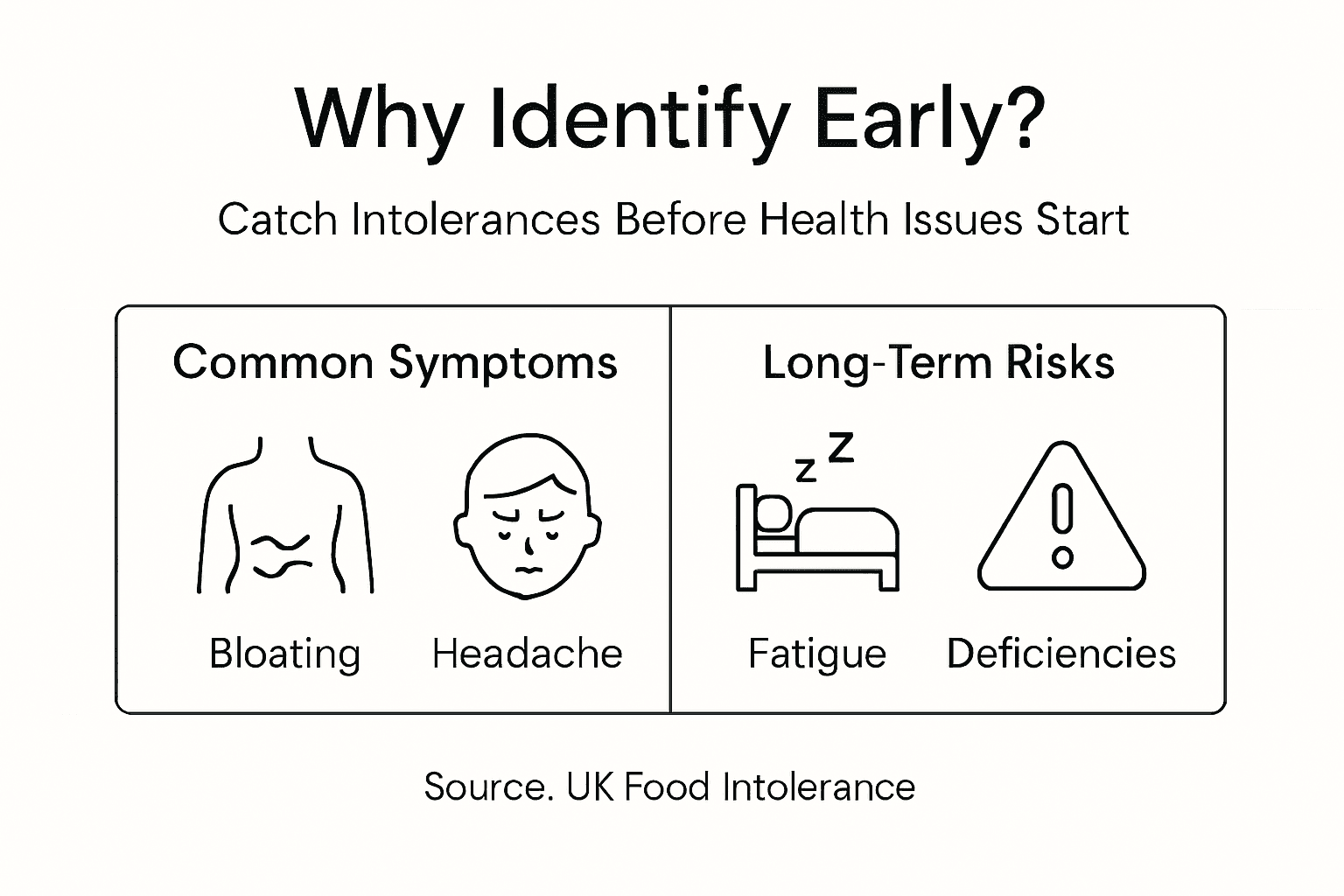
Instead of guessing which foods might be problematic, you know exactly what to avoid. This precision means you’re not unnecessarily eliminating foods you tolerate perfectly well, allowing you to maintain better nutritional balance and enjoy eating again.
Professional guidance from dietitians amplifies these benefits. They help you replace trigger foods with alternatives that maintain nutritional completeness whilst eliminating symptoms.
Reducing medication and healthcare burden
Many people with undiagnosed intolerances take antacids, antihistamines, anti-inflammatory medications, or digestive aids regularly. Identifying and eliminating trigger foods often makes these medications unnecessary, reducing both your medication burden and healthcare costs.
You also stop making unnecessary specialist visits. No more dermatologists for rashes, neurologists for headaches, or gastroenterologists for digestive issues when diet fixes all three simultaneously.
Early intolerance identification reduces unnecessary medications, prevents chronic symptoms, and enables a varied diet that supports sustained health and quality of life.
Psychological and quality-of-life improvements
Living with unexplained symptoms takes a genuine psychological toll. Constant discomfort, fatigue, and brain fog create anxiety and frustration, especially when no doctor can explain what’s wrong. Identifying your triggers and experiencing rapid symptom relief transforms your mental health as much as your physical health.
Within weeks of eliminating trigger foods, you typically notice improved energy, clearer thinking, better mood, and restored confidence in your body. These improvements compound over time, creating lasting positive changes to your overall wellbeing.
Pro tip: When you receive your intolerance results, eliminate one major trigger food at a time rather than all simultaneously—this helps you confidently identify which specific foods genuinely affect you and prevents unnecessarily restrictive dieting based on test results alone.
Discover Your Hidden Food Intolerances Early and Take Control of Your Health
If you have been struggling with unexplained symptoms like bloating, fatigue, or headaches that appear hours or days after eating certain foods, you are not alone. Hidden food intolerances create a frustrating challenge because their delayed and scattered nature makes them hard to pinpoint without the right tools. By addressing this challenge now, you can prevent chronic discomfort, inflammation, and unnecessary healthcare visits.

At UK Food Intolerance, we offer simple, non-invasive at-home bio-resonance testing that identifies over 1,100 potential food and environmental triggers with fast results in just 48-72 hours. Choose from our Ultimate Single Intolerance Test or the affordable Core Single Intolerance Test to gain personalised insights into your body’s unique sensitivities. Start eliminating guesswork with a clear, digital report to guide your elimination diet and reclaim your wellbeing. Act today to experience lasting relief and improved quality of life by visiting UK Food Intolerance and begin your journey to better health.
Frequently Asked Questions
What are hidden food intolerances?
Hidden food intolerances are adverse reactions to food that develop gradually and can go undiagnosed for years. Unlike allergies, intolerances cause delayed and vague symptoms, making them difficult to link to specific foods.
How can I identify if I have a food intolerance?
You can identify food intolerances through methods like detailed food and symptom diaries, elimination diets, and bio-resonance testing, which measures energetic imbalances caused by food triggers.
What are some common symptoms of hidden food intolerances?
Common symptoms include digestive issues like bloating, diarrhoea, and stomach pain, as well as non-digestive symptoms such as fatigue, headaches, skin rashes, and mood changes.
Why is early detection of food intolerances important?
Early detection helps prevent chronic health issues, reduces the need for medication, and enables you to maintain a varied diet that supports overall wellbeing, thus improving your quality of life.










Leave a Reply
Want to join the discussion?Feel free to contribute!