

Persistent bloating, stomach pains, or skin inflammation can leave you searching for answers and a sense of relief. For many health-conscious adults in the United Kingdom, the path to better gut health starts with understanding potential triggers behind these symptoms. Discover how thorough preparation and accurate at-home allergy testing can empower you to finally uncover which foods or environments may be affecting your wellbeing.
Table of Contents
- Step 1: Prepare For At-Home Allergy Testing
- Step 2: Collect And Package Your Hair Sample
- Step 3: Send Your Sample To The Laboratory
- Step 4: Review Your Digital Allergy Report
- Step 5: Implement Recommendations For Wellness
Quick Summary
| Key Point | Explanation |
|---|---|
| 1. Review Medical History | Document your health records and past allergic reactions to provide context for interpreting test results. |
| 2. Pause Certain Medications | Discontinue antihistamines and consult your healthcare provider to avoid interference with test accuracy. |
| 3. Follow Sample Collection Protocols | Ensure proper hair sample collection and packaging to maintain sample integrity for accurate analysis. |
| 4. Understand Your Digital Report | Analyse allergen sensitivity ratings and make informed dietary adjustments based on your report findings. |
| 5. Implement Wellness Recommendations | Develop a personalised strategy including allergen elimination and a food diary to enhance overall wellbeing. |
Step 1: Prepare for At-Home Allergy Testing
Preparing for at-home allergy testing requires careful planning and understanding of the process to ensure accurate results. This step will guide you through essential preparation strategies that help you obtain reliable insights into potential allergic sensitivities.
Before beginning your allergy test, several critical preparatory steps must be taken. First, you’ll want to review your medical history and recent health experiences. Comprehensive medical history documentation plays a crucial role in interpreting test results accurately. Your preparation should include:
- Gathering comprehensive health records
- Making a detailed list of current medications
- Noting any previous allergic reactions
- Identifying potential environmental or dietary triggers
It is essential to discontinue certain medications that might interfere with test accuracy. Antihistamines, in particular, can significantly impact results and should be avoided for a specified period before testing. Consult with your healthcare provider about:
Here is a summary of common medication types and their impact on allergy test accuracy:
| Medication Type | Typical Effect on Test Results | Recommended Action Before Testing | Alternative Symptom Management |
|---|---|---|---|
| Antihistamines | Can suppress allergic response seen | Pause 3-7 days prior | Saline nasal rinse |
| Steroids | May reduce inflammation markers | Consult provider, may need pausing | Adjust dosage with doctor |
| Decongestants | Minimal effect but possible masking | Generally no pause needed | Use non-medicated options |
| Antidepressants | Rarely interfere, but check specifics | Usually continue as prescribed | Discuss with GP for concerns |
- Specific medications to pause
- Duration of medication suspension
- Alternative symptom management strategies
Proper preparation can dramatically improve the reliability of your allergy test results.
Documenting your symptoms and potential triggers beforehand will provide valuable context for interpreting your test outcomes. Consider maintaining a detailed symptom diary in the weeks leading up to your test, recording:
- Frequency of allergic reactions
- Specific symptoms experienced
- Potential environmental or dietary connections
Top Tip: Keep a digital or physical log of your symptoms and potential triggers to share with healthcare professionals, which can provide crucial insights during result interpretation.
Step 2: Collect and Package Your Hair Sample
Collecting and packaging your hair sample correctly is crucial for obtaining accurate allergy testing results. This step requires precision and attention to detail to ensure your sample arrives at the laboratory in optimal condition.
To begin, you’ll need to carefully follow specimen collection protocols that maintain sample integrity. Prepare a clean workspace with the following items:
- Clean scissors
- White paper or collection envelope
- Gloves (optional but recommended)
- Hair collection instructions from your testing kit
Follow these specific steps for hair sample collection:
- Wash your hands thoroughly before starting
- Select hair from the root area (typically back of the head)
- Cut approximately 5-10 strands close to the scalp
- Ensure hair is clean and free from styling products
Proper hair sample collection is essential for obtaining reliable test results.
Packaging your sample requires equal care. Use the provided collection envelope or white paper, ensuring:
- Hair roots are visible
- Sample is dry and clean
- Envelope is sealed securely
- Patient information is clearly marked
Top Tip: Use natural daylight when cutting hair to ensure you can see the root clearly and select the most appropriate strands for testing.

Step 3: Send Your Sample to the Laboratory
Submitting your hair sample to the laboratory is the critical bridge between collection and receiving your comprehensive allergy testing results. This step requires careful attention to ensure your sample arrives safely and remains viable for accurate analysis.
Follow the specific laboratory shipping instructions to maintain sample integrity. Your preparation should include:
- Verifying the provided return envelope or packaging
- Checking postal address details
- Ensuring correct postage
- Including all required documentation
Complete these essential sending steps:
- Double-check your personal information on the submission form
- Place the sealed hair sample envelope inside the provided return packaging
- Attach any additional required documentation
- Seal the outer packaging securely
Proper sample packaging and prompt shipping are crucial for obtaining reliable test results.
Select the most appropriate shipping method to ensure timely delivery. Consider factors such as:
- Postal service tracking options
- Estimated delivery timeframes
- Protection against potential environmental damage
Pro Tip: Take a photograph of your packaged sample and tracking information as a personal record for reference in case of any unexpected complications during transit.
Step 4: Review Your Digital Allergy Report
Receiving your digital allergy report marks an important milestone in understanding your potential sensitivities and health triggers. This comprehensive document provides crucial insights into your body’s specific immunological responses that can help guide future dietary and lifestyle choices.
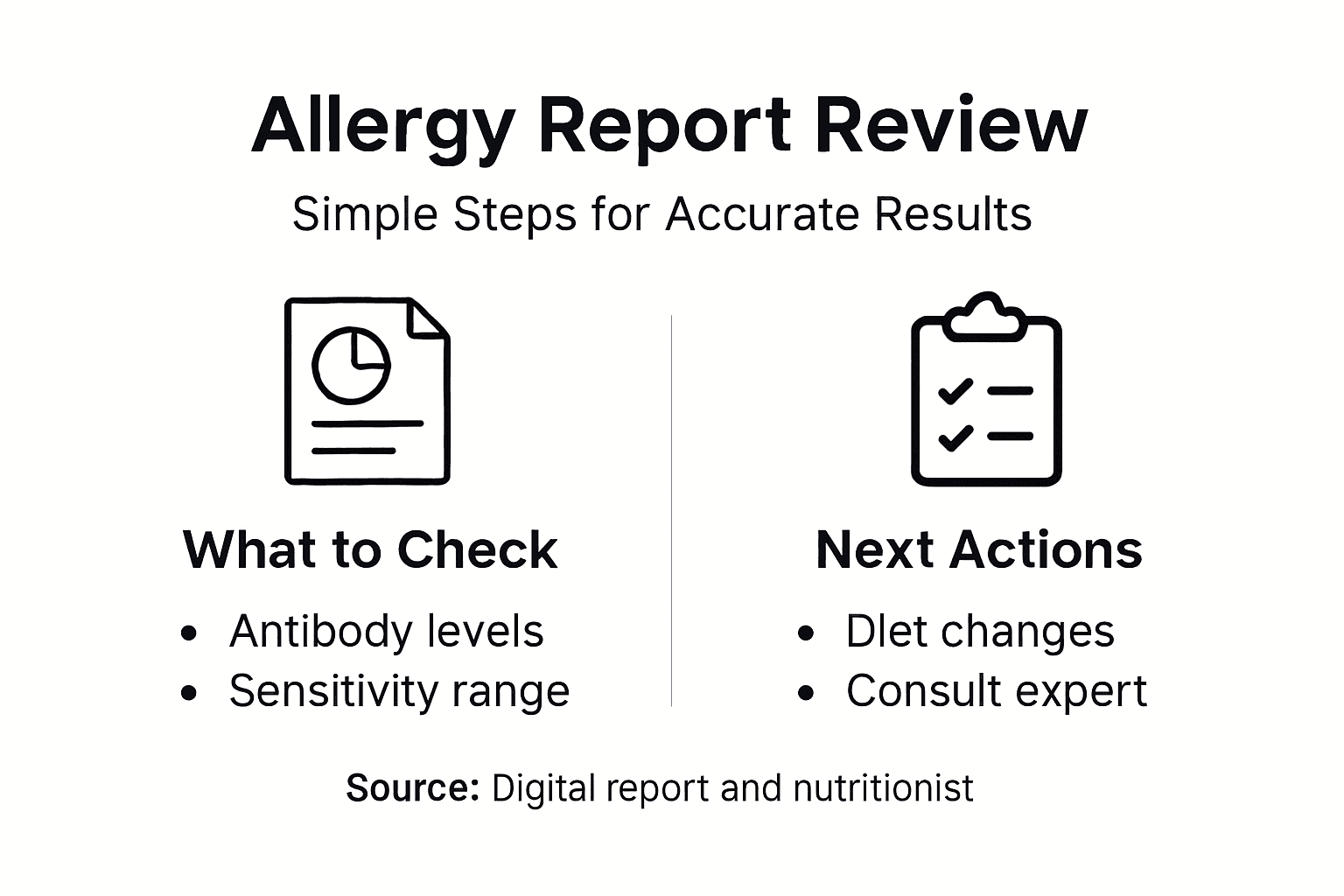
Clinical interpretation of test results requires careful and systematic analysis. Your digital report will typically include:
- Detailed allergen-specific antibody levels
- Categorisation of sensitivity ranges
- Colour-coded risk indicators
- Recommended dietary modifications
Break down your report using these key steps:
- Review the overall summary section first
- Examine individual allergen sensitivity ratings
- Cross-reference results with your personal health history
- Note any moderate to high sensitivity items
Understanding your report is crucial for making informed health decisions.
Pay special attention to the sensitivity levels for each identified allergen, which are typically categorised as:
Compare the three typical allergen sensitivity levels found in digital allergy reports:
| Sensitivity Level | Indication for Lifestyle Change | Typical Dietary Recommendation |
|---|---|---|
| Low Sensitivity | Minimal changes needed | May freely include in diet |
| Moderate Sensitivity | Cautious monitoring or trial avoidance | Consider limiting intake, monitor symptoms |
| High Sensitivity | Strict elimination recommended | Exclude from diet, seek alternatives |
- Low sensitivity
- Moderate sensitivity
- High sensitivity
Pro Tip: Consider scheduling a brief consultation with a nutritionist or healthcare professional to help you interpret the more complex aspects of your allergy test results.
Step 5: Implement Recommendations for Wellness
Transitioning from understanding your allergy test results to actively improving your health requires strategic and thoughtful implementation. Your digital report provides a roadmap for making informed lifestyle and dietary adjustments that can significantly enhance your overall wellbeing.
Care pathway recommendations emphasise a comprehensive approach to managing potential sensitivities. Begin by prioritising your wellness strategy with these key actions:
- Eliminate high-sensitivity allergens from your diet
- Create a detailed food and symptom tracking journal
- Plan balanced meals that support nutritional needs
- Consult with a registered dietitian
Implement your personalised wellness plan through these structured steps:
- Review allergen sensitivity levels carefully
- Design a systematic elimination approach
- Gradually reintroduce foods under professional guidance
- Monitor your body’s responses meticulously
Successful allergy management requires patience and consistent, informed action.
Additional strategies for comprehensive wellness include:
- Regular health check-ups
- Stress management techniques
- Immune system support through balanced nutrition
- Maintaining a detailed health journal
Pro Tip: Photograph your food diary and test results to create a comprehensive digital health record that can easily be shared with healthcare professionals.
Discover Precise Allergy Insights with UK Food Intolerance
Struggling to decode confusing allergic reactions or unexplained symptoms can be overwhelming. This step-by-step allergy testing guide highlights the importance of careful preparation, accurate sample collection, and thorough result interpretation to gain clear insights. At UK Food Intolerance, we specialise in non-invasive at-home testing using advanced bio-resonance technology, delivering fast and reliable digital reports that help you identify hidden food and environmental sensitivities impacting your wellbeing.
Take control of your health journey today by choosing from our comprehensive Ultimate Single Intolerance Test or the accessible Core Single Intolerance Test. Pair your test results with helpful resources from our Digestive Health Archives – UK Food Intolerance for guidance on managing intolerances effectively. Don’t wait for symptoms to disrupt your life further. Visit UK Food Intolerance and start turning your allergy frustrations into informed wellness decisions now.
Frequently Asked Questions
How should I prepare for at-home allergy testing?
To prepare for at-home allergy testing, review your comprehensive medical history, noting any past allergic reactions and potential triggers. Additionally, gather a list of current medications and consult your healthcare provider about pausing antihistamines or other medications that may interfere with test accuracy.
What steps should I follow to collect my hair sample for allergy testing?
When collecting your hair sample, ensure you wash your hands and use clean scissors to cut approximately 5-10 strands from the root area. Place the hair in a clean envelope, ensuring the roots are visible, and seal it securely before sending it to the laboratory.
How can I ensure my hair sample arrives safely at the laboratory?
To ensure your hair sample arrives safely, double-check the provided return envelope, verify the postal address, and securely seal the outer package. Use a reliable postal service with tracking options to confirm delivery within the recommended timeframe.
What information should I expect in my digital allergy report?
Your digital allergy report will typically include allergen-specific antibody levels, categorisations of sensitivity ranges, and recommended dietary modifications. Carefully review each section, especially the sensitivity levels, to understand which allergens to avoid or monitor closely.
What should I do after receiving my allergy test results?
After receiving your test results, implement any recommended dietary changes, particularly eliminating high-sensitivity allergens. Keep a detailed food and symptom tracking journal to monitor your body’s responses, and consider consulting with a registered dietitian for tailored guidance.
How can I monitor my symptoms effectively after allergy testing?
To monitor your symptoms effectively, maintain a detailed health journal documenting the frequency and nature of any allergic reactions. Record potential triggers and responses to various foods to help identify patterns and manage sensitivities more successfully.










Leave a Reply
Want to join the discussion?Feel free to contribute!