

Every British household knows someone who struggles with stomach pain, unexplained bloating, or headaches after a meal. In fact, up to one in five British adults are affected by food intolerances, often without clear answers. Addressing these symptoms is vital because hidden sensitivities can impact energy, mood, and long-term health. This guide breaks down how advances in at-home testing are empowering British consumers to pinpoint triggers quickly and regain control of their wellbeing.
Table of Contents
- Food Intolerance In The UK Explained
- Prevalence And Rising Trends Nationwide
- Common Triggers And Symptoms Identified
- Modern Intolerance Testing Methods Compared
- Legal And Safety Landscape For Consumers
- Interpreting Test Reports For Dietary Change
Key Takeaways
| Point | Details |
|---|---|
| Rising Prevalence | Approximately 20% of the UK population experiences food intolerances, with dairy, gluten, and eggs being common triggers. |
| Modern Testing Methods | Advanced techniques, including bioresonance, are emerging to identify food sensitivities, offering personalised dietary insights. |
| Systemic Effects | Symptoms of food intolerances extend beyond digestive issues, impacting fatigue, skin health, and overall wellbeing. |
| Legal Protections | UK regulations require transparent allergen labelling, safeguarding consumers by ensuring clear communication from food businesses. |
Food intolerance in the UK explained
Food intolerances are increasingly prevalent across the United Kingdom, impacting millions of individuals and creating complex dietary challenges. Recent research indicates that up to 20% of the population experiences some form of food sensitivity, with common triggers including dairy, gluten, and eggs. These conditions extend far beyond simple digestive discomfort, potentially manifesting as systemic inflammation, skin problems, and chronic fatigue.
The growing recognition of food intolerances has been driven by improved diagnostic techniques and increased public awareness. UK consumers now demonstrate sophisticated understanding of allergen management, particularly through careful food label examination and proactive health monitoring. Unlike food allergies, which can trigger immediate and potentially life-threatening reactions, intolerances typically produce more subtle, delayed responses that can be challenging to diagnose.
Understanding individual food sensitivities requires comprehensive testing and personalised nutritional strategies. Modern approaches like bioresonance technology provide non-invasive methods for identifying specific dietary triggers, allowing individuals to make informed choices about their nutrition. By mapping out precise sensitivities, people can develop targeted elimination diets that reduce inflammation, improve digestive health, and enhance overall wellbeing.
Pro tip: Keep a detailed food and symptom diary for two weeks before testing to help identify potential intolerance patterns more effectively.
Prevalence and rising trends nationwide
Food intolerance has become a significant health concern across the United Kingdom, with recent epidemiological studies revealing a dramatic increase in dietary sensitivity cases. Approximately one in five British adults now report experiencing some form of food-related adverse reaction, marking a substantial rise from previous decades. This surge reflects not only improved diagnostic capabilities but also growing public awareness about nutritional health and individual dietary requirements.
Clinical research demonstrates that certain digestive conditions are particularly prevalent. The low FODMAP diet has emerged as a critical intervention strategy for managing food intolerance symptoms, especially among individuals diagnosed with irritable bowel syndrome (IBS). This dietary approach highlights the sophisticated understanding medical professionals now have regarding complex nutritional interactions and personalised dietary management.
Regional variations exist within the United Kingdom, with urban centres like London and Manchester showing higher reported rates of food sensitivities compared to rural areas. These differences potentially stem from diverse factors including dietary habits, environmental exposures, and access to advanced diagnostic services. Younger generations appear more likely to seek comprehensive testing and adopt targeted nutritional strategies, indicating a significant shift in health consciousness and proactive wellness management.
Pro tip: Consult with a registered nutritionist to develop a personalised approach to identifying and managing potential food intolerances.
Common triggers and symptoms identified
Food intolerances present a complex spectrum of symptoms that can significantly impact an individual’s daily life and overall health. The most common dietary triggers include dairy products, gluten, eggs, and specific food additives, with each individual experiencing a unique combination of physiological responses. These reactions typically manifest through a range of symptoms that extend far beyond simple digestive discomfort.
Physiological symptoms of food intolerances often include bloating, abdominal pain, excessive gas, and irregular bowel movements. However, less obvious indicators can encompass systemic responses such as chronic fatigue, skin irritations, headaches, and mood fluctuations. Some individuals might experience respiratory symptoms like nasal congestion or mild wheezing, while others report neurological manifestations including brain fog and difficulty concentrating.

Certain food groups emerge as particularly problematic for many individuals. Dairy products containing lactose frequently trigger digestive distress, with approximately 65% of the population experiencing some degree of lactose sensitivity. Gluten, found in wheat, barley, and rye, presents another significant challenge, with symptoms ranging from mild intestinal discomfort to more severe inflammatory responses. Processed foods containing artificial additives and preservatives can also provoke unexpected immune system reactions, highlighting the importance of understanding individual dietary sensitivities.
Here’s a summary of common food intolerance triggers and their typical symptoms:
| Trigger | Common Symptoms | Prevalence in UK |
|---|---|---|
| Dairy (lactose) | Bloating, abdominal pain, fatigue | About 65% show sensitivity |
| Gluten | Intestinal discomfort, inflammation | Millions affected |
| Eggs | Skin irritation, digestive upset | Frequently reported |
| Food additives | Headaches, mood changes | Increasing numbers |
| Preservatives | Immune reactions, bloating | Often underdiagnosed |
Pro tip: Maintain a detailed food and symptom journal to help identify potential intolerance patterns and assist healthcare professionals in developing targeted dietary strategies.
Modern intolerance testing methods compared
The landscape of food intolerance testing has dramatically evolved, with multiple diagnostic approaches emerging to help individuals understand their unique dietary sensitivities. Medical professionals now recognise that traditional testing methods like IgG blood tests and alternative techniques lack robust scientific validation, emphasising the need for more precise and evidence-based diagnostic strategies.
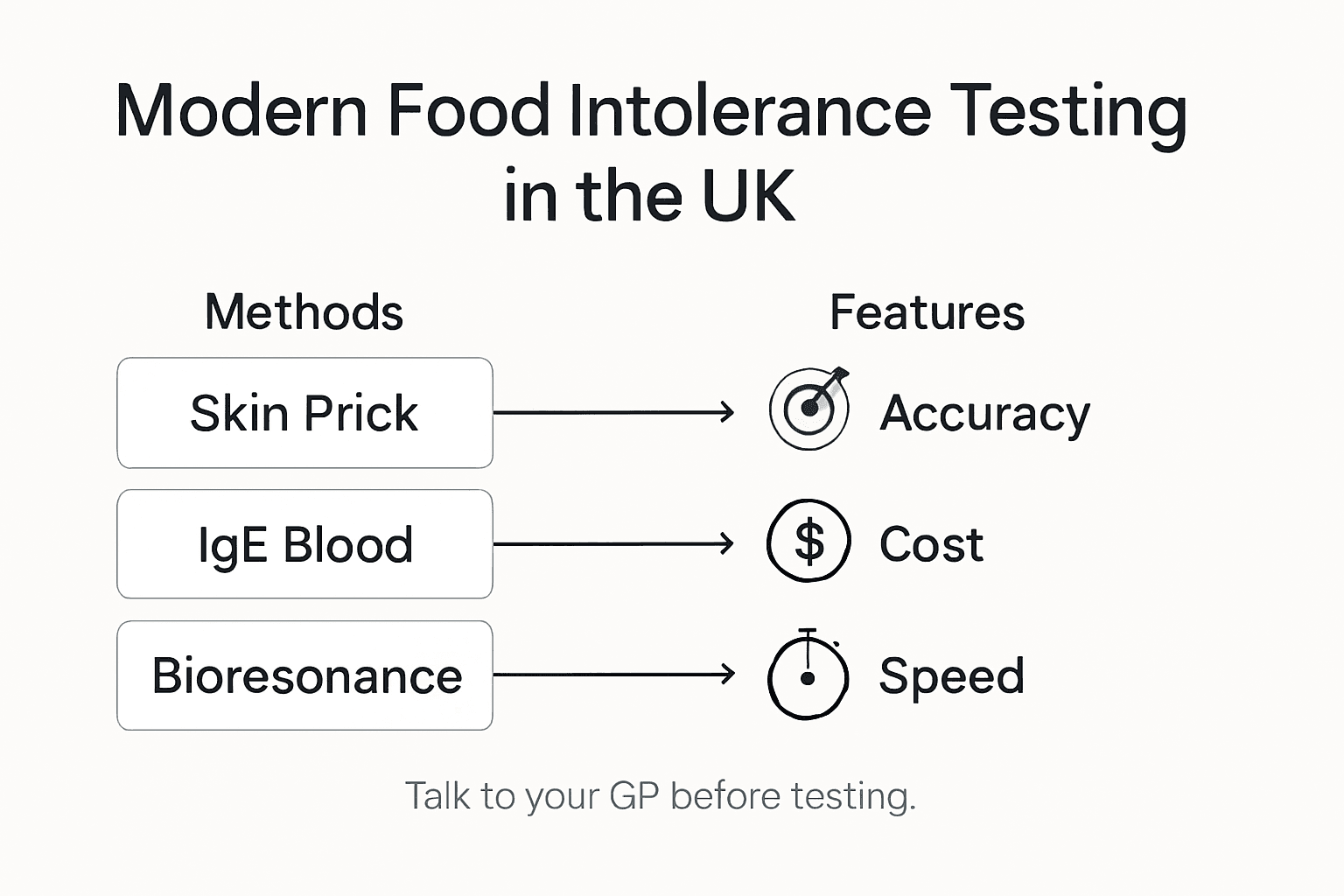
Conventional medical testing primarily relies on two principal methods: skin prick tests and specific IgE blood tests. These techniques are most effective for identifying immediate allergic responses rather than complex food intolerances. Complementary approaches such as detailed clinical history and supervised elimination diets have become increasingly important, allowing healthcare practitioners to develop a comprehensive understanding of an individual’s specific dietary challenges.
Bioresonance technology represents a modern, non-invasive approach to identifying potential food sensitivities. Unlike traditional methods, this technique analyses hair samples to detect subtle electromagnetic responses associated with different food groups. While not replacing conventional medical diagnosis, it offers an additional layer of insight for individuals seeking a holistic understanding of their nutritional interactions. The key distinction lies in providing personalised data that can inform targeted dietary modifications and support overall wellness.
Compare the main food intolerance testing methods in the UK:
| Testing Method | How It Works | Limitations | Best For |
|---|---|---|---|
| Skin prick test | Measures skin reaction | Detects allergies not intolerances | Immediate allergic reactions |
| IgE blood test | Analyses immune response | Not accurate for intolerances | Identifying allergy triggers |
| Elimination diet | Systematically removes foods | Time-consuming process | Pinpointing intolerances |
| Bioresonance | Analyses hair sample | Limited scientific validation | Supplementing traditional tests |
Pro tip: Always consult a registered nutritionist or healthcare professional to interpret any food intolerance test results and develop a personalised dietary strategy.
Legal and safety landscape for consumers
The United Kingdom maintains a robust regulatory framework designed to protect consumers with food intolerances and allergies, ensuring comprehensive safety across food production and hospitality sectors. Regulatory provisions mandate precise allergen information and labelling standards, requiring businesses to transparently communicate potential dietary risks to consumers.
Under current legislation, food manufacturers and catering establishments must provide clear, comprehensible information about potential allergens in their products. This includes detailed ingredient lists, explicit warnings about cross-contamination risks, and comprehensive nutritional declarations. The legal requirements extend beyond mere documentation, compelling businesses to implement systematic approaches to prevent accidental exposure and protect vulnerable consumers.
Consumer protection mechanisms have evolved to address the complex landscape of food sensitivities. Regulatory bodies like the Food Standards Agency actively monitor compliance, conducting regular inspections and implementing stringent penalties for businesses failing to meet established safety protocols. These measures not only safeguard individuals with specific dietary requirements but also promote a culture of transparency and accountability within the food industry.
Pro tip: Always request detailed ingredient information and cross-contamination protocols when dining out or purchasing packaged foods to ensure your dietary safety.
Interpreting test reports for dietary change
Interpreting food intolerance test results requires a nuanced and professional approach to ensure accurate dietary modifications. Test reports must be carefully evaluated to avoid unnecessary food elimination that could potentially lead to nutritional deficiencies, making professional guidance crucial in translating test data into meaningful lifestyle changes.
The process of dietary modification involves strategic steps beyond simply removing identified trigger foods. Individuals should focus on understanding the specific sensitivities highlighted in their reports, working closely with nutritional professionals to develop a balanced replacement strategy. This approach ensures that nutritional needs are met while systematically addressing potential food intolerances, preventing potential risks associated with overly restrictive diets.
Successful dietary transformation requires a methodical approach of gradual food elimination and careful reintroduction. Practitioners recommend maintaining a detailed symptom diary to track how specific dietary changes impact overall wellbeing. This personalised tracking allows individuals to distinguish between actual intolerances and potential false positives, creating a more precise and effective nutritional management plan that supports long-term health and wellness.
Pro tip: Consult a registered dietitian to help interpret your test results and develop a personalised nutrition strategy that maintains balanced nutrient intake.
Take Charge of Your Wellbeing With Modern Food Intolerance Testing
Living with unexplained symptoms or chronic discomfort can be exhausting especially when traditional methods fail to identify hidden food sensitivities. This article highlights how modern approaches like bioresonance technology offer a non-invasive, personalised way to uncover your unique dietary triggers. If you are looking for clarity beyond standard allergy tests and seeking an affordable, reliable solution tailored to UK consumers, now is the time to explore smarter nutritional insight.
Discover how the Ultimate Single Intolerance Test and the more accessible Core Single Intolerance Test allow you to test hundreds of potential triggers from the comfort of your home. Receive fast, clear digital reports within days and take confident steps toward reducing inflammation, improving digestion, and enhancing overall wellbeing. Don’t let food intolerances control your life. Act now and start your personalised journey at UK Food Intolerance.
Frequently Asked Questions
What are the common triggers of food intolerance?
Common triggers of food intolerance include dairy products (lactose), gluten, eggs, and certain food additives. Symptoms can range from digestive discomfort to chronic fatigue and skin irritations.
How can I identify if I have a food intolerance?
Identifying food intolerance often requires testing methods such as supervised elimination diets or bioresonance technology. Keeping a detailed food and symptom diary can also help reveal patterns related to your diet.
What modern testing methods are available for food intolerances?
Modern testing methods for food intolerances include bioresonance technology, which analyses hair samples to detect dietary sensitivities, and elimination diets that systematically remove potential trigger foods to pinpoint intolerances.
How should I interpret my food intolerance test results?
Interpreting food intolerance test results should be done with professional guidance. It involves understanding specific sensitivities and developing a balanced dietary strategy, rather than simply eliminating certain foods. Consulting a registered dietitian is recommended for effective dietary adjustments.










Leave a Reply
Want to join the discussion?Feel free to contribute!