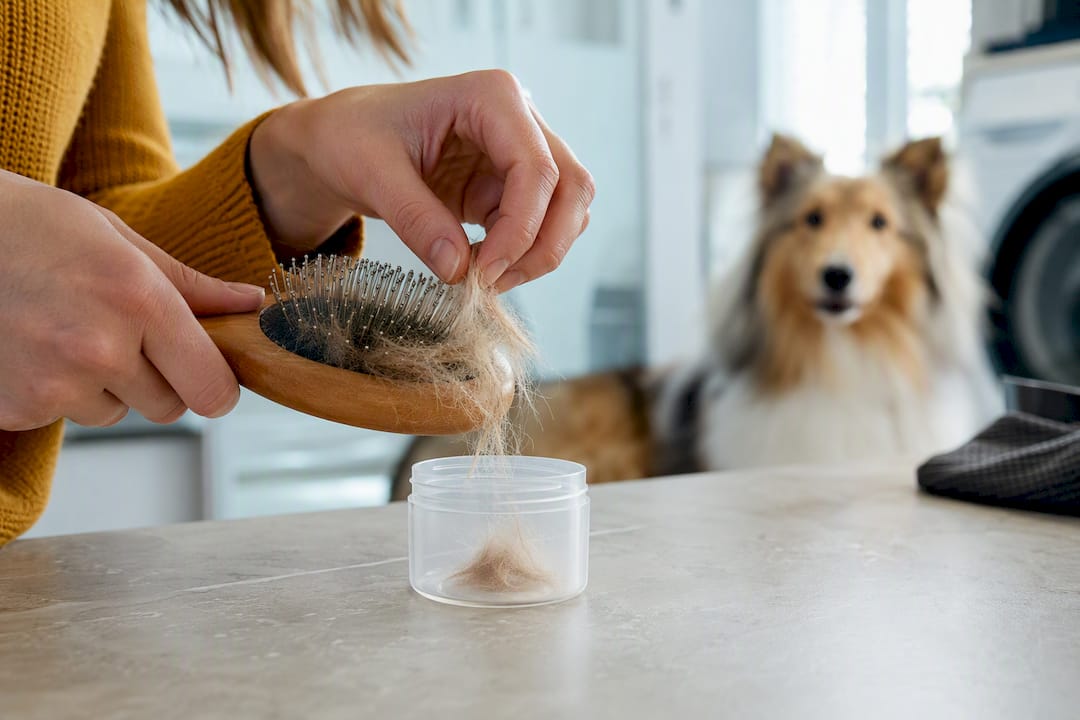
For most cats and dogs, Pet Essential 500 is the test we recommend: it tests 500 food and environmental items, plus metals, vitamins and minerals and selected additives. Choose Pet Intro 300 for a simpler food-and-environment test, or Pet Peak 700 if you want the most complete picture, including a fuller additives panel and supplements.
All three use the same small hair sample, the same simple process and the same easy-to-read report. The difference is how much each one covers.
How do the three pet tests compare?
| Pet Intro 300 | Pet Essential 500 | Pet Peak 700 | |
|---|---|---|---|
| Items tested | 300 | 500 | 700 |
| Food items | Yes | Yes | Yes |
| Environmental items | Yes | Yes | Yes |
| Metals | No | Yes | Yes |
| Vitamins and minerals | No | Yes | Yes |
| Additives | No | Selected additives | Yes |
| Supplements | No | No | Yes |
| Suitable for | Cats and dogs | Cats and dogs | Cats and dogs |
| Best for | A first look at food and everyday surroundings | Most pets; a broad, balanced test | Pets on varied diets, supplements or lots of processed treats |
| Price | £19.99 | £29.99 | £39.99 |
Who is Pet Intro 300 for?
Pet Intro 300 tests 300 food and environmental items. It suits owners who want a straightforward starting point and whose pet eats a fairly simple diet.
It’s a good fit if:
- Your pet eats one main food and a small number of treats.
- You mainly want a shortlist of food items to discuss with your vet.
- You’re keeping costs down and don’t need the extra panels.
What you don’t get is the metals, vitamins and minerals and additives sections, so if your pet eats lots of different foods or treats, Essential 500 gives you more to work with.
Why is Pet Essential 500 our default recommendation?
Pet Essential 500 tests 500 items across food, environmental, metals, vitamins and minerals, and selected additives. For most cats and dogs, that’s the sensible balance between breadth and simplicity.
- Wider food coverage, helpful when your pet has eaten many different foods and treats over the years.
- Environmental items included, which matters because itching often has more than one source. Our guide to dog food intolerance symptoms explains why the two are easy to confuse.
- Selected additives, useful if your pet eats processed treats or flavoured chews.
If you’re unsure which to pick, this is the one to choose.
When is Pet Peak 700 worth it?
Pet Peak 700 is our most complete pet test, covering 700 items. It includes everything in Essential 500 plus a fuller additives panel and supplements.
Consider it if:
- Your pet takes one or more supplements, such as joint or coat products.
- Their diet is very varied, mixing kibble, wet food, raw, home-cooked meals or lots of treats.
- You’ve already tried a simpler approach and want the fullest list to take to your vet.
How do you choose in three quick questions?
If you’re still torn, these three questions usually settle it:
- How varied is your pet’s diet? One main food and a few treats points towards Intro 300 or Essential 500. A mix of kibble, wet, raw, home-cooked and lots of different treats points towards Essential 500 or Peak 700.
- Does your pet take supplements? If yes, Peak 700 is the only test that includes a supplements panel.
- What do you want from the report? A short list of food items to talk through with your vet is Intro 300 territory. A broader picture, including metals, vitamins and minerals and additives, is what Essential 500 and Peak 700 are for.
A practical tip: think about the questions you’ll want answered when you sit down with your vet to plan a trial diet. If the extra panels would help that conversation, choose the larger test now rather than wishing you had later.
And if you only remember one thing, remember this: when in doubt, Essential 500 covers the most ground for most pets without overwhelming you with detail.
What’s the same across all three tests?
- No kit in the post. You order online and the sampling instructions and form arrive by email straight away.
- The same easy sample. Brush or snip a small amount of your pet’s hair, bag it separately and post it to our UK lab. Our guide to what pet hair testing can and cannot tell you covers how to take it.
- The same report format. Items are grouped into high, medium and low response, by email within 3–5 working days of the sample arriving.
- The same support. Email support Monday to Friday, 9am to 5:30pm, usually answered within the hour, and our 30-day money-back guarantee.
- Flexible payment. Card, Apple Pay, Google Pay, PayPal, or three interest-free payments with Klarna or PayPal.
Is there a different test for cats and dogs?
No. All three tests are designed for both cats and dogs, so you choose by how much you want tested rather than by species. If you have more than one pet, order a test for each and keep every sample in its own labelled bag.
Still working out whether food is involved at all? Start with our guides to cat food intolerance symptoms or dog symptoms above, which explain what to record first.
Where pet testing fits alongside your vet
Whichever test you choose, the report is a starting point. It doesn’t explain your pet’s symptoms or replace a vet check. Use it with your vet to plan a food trial: high-response items can help you choose which proteins to leave out of the trial diet and which foods to test first when you reintroduce them. Our dog elimination diet guide shows how that works in practice.
Testing yourself too? The human range works differently, and our guide to choosing between the human intolerance tests explains the options.
Frequently asked questions
What if my pet's report shows lots of high-response items?
Start with the items your pet actually eats regularly, especially the main proteins in their food and treats. Take the report and your symptom diary to your vet, and use them together to choose a trial diet and decide which foods to reintroduce first.
Do the pet tests work for rabbits or horses?
Our pet tests are designed for cats and dogs. If you have another animal, please get in touch before ordering.
Which pet test is best for an itchy dog?
Pet Essential 500 is usually the best fit, because it adds metals, vitamins and minerals and selected additives to the food and environmental items, and itching can have more than one source. Use the report with your vet to plan a food trial, and keep flea treatment up to date.
Do I need to order a separate test for each pet?
Yes. Each report is for one animal, so order one test per pet and keep each hair sample in its own labelled bag.
This guide is general wellness information, not medical advice. Our test uses bioresonance, a complementary (CAM) method; it does not diagnose allergies, coeliac disease or any medical condition. Speak to a GP if you have severe or ongoing symptoms.