
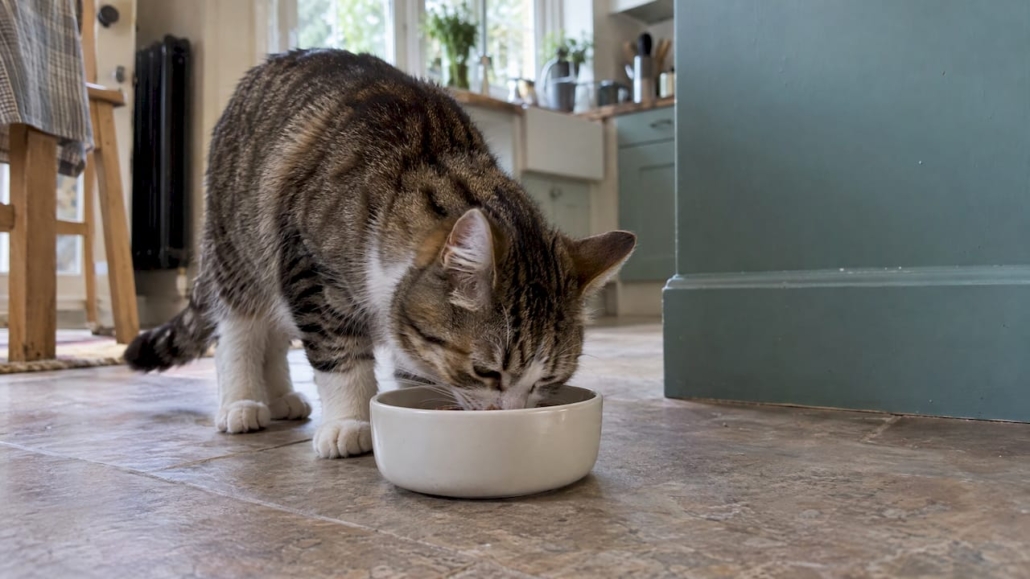
A cat elimination diet means feeding your cat one carefully chosen food, and nothing else, for several weeks to see whether itchy skin or an unsettled gut settles down. Done properly with your vet, it is the most reliable way to find out whether food is behind your cat’s symptoms. Most of its success comes down to strictness, patience and a good diary. This guide takes you through each step, in plain words.
TL;DR
- An elimination diet trial followed by reintroducing foods is currently the only reliable diagnostic test for food allergy in cats.
- Choose the food with your vet. It is usually a hydrolysed protein diet or a novel protein diet, and a prescription food is preferred over shop-bought options.
- Feed only that food and water for 6 to 8 weeks, and keep a daily symptom diary.
- No treats, scraps, supplements or flavoured medicines unless your vet has checked them. Even tiny amounts can spoil the trial.
- If symptoms clear, your vet may suggest reintroducing ingredients one at a time to confirm the culprit.
Table of Contents
- What a cat elimination diet is
- Choosing the right food
- How long to feed the trial diet
- What your cat can and cannot have
- If your cat turns up their nose
- Judging whether it worked
- Reintroducing foods to confirm the trigger
- If your cat does not improve
- Getting a head start with a pet test
- FAQ
- Sources
What a cat elimination diet is
An elimination diet is a diagnostic test. All the foods that could trigger an allergic reaction are removed, and your cat eats a diet built to avoid them. If the itching, vomiting or loose stools fade, food is a likely cause. If nothing changes despite strict feeding, something else is probably going on.
VCA Animal Hospitals describe the trial as removing potential food allergens to see whether allergic signs resolve, such as itchy skin or digestive upsets. It is not a weight-loss plan, a detox or a long-term way of feeding. It is a short, controlled experiment with a clear start, middle and end.
When a vet might suggest one
Your vet is likely to recommend a trial when your cat shows signs that suggest a food reaction and other medical causes have been considered. Typical signs include persistent itching, overgrooming, skin sores around the head and neck, vomiting and diarrhoea. If you want help noting what to look for, our guide to cat food intolerance symptoms and what to record gives you a simple checklist to bring to the appointment.
The 2023 AAHA guidelines add an important point: diagnosis needs a clinical history of allergy alongside the diet trial and the later provocation test. That is why the conversation with your vet comes first and your own notes matter so much.
Choosing the right food
This is the decision that makes or breaks the trial, so it is worth getting your vet involved. According to VCA, the vet will usually pick a hydrolysed protein diet or a novel protein diet based on a detailed diet history. In other words, they need to know everything your cat has eaten so far, including treats, toppings and what the neighbours might hand out.
| Option | What it means | Good to know |
|---|---|---|
| Hydrolysed diet | Protein is broken into pieces small enough that the immune system is less likely to react | Prescription food from your vet |
| Novel protein prescription diet | A protein your cat has not eaten before | Needs a careful diet history to be truly “new” |
| Home-cooked novel diet | You prepare a food built around a new protein | Must be formulated by a veterinary nutritionist so it is balanced |
These three categories are the ones Today’s Veterinary Practice lists for a trial: a novel-ingredient prescription diet, a novel-ingredient home-cooked diet, or a hydrolysed diet.
Why prescription foods are preferred
It is tempting to grab a “sensitive” or “limited ingredient” food from the supermarket shelf. The AAHA guidelines are clear that prescription veterinary diets are the only acceptable commercial choices for a true trial, because over-the-counter foods can contain undeclared ingredients. A trace of the wrong protein is enough to muddy the result.
A word on novel proteins and cross-reactivity
A “novel” protein means one your cat has not met before. Closely related animals can cause trouble too. The Small and Large Animal Dermatology Handbook notes that the clinical relevance of cross-reactivity between related species, such as chicken and duck, is still debated, but it remains a practical thing to consider when choosing. Your vet will weigh this against your cat’s history.
How long to feed the trial diet
Plan for 6 to 8 weeks. FirstVet’s UK guidance says to feed only the new diet for 6 to 8 weeks, counting from the day your cat eats only that food. That detail matters: if your cat is still finishing the old food for the first week, the clock has not started.
There is a good reason not to cut the trial short. A critically appraised review found that extending the diet to 8 weeks raises diagnostic sensitivity to over 90% of cases. Some improvement may show earlier, but stopping at week three can leave you with an unclear answer and a cat who has to start again.
A simple timeline
- Before you start: book a vet appointment, share your notes, agree the food and plan how you will manage other pets and family members.
- Days 1 to 7: switch over to the trial food as your vet advises, and begin a daily diary.
- Weeks 2 to 6: feed only the trial food and water. Note itching, grooming, skin changes, stool quality and vomiting each day.
- Weeks 6 to 8: review the diary with your vet and decide whether there is a clear improvement.
- After improvement: discuss whether to reintroduce foods to confirm the trigger.
What to put in your diary
FirstVet recommends a daily symptom diary. Keep it simple so you actually do it:
- Itch level out of 10 (scratching, overgrooming, head shaking)
- Skin changes: redness, scabs, bald patches
- Stool: normal, soft or watery, and how often
- Vomiting or hairballs
- Anything unusual your cat ate, or may have eaten
- Appetite and energy
Photos of skin once a week make progress much easier to judge than memory alone.
What your cat can and cannot have
The rule is simple and hard: the trial food and water only. FirstVet says that during the trial even small amounts of uncontrolled food can trigger a reaction and disrupt the trial. PDSA’s advice for UK owners is the same: give only the specific low-allergy food chosen with your vet, none of your cat’s normal food or treats, and keep human food and other pets’ food out of reach.
Things that catch owners out
The obvious extras are treats and scraps. The less obvious ones are the real trial-wreckers. Vets’ UK trial instructions list treats and chews, scraps and tidbits, supplements, tea, milk and coffee, biscuits, flavourings and gravy, and say scavenging must also be prevented.
Watch for these:
- Supplements and probiotics. FirstVet also names probiotics, toothpastes and some flavoured medications as things to avoid.
- Medicines. Davies Veterinary Specialists advises checking medicines for animal protein with your clinician. Never stop a prescribed medicine on your own. Ask first.
- Milk. Offer plain water only. The same Davies fact sheet says milk should be avoided.
- Other pets’ bowls. Feed pets in separate rooms, or lift bowls straight after meals.
- Helpful people. Tell everyone in the house, and the neighbours if your cat wanders. PDSA points out that other people should give only the special food.
Hunters and roamers
If your cat catches mice or visits other kitchens, the trial is hard to control. Blue Cross advises that a hunting or roaming cat may need to stay indoors during the trial so it cannot eat elsewhere. Talk this through with your vet well before you start, so you can plan enrichment indoors for a few weeks.
If your cat turns up their nose
Cats are particular. Today’s Veterinary Practice notes that cats are sensitive to the smell, texture and form of a new food, so owners should prepare for the possibility of food aversion. A few tips that fit within the rules:
- Ask your vet whether the diet comes in more than one texture, such as pâté or dry, before you start.
- Move over gradually if your vet agrees, rather than all at once.
- Warm wet food slightly so the smell comes through.
- Do not add tasty toppers to tempt a fussy cat. If your cat refuses to eat, phone your vet the same day rather than improvising.
A cat that stops eating needs veterinary advice promptly. Do not wait out a refusal in the hope the cat gives in.
Judging whether it worked
Improvement looks like less itching, firmer stools and fewer episodes of vomiting, bloating or gas. VCA describes it as signs such as itchy skin, loose stool, diarrhoea, vomiting, bloating or excess gas lessening or resolving.
Be realistic about interpretation, though. The 2023 JAVMA review points out that environmental allergies can exist alongside food allergy, and symptoms can wax and wane or improve for other reasons. That is why your diary, your photos and your vet’s judgement together give a better answer than a gut feeling at week four.
Seasonal allergies also play a part. The AAHA guidelines mention that for cats with seasonal hypersensitivities, clinicians may consider timing the trial away from high-allergen seasons. If your cat’s itch flares every spring, mention it.
Reintroducing foods to confirm the trigger
A better cat is good news, but it does not yet tell you which ingredient was responsible. The confirming step is called provocation or re-challenge. VCA explains that it reintroduces the original diet or specific ingredients to see whether symptoms return.
PDSA says that once symptoms have cleared, and following your vet’s advice, you can optionally reintroduce one ingredient at a time to see whether your cat reacts. Introduce a single item, watch and record for the period your vet recommends, then stop and let your cat settle before the next one.

Veterinary dermatology researchers describe a restricted-antigen diet trial followed by food provocation as the optimal method for confirming food allergy, and stress that success depends on strict compliance and correct interpretation. Some owners prefer to stay on the safe diet rather than provoke a flare. That is a conversation to have with your vet.
If your cat does not improve
Do not blame yourself, and do not just carry on. PDSA advises speaking to your vet if your cat has not improved even though you are sure nothing else was eaten, because the cause may be environmental rather than dietary. Contact your vet too if your cat gets worse, or if you are simply worried.
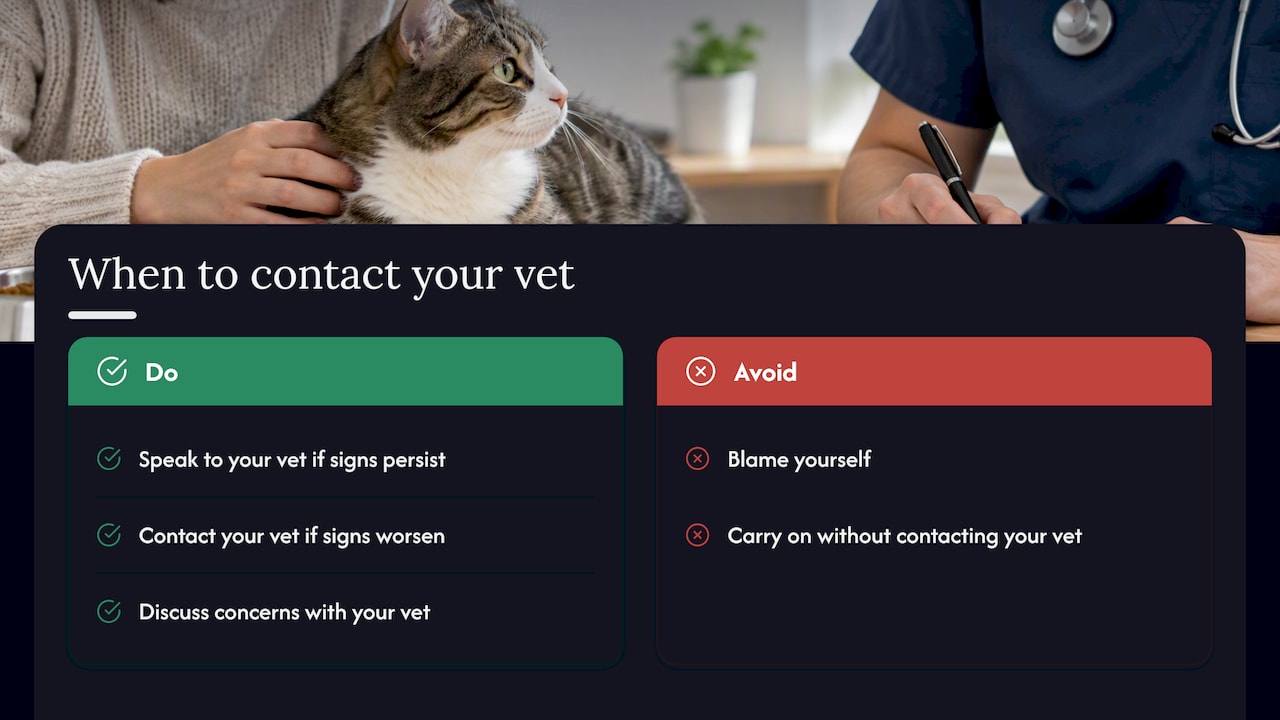
VCA adds that if signs still do not improve after a second diet trial, your cat does not have a true food allergy, and the search moves to other causes of the skin or gut problem. A negative result is still useful, because it narrows things down.
If you suspect household triggers, such as dust, pollen or cleaning products, our guide to environmental allergy examples and how to identify triggers can help you think through what to note.
Our perspective
We hear from worried cat owners who have watched their pet scratch, overgroom or struggle with their stomach for months. The first thing we tell them is that a vet-guided elimination trial is the gold standard, and we would never suggest skipping it.
Where we can help is in the stage before and around it. Our at-home pet tests use a small hair sample, sent to a UK laboratory, so there is no needle and no stressful trip for your cat. The report is designed to point you to foods and environmental items worth a closer look, which can give you something concrete to discuss with your vet when you plan the trial and check what your cat has eaten before.
We built our approach around being simple, non-invasive and clear, because owners are more likely to stick with a plan when it feels manageable. A good diary, a good vet and a clear list of suspects make a trial far easier to run.
Rob
Getting a head start with a pet test
If you would like a clear list of items to talk through with your vet before you start a trial, our pet range may help. It comes in three levels, Intro 300, Essential 500 and Peak 700, and you collect a hair sample at home and send it to our UK laboratory. You then receive a digital report. Take it to your vet as a conversation starter, not a replacement for their advice.

See the pet testing range to choose the level that suits your cat. Ordering takes a few minutes online.
FAQ
How long does a cat elimination diet take?
The new-diet phase usually lasts 6 to 8 weeks, counted from the day your cat eats only the trial food. Reintroducing foods afterwards adds more time, and your vet will tell you how long to wait between each ingredient.
Can I use a normal limited-ingredient cat food from the shop?
Vets generally advise against it. Over-the-counter foods can contain ingredients that are not declared on the label, which can ruin the trial. A prescription hydrolysed or novel protein diet, or a home-cooked diet formulated by a veterinary nutritionist, is the safer route.
Are treats really off the table?
Yes, for the whole trial. Treats, chews, scraps, supplements and some flavoured medicines can all contain the proteins you are trying to rule out. Ask your vet for a safe alternative if you need one for giving tablets.
What if my cat gets worse during the trial?
Contact your vet. Worsening skin, repeated vomiting, diarrhoea or a cat who stops eating should not wait for the end of the trial. Your vet may adjust the plan or look for another cause.
Does the trial work for cats with several allergies?
It can still be useful, but it is harder to read. Environmental allergies can sit alongside a food allergy, so improvement may be partial. Your diary and your vet’s judgement are what make sense of the pattern.
Sources
- Implementing an Elimination-Challenge Diet Trial in Cats, VCA Animal Hospitals
- Food allergy in dogs and cats: current perspectives, JAVMA
- 2023 AAHA Management of Allergic Skin Diseases in Dogs and Cats
- Elimination Diet Trials: Steps for Success and Common Mistakes, Today’s Veterinary Practice
- Adverse Food Reaction and Food Allergy in Dogs and Cats, Small and Large Animal Dermatology Handbook
- How to do an elimination diet food trial for cats, FirstVet
- Critically appraised topic on adverse food reactions, PMC
- Food allergy in cats, PDSA
- Diet Trial Cat, Vale Veterinary Group
- Feeding an Exclusion Diet Fact Sheet, Davies Veterinary Specialists
- Cat skincare and earcare, Blue Cross
- Conducting a successful diet trial for the diagnosis of food allergy, Veterinary Dermatology









Leave a Reply
Want to join the discussion?Feel free to contribute!