

Most people get a result faster than they expect. Skin prick tests give you an answer at the appointment, blood tests usually take several days to a couple of weeks, and commercial home kits often deliver a digital report within a few days. A quick report is not the same as a full clinical diagnosis, though, especially for reactions that take longer to confirm properly.
TL;DR:
- Rapid test results like skin prick tests are available immediately, but blood and home kit results can take from 2 days up to 7 days, depending on the method.
- Commercial tests often advertise 48 to 72 hours for digital reports, which reflect report delivery speed, not diagnostic certainty.
- Longer turnaround times are caused by sample processing logistics, panel complexity, and administrative steps, not just lab workload.
- A fast report provides a useful starting point for discussions with healthcare professionals but cannot replace comprehensive clinical diagnosis or structured elimination protocols.
- Always verify a provider’s stated sample receipt and reporting times, and consult a professional before making dietary changes based solely on short-term test results.
Table of Contents
- Typical result times by test type
- Why turnaround times vary so much
- Clinical diagnosis versus a fast commercial report
- What to expect after you send off your sample
- A fast report from a specialist provider, in context
- Balancing speed with safe interpretation
- Getting your own test done, and what happens next
- Where to read more on the clinical side
- Sources
- FAQ
Typical result times by test type
Turnaround time depends entirely on which test you take, so it helps to know what to expect from each one before you order.
- Skin prick tests: read at the appointment itself, usually within about 15 minutes, though a written summary may follow later according to NHS pathology guidance.
- Specific IgE blood tests: lab processing commonly takes 2 to 14 days, depending on whether you’re going through the NHS or a private provider and how busy the lab is.
- Breath tests (hydrogen or lactose): many clinics return results the same day or within a few days.
- Commercial or home kits: report delivery ranges widely, some services advertise 48 to 72 hours, others quote 5 to 7 days. These are report delivery times, not clinical confirmation.
Knowing this range matters because a provider’s “fast” claim tells you about their reporting speed, not about how sure you should be of the result.
Why turnaround times vary so much
A blood test and a home kit follow completely different paths before you see a result, and that’s the real reason waiting times differ so much.
- Point-of-care versus lab testing: a skin prick reading happens in front of you, while blood and hair samples must travel to a central lab first.
- Panel size and complexity: testing for one substance is quicker than testing for hundreds, since each item adds processing steps.
- Sample logistics: postage, courier schedules, batching and lab backlog can all add days you never see reflected in a marketing claim.
- Administrative steps: clinician sign-off, report formatting and digital delivery all add time after the lab work itself is finished.
Pro Tip: Before you order any test, check the provider’s stated sample receipt and reporting timescale, not just their headline turnaround claim.
Clinical diagnosis versus a fast commercial report
A commercial report and a clinical diagnosis are answering different questions, and it helps to keep that distinction clear before you act on either one.
- Elimination and reintroduction: NICE guidance recommends a supervised elimination trial of the suspected food, normally lasting 2 to 6 weeks, followed by reintroduction to confirm a non-IgE-mediated food allergy in children and young people.
- Oral food challenges: considered the gold standard for confirming allergy, these usually require a specialist referral and scheduled appointment, adding weeks to the process.
- Skin prick testing: gives immediate bedside information for suspected IgE-mediated allergy, but this sits in a separate diagnostic pathway from intolerance testing.
- Unsupervised reliance on home reports: BSACI’s Choosing Wisely guidance warns that alternative tests carry no proven diagnostic benefit and may lead to false positives, unnecessary elimination diets, or nutritional shortfalls if used without follow-up.
Speed and certainty pull in different directions here. A fast report can point you towards a conversation worth having, but it cannot replace weeks of structured observation when that’s what the underlying reaction actually requires.
What to expect after you send off your sample
Once your sample leaves your hands, it moves through a fairly predictable sequence, and knowing the steps helps you judge when to start checking for updates.
- Order placed: you receive confirmation and instructions for collecting your sample.
- Sample collected and posted: postal or courier transit typically adds a day or two before the lab receives it.
- Lab receipt confirmed: most providers send an email or portal update once your sample arrives.
- Analysis and report writing: this is where panel size and lab workload have the biggest effect on timing.
- Digital report delivered: you’re notified by e-mail or through an online portal.
48 to 72 hours is the digital report window some commercial testing services advertise once your sample reaches their laboratory, though this reflects report delivery rather than clinical confirmation.
When your report arrives, look for clear next steps, practical nutritional guidance, and an explicit recommendation to discuss significant findings with your GP or a registered dietitian. Contact your provider if you haven’t heard anything within their stated window, and seek clinical advice promptly if you notice severe reactions, unexplained weight loss, or signs of nutritional deficiency, whatever a home report suggests.
A fast report from a specialist provider, in context
UK Food Intolerance offers non-invasive at-home testing using bio-resonance technology, with hair samples analysed at a UK laboratory and digital reports delivered within 48 to 72 hours. That’s a genuinely fast reporting model, and it shows what commercial testing can offer someone who wants quick, practical insight into possible triggers.
Speed of delivery is a service feature. It says nothing about whether a result replaces the clinical pathways that NHS, NICE and BSACI guidance set out for confirming a genuine food allergy or intolerance.
A 48 to 72 hour report gives you a starting point for a conversation, not a finishing line.
Balancing speed with safe interpretation
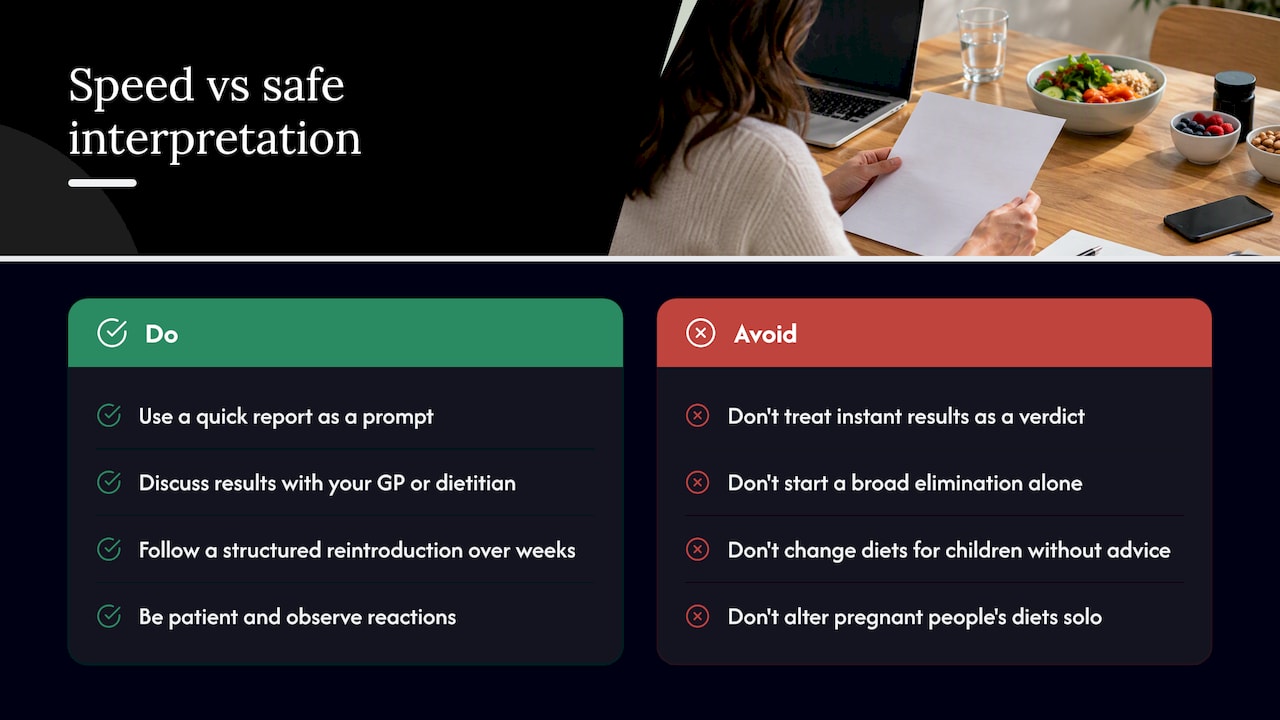
Fast results are genuinely useful, but only when you treat them as a prompt rather than a verdict. Use a quick report to start a conversation with your GP or dietitian, not to launch into a broad elimination diet on your own, particularly for children, pregnant people, or anyone with existing nutritional concerns.
Patience still earns its keep here. A structured reintroduction over several weeks often tells you more about what’s really going on than any single instant result ever could.
— Rob
Getting your own test done, and what happens next
If you’d rather skip the waiting rooms and referral queues, UK Food Intolerance lets you test from home with a simple hair sample, no needles or clinic visits involved.
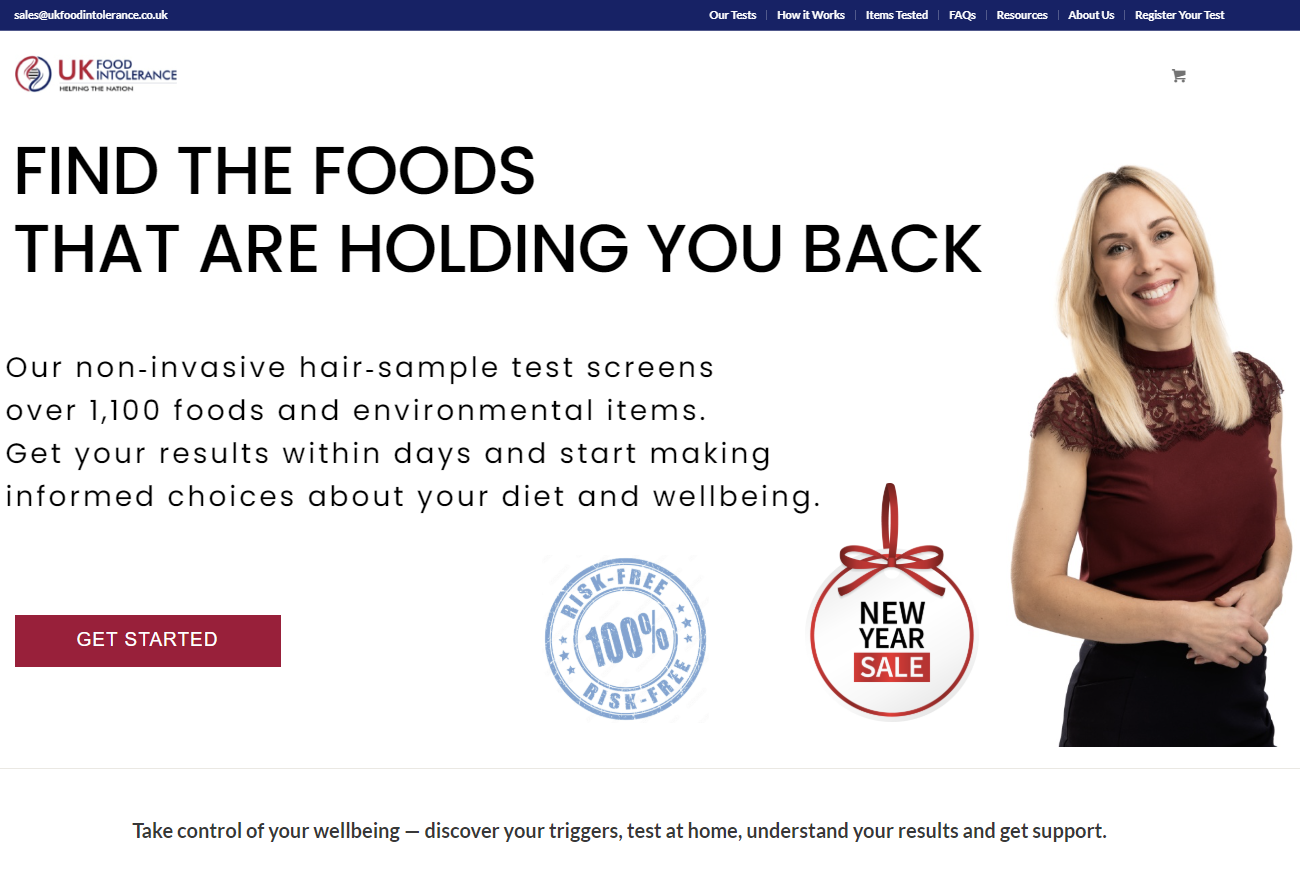
- Choose from options including the Core Test, Essential Test, Premium Test and the Ultimate Plus Intolerance Test, which screens for a wide panel of potential triggers.
- Collect your sample using the guided step-by-step workflow, then post it off for UK-based lab analysis.
- Receive your digital report within a 48 to 72 hour window, with guidance for interpreting your results.
Once your report lands, share it with your GP or a registered dietitian before making any significant dietary changes, especially if you’re planning an elimination diet or supporting a child’s diet. Browse the full range of tests to find the panel that fits what you’re trying to understand.
Where to read more on the clinical side
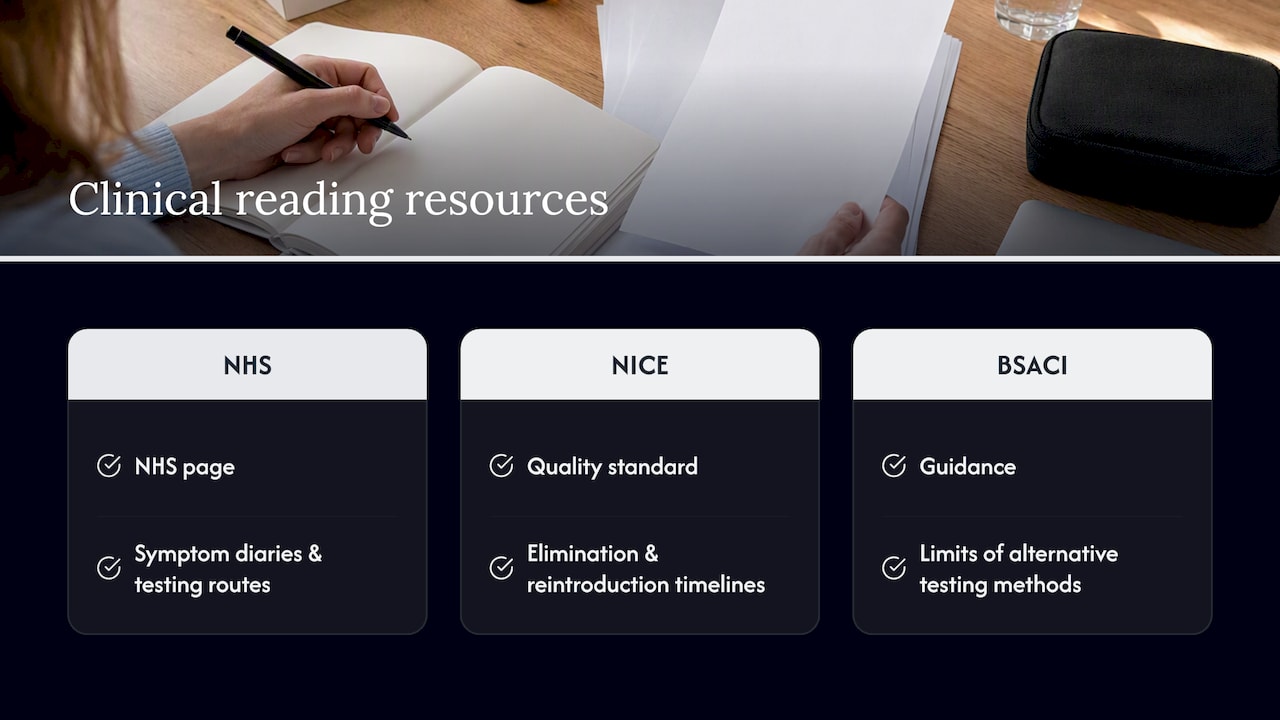
For broader context beyond report timing, the NHS page on food intolerance covers symptom diaries and testing routes, while NICE’s quality standard sets out elimination and reintroduction timelines, and BSACI’s guidance flags the limits of alternative testing methods.
This article is general information, not a substitute for advice from a qualified doctor. Consult a qualified healthcare professional about your own circumstances before acting on anything here.
Sources
- NHS — Food intolerance
- NICE — Quality statement 3: Diagnosing non‑IgE‑mediated food allergy
- BSACI — Choosing wisely: alternative tests
- Leeds Teaching Hospitals — adverse reactions to food
FAQ
How long does it take to get results from a food intolerance test?
It depends on the test. Skin prick tests are read within minutes at your appointment, blood tests typically take 2 to 14 days, and commercial home kits often deliver a digital report within a few days according to provider claims, though some take up to 5 to 7 days.
How accurate are food intolerance tests?
Accuracy varies significantly by method and purpose. BSACI’s Choosing Wisely guidance states that alternative tests, including IgG and bio-resonance testing, have no proven benefit for diagnosing food allergy and should not replace clinical history and supervised elimination diets.
Will the NHS do an intolerance test?
The NHS generally recommends symptom diaries, supervised elimination and reintroduction, blood tests in selected cases, and breath testing for suspected lactose intolerance rather than a single standard intolerance test. Some NHS trusts, including Leeds Teaching Hospitals, explicitly advise against non-validated hair or IgG testing and won’t accept referrals based on them.
Will an intolerance show up on an allergy test?
Not reliably. Allergy tests such as skin prick and specific IgE blood tests are designed to detect IgE-mediated allergic reactions, while intolerances typically involve different mechanisms that these tests aren’t built to identify, which is one reason NICE recommends elimination and reintroduction for suspected non-IgE-mediated reactions.










Leave a Reply
Want to join the discussion?Feel free to contribute!