
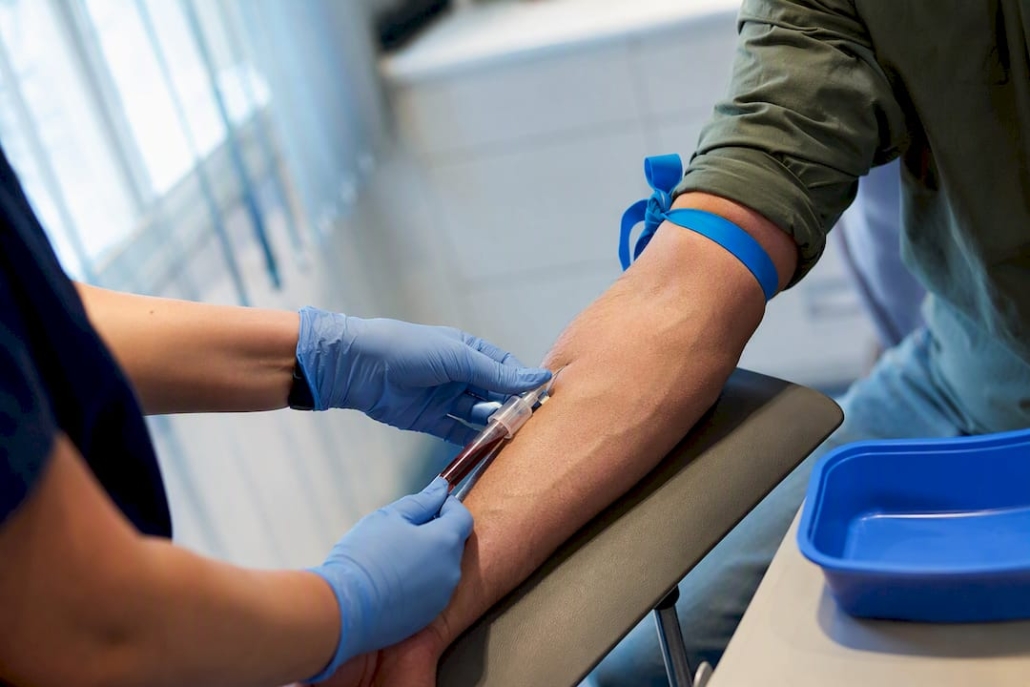
Yes. Vitamin deficiency from intolerance usually happens one of two ways: gut damage that stops your body absorbing nutrients properly, or a restrictive diet that quietly removes the foods that carry them. The NHS is clear that intolerances themselves aren’t immune conditions, and the British Dietetic Association warns against long-term self-prescribed exclusions. Ask your GP for blood tests before cutting anything else out, and get a dietitian involved if you’re already avoiding a whole food group.
TL;DR:
- Malabsorption from gut damage like coeliac disease can cause deficiencies that persist for months or years despite dietary changes.
- Restrictive diets that eliminate nutrient-rich foods often lead to deficiencies unless replaced with fortified alternatives or supplements under professional guidance.
- Vitamin B12, iron, vitamin D, calcium, folate, and zinc are most at risk, each with distinct deficiency symptoms and requiring specific testing and management.
- Repeat blood testing every three to six months is crucial for coeliac patients and others on elimination diets to catch ongoing deficiencies early.
- At-home intolerance testing can guide elimination efforts but must be followed up with clinical assessments for accurate diagnosis and safety.
Table of Contents
- What causes vitamin deficiency from food intolerance?
- Which vitamins and minerals are most at risk?
- Why does gut damage or diet change reduce nutrient levels?
- How do doctors diagnose the cause of a deficiency?
- How can you treat and prevent nutrient deficiencies from intolerance?
- When should you seek urgent medical help?
- Where does at-home intolerance testing fit into this?
- What do people get wrong about intolerance and nutrient deficiency?
- How Ukfoodintolerance supports safer elimination diets
- Sources
What causes vitamin deficiency from food intolerance?
Two very different mechanisms sit behind most cases, and telling them apart changes everything about how you manage the problem.
Malabsorption happens when the gut lining itself is damaged, so nutrients pass through without being absorbed properly, however much you eat. Coeliac disease is the clearest example: gluten triggers an immune reaction that flattens the tiny finger-like structures (villi) lining the small intestine, a process called villous atrophy. With less surface area to absorb through, iron, folate, calcium and vitamin B12 all suffer. Inflammatory bowel disease can cause a similar effect in the section of gut where B12 is absorbed.
Restrictive or elimination diets work differently. Nothing is physically wrong with your gut. You’re simply eating less of a nutrient because you’ve stopped eating the foods that carry it. Cut dairy and you lose a major calcium and vitamin D source. Cut wheat-based foods without checking labels and you may lose fortified iron and B vitamins that manufacturers add back into bread and cereal.
Both routes can produce deficiency, but the evidence base treats them differently:
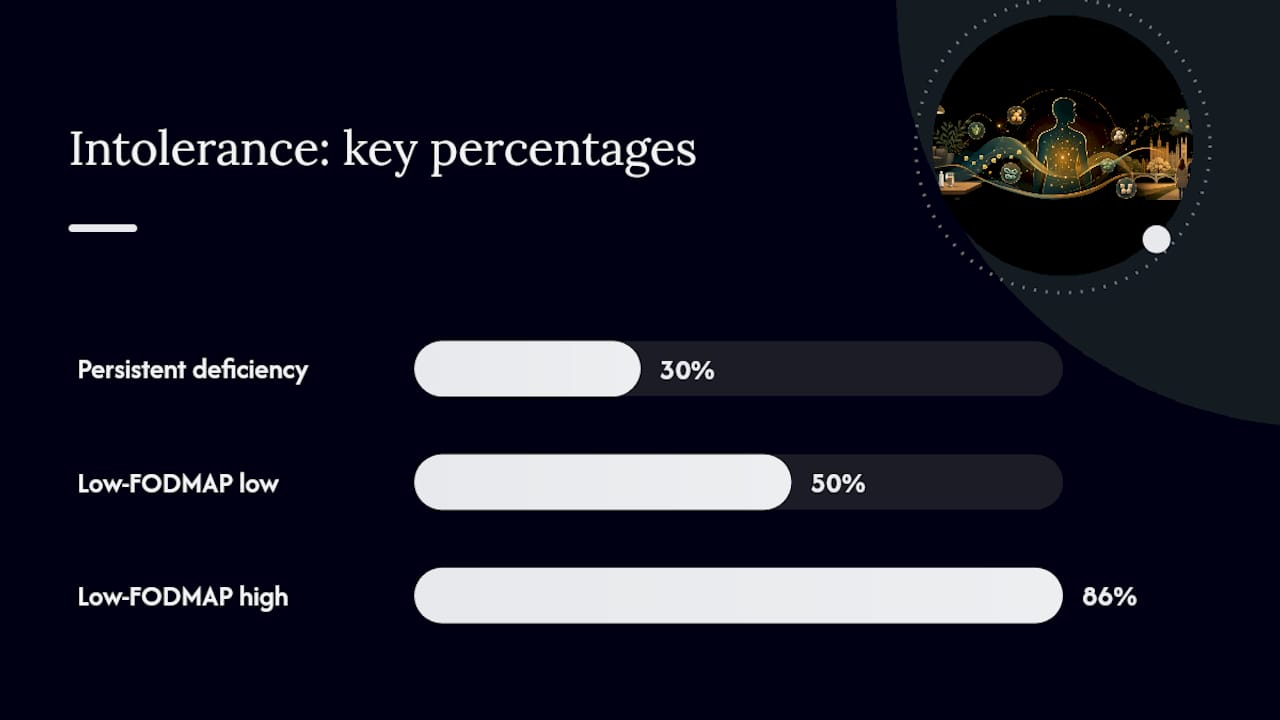
- Malabsorption from coeliac disease can cause deficiencies that persist in around 30% of patients even after switching to a gluten-free diet, because gut healing takes time.
- Restrictive diets create a supply problem, not an absorption problem, so the fix is usually more direct: replace what’s missing.
- Diets like low-FODMAP can ease IBS symptoms in 50 to 86% of patients, but the same research flags fibre, calcium, protein, iron and B12 shortfalls when it’s followed without dietetic input.
Knowing which pathway applies to you determines whether the answer is “heal and monitor” or “swap and supplement”.
Which vitamins and minerals are most at risk?
Some nutrients show up far more often than others in intolerance-related deficiency, and each has a fairly distinct symptom pattern worth knowing.
- Vitamin B12 — fatigue, pins and needles, and in severe cases nerve damage. B12 depends on a healthy gut lining and on eating animal-source foods, so both coeliac disease and dairy or meat exclusion put it at risk. Research has also found higher rates of B12 deficiency among children with diagnosed food allergies.
- Iron — tiredness, pale skin, breathlessness on exertion. Classic in coeliac-related malabsorption, but also common when red meat is cut without a planned replacement.
- Vitamin D and calcium — bone pain, muscle weakness, and over time a raised fracture risk. Removing dairy without a fortified substitute is the usual trigger here.
- Folate and other B vitamins — mouth ulcers, low mood, and (in pregnancy) more serious risks; often lost alongside B12 when the same foods or the same gut segment are affected.
- Zinc — slow wound healing, hair thinning, reduced taste sensation; easy to miss because the symptoms are vague.
One figure worth sitting with: even with strict adherence to a gluten-free diet, roughly 30% of coeliac patients still show nutrient deficiencies, because the gut lining hasn’t fully recovered. That’s the strongest argument in this whole article for repeat testing rather than a one-off check.
If you’re seeing two or more of these symptoms alongside a known or suspected intolerance, that’s a reasonable trigger to book bloods rather than wait and see.
Why does gut damage or diet change reduce nutrient levels?
Villous atrophy from coeliac disease doesn’t just reduce absorption in general. It specifically hits iron, folate and fat-soluble vitamins (A, D, E, K), because these depend on healthy villi and adequate bile and fat digestion to be taken up properly. That’s why deficiency can outlast the diagnosis. Gut healing after starting a gluten-free diet is variable, and some people need months to years before absorption normalises, which is precisely why ongoing monitoring matters even once symptoms improve.
Enzyme-based intolerances work through a different mechanism. Lactose intolerance stems from reduced lactase, the enzyme that breaks down milk sugar, not from gut injury. But the practical effect is the same: people quietly drop dairy from their diet and calcium intake falls with it, even though lactose restriction alone doesn’t reliably change bone density on its own. The risk isn’t the enzyme deficiency. It’s the food group that disappears alongside it.
How do doctors diagnose the cause of a deficiency?
A structured work-up separates malabsorption from a simple intake gap, and it typically follows this order:
- Full blood count (FBC) to check for anaemia and general markers of nutrient status.
- Ferritin, B12 and folate levels to identify the specific deficiency pattern.
- 25-OH vitamin D and calcium if bone symptoms, dairy exclusion or limited sun exposure are relevant.
- Coeliac serology (tissue transglutaminase antibodies) if malabsorption is suspected, followed by referral to gastroenterology for endoscopy if the result is positive.
- Dietitian assessment, including a full dietary history, to work out whether the problem is what’s being eaten or what’s being absorbed.
This last step matters more than people expect. Two patients can have identical blood results for entirely different reasons: one because their gut can’t absorb iron, the other because they stopped eating red meat eighteen months ago and never adjusted. A dietitian’s assessment is often what actually distinguishes the two, and it changes the treatment plan completely.
It’s worth being direct about something here: commercial intolerance tests, including bioresonance-based ones, are not a substitute for these clinical pathways. They can point towards food triggers worth discussing with your GP, but they don’t diagnose coeliac disease or measure a vitamin level.
How can you treat and prevent nutrient deficiencies from intolerance?
Once you know which pathway applies, the fix generally falls into four categories.
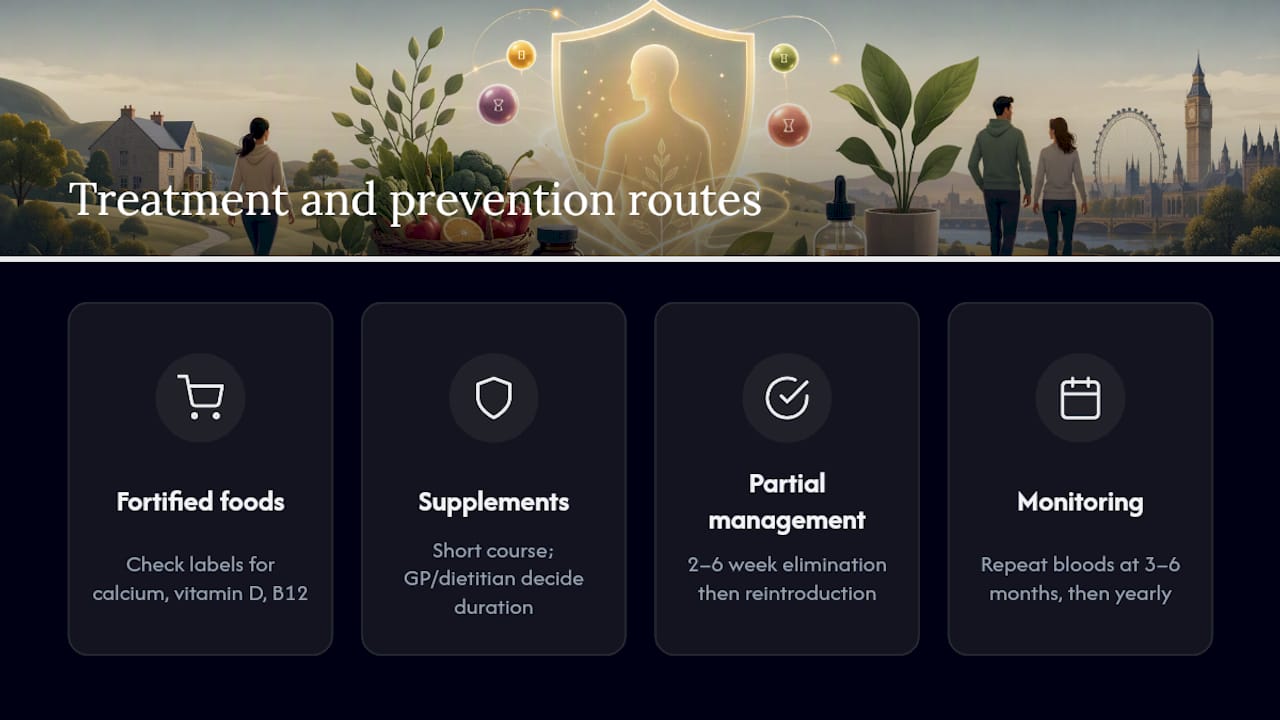
Fortified alternatives. Plant milks, breads and breakfast cereals vary hugely in fortification. Check the label for added calcium, vitamin D and B12 specifically. Not every “dairy-free” or “gluten-free” product carries the same nutrients as the food it replaces. If you’ve cut back on red meat, alternative iron and B12 sources like fortified cereals, lentils and eggs are worth building into your weekly shop.
Supplements, used deliberately. A short course of iron or B12 can correct a specific deficiency quickly, but ongoing supplementation should be a decision made with your GP or dietitian, not an indefinite habit. Duration and dose matter, particularly with iron and vitamin D, where taking too much causes its own problems.
Managing intolerance without full exclusion. Lactase-treated milk, small controlled portions, and supervised reintroduction after a short trial often let people keep a food group rather than lose it entirely. Professional guidance generally favours a 2 to 6 week elimination followed by controlled reintroduction to confirm the trigger, not months of open-ended avoidance.
A monitoring plan. Repeat the relevant bloods at 3 to 6 months after starting treatment, then annually if stable. Coeliac patients in particular benefit from periodic recheck, given how many still carry deficiencies years into a gluten-free diet.
Pro Tip: Keep a simple food and symptom diary for two weeks before your GP appointment. It turns a vague “I feel tired” into concrete evidence a dietitian can actually work with.
If you’re navigating early symptoms rather than a confirmed deficiency, this guide to managing intolerance symptoms covers practical day-to-day steps alongside the medical ones above.
When should you seek urgent medical help?
Some signs need faster action than a routine GP booking. Get seen urgently, or go to A&E, if you notice severe pallor, breathlessness, chest pain, blood in stools, or any sudden neurological change such as numbness, tingling that’s worsening, or confusion. These can point to advanced anaemia or serious B12 deficiency, both of which need prompt investigation.
Pregnant women and children deserve faster review too. Nutrient demands are higher, margins for error smaller, and the consequences of an unmonitored deficiency more serious. If you’ve started an elimination diet for a child, book a check-in with a dietitian within the first month, not after the diet’s been running for a year unsupervised.
Where does at-home intolerance testing fit into this?
An at-home test like the ones Ukfoodintolerance offers works by taking a hair sample at home, sending it to a UK laboratory, and returning a digital report within 48 to 72 hours covering hundreds of potential food and environmental triggers. Used well, that report becomes a starting point for a conversation, not an endpoint.
- It can help you identify candidate foods worth investigating through a structured, supervised elimination.
- It does not replace coeliac serology, blood-based vitamin testing, or a GP diagnosis.
- The most useful next step is taking your report to a GP or dietitian and working through it against an elimination diet checklist rather than acting on it alone.
Treated that way, a report gives you a shortlist to discuss rather than a diagnosis to act on unsupervised.
What do people get wrong about intolerance and nutrient deficiency?
The mistake I see most often isn’t ignorance. It’s overcorrection: someone gets a hunch about a trigger food, cuts it completely, feels a bit better, and never revisits the decision. Two years later they’re deficient in something nobody thought to check, because the original symptom improved and the exclusion became permanent by default.
Children carry the highest stakes here, because a poorly substituted exclusion diet during growth years is harder to undo than the original problem. Most of this is preventable with a blood test, a dietitian conversation, and a plan to reintroduce foods properly rather than avoid them forever.
— Rob
How Ukfoodintolerance supports safer elimination diets
Ukfoodintolerance exists for exactly the gap this article has been describing: the space between “I suspect a trigger food” and “I have clinical proof.” Rather than guessing which food group to cut next, or cutting several at once and risking the nutrient gaps covered above, you get a structured shortlist to test methodically.

The Ultimate Single Intolerance Test screens over 1,100 items, while the Core Single Intolerance Test covers 500 items at a lower price point, and both follow the same simple process: collect a hair sample at home, post it to a UK laboratory, and receive a detailed digital report within 48 to 72 hours. Customers typically use their report alongside GP or dietitian advice to plan a supervised elimination, rather than treating it as a standalone diagnosis. It won’t replace coeliac serology or a blood-based vitamin panel, but it gives you a concrete, discussion-ready starting point instead of months of unstructured guesswork. Browse the full range of intolerance tests to find the option that matches your situation.
Sources
- Food intolerance – NHS
- Nutrition in patients with lactose malabsorption, celiac disease and related disorders – MDPI
- Food allergy and food intolerance – British Dietetic Association










Leave a Reply
Want to join the discussion?Feel free to contribute!