

If you have digestive symptoms right now, here’s the short version: check for red flags that need urgent care, and if there are none, start simple self-care alongside a food and symptom diary today. NHS guidance sets out the warning signs that mean you should call 999 or go straight to A&E. For everything else, NICE recommends a structured elimination and reintroduction approach lasting a few weeks if you suspect a food is behind your symptoms. Services such as Ukfoodintolerance offer at-home testing that can give you a starting point for that process.
Before anything else, run through these three checks:
- Red flags first: sudden severe pain, bloody or black stools, vomiting blood, or chest pain mean urgent care, not self-care.
- Immediate comfort measures: sip water regularly, avoid large or fatty meals, and rest if you’re in pain.
- Start tracking today: note what you eat, when symptoms appear, and how severe they are, even before you know the cause.
Key Takeaways
Addressing digestive symptoms effectively means ruling out emergencies first, then combining consistent self-care with a structured, time-limited elimination and reintroduction process.
| Point | Details |
|---|---|
| Check for red flags first | Call 999 or go to A&E for sudden severe pain, blood in vomit or stools, or chest pain. |
| Start a diary before changing anything | Record food, portions, and symptoms for at least two weeks before eliminating anything. |
| Follow the 2 to 6 week rule | Eliminate one suspect food at a time for 2 to 6 weeks, then reintroduce it in a measured portion. |
| Match OTC options to symptoms | Use antacids for heartburn, loperamide for diarrhoea, and soluble fibre for constipation. |
| Consider testing as a starting point | Ukfoodintolerance’s at-home hair analysis can help prioritise which foods to trial first. |
Table of Contents
- How to address digestive symptoms with daily self-care
- When are digestive symptoms a medical emergency?
- How do you track symptoms and test for food intolerance?
- What over-the-counter options help specific symptoms?
- When should you ask for specialist tests or a dietitian referral?
- A safe checklist for running an elimination diet at home
- Where at-home testing fits into your next steps
- Frequently asked questions
- Sources
How to address digestive symptoms with daily self-care
The most effective first step is usually the simplest one: change how and when you eat before you change what you eat. Eating slowly and stopping before you feel full reduces the pressure on your gut that triggers bloating and reflux. Rather than three large meals, NHS advice suggests four or five smaller ones, spaced out, with nothing eaten in the 3 to 4 hours before bed.
Certain foods and drinks aggravate symptoms more often than others. Caffeine, alcohol, spicy dishes, and fatty or fried food all tend to irritate the gut lining or speed up transit time. Cutting back on these, rather than cutting them out entirely, is often enough to see whether they’re contributing to your symptoms.
Hydration matters more than most people realise. Aim for around a litre and a half, or several drinks, a day, counting water, herbal tea, and diluted squash. Dehydration alone can worsen constipation and make bloating feel worse than it is.
Stress and poor sleep directly affect gut function through the gut-brain connection, so lifestyle changes belong alongside dietary ones. A 10-minute walk after eating, or a short breathing exercise before meals, can measurably calm symptoms for some people. Techniques drawn from holistic stress-relief practices are worth exploring if stress is a clear trigger for you.

If symptoms are mild and short-lived, a pharmacist can usually advise on suitable over-the-counter options. If they persist beyond a couple of weeks despite these changes, it’s time to speak to a GP.
Pro Tip: Try plating your meal on a smaller plate for two weeks. It’s a simple visual trick that curbs overeating without you having to consciously restrict anything, and smaller portions are one of the fastest ways to ease bloating and reflux.
When are digestive symptoms a medical emergency?
Call 999 or go to A&E immediately if you experience any of these signs, regardless of how you’ve been feeling generally:
- Sudden, severe abdominal pain that comes on quickly and doesn’t ease.
- Vomiting blood or vomit that looks like coffee grounds.
- Black, tarry, or bloody stools.
- Inability to pass urine, chest pain, or collapse.
Statistic callout: NHS emergency guidance lists these exact combinations of symptoms as requiring immediate assessment, because they can indicate internal bleeding, obstruction, or a serious cardiac event rather than routine digestive upset.
Outside of those red flags, book a non-urgent GP appointment if you notice unexplained weight loss, difficulty swallowing, ongoing diarrhoea lasting more than a few weeks, or any blood in your stools that isn’t linked to an obvious cause like piles. When you contact 111 or your GP, be ready to explain how long symptoms have lasted, how severe they are, whether you’ve noticed any red-flag signs, any recent travel, and what medications you’re currently taking.
How do you track symptoms and test for food intolerance?
The most reliable way to identify a trigger food is not a single test but a process: a detailed symptom diary followed by a supervised elimination and reintroduction, ideally with dietitian input. NICE guidance recommends eliminating a suspected food for 2 to 6 weeks before reintroducing it in a controlled way.
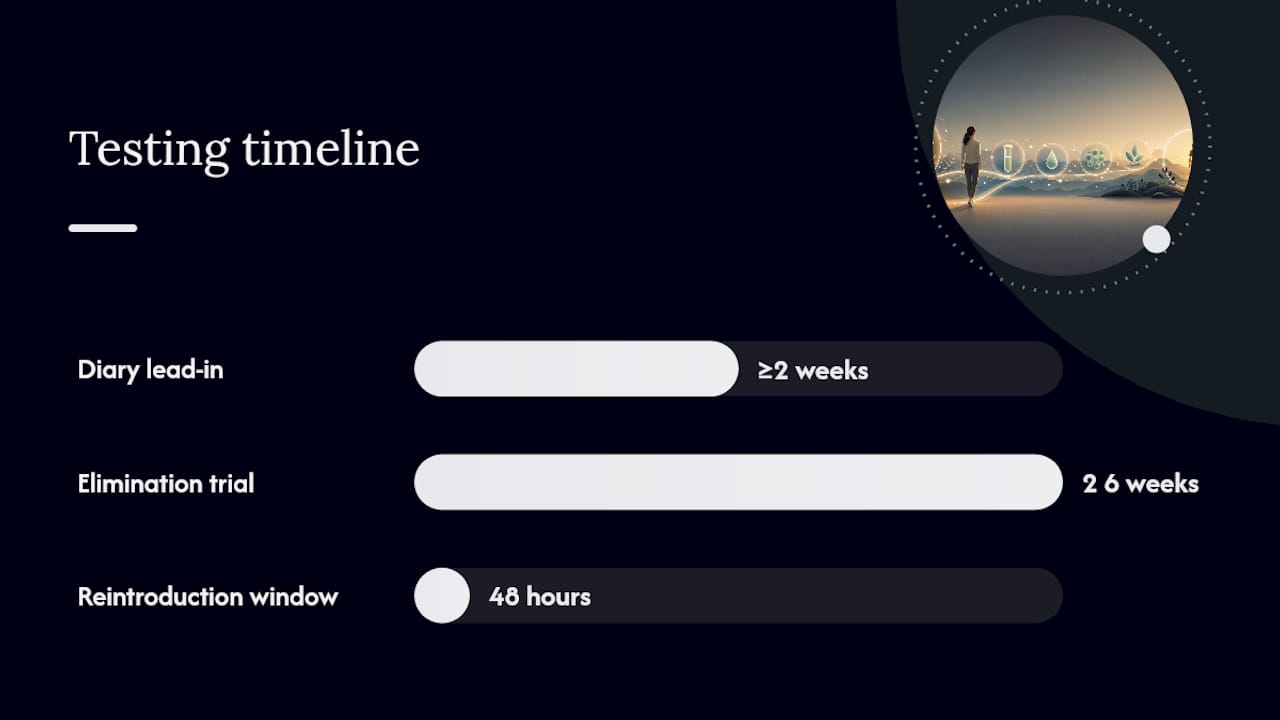
Start the diary at least two weeks before you eliminate anything. For every meal, record the time, the portion size, every ingredient (including hidden ones like sauces and stock cubes), and any symptoms along with their timing and severity. Accuracy here genuinely matters: vague portion estimates or forgotten ingredients make patterns much harder to spot.
Once you’ve identified a likely culprit, follow this sequence:
- Choose one suspected food at a time rather than removing several at once.
- Eliminate it completely for 2 to 6 weeks, replacing any lost nutrients (calcium if dropping dairy, for example).
- Keep recording symptoms throughout the trial, not just at the end.
- Reintroduce the food in a single, measured portion and watch for a reproducible reaction within 48 hours.
- Repeat the elimination if the reaction is unclear, or move on to the next suspect food if it isn’t.
Be cautious of commercial blood tests claiming to diagnose intolerance outright. Allergy UK is clear that no single blood test reliably diagnoses food intolerance, and unvalidated results often lead people to cut out food groups unnecessarily. Bioresonance-based hair analysis from a service like Ukfoodintolerance’s food intolerance tests works best as a starting point for deciding what to trial first, not as a standalone diagnosis. It narrows the list; the elimination and reintroduction process confirms it.
What over-the-counter options help specific symptoms?
Different digestive symptoms call for different remedies, and matching the right one to the right problem saves time and unnecessary trial and error. For heartburn or indigestion, antacids and alginates neutralise acid quickly, while proton pump inhibitors work better for recurring reflux. Loperamide is the standard option for acute diarrhoea, though it shouldn’t be used if you have a fever or blood in your stool. Constipation usually responds to soluble fibre or a gentle laxative, alongside the hydration target mentioned earlier. For cramping and bloating, Buscopan and peppermint oil capsules are commonly recommended by pharmacists.
A few safety notes apply across the board:
- Avoid loperamide and most laxatives during pregnancy without checking with a pharmacist or midwife first.
- Antacids can interfere with other medications if taken too close together, so leave a two-hour gap.
- Peppermint oil can worsen reflux in some people even as it eases bloating in others.
Non-drug measures help too: raising the head of your bed reduces night-time reflux, soluble fibre (found in oats and psyllium husk) softens stools without the harsh effect of stimulant laxatives, and cutting back on sorbitol, found in sugar-free gum and some fruit juices, often eases diarrhoea within days.
Pro Tip: Ask your pharmacist “is this safe alongside what I already take?” rather than just “what do you recommend?” It prompts them to check interactions you might not think to mention, and it’s the fastest way to get a genuinely tailored answer over the counter.
When should you ask for specialist tests or a dietitian referral?
Ask your GP about further testing or a dietitian referral if red flags appear, symptoms persist despite weeks of basic changes, you’re avoiding multiple food groups, or you’re worried your diet is becoming nutritionally unbalanced.
Coeliac serology is the usual first test if gluten is suspected, since it must be done while you’re still eating gluten to be accurate. Allergy testing (skin prick or IgE blood tests) is appropriate when reactions are immediate and severe rather than delayed. Hydrogen breath tests can identify lactose or fructose malabsorption, or bacterial overgrowth in the small intestine (SIBO).
Dietitian referral becomes important when reintroductions get complicated, when a child’s growth is a concern, or when several foods are already excluded. NICE specifically recommends dietitian involvement for exactly these situations, because unsupervised long-term exclusion carries a real risk of nutrient shortfalls.
A safe checklist for running an elimination diet at home
The rule to remember is: plan, record, replace, reintroduce, and review with a clinician if anything feels uncertain.
- Pick one suspect food at a time, never several together.
- Set a clear duration, 2 to 6 weeks, and stick to it.
- Plan nutritionally equivalent replacements before you start, not after.
- Read labels carefully and watch for cross-contamination in processed foods.
- Keep an accurate diary throughout, not just at the beginning and end.
- Schedule the reintroduction date in advance and monitor the response closely.
Elimination diets carry real risk when they’re done without structure. Children with faltering growth, or anyone with a history of severe delayed reactions, should only attempt elimination under specialist supervision, never as a self-directed experiment.
Reading labels properly means checking for the ingredient under its technical name too. Lactose can hide as “milk solids,” and gluten as “modified wheat starch.”
A practical note from Rob
Diaries and supervised elimination remain the most defensible route to finding your trigger, but pragmatism matters too. Testing can help you decide where to start; it shouldn’t replace the process.
Where at-home testing fits into your next steps
If you’ve read this far and want a practical starting point rather than guessing which food to eliminate first, at-home testing from Ukfoodintolerance gives you structured data to work from before you commit to weeks of trial and error.

The process is straightforward: you collect a small hair sample at home, send it to a UK laboratory, and receive a digital report within 48 to 72 hours covering over 1,450 items. What that gives you:
- A ranked list of potential sensitivities to prioritise in your elimination trial, rather than starting from scratch.
- Guidance for applying results within an elimination diet framework.
- Support for interpreting your report alongside the diary you’re already keeping.
This works best as a complement to the diary and elimination process outlined above, not a replacement for it. If you’re ready to narrow down where to focus your elimination trial, take a look at Ukfoodintolerance’s food intolerance tests and see which option matches your situation.
Frequently asked questions
What is the fastest way to address digestive symptoms at home?
Start by ruling out red-flag symptoms, then adjust meal timing, cut back on caffeine and alcohol, and keep hydration around 1.5 litres a day while you track what triggers flare-ups.
How long should a food elimination trial last?
NICE guidance recommends 2 to 6 weeks per suspected food, followed by a controlled reintroduction to check whether symptoms return.
Can a blood test diagnose food intolerance on its own?
No single blood test reliably diagnoses food intolerance. Clinical history combined with supervised elimination and reintroduction remains the recommended approach.
When should I see a GP rather than manage symptoms myself?
See a GP if symptoms persist beyond a few weeks despite self-care, if you notice unexplained weight loss or blood in your stools, or if you’re excluding multiple foods without improvement.
Does UK Food Intolerance testing replace an elimination diet?
No. It’s designed to help identify which foods to prioritise in your elimination trial, working alongside a symptom diary rather than instead of one.
This article is general information, not a substitute for advice from a qualified doctor. Consult a qualified healthcare professional about your own circumstances before acting on anything here.










Leave a Reply
Want to join the discussion?Feel free to contribute!