

The most effective ways to improve digestive health are straightforward diet and lifestyle changes you can begin today. Start with these six: increase fibre gradually, drink enough fluids, eat 30 or more different plant foods each week, add a fermented food daily, move your body regularly, and manage stress. Together, these steps are backed by NHS guidance and recent research as the highest-impact starting points for most people.
Your quick-start checklist:
- Increase fibre intake towards 30 g per day (most UK adults currently eat around 18–20 g)
- Drink several glasses of water daily, increasing the amount if you are active
- Aim for 30 or more different plant foods each week
- Add one fermented food (live yoghurt, kefir, sauerkraut) to your daily routine
- Take a 20–30 minute walk most days
- Build a short daily habit to reduce stress, such as breathing exercises or a screen break
If you notice blood in your stool, unexplained weight loss, persistent vomiting, or symptoms that wake you at night, see your GP promptly rather than trying dietary changes first. For persistent but non-urgent symptoms, a digestive health checklist or at-home sensitivity testing can help you narrow down personal triggers before a clinical appointment.
Key takeaways
The most effective ways to improve digestive health combine gradual fibre increases, consistent hydration, plant variety, fermented foods, daily movement, and stress management, with testing or clinical support when self-management reaches its limits.
| Point | Details |
|---|---|
| Fibre target | Aim for around 30 g of fibre per day; most UK adults currently eat only 18–20 g. |
| Plant diversity | Eating 30 or more different plant foods per week supports microbiome diversity and produced 57 species-level changes versus 14 in a six-week RCT. |
| Fermented foods first | Live yoghurt, kefir, and sauerkraut are a more practical first choice than probiotic supplements for most healthy people. |
| Track before you restrict | A two-week food and symptom diary identifies personal triggers more reliably than removing multiple foods at once. |
| Ukfoodintolerance testing | At-home bioresonance hair-sample tests covering 1,450+ items can help prioritise your elimination plan when self-tracking alone is not enough. |
Table of Contents
- 1. How to increase your fibre intake towards 30 g a day
- 2. Hydration supports digestion more than most people realise
- 3. Which foods actively support your gut microbiome?
- 4. Common symptom triggers to limit and how to find your personal ones
- 5. Lifestyle habits that affect your gut more than you might expect
- 6. Targeted steps for bloating, constipation, and diarrhoea
- 7. Probiotics and supplements: what the evidence actually says
- 8. How to keep a food and symptom diary and run an elimination safely
- 9. Red flags: when to see your GP rather than self-manage
- 10. At-home sensitivity testing: how to use it responsibly alongside clinical care
- What I’d actually prioritise, and the mistakes worth avoiding
- Ukfoodintolerance can help you narrow down your triggers faster
- Sources
1. How to increase your fibre intake towards 30 g a day
Fibre is the single most evidence-backed dietary change for digestive health. The NHS recommends around 30 g of fibre per day, yet most UK adults consume only 18–20 g. That gap matters: fibre adds bulk to stools, softens them, and feeds butyrate-producing bacteria that keep the gut lining healthy.
The key is to increase fibre gradually. Adding too much too fast causes bloating and wind. A staged approach over three to four weeks lets your gut microbiome adjust.
| Meal | Lower-fibre choice | Higher-fibre swap |
|---|---|---|
| Breakfast | White toast | Porridge oats or wholegrain toast with nut butter |
| Lunch | White bread sandwich | Wholegrain wrap with salad and pulses |
| Dinner | White rice or pasta | Brown rice, lentils, or a pulse-based dish |
| Snack | Crisps or biscuits | Apple with skin, mixed nuts, or carrot sticks with hummus |
Pulses (lentils, chickpeas, kidney beans) are particularly useful: they are cheap, filling, and high in both soluble and insoluble fibre. Cooled cooked potato, rice, or pasta also contains resistant starch, which acts as a prebiotic for many people and tends to be well tolerated even when high-FODMAP foods cause problems.
Pro Tip: Increase your fluid intake at the same time as your fibre. Fibre absorbs water; without enough fluid, a high-fibre diet can worsen constipation rather than relieve it. Practitioner guidance consistently highlights this pairing as one of the most common mistakes people make when changing their diet.
2. Hydration supports digestion more than most people realise
Water is not just a background requirement. It is what keeps stool soft, supports digestive enzyme function, and helps fibre do its job. Without enough fluid, even a high-fibre diet can leave you constipated and uncomfortable.
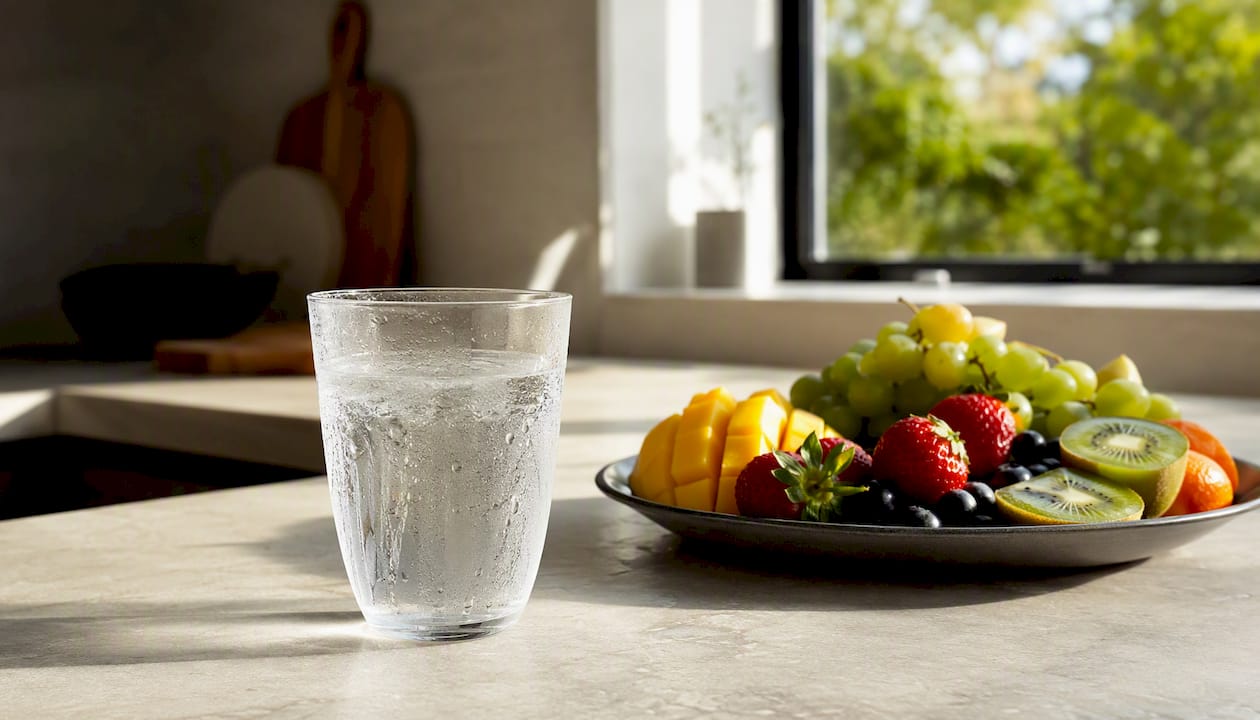
A practical target for most UK adults is 1.5–2 litres (roughly 6–8 glasses) per day, adjusting upward in hot weather or after exercise. There is no single universal figure, but this range reflects NHS lifestyle guidance for digestive health.
Simple habits that help:
- Drink a glass of water with each meal and one on waking
- Carry a reusable bottle so fluid intake becomes automatic rather than deliberate
- Include hydrating foods: cucumber, melon, tomatoes, and leafy greens all contribute to daily fluid intake
- Herbal teas (peppermint, ginger) count towards your total and may ease mild bloating
- If bloating is a problem, reduce or cut fizzy drinks, which introduce gas into the gut
Caffeinated drinks count towards fluid intake in moderate amounts, but caffeine is also a common trigger for loose stools and acid reflux in sensitive people. If you are tracking symptoms, it is worth noting whether your digestive comfort changes when you reduce coffee or strong tea.
3. Which foods actively support your gut microbiome?
Your gut microbiome, the community of trillions of bacteria living in your digestive tract, responds directly to what you eat. Three categories of food make the biggest difference: fermented foods, prebiotic foods, and a wide variety of plants.
Fermented foods contain live cultures that add to the microbial population in your gut. Widely available UK options include:
- Live natural yoghurt (check the label for “live cultures”)
- Kefir (dairy or water-based)
- Sauerkraut and kimchi (unpasteurised versions from the chilled section)
- Miso paste (stir into soups or dressings rather than boiling, which kills the cultures)
- Kombucha (choose lower-sugar varieties)
Prebiotic foods feed the bacteria already living in your gut. Onions, garlic, leeks, oats, slightly unripe bananas, asparagus, and pulses are all good sources. You do not need to eat large amounts; small, regular portions work well.
The 30+ plant foods per week target is one of the most practical ways to support gut health. The British Heart Foundation recommends aiming for 30 or more different plant-based foods weekly, counting fruits, vegetables, wholegrains, pulses, nuts, seeds, herbs, and spices. A six-week randomised controlled trial published in the British Journal of Nutrition found that a 30+ plant blend produced 57 species-level microbiome changes versus 14 in the control group, alongside small symptomatic improvements, though effect sizes were modest in healthy adults.
The easiest way to reach 30 plants is to count small additions: a sprinkle of mixed seeds on porridge, fresh herbs on a salad, or a handful of walnuts as a snack. You do not need to overhaul every meal.
For generally healthy people, fermented foods are a better first choice than probiotic supplements. They combine live cultures with prebiotic substrates and nutrients in one package, making them more practical and often more cost-effective.

4. Common symptom triggers to limit and how to find your personal ones
Not every digestive problem has the same cause. Some triggers are common across most people; others are highly individual. Knowing which category you are dealing with saves a lot of unnecessary restriction.
Common triggers identified by the NHS include:
- Caffeine (coffee, strong tea, energy drinks)
- Fatty and fried foods
- Very spicy foods
- Acidic foods (citrus, tomatoes, vinegar-heavy dishes)
- Sorbitol and other artificial sweeteners (found in sugar-free gum, mints, and some diet drinks)
- Alcohol
Reducing these does not mean eliminating them permanently. Start by cutting back on the one or two you consume most, for two weeks, and note whether symptoms improve.
For personal triggers, a food diary is the most reliable tool. Record what you eat, when, how much, and what symptoms follow within a few hours. After two weeks, patterns usually become visible. You can then run a careful elimination: remove the suspected trigger for two to six weeks, then reintroduce it while continuing to track. This approach is far more useful than removing multiple foods at once, which makes it impossible to identify what actually caused the problem.
Guidance on managing food triggers and identifying common trigger examples can help you structure this process without over-restricting your diet.
5. Lifestyle habits that affect your gut more than you might expect
Diet gets most of the attention, but movement, sleep, stress, smoking, and alcohol all influence how well your digestive system functions. The NHS highlights these lifestyle factors as important influences on symptom control, not just background noise.
Movement: Regular moderate exercise supports gut motility, the muscular contractions that move food through the digestive tract, and is linked to greater diversity among butyrate-producing bacteria. A 20–30 minute walk after meals is one of the simplest and most consistent recommendations in clinical practice.
Sleep: Poor sleep alters gut function through changes in vagal tone and stress hormones. A consistent sleep schedule, even at weekends, helps regulate the gut-brain axis and reduces the likelihood of stress-driven symptoms.
Stress: Stress directly alters gut motility and can trigger or worsen IBS symptoms. Short, daily stress-reduction habits are more effective than occasional longer sessions.
Pro Tip: Try a five-minute diaphragmatic breathing exercise before your main meal. Slow, deep breaths activate the parasympathetic nervous system, which supports digestive enzyme release and reduces the chance of post-meal bloating. Apps such as Calm or Headspace offer guided versions if you prefer a prompt.
Smoking and alcohol: Smoking weakens the lower oesophageal sphincter, increasing acid reflux risk. Alcohol irritates the gut lining and disrupts the microbiome with regular use. The NHS recommends staying within 14 units of alcohol per week, spread across several days, and stopping smoking entirely for digestive as well as general health benefits.
6. Targeted steps for bloating, constipation, and diarrhoea
Specific symptoms respond to specific approaches. Here is what the evidence supports for the three most common digestive complaints.
For bloating:
- Eat more slowly and chew thoroughly; this simple habit reduces swallowed air and begins fibre breakdown before food reaches the stomach
- Reduce fizzy drinks and carbonated water
- Identify high-FODMAP triggers (onions, garlic, wheat, certain fruits) if bloating is persistent; a short low-FODMAP trial under dietitian guidance can clarify whether these are a factor
- Linseeds (one tablespoon daily, with plenty of water) and oats may ease bloating for some people
- See a pharmacist if symptoms are frequent; see your GP if bloating is persistent, unexplained, or accompanied by other symptoms
For constipation:
- Increase soluble fibre (oats, linseeds, fruit) and fluid together
- Add daily movement; even a short walk stimulates gut motility
- Bulk-forming laxatives such as ispaghula husk (Fybogel) are a safe short-term option available from pharmacies
- See your GP if constipation lasts more than three weeks, is new, or is accompanied by pain or bleeding
For diarrhoea:
- Prioritise hydration; use oral rehydration sachets (available from pharmacies) if diarrhoea is frequent
- Temporarily reduce high-insoluble-fibre foods (bran, raw vegetables) until symptoms settle
- Loperamide (Imodium) is available over the counter for short-term control in adults
- For IBS-related diarrhoea, a symptom diary and tailored dietary approach are more effective than blanket restriction
- See your GP if diarrhoea lasts more than a week, contains blood, or is accompanied by fever or significant weight loss
7. Probiotics and supplements: what the evidence actually says
Probiotic supplements are one of the most marketed products in the gut health space, but the evidence is more nuanced than the packaging suggests. Bowel Research UK is clear: probiotics show benefit for specific conditions, including IBS and antibiotic-associated diarrhoea, but evidence for general use in healthy people is limited and product quality varies considerably.
For healthy people, fermented foods remain the preferred first choice. For those with specific symptoms, a structured trial is more useful than buying the most expensive product on the shelf.
A practical trial protocol:
- Choose one product with a named strain and a stated dose (colony-forming units, or CFUs)
- Take it daily for four weeks without changing other habits significantly
- Track symptoms before and during the trial using a simple diary
- If there is no change after four weeks, that strain is unlikely to help you; try a different one or stop
- For strain-specific guidance on probiotic benefits and safety, look for products with published clinical evidence for your specific symptom
Fibre supplements such as psyllium husk (ispaghula) are useful when dietary fibre is genuinely hard to increase, or as a short-term support for constipation. Take them with a full glass of water and increase the dose gradually.
Safety note: Avoid probiotic and fibre supplements without medical advice if you are immunocompromised, have had recent gut surgery, or take medications that affect gut motility or absorption. Always check interactions with your pharmacist or GP.
8. How to keep a food and symptom diary and run an elimination safely
A food and symptom diary is the most reliable, low-cost tool for identifying personal digestive triggers. Done well, it takes about five minutes per day and produces genuinely useful data within two weeks.
- Record every meal and drink: note the food, portion size, and time of eating.
- Log symptoms: write down the type (bloating, pain, loose stool, reflux), severity on a scale of 1–10, and time of onset.
- Include context: note stress levels, sleep quality, physical activity, and any medications or supplements taken that day.
- Review after two weeks: look for patterns. Do symptoms appear within two hours of a specific food? Are they worse on high-stress days regardless of diet?
- Run a structured elimination: remove one suspected trigger at a time for two to six weeks, then reintroduce it while continuing to track. Removing multiple foods simultaneously makes it impossible to identify the actual cause.
- Reintroduce carefully: eat the reintroduced food in a normal portion on two consecutive days and monitor for 48–72 hours before drawing conclusions.
Example diary template:
For a more detailed tracking method, the guide on how to track food symptom triggers effectively offers templates and worked examples.
If you are considering a long-term elimination diet or have nutritional risk factors (for example, you already restrict several food groups), seek support from a registered dietitian before proceeding. Over-restriction without clinical oversight can lead to nutritional deficiencies and unnecessary anxiety around food.
9. Red flags: when to see your GP rather than self-manage
Most digestive symptoms respond well to the diet and lifestyle steps above. Some, however, require prompt medical review. Do not delay a GP appointment if you notice any of the following.
Red flag symptoms:
- Blood in your stool or black, tarry stools
- Unexplained weight loss
- Persistent vomiting or difficulty swallowing
- Symptoms that wake you from sleep
- A new change in bowel habit lasting more than three weeks, particularly in adults over 50
- Severe or worsening abdominal pain
What your GP may do:
- Blood tests, including full blood count, coeliac serology (to check for coeliac disease), and inflammatory markers
- Stool tests to rule out infection or inflammation
- Referral for endoscopy, colonoscopy, or a breath test for small intestinal bacterial overgrowth (SIBO)
- Referral to a registered dietitian for structured dietary support
Preparing for your appointment: write down your symptoms, when they started, how often they occur, and any foods or situations that make them better or worse. A two-week food and symptom diary is genuinely useful here. Bring a list of any medications and supplements you take.
For routine rather than urgent symptoms, your GP may suggest trying the dietary and lifestyle changes in this article first, then reviewing in four to six weeks.
10. At-home sensitivity testing: how to use it responsibly alongside clinical care
At-home testing can be a practical way to narrow down potential triggers before or alongside a clinical consultation. Understanding what different tests can and cannot tell you helps you use results effectively rather than acting on them in isolation.
What different tests do:
- Coeliac serology and SIBO breath tests are clinically validated diagnostic tests ordered by a GP. They test for specific conditions and produce a diagnosis.
- IgE allergy tests identify true immune-mediated allergies and require clinical interpretation.
- At-home sensitivity tests using bioresonance technology, such as those offered by Ukfoodintolerance, analyse hair samples to identify potential food and environmental sensitivities. They cover a wide range of items (over 1,450 in Ukfoodintolerance’s reports) and are designed to help you prioritise which foods to trial in an elimination plan, not to diagnose a medical condition.
How to use a sensitivity test result responsibly:
- Treat a positive result as a starting point for a structured elimination and reintroduction trial, not as a confirmed diagnosis
- Use the report to prioritise which foods to test first, rather than removing everything flagged simultaneously
- Consider sharing results with a dietitian or GP to guide the elimination process, particularly if multiple items are flagged
- Continue monitoring symptoms with a diary throughout
At-home bioresonance testing is not a substitute for clinical investigation when red flag symptoms are present. For serious or persistent symptoms, a GP appointment comes first. For people with non-urgent, ongoing digestive discomfort who want a clear starting point for dietary change, intolerance testing for digestive health can help structure the process and reduce the guesswork involved in elimination diets.
A short cautionary note: commercial tests vary widely in methodology and evidence base. If you are considering any at-home test, check what the methodology covers, what the report includes, and how the company recommends you act on results.
What I’d actually prioritise, and the mistakes worth avoiding
The most common mistake people make with gut health is doing too much at once. They cut gluten, dairy, and several other foods simultaneously, start three supplements, and then have no idea what, if anything, helped. After a few weeks of feeling restricted and confused, they give up entirely.
The evidence points clearly in a different direction. Consistent, modest habit changes — varied plants, regular movement, adequate hydration — produce the biggest sustained gains in digestive comfort. Not short resets. Not expensive products. Habits you can keep for months.
If I were advising someone starting from scratch, I would say this: pick one fibre swap at breakfast, drink a glass of water with every meal, and add a daily walk. Do that for three weeks before changing anything else. Most people notice a real difference from those three changes alone, and they are free.
The supplement industry has done a good job of convincing people that gut health requires specialist products. For most healthy adults, it does not. Fermented foods beat probiotic capsules for everyday use. Oats and lentils beat fibre powders. A food diary beats an expensive microbiome test for identifying personal triggers.
Where testing genuinely helps is when you have tried the basics and still cannot identify what is causing your symptoms. A structured sensitivity test, used to prioritise an elimination trial rather than replace one, can save weeks of unnecessary restriction. That is a specific, practical use case, not a general recommendation for everyone.
Seek professional input early if symptoms are severe, if you are already restricting multiple food groups, or if you have any of the red flag symptoms listed above. Dietary self-management has real limits, and a registered dietitian or gastroenterologist can take you further than any article can.
Ukfoodintolerance can help you narrow down your triggers faster
Changing your diet is straightforward when you know what to change. The challenge is that identifying your personal triggers through trial and error alone can take months of careful elimination work.
Ukfoodintolerance offers a non-invasive, at-home sensitivity test using bioresonance technology. You collect a small hair sample at home, post it to a UK laboratory, and receive a detailed digital report within 48–72 hours. Reports cover over 1,450 food and environmental items, including potential nutritional imbalances and gut biome indicators, giving you a clear, prioritised list to work from.

The report is designed to structure your elimination diet, not replace clinical care. Use it to decide which foods to test first, track your response, and make faster progress than a blank-slate elimination allows. For anyone who has been managing unexplained digestive symptoms without a clear direction, it is a practical, affordable starting point.
Browse the full range of food intolerance tests or find out how a test result can guide your diet on the Ukfoodintolerance website.
Sources
These UK-relevant sources underpin the guidance in this article and are worth bookmarking for reference.
- How to get more fibre into your diet – NHS
- How can I improve my gut health – BHF
- Does a diverse whole‑food plant‑based dietary intervention improve gut microbiome composition? — British Journal of Nutrition (Cambridge)
- Science‑backed tips for the microbiome – Bowel Research UK
- 5 simple ways to improve gut health – Harvard Health
- I’ve spent 20 years fixing patients’ gut health – here’s what actually works – Which?










Leave a Reply
Want to join the discussion?Feel free to contribute!