

TL;DR:
- Blood tests provide a snapshot of current health, while hair analysis reveals mineral and toxin exposure over the past three months. Proper sample collection and handling are essential to obtain accurate results that complement traditional diagnostics. Together, these methods offer a comprehensive view of long-term health patterns and deficiencies.
Most people assume a blood test tells them everything they need to know about their health. It does not. Blood captures a snapshot of what is circulating in your body right now, on one particular morning, after one particular meal. That is genuinely useful, but it is also limited. Understanding why collect hair samples matters starts with recognising that your hair records a completely different kind of story. One that unfolds over months, not moments. This guide covers how hair analysis works, what it can reveal, how to collect samples properly, and where it fits alongside other testing methods.
Table of Contents
- Key takeaways
- How hair acts as a biological archive
- Benefits and uses of collecting hair samples
- How to collect hair samples properly
- Comparing hair analysis with blood tests
- My honest view on hair testing
- Discover what your hair can tell you
- FAQ
Key takeaways
| Point | Details |
|---|---|
| Hair is a biological archive | Hair embeds a record of minerals, toxins, and exposures over roughly 90 days, unlike blood. |
| Blood tests miss chronic deficiencies | Around 40% of mineral deficiencies detectable in hair tissue go unnoticed in standard blood panels. |
| Collection is simple and pain-free | A small cutting from the back of the scalp is all you need for most hair-based analyses. |
| Proper handling matters | Store samples in paper envelopes and avoid moisture to preserve the integrity of the sample. |
| Hair testing complements, not replaces | Combining hair and blood testing gives you the most complete picture of your health patterns. |
How hair acts as a biological archive
Think of your hair the way scientists think of tree rings. Each centimetre of growth reflects roughly one month of your body’s internal environment. Hair grows approximately 1 cm per month and, as it forms, it incorporates minerals, heavy metals, hormones, and other molecules directly from the bloodstream and surrounding tissues. That information becomes locked into the hair shaft. It does not wash out with shampoo and it does not fluctuate with your morning coffee.
This is what makes the importance of hair samples so distinct compared to blood or urine. A blood test reflects what is circulating at the exact moment of the draw. Urine testing shows what your kidneys have filtered very recently. Hair, by contrast, gives you a window into what has been happening in your body over the past three months. That is a meaningful difference when you are trying to understand patterns rather than peaks.
The types of information hair analysis can reveal include:
- Mineral levels: calcium, magnesium, zinc, iron, and trace elements stored in tissue over time
- Heavy metal exposure: lead, mercury, arsenic, and cadmium accumulation from environmental sources
- Hormonal fluctuations: certain hormonal changes leave molecular traces in growing hair
- Long-term nutritional deficiencies: particularly those that fluctuate in blood but consistently show up in tissue
“Hair retains a stable, time-resolved record of bodily exposure to nutrients and toxins unlike blood, allowing historical health analysis.” Wellbeing Journal
One legitimate challenge in hair analysis is contamination. Hair sits on the outside of your body and absorbs environmental residues, including dust, smoke, and chemical treatments. Reputable laboratories address this by using rigorous decontamination washing protocols with solvents such as dichloromethane to strip external residues before analysis begins. This separates what is inside the hair shaft from what has merely settled on it.
Pro Tip: When reviewing hair analysis results, ask the laboratory whether they publish their decontamination protocol. A credible provider will be transparent about how they distinguish internal exposure from environmental contamination.
Benefits and uses of collecting hair samples
The practical benefits of hair samples span several fields, from personal health monitoring to forensic science. Understanding the full range of applications of hair testing helps you appreciate why this method has gained traction beyond clinical settings.
Non-invasive and accessible
The collection process requires no needles, no clinics, and no fasting. You take a small cutting from your scalp at home and post it to a laboratory. For children, people with needle anxiety, or anyone managing a busy schedule, this makes a real difference. It is one of the core reasons non-invasive testing has grown steadily in popularity across the UK.
Nutritional and mineral analysis
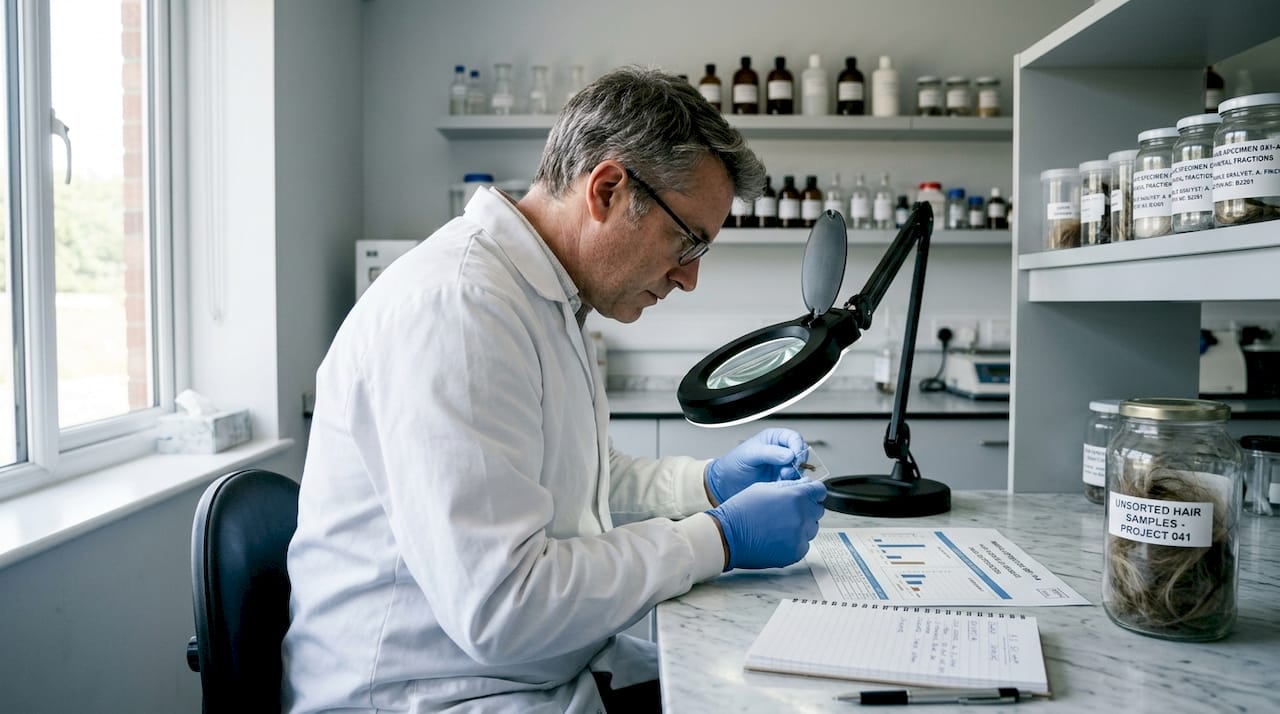
Hair tissue mineral analysis (HTMA) is perhaps the most widely used application. HTMA detects around 40% of mineral deficiencies that blood tests miss entirely. This happens because blood tightly regulates its mineral concentrations to protect vital organs. The body will pull magnesium from tissues to keep blood levels stable, meaning your blood panel looks fine while your tissues are genuinely depleted. Hair catches that.
Environmental toxin exposure
If you have been exposed to heavy metals over a prolonged period, hair is one of the most reliable matrices for detecting it. A single blood draw taken weeks after exposure may show nothing. Hair grown during that period carries the record. This makes it particularly relevant for people living near industrial sites, working with metals, or concerned about cumulative dietary exposure.
Food and environmental sensitivities
Hair sample benefits extend into sensitivity and intolerance testing. Services like those offered by Ukfoodintolerance use hair-based intolerance analysis to identify potential food and environmental triggers. This is not the same as a clinical allergy test, but it gives you a practical starting point for an elimination diet when you have symptoms but no clear diagnosis.
Forensic and drug testing
In legal and forensic settings, hair is the gold standard for long-term drug monitoring. A 3 cm sample covers approximately 90 days of potential exposure. Blood and urine testing windows close within days. Hair remains stable for much longer, which is why it appears in workplace testing, custody proceedings, and post-mortem toxicology.
Here is a comparison of how hair testing stacks up against other common methods:
| Feature | Hair analysis | Blood test | Urine test |
|---|---|---|---|
| Time window covered | Up to 90 days | Hours to days | Hours to 3 days |
| Invasiveness | None | Needle required | Non-invasive |
| Mineral deficiency detection | High (tissue level) | Moderate (circulating) | Low |
| Drug/toxin history | Excellent | Poor | Limited |
| Sample stability | Very stable | Requires refrigeration | Degrades quickly |
| Insurance coverage | Rarely covered | Usually covered | Usually covered |
It is worth noting that hair analysis for nutritional diagnosis is classified as investigative by most insurers and is not typically covered by health insurance due to limited peer-reviewed clinical evidence. This does not make it useless. It means you are using it as a complementary health tool rather than a standalone clinical diagnosis.
How to collect hair samples properly
Collecting hair for testing correctly is what separates useful results from misleading ones. The collection process itself is simple, but the details matter.
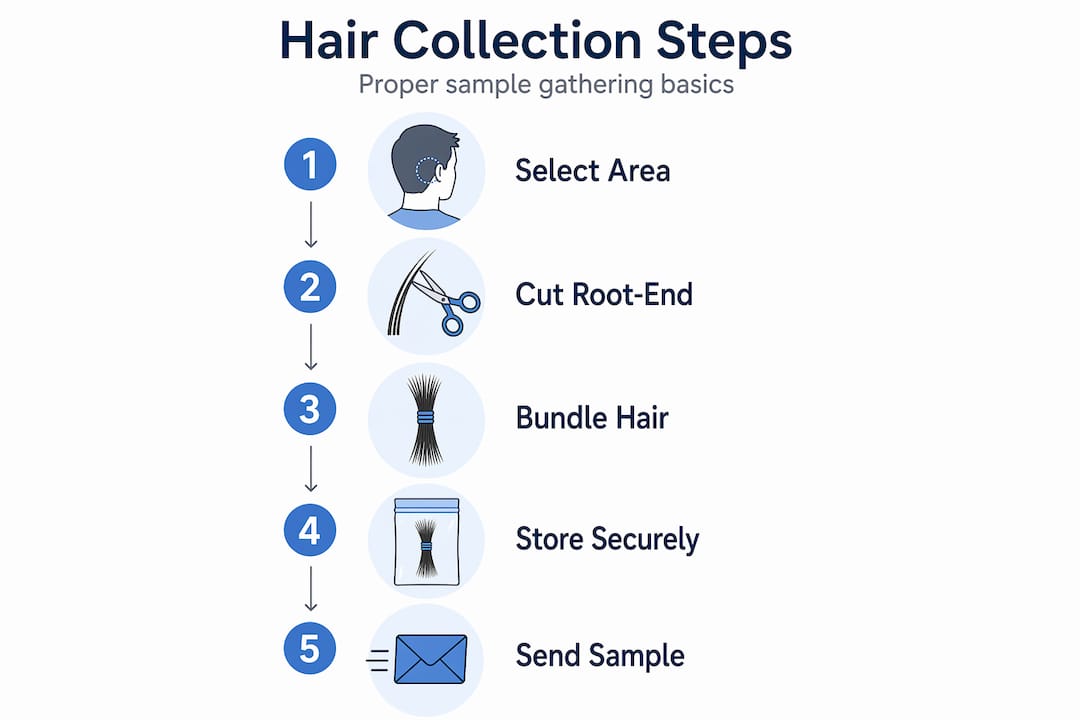
Follow these steps for a reliable sample:
- Choose the right location. The nape of the neck is the preferred site. Hair here grows more consistently and is less affected by sunlight and environmental exposure than hair on the crown or sides.
- Cut close to the scalp. Use clean scissors and cut strands as close to the root as possible. For mineral analysis, you need the first 3 to 4 cm of growth, which reflects the most recent 90 days.
- Collect enough hair. For most intolerance and mineral tests, a small bundle roughly the width of a pencil is sufficient. For DNA testing, 25 to 50 hairs with follicles attached are required, meaning the hairs must be pulled from the root rather than cut.
- Handle cleanly. Do not touch the cut ends more than necessary. Place the sample onto a piece of clean paper or foil before transferring it.
- Store correctly. Wrap the sample in paper or place it in a paper envelope. Avoid plastic bags entirely. Moisture trapped by plastic promotes degradation and can render a sample unusable.
- Avoid recent chemical treatments. Hair that has been bleached, permed, or heavily treated within the past four to six weeks may give skewed mineral readings. Ideally, wait until you have at least 3 cm of untreated regrowth before sampling.
Pro Tip: If you are unsure whether your hair qualifies as suitable, send a brief description of your hair treatment history to the testing provider before sending your sample. Most reputable services will advise you directly.
Common mistakes include cutting hair that is too short (missing the most informative root-end growth), storing samples in damp environments, and ignoring the timing of chemical treatments. Getting these details right is not complicated, but skipping them can affect your results.
Comparing hair analysis with blood tests
Hair analysis and blood testing are not competitors. They answer different questions. Blood testing reflects short-term circulating levels while hair testing reveals what has been stored in tissues over time. For someone trying to understand a chronic pattern of fatigue, digestive issues, or skin problems, a blood test taken on a good day may show nothing unusual. Hair tells a longer story.
“Hair testing captures long-term health trends while blood tests snapshot current status. Combined testing is recommended for a complete clinical picture.” Hair analysis vs. blood test for mineral deficiencies
The gap in clinical acceptance is real. Hair analysis for nutritional purposes lacks sufficient peer-reviewed support to satisfy most medical insurance requirements. But clinical acceptance and practical usefulness are not always the same thing. Many people use hair sample testing to generate hypotheses, then follow up with their GP using the findings as a conversation starter.
One area where legal and ethical considerations do arise is animal hair sampling. A 2026 ruling in British Columbia determined that collecting hair from wildlife using certain invasive methods constituted hunting under existing wildlife legislation. This illustrates that, even in scientific contexts, the method of collection matters enormously from a regulatory perspective.
The overall picture is this. Hair analysis is a genuine, useful tool. It works best when you understand what it can and cannot tell you, and when you treat it as part of a broader approach to understanding your health.
My honest view on hair testing
I have spent years looking at how people approach their health when they cannot get clear answers through conventional routes. Hair testing comes up again and again, and in my experience, it is one of the most consistently underestimated tools available.
What I have noticed is that people often dismiss it because it falls outside the standard GP toolkit. That is understandable, but it misses the point. Hair analysis does not aim to replace your doctor. It aims to give you more to work with before, during, and after clinical appointments. That is where its real value lies.
The biggest mistake I see is people collecting samples incorrectly and then feeling let down by their results. Contamination, wrong hair length, plastic storage bags. These small errors undermine what is actually a sound methodology. When samples are collected properly and analysed by a qualified laboratory, the results can reveal patterns that months of blood tests simply did not surface.
My honest advice is this. If you have been experiencing unexplained symptoms and standard tests keep coming back normal, hair analysis is worth exploring. Not as a final answer, but as a genuinely different lens. Treat the results as information, not diagnosis, and use them to guide the next conversation with your healthcare provider.
— Rob
Discover what your hair can tell you
If reading this has made you curious about what your own hair might reveal, Ukfoodintolerance makes the process straightforward. You collect a small hair sample at home, post it to their UK-based laboratory, and receive a detailed digital report within 48 to 72 hours.

Their tests screen for reactions to over 1,100 food and environmental items using bio-resonance technology, giving you a clear, personalised breakdown of potential sensitivities. Whether you want a comprehensive overview or a more focused starting point, you can explore their full range of intolerance tests to find the option that fits you. For those who want to understand how results translate into real dietary changes, their guidance on matching your body to the right diet is a practical next step.
FAQ
Why collect hair samples instead of using a blood test?
Hair samples record a 90-day history of mineral levels, toxin exposure, and other biological markers, while blood tests only reflect what is circulating at the moment of the draw. They serve different purposes and are most useful when combined.
How many hairs do I need for a sample?
For mineral and intolerance analysis, a small bundle roughly the thickness of a pencil is typically sufficient. For DNA testing, you need 25 to 50 hairs with follicles attached, which means pulling rather than cutting.
Does hair analysis detect food intolerances?
Hair-based sensitivity testing can identify potential food and environmental triggers, giving you a useful starting point for an elimination diet. It is not the same as a clinical allergy test, but it provides clear, practical information.
Can chemical hair treatments affect results?
Yes. Bleaching, perming, or other chemical treatments can interfere with mineral readings. Ideally, wait until you have at least 3 cm of untreated regrowth before collecting your sample.
Is hair analysis covered by health insurance in the UK?
Most health insurers classify hair analysis for nutritional purposes as investigative and do not cover the cost. It is generally self-funded, but the affordability of at-home tests makes it accessible without insurance support.










Leave a Reply
Want to join the discussion?Feel free to contribute!