

Waking up every morning feeling bloated or fatigued can leave anyone frustrated and searching for answers. For many adults across the United Kingdom, unexplained digestive discomfort is more than just an inconvenience. Food intolerances present subtle yet persistent symptoms that often disrupt daily routines and wellbeing. Understanding what food intolerance really means sheds light on these invisible challenges and explores safe routes to identifying potential triggers from the comfort of home.
Table of Contents
- What Food Intolerance Really Means
- Digestive Symptoms Linked to Intolerance
- Non-Digestive Signs: Common Indicators
- How Intolerances Differ From Allergies
- Managing Symptoms and Next Steps
Key Takeaways
| Point | Details |
|---|---|
| Understanding Food Intolerance | Food intolerance involves the body’s inability to effectively digest certain food components, leading to chronic and often subtle symptoms. |
| Symptoms Differentiation | Unlike food allergies, which present immediate and severe reactions, food intolerances typically result in mild to moderate, delayed symptoms including digestive discomfort and fatigue. |
| Diagnostic Approaches | Maintaining a detailed food diary and consulting with healthcare professionals are essential for identifying potential trigger foods without resorting to overly restrictive diets. |
| Effective Management Strategies | A systematic approach to elimination and careful reintroduction of foods, along with ongoing symptom monitoring, can significantly enhance quality of life for individuals with food intolerances. |
What Food Intolerance Really Means
Food intolerance represents a complex digestive challenge where individuals struggle to process specific food components effectively. Unlike immediate allergic reactions, food intolerances develop gradually and manifest through subtle, often overlooked symptoms that impact daily wellbeing.
At its core, a food intolerance occurs when the body cannot properly digest certain food substances due to specific enzyme deficiencies. Complex digestive reactions typically involve challenges processing components like:
- Lactose in dairy products
- Gluten in wheat-based foods
- Specific protein structures in certain grains
- Complex carbohydrate compounds
Crucially, food intolerances differ significantly from food allergies. While allergies trigger immediate immune responses that can be life-threatening, intolerances produce milder, chronic symptoms that develop more subtly over time. These can include:
- Persistent bloating
- Irregular digestive patterns
- Unexplained fatigue
- Mild skin irritations
- Intermittent headaches
Professional healthcare experts recommend careful diagnostic approaches that avoid overly restrictive elimination diets. Most specialists suggest maintaining a detailed food diary and working closely with nutritional professionals to identify potential trigger foods.
Pro tip: Keep a comprehensive food and symptom journal to help healthcare professionals accurately identify potential food intolerances more efficiently.
Digestive Symptoms Linked to Intolerance
Food intolerances can create a complex array of digestive challenges that significantly impact an individual’s daily comfort and overall health. Digestive system disruptions manifest through various uncomfortable and often unpredictable symptoms that can dramatically affect quality of life.
The most common digestive symptoms associated with food intolerances include:
- Persistent bloating
- Abdominal cramps and pain
- Irregular bowel movements
- Excessive gas production
- Nausea and occasional vomiting
- Uncomfortable digestive discomfort after eating specific foods
Wheat intolerance, for instance, presents particularly challenging digestive responses. Specific wheat-related reactions can trigger significant gastrointestinal distress, including constipation, diarrhoea, and persistent flatulence. These symptoms often emerge within hours of consuming wheat-based products and can vary in intensity depending on individual sensitivity.

Prolonged exposure to trigger foods may lead to more severe complications, such as nutrient malabsorption and low-grade inflammation in the gastrointestinal tract. This can potentially exacerbate underlying conditions like Irritable Bowel Syndrome (IBS) and create a cycle of ongoing digestive discomfort.
Pro tip: Consider maintaining a detailed food and symptom diary to help healthcare professionals accurately identify potential dietary triggers and develop a personalised management strategy.
Non-Digestive Signs: Common Indicators
Food intolerances extend far beyond digestive discomfort, manifesting through a complex array of systemic symptoms that can significantly impact overall wellbeing. Non-digestive health implications reveal a profound connection between dietary triggers and seemingly unrelated bodily responses.
The most prevalent non-digestive indicators of food intolerance include:
- Persistent fatigue
- Unexplained headaches
- Cognitive difficulties (brain fog)
- Skin conditions like eczema or rashes
- Joint and muscle pain
- Mood fluctuations and irritability
- Respiratory issues
Particularly with dairy intolerances, individuals often experience a range of surprising symptoms. Subtle dairy-related reactions can manifest as chronic fatigue, intermittent skin problems, and generalised malaise that many people mistakenly attribute to stress or aging.
These non-digestive symptoms stem from chronic low-grade inflammation triggered by the body’s immune response to specific food components. The complexity of these reactions underscores the importance of comprehensive health assessments and personalised dietary investigations, as symptoms can vary dramatically between individuals.
Pro tip: Document all seemingly unrelated symptoms in a comprehensive health journal to help healthcare professionals identify potential food intolerance patterns more effectively.
How Intolerances Differ from Allergies
Understanding the critical distinction between food intolerances and food allergies is essential for appropriate health management. Immunological response mechanisms reveal fundamental differences in how the body processes and reacts to problematic food substances.
Key differences between food intolerances and allergies include:
- Immune system involvement
- Symptom onset speed
- Severity of bodily response
- Duration of symptoms
- Potential health risks
Food allergies represent an immediate, potentially life-threatening immune response involving IgE antibodies. Symptoms can manifest rapidly and may include:
- Anaphylactic shock
- Severe respiratory distress
- Immediate skin reactions
- Circulatory system complications
Food intolerance diagnostic approaches demonstrate that these conditions involve non-immune mechanisms, typically causing prolonged and less severe digestive disruptions. Unlike allergies, intolerances rarely trigger emergency medical interventions and are primarily managed through dietary modifications.
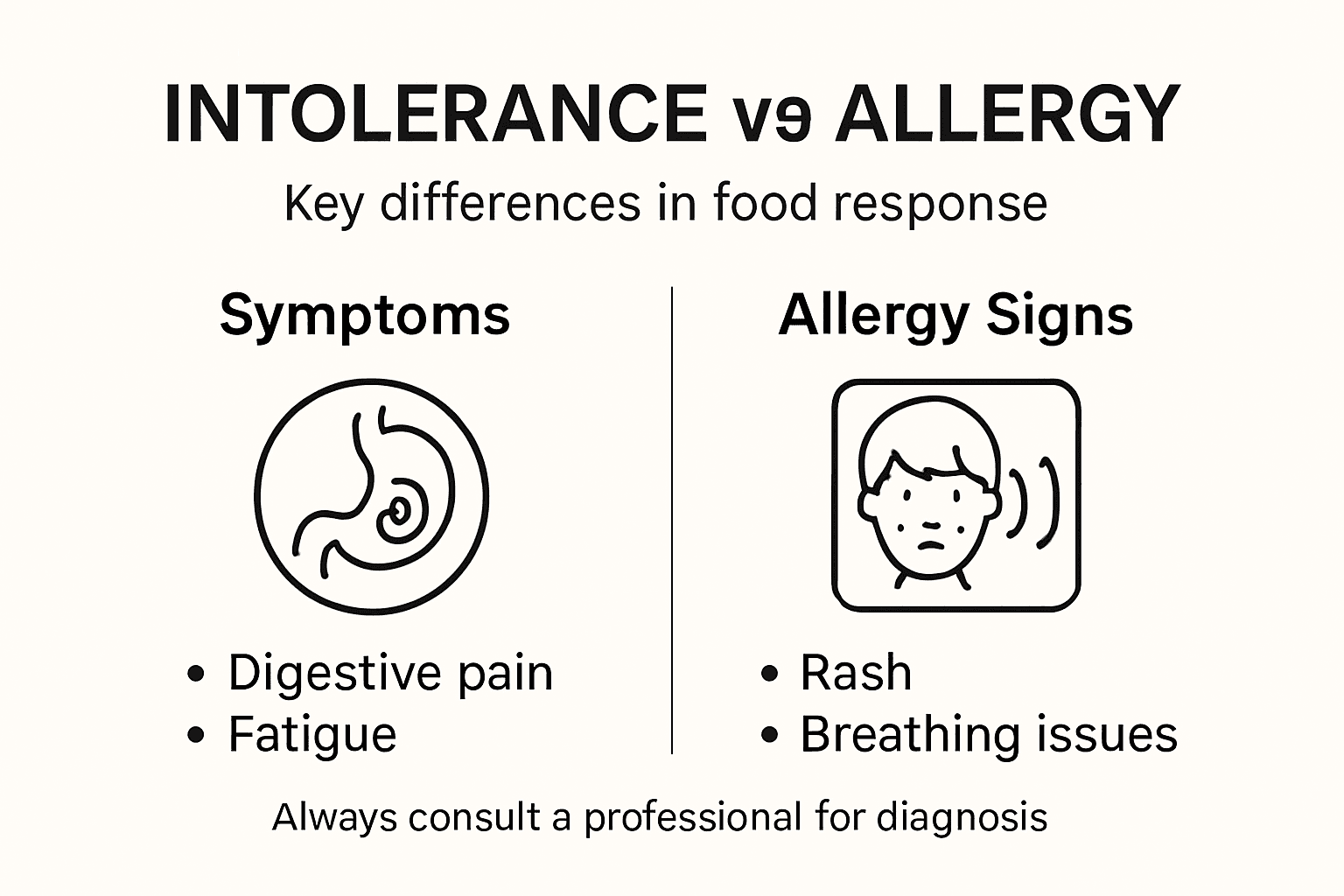
The complexity of these physiological responses underscores the importance of professional medical assessment to distinguish between these two distinct conditions and develop appropriate management strategies.
Here is a concise comparison of food intolerance and food allergy characteristics:
| Characteristic | Food Intolerance | Food Allergy |
|---|---|---|
| Main bodily response | Digestive disruption | Immune system reaction |
| Symptom onset | Gradual (hours to days) | Rapid (seconds to minutes) |
| Severity level | Mild to moderate | Severe, can be life-threatening |
| Typical management approach | Dietary adjustment | Strict avoidance, emergency plan |
| Common investigation method | Food diaries, elimination | Allergy testing, medical history |
Pro tip: Consult a healthcare professional for comprehensive testing to accurately differentiate between food intolerances and potentially dangerous allergic reactions.
Managing Symptoms and Next Steps
Navigating food intolerances requires a strategic and careful approach to dietary management. Comprehensive elimination strategies can significantly improve an individual’s quality of life and reduce uncomfortable symptoms.
Effective management typically involves several critical steps:
- Detailed food diary documentation
- Professional nutritional consultation
- Systematic food elimination
- Careful food reintroduction
- Ongoing symptom tracking
The recommended approach for addressing food intolerances includes:
- Identifying specific trigger foods
- Developing a personalised nutritional plan
- Exploring alternative food options
- Maintaining balanced nutritional intake
- Monitoring long-term dietary impacts
Evidence-based food testing protocols emphasise the importance of professional guidance. Unverified commercial tests can potentially lead to unnecessary dietary restrictions, which might compromise overall nutritional health.
Nutritional experts recommend a gradual, monitored approach to dietary changes, ensuring that individuals maintain adequate nutrient intake while identifying and managing their specific food intolerances.
The following table summarises steps for effectively managing food intolerance:
| Management Step | Purpose | Professional Involvement |
|---|---|---|
| Detailed food diary | Identify triggers | Patient-led, specialist review |
| Systematic elimination | Pinpoint specific intolerance | Guided by dietician |
| Gradual food reintroduction | Confirm individual sensitivities | Monitored by nutritionist |
| Ongoing symptom tracking | Ensure long-term dietary success | Joint follow-up |
Pro tip: Consult a registered dietician to develop a personalised dietary strategy that addresses your unique nutritional needs and food intolerance challenges.
Discover Your Food Intolerances and Regain Control of Your Wellbeing
If you recognise common symptoms like persistent bloating, fatigue or unexplained headaches highlighted in the Digestive Health Archives – UK Food Intolerance you understand how disruptive food intolerances can be to daily life. Many struggle with digestive disruptions and system-wide discomfort without knowing the underlying causes. Identifying specific food triggers is crucial for managing symptoms and improving long-term health.

Take charge today by using the trusted at-home testing services available at UK Food Intolerance. With simple hair sample collection and fast analysis, you gain detailed insights into your unique sensitivities, whether you choose the comprehensive Ultimate Single Intolerance Test or the affordable Core Single Intolerance Test. For those concerned about less common triggers, exploring additional resources like our Egg Intolerance – Symptoms, Allergy Difference & How to Test page can broaden your understanding. Don’t let unidentified intolerances hold back your wellbeing. Visit UK Food Intolerance now to get reliable results and start a personalised elimination diet with confidence.
Frequently Asked Questions
What are the common symptoms of food intolerance?
Common symptoms of food intolerance include persistent bloating, abdominal cramps, irregular bowel movements, excessive gas production, nausea, unexplained fatigue, and skin irritations like eczema.
How does food intolerance differ from food allergy?
Food intolerance primarily causes digestive disruptions and develops gradually. In contrast, food allergies trigger an immediate immune response that can be life-threatening, with symptoms manifesting rapidly and more severely.
How can I identify potential food intolerances?
To identify potential food intolerances, it’s recommended to maintain a detailed food diary, consult a healthcare professional for nutritional guidance, and consider systematic food elimination and gradual reintroduction of foods.
What is the impact of food intolerance on overall wellbeing?
Food intolerance can significantly impact overall wellbeing by causing chronic discomfort, fatigue, and various non-digestive symptoms, which may lead to a reduced quality of life and longer-term health issues if not addressed properly.










Leave a Reply
Want to join the discussion?Feel free to contribute!