

Persistent digestive discomfort can make everyday activities challenging, leaving many people in the UK searching for real answers and relief. Unexplained bloating, cramps, or fatigue often point towards hidden food intolerances, which can be complex to uncover without the right guidance. By following trusted advice from the Food Standards Agency, you can use your intolerance test results as a powerful tool for understanding your body’s unique responses and confidently moving towards improved wellbeing.
Table of Contents
- Step 1: Prepare to Review Your Intolerance Report
- Step 2: Identify Key Triggers From Your Results
- Step 3: Prioritise Actions Based on Severity
- Step 4: Integrate Guidance Into Your Daily Routine
- Step 5: Verify Improvements In Your Wellbeing
Quick Summary
| Key Point | Explanation |
|---|---|
| 1. Create a Comfortable Review Space | Prepare a quiet environment with necessary resources, including your intolerance report and health records, to facilitate focused analysis. |
| 2. Identify Your Food Triggers | Classify your food intolerances into severe, moderate, and mild categories to create a clear action plan on dietary modifications. |
| 3. Prioritise Dietary Changes | Eliminate severe triggers immediately while gradually reducing moderate sensitivities, ensuring a balanced approach to nutrition. |
| 4. Implement Sustainable Lifestyle Changes | Integrate dietary modifications into daily routines through meal planning and kitchen organisation, making healthy choices manageable. |
| 5. Track Wellbeing Progress Methodically | Monitor physical and emotional health indicators regularly to understand the impact of dietary changes on overall wellbeing. |
Step 1: Prepare to Review Your Intolerance Report
Reviewing your intolerance test results requires a systematic and informed approach. Understanding the nuances of your personalised report will help you take proactive steps towards improving your health and dietary management.
Before diving into your results, gather the necessary resources to support your analysis. The Food Standards Agency guidance recommends having the following items prepared:
- A quiet, comfortable space for focused review
- A notepad and pen for recording observations
- Your complete intolerance test report
- Any existing medical history or health records
- A list of current symptoms or health concerns
Carefully read through your entire report, paying close attention to:
- Identified food sensitivity levels
- Recommended dietary modifications
- Potential cross-reactive food groups
- Severity of individual intolerances
When reviewing the results, approach the information objectively and without undue stress. Your report provides insights, not a definitive diagnosis. If certain findings seem overwhelming or complex, consider consulting a nutritionist or healthcare professional who can provide personalised guidance.
Remember: Your intolerance test results are a tool for understanding your body, not a source of anxiety.
Pro tip: Create a digital or physical folder to track your intolerance journey, storing your test results, dietary changes, and health observations for comprehensive monitoring.
Step 2: Identify Key Triggers from Your Results
Now that you’ve prepared your report, it’s time to dive deep into identifying your specific food triggers. Your intolerance test results will reveal critical insights about which foods might be causing your body unnecessary stress.
Consulting the Food Standards Agency allergen checklist can help you systematically review your results. Pay close attention to the following key elements:
- Sensitivity levels for each food item
- High reactivity foods that show significant immune response
- Cross-reactive food groups that might trigger similar responses
- Unexpected trigger foods within your typical diet
Classify your findings into clear categories:
- Severe Triggers: Foods you must completely eliminate
- Moderate Sensitivity: Foods to significantly reduce
- Mild Reactions: Foods to consume sparingly
When interpreting your results, remember that intolerance is not the same as a full allergy. Some foods might require gradual reduction rather than immediate elimination. Your goal is to create a balanced approach to managing your dietary sensitivities.
Understanding your body’s unique responses is key to developing a personalised nutrition strategy.
Pro tip: Create a colour-coded chart categorising your food triggers, using green for safe foods, yellow for moderate reactions, and red for severe intolerances to visualise your dietary landscape at a glance.

Step 3: Prioritise Actions Based on Severity
Transforming your intolerance test results into actionable steps requires a strategic approach. Not all food sensitivities are created equal, and understanding how to prioritise your dietary modifications can significantly improve your health management.
Drawing from clinical prioritisation strategies, develop a hierarchical action plan that addresses your intolerances systematically:
- Immediate Elimination: Foods causing severe reactions
- Gradual Reduction: Foods with moderate sensitivities
- Careful Monitoring: Foods with mild reactions
Prioritise your actions using this comprehensive framework:
- Assess Symptom Impact: Rate each food trigger based on its physiological response
- Calculate Long-term Health Risk: Consider potential cumulative effects
- Evaluate Quality of Life: Understand how each intolerance affects daily functioning
- Develop Personalised Replacement Strategies: Find nutritious alternatives
Remember that your priority is not just eliminating problematic foods, but creating a balanced, nutritious diet that supports your overall wellbeing. Work closely with a nutritionist to ensure you’re meeting all nutritional requirements while managing your intolerances.
Here’s a comparison of typical food intolerance management approaches and their potential impact:
| Approach | Short-Term Benefit | Long-Term Impact | Level of Personalisation |
|---|---|---|---|
| Immediate elimination | Rapid symptom relief | May restrict diet diversity | Highly specific to individual |
| Gradual reduction | Reduced symptoms over time | Easier nutritional balance | Adaptable to tolerance levels |
| Careful monitoring | Early identification of triggers | Enables ongoing adjustment | Responsive to changing needs |
Effective management is about strategic adaptation, not restrictive elimination.
Pro tip: Create a dynamic tracking spreadsheet that allows you to update your food tolerance levels over time, helping you visualise your progress and adjust your dietary strategy accordingly.
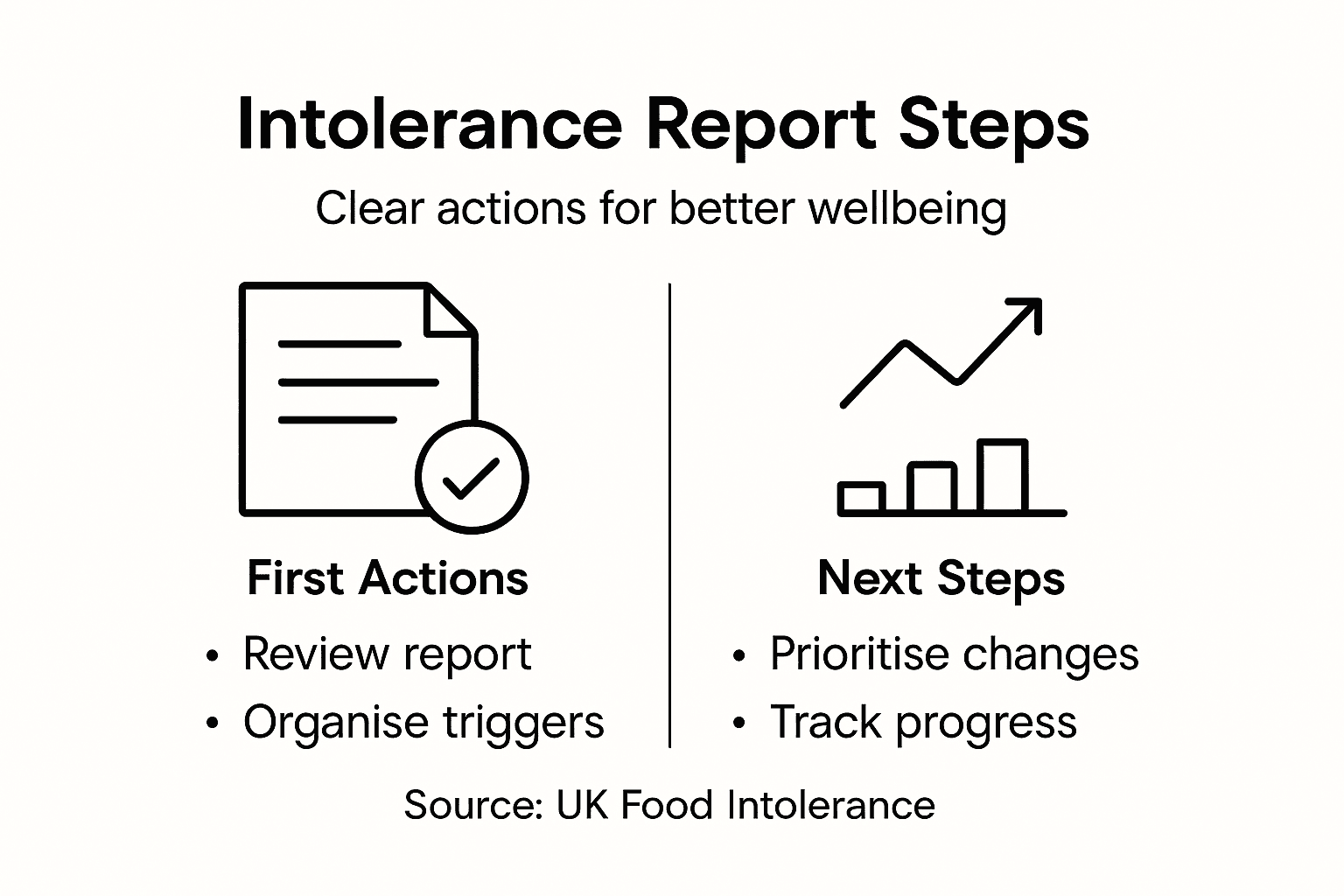
Step 4: Integrate Guidance into Your Daily Routine
Transforming your intolerance test results into sustainable lifestyle changes requires practical strategies that seamlessly blend with your existing eating habits. Successful integration means creating a personalised approach that feels natural and manageable.
Following the NHS Eatwell Guide recommendations, develop a comprehensive strategy for integrating dietary modifications:
- Meal Planning: Redesign weekly menus around safe foods
- Kitchen Organisation: Separate and label trigger foods
- Shopping Strategies: Create detailed ingredient checklists
- Backup Meal Options: Prepare emergency alternative recipes
Implement your integration plan through these structured steps:
- Conduct a Pantry Audit: Remove or isolate problematic ingredients
- Create Replacement Protocols: Find nutritious alternatives for eliminated foods
- Develop Flexible Meal Templates: Design adaptable recipes
- Establish Tracking Mechanisms: Monitor symptom responses
Consistent implementation transforms dietary changes from challenging restrictions into a sustainable, empowering lifestyle. Small, incremental adjustments will help you navigate your new nutritional landscape with confidence and ease.
Successful dietary management is about adaptation, not limitation.
Pro tip: Invest in clear, colour-coded food storage containers to visually separate safe and trigger foods, making daily food preparation more intuitive and stress-free.
Step 5: Verify Improvements in Your Wellbeing
After implementing your personalised dietary modifications, systematically tracking your health progress becomes crucial. Understanding how your body responds to these changes will help you refine your approach and celebrate your wellness journey.
Utilising personal wellbeing measurement techniques, develop a comprehensive tracking strategy that goes beyond just physical symptoms:
- Physical Indicators: Track digestive comfort, energy levels, sleep quality
- Emotional Wellbeing: Monitor mood stability, stress levels
- Cognitive Function: Assess mental clarity, concentration
- Overall Life Satisfaction: Evaluate daily functioning and happiness
Implement a structured verification process:
- Create a Baseline Record: Document initial health status
- Establish Regular Check-ins: Weekly or monthly health assessments
- Use Quantitative and Qualitative Metrics: Combine numerical data with personal observations
- Consult Healthcare Professionals: Validate your findings
Consistent, objective tracking transforms your intolerance management from a reactive approach to a proactive wellness strategy. Your dedication to understanding your body’s signals is the key to long-term health improvement.
For quick reference, here are key wellbeing markers you can track during your dietary changes:
| Area Tracked | Typical Metric | Example Observation |
|---|---|---|
| Physical health | Energy levels | Increased energy in afternoons |
| Emotional wellbeing | Mood stability | Fewer mood swings weekly |
| Cognitive performance | Focus and clarity | Improved concentration at work |
| Life satisfaction | Daily activities | Enhanced enjoyment of meals |
Wellbeing is a journey of continuous discovery and personalised care.
Pro tip: Maintain a digital or physical wellness journal with colour-coded entries to visually track improvements and identify patterns in your health progression.
Take Clear Next Steps Toward Better Digestive Health
Interpreting intolerance test results can feel overwhelming when faced with complex sensitivity levels and dietary recommendations. This article guides you through identifying triggers, prioritising actions, and integrating changes into daily routines to improve your wellbeing. If you are struggling with unexplained symptoms or want to manage your sensitivities effectively, understanding your body’s unique responses is essential.
Discover how UK Food Intolerance’s non-invasive at-home testing services simplify this journey. With options like the Ultimate Single Intolerance Test and Core Single Intolerance Test, you can receive detailed digital reports within 72 hours. Start your personalised path to clearer food sensitivities today and empower your health with reliable insights. Visit UK Food Intolerance and explore our Food Sensitivities Archives – UK Food Intolerance and Digestive Health Archives – UK Food Intolerance for guidance along the way.
Frequently Asked Questions
How do I start interpreting my intolerance results?
Begin by gathering your intolerance test report and any existing health records. Read your report in a quiet space and take notes on key findings, including identified food sensitivities and recommended dietary modifications.
What should I do if I have severe triggers on my intolerance report?
For severe triggers, immediately eliminate these foods from your diet to avoid adverse reactions. Create a meal plan that focuses on alternative foods within the next week to maintain balanced nutrition.
How can I categorise my food triggers for better management?
Classify your food triggers into categories: severe triggers that you must eliminate, moderate sensitivities to reduce, and mild reactions to consume sparingly. Use a colour-coded chart to visualise these categories for easier dietary management.
How do I track improvements in my wellbeing after dietary changes?
Develop a tracking strategy that includes physical indicators like energy levels and emotional wellbeing such as mood stability. Record these metrics regularly—weekly or monthly—to evaluate progress and make necessary adjustments.
Should I consult a healthcare professional after reviewing my intolerance results?
Yes, consulting a healthcare professional can provide personalised guidance based on your intolerance results. Schedule an appointment to discuss your findings and develop a tailored nutrition strategy within the next month.










Leave a Reply
Want to join the discussion?Feel free to contribute!