

Persistent digestive discomfort can leave even the most health-conscious individuals in the United Kingdom feeling frustrated and uncertain about what food might be causing the issue. With rising awareness of food sensitivities and the availability of advanced, non-invasive testing, more people are seeking answers beyond traditional approaches. This overview offers practical insight into the evolving world of UK intolerance testing, highlighting how modern methods help identify troublesome foods and support everyday wellbeing.
Table of Contents
- Defining UK Intolerance Testing Landscape
- Types of Intolerance Tests and Distinctions
- How Bio-Resonance Technology Works
- Regulatory Standards and Legal Status in the UK
- Risks, Reliability, and Consumer Protections
- Comparing Alternatives and Interpreting Results
Key Takeaways
| Point | Details |
|---|---|
| Intolerance Testing Landscape | The UK has developed a sophisticated approach to diagnosing food sensitivities, using multiple modern methodologies. |
| Testing Methodologies | Key tests include Blood Antibody Screening, Elimination Diets, and Hydrogen Breath Tests, each focusing on different bodily responses. |
| Bio-Resonance Technology | This innovative method analyses electromagnetic signals from the body to identify sensitivities not detectable by traditional tests. |
| Regulatory Compliance | Stringent regulations ensure testing accuracy and protect consumer health, highlighting the importance of consulting certified professionals when interpreting results. |
Defining UK intolerance testing landscape
The UK’s intolerance testing landscape represents a sophisticated and evolving healthcare approach addressing complex digestive health challenges. As food hypersensitivities continue to impact significant population segments, the testing methodologies have become increasingly refined and scientifically grounded. Food sensitivity research by the Food Standards Agency indicates that approximately 1-2% of the UK population experiences measurable food-related sensitivities, necessitating comprehensive diagnostic strategies.
Modern intolerance testing in the United Kingdom encompasses multiple diagnostic techniques designed to identify potential food triggers and inflammatory responses. These methodologies typically involve:
- Blood antibody screening
- Hair sample bioresonance analysis
- Elimination diet protocols
- Comprehensive symptom mapping
- Professional clinical interpretation
The diagnostic landscape has significantly transformed, moving beyond traditional allergic reaction models towards more nuanced understanding of individual metabolic responses. Intolerance testing now provides personalised insights into how specific food components might trigger systemic inflammatory reactions, gastrointestinal disturbances, and potential long-term health complications.
Recent research highlighting food allergies suggests an increasing prevalence, particularly among children, with an estimated 4% of preschool populations experiencing identifiable food sensitivities. This trend underscores the critical importance of advanced, non-invasive testing methodologies that can provide early intervention and management strategies.
Pro tip: Consult with healthcare professionals who specialise in nutritional medicine to interpret your intolerance test results comprehensively and develop a personalised dietary management plan.
Types of intolerance tests and distinctions
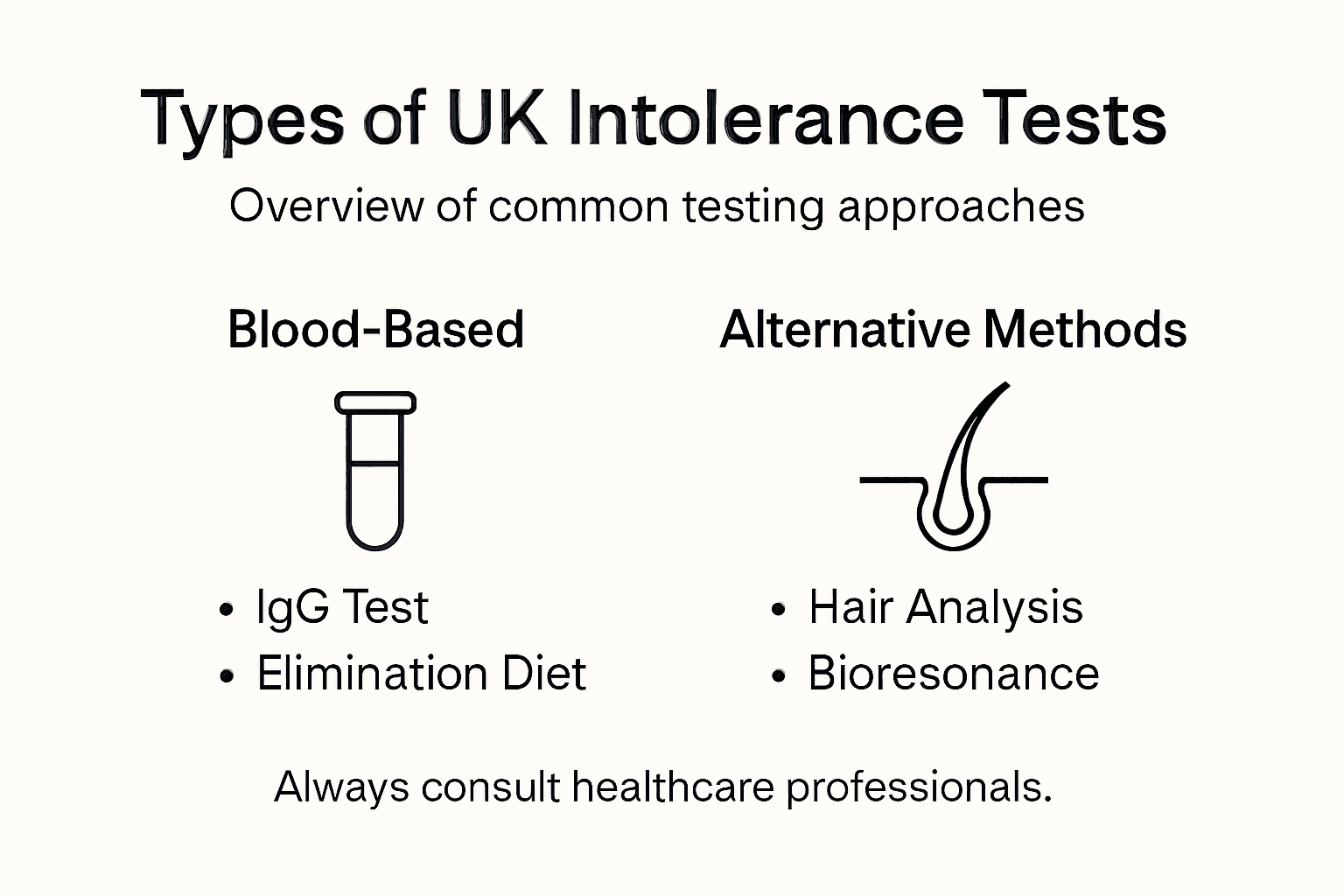
Intolerance testing in the United Kingdom represents a nuanced diagnostic landscape with multiple methodological approaches designed to uncover complex dietary sensitivities. Comprehensive research on food intolerances highlights the critical differences between various testing techniques, emphasising that each method offers unique insights into an individual’s physiological responses.
The primary types of intolerance tests include:
- Blood Antibody Screening: Measures immunological responses to specific food proteins
- Hair Sample Analysis: Uses bioresonance technology to identify potential sensitivities
- Elimination Diet Protocols: Systematic food removal and reintroduction to identify triggers
- Hydrogen Breath Tests: Specifically designed for detecting lactose and fructose intolerances
- IgG Blood Testing: Identifies potential inflammatory responses to food components
Diagnostic distinctions are crucial in understanding these testing methodologies. Unlike traditional allergy tests that detect immediate immunological reactions, intolerance tests explore more subtle, delayed inflammatory responses. This approach allows for a more comprehensive understanding of how specific food components might trigger systemic health issues.
Specialised tests like the gluten intolerance diagnostic approach demonstrate the complexity of identifying food sensitivities. Different tests target various physiological mechanisms, from immune system responses to digestive enzyme deficiencies, providing patients with personalised insights into their potential dietary challenges.
Pro tip: Consult a registered nutritionist or healthcare professional to determine the most appropriate intolerance test for your specific health concerns and symptoms.
The following table summarises how intolerance testing methods differ in their core focus, typical use cases, and level of scientific support:
| Test Method | Primary Focus | Common Use Case | Scientific Support Level |
|---|---|---|---|
| Blood Antibody Screening | Immune response to specific foods | Identifying immune triggers | Moderate, still debated |
| Hair Bioresonance | Energetic body frequencies | Holistic sensitivity review | Low, emerging technology |
| Elimination Diet | Systematic trigger identification | Validating symptoms | High, clinically accepted |
| Hydrogen Breath Test | Digestive enzyme deficiencies | Detecting sugar intolerance | High, widely validated |
| IgG Testing | Inflammatory markers in blood | Exploring delayed responses | Moderate, some controversy |
How bio-resonance technology works
Bio-resonance technology represents an innovative approach to understanding individual health responses, moving beyond traditional diagnostic methods. Advanced laboratory testing techniques explore the body’s subtle energetic signals to detect potential sensitivities and inflammatory triggers that might escape conventional medical screening.
The core principles of bio-resonance technology involve several key mechanisms:
- Electromagnetic Signal Analysis: Measuring the body’s unique energy frequencies
- Vibrational Frequency Mapping: Identifying potential disruptions in cellular communication
- Holistic Health Assessment: Examining interconnected physiological responses
- Non-invasive Diagnostic Approach: Utilising hair or blood samples without direct physical intervention
- Comprehensive Sensitivity Screening: Detecting subtle reactive patterns
At its fundamental level, bio-resonance technology operates on the principle that every biological organism emits specific electromagnetic frequencies. These frequencies can be measured and analysed to understand potential imbalances or sensitivities within an individual’s system. The technology essentially creates a comprehensive energetic profile, mapping how different substances might interact with a person’s unique physiological landscape.

UK-based research in bio-resonance continues to refine these diagnostic approaches, emphasising the technology’s potential to provide personalised insights into complex health interactions. By translating subtle energetic information into actionable health data, bio-resonance offers a nuanced perspective on individual wellness that complements traditional medical diagnostics.
Pro tip: Request a detailed consultation to understand how bio-resonance technology can be tailored to your specific health assessment needs.
Regulatory standards and legal status in the UK
Intolerance testing regulations in the United Kingdom represent a comprehensive framework designed to protect consumer health and ensure diagnostic accuracy. UK laboratory testing standards are governed by stringent oversight mechanisms that maintain rigorous quality control and ethical practices across diagnostic services.
Key regulatory requirements for intolerance testing include:
- Medical Device Regulation (MDR) compliance
- In-Vitro Diagnostic Regulation (IVDR) adherence
- Medical and Healthcare products Regulatory Authority (MHRA) approval
- Quality Management System certification
- Professional Laboratory Accreditation standards
The legal landscape surrounding intolerance testing is complex and multifaceted. While these tests are not currently classified as primary diagnostic tools within the National Health Service (NHS), they must still meet extensive scientific and ethical standards. Laboratories must demonstrate precise calibration methods, maintain comprehensive documentation, and ensure transparent reporting of test results.
Professional bodies and regulatory agencies work collaboratively to establish guidelines that protect consumer interests. These standards ensure that intolerance testing services provide reliable, scientifically-grounded information without making unwarranted medical claims or creating unnecessary patient anxiety.
Pro tip: Always verify a testing provider’s regulatory credentials and accreditations before proceeding with any diagnostic service.
Risks, reliability, and consumer protections
Intolerance testing reliability remains a complex and nuanced field, with significant variations in diagnostic accuracy and potential implications for consumer health. Scientific studies highlight the critical need for careful interpretation of test results to prevent unnecessary dietary restrictions or missed underlying health conditions.
Key risks associated with intolerance testing include:
- False Positive Results: Potential for incorrect sensitivity identification
- Misinterpretation of Test Data: Risk of inappropriate dietary modifications
- Psychological Impact: Potential anxiety from uncertain diagnostic outcomes
- Limited Scientific Validation: Varying levels of research evidence
- Potential Nutritional Deficiencies: Risk from unnecessary dietary eliminations
Consumer protection mechanisms play a crucial role in mitigating these potential risks. Professional healthcare bodies recommend comprehensive approaches that involve professional medical consultation, comprehensive symptom assessment, and cross-referencing test results with clinical observations. This multifaceted approach helps prevent individuals from making potentially harmful dietary decisions based on incomplete or potentially inaccurate testing information.
The regulatory landscape continues to evolve, with increasing emphasis on transparent reporting, scientific rigour, and consumer education. Reputable testing providers must demonstrate clear methodological standards, provide comprehensive result explanations, and encourage professional medical interpretation to ensure consumer safety and meaningful health insights.
Pro tip: Always discuss intolerance test results with a registered nutritionist or healthcare professional to ensure accurate interpretation and appropriate dietary management.
Here’s a summary of key consumer protection measures relevant to UK intolerance testing:
| Protection Measure | Purpose | Who Oversees |
|---|---|---|
| Quality Accreditation | Ensures laboratory competence | UKAS, MHRA |
| Regulatory Compliance | Maintains safety and accuracy | MHRA, government bodies |
| Result Interpretation | Prevents misdiagnosis | Registered professionals |
| Transparent Reporting | Supports informed decision-making | Testing providers |
Comparing alternatives and interpreting results
Diagnostic approaches for identifying food sensitivities encompass multiple methodological strategies, each with unique strengths and limitations. Comprehensive scientific reviews emphasise the importance of understanding the nuanced differences between various testing techniques to ensure accurate health insights.
Key alternative diagnostic methods include:
- Elimination Diet Protocols: Systematic food removal and controlled reintroduction
- Blood Antibody Screening: Measuring immunological responses
- IgG Antibody Testing: Identifying potential inflammatory triggers
- Clinical Symptom Mapping: Comprehensive patient history analysis
- Hydrogen Breath Tests: Detecting specific digestive enzyme deficiencies
Interpreting intolerance test results requires a sophisticated, multidimensional approach. Healthcare professionals recommend cross-referencing test outcomes with clinical observations, patient medical history, and comprehensive symptom assessment. This holistic methodology helps prevent misinterpretation and ensures that dietary recommendations are tailored to individual physiological responses.
The diagnostic landscape continues to evolve, with emerging technologies offering increasingly precise mechanisms for understanding individual food sensitivities. However, no single test provides a definitive diagnosis, underscoring the critical importance of professional medical interpretation and personalised nutritional guidance.
Pro tip: Request a comprehensive consultation that integrates multiple diagnostic approaches and considers your unique physiological profile when interpreting intolerance test results.
Take Control of Your Digestive Wellbeing with Precise Intolerance Testing
Understanding and managing food intolerances can be a confusing and frustrating journey. This article highlights the challenges of identifying hidden food and environmental triggers behind digestive discomfort and systemic inflammation. If you are struggling with unexplained symptoms or want to avoid unnecessary dietary restrictions, recognising subtle inflammatory responses through reliable testing methods like bio-resonance technology can be life-changing. Our advanced services offer comprehensive, non-invasive solutions designed for individuals seeking clarity and personalised insights into their digestive health.

Explore the Digestive Health Archives – UK Food Intolerance to learn more about symptoms and management strategies. At UK Food Intolerance, we provide two tailored home testing kits—the Ultimate Single Intolerance Test covering over 1,100 items and the Core Single Intolerance Test looking at 500 key triggers. Both use simple hair sample collection analysed by UK-based laboratories to deliver fast and reliable results within 48-72 hours. Begin your journey towards improved wellbeing today by visiting our homepage to order your test and access expert guidance on interpreting your results effectively.
Frequently Asked Questions
What are the main types of intolerance tests available?
The primary types of intolerance tests include blood antibody screening, hair sample analysis, elimination diet protocols, hydrogen breath tests, and IgG testing. Each method focuses on different physiological responses to food components.
How does bio-resonance technology work in intolerance testing?
Bio-resonance technology measures the body’s unique electromagnetic frequencies to identify potential sensitivities and inflammatory triggers, providing a comprehensive energetic profile that can reveal dietary challenges.
What are the risks associated with intolerance testing?
Risks include false positive results, misinterpretation of test data, psychological impacts from uncertain diagnoses, and potential nutritional deficiencies due to unnecessary dietary eliminations. Consulting a healthcare professional is recommended to mitigate these risks.
Why is professional interpretation important for intolerance test results?
Professional interpretation is crucial because it helps prevent misdiagnosis and inappropriate dietary changes. A registered nutritionist or healthcare professional can provide personalised recommendations and integrate test outcomes with clinical observations and symptoms.










Leave a Reply
Want to join the discussion?Feel free to contribute!