
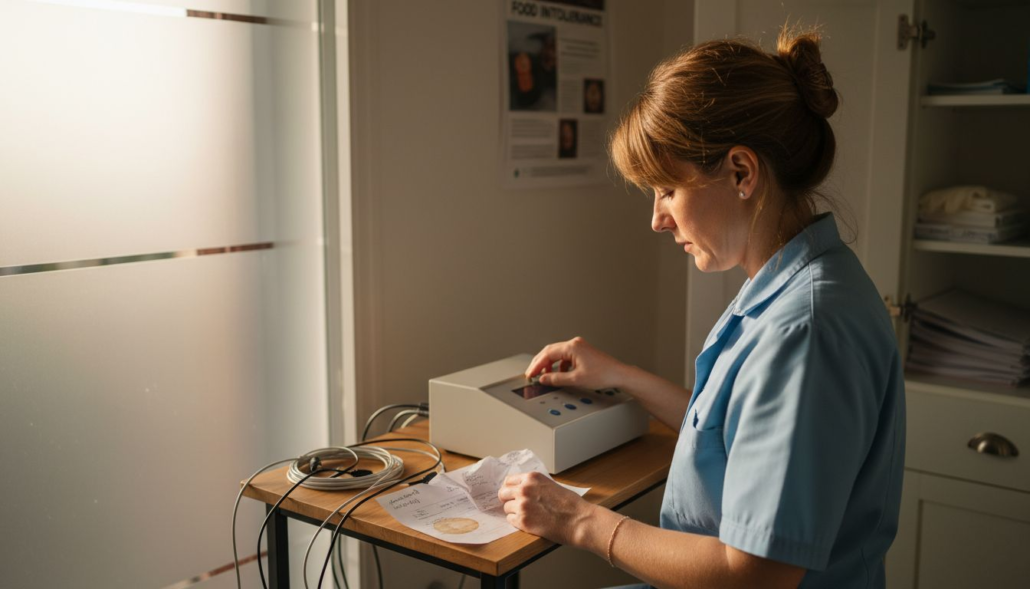
Many british adults with digestive discomfort find that traditional medical tests leave questions unanswered. When digestive issues disrupt daily life, the search for gentle and effective answers often leads to bio-resonance testing. This non-invasive technology analyses electromagnetic signals from your body, offering a fresh perspective on hidden food intolerances. With over 16 million people in the United Kingdom reportedly affected by food sensitivities, exploring bio-resonance could help you pinpoint trigger foods and guide safer, more personalised diet choices.
Table of Contents
- Bio-resonance Testing: Definition And Core Concepts
- Types Of Bio-resonance Food Intolerance Tests
- How At-home Hair Sample Analysis Works
- Accuracy, Reliability, And Medical Recognition
- Risks, Misconceptions, And Alternatives
Key Takeaways
| Point | Details |
|---|---|
| Bio-resonance testing offers alternative insights | This technique assesses electromagnetic frequencies from cells to detect potential health imbalances, but should be used as a complementary tool rather than a definitive diagnostic method. |
| Concerns about scientific validity remain | The scientific community is cautious due to the lack of robust clinical evidence supporting bio-resonance testing as an accurate diagnostic tool, urging reliance on traditional methods. |
| At-home tests provide convenience, but caution is advised | Hair sample analysis can be non-invasive for detecting food intolerances, yet results should be interpreted alongside professional medical advice to avoid misleading conclusions. |
| Awareness of misconceptions is crucial | Many believe bio-resonance can definitively diagnose conditions, but it’s essential to consult healthcare professionals for accurate health assessments and advice. |
Bio-resonance testing: definition and core concepts
Bio-resonance testing represents an alternative diagnostic technique that explores electromagnetic frequencies emitted by human cells to assess potential health imbalances. Bioresonance diagnostic approaches are based on the fundamental principle that every biological cell generates specific electromagnetic wavelengths that can indicate its current functional state.
At its core, bio-resonance technology operates through specialised electronic devices designed to detect and analyse these subtle electromagnetic oscillations. These sophisticated instruments use sensitive skin electrode connections to measure the body’s energetic signals, which proponents suggest can reveal underlying health conditions or potential sensitivities before conventional diagnostic methods might detect them. The process involves scanning and comparing these electromagnetic frequencies against established reference patterns to identify potential irregularities.
While the scientific community remains cautious about bio-resonance methodology, practitioners argue that these techniques can provide insights into complex health issues by mapping the body’s subtle energetic responses. The technology attempts to distinguish between harmonious and disruptive electromagnetic frequencies, with the fundamental hypothesis being that healthy cells produce coherent energy patterns, whereas compromised or stressed cells generate irregular wavelengths.
Pro tip: When considering bio-resonance testing, always consult healthcare professionals and view the results as complementary information rather than a definitive medical diagnosis.
Types of bio-resonance food intolerance tests
Bio-resonance food intolerance testing encompasses several sophisticated diagnostic approaches designed to identify potential dietary sensitivities. Bioenergetic testing methodologies range from traditional scanning techniques to advanced electromagnetic frequency analysis, each offering unique insights into an individual’s potential food reactions.
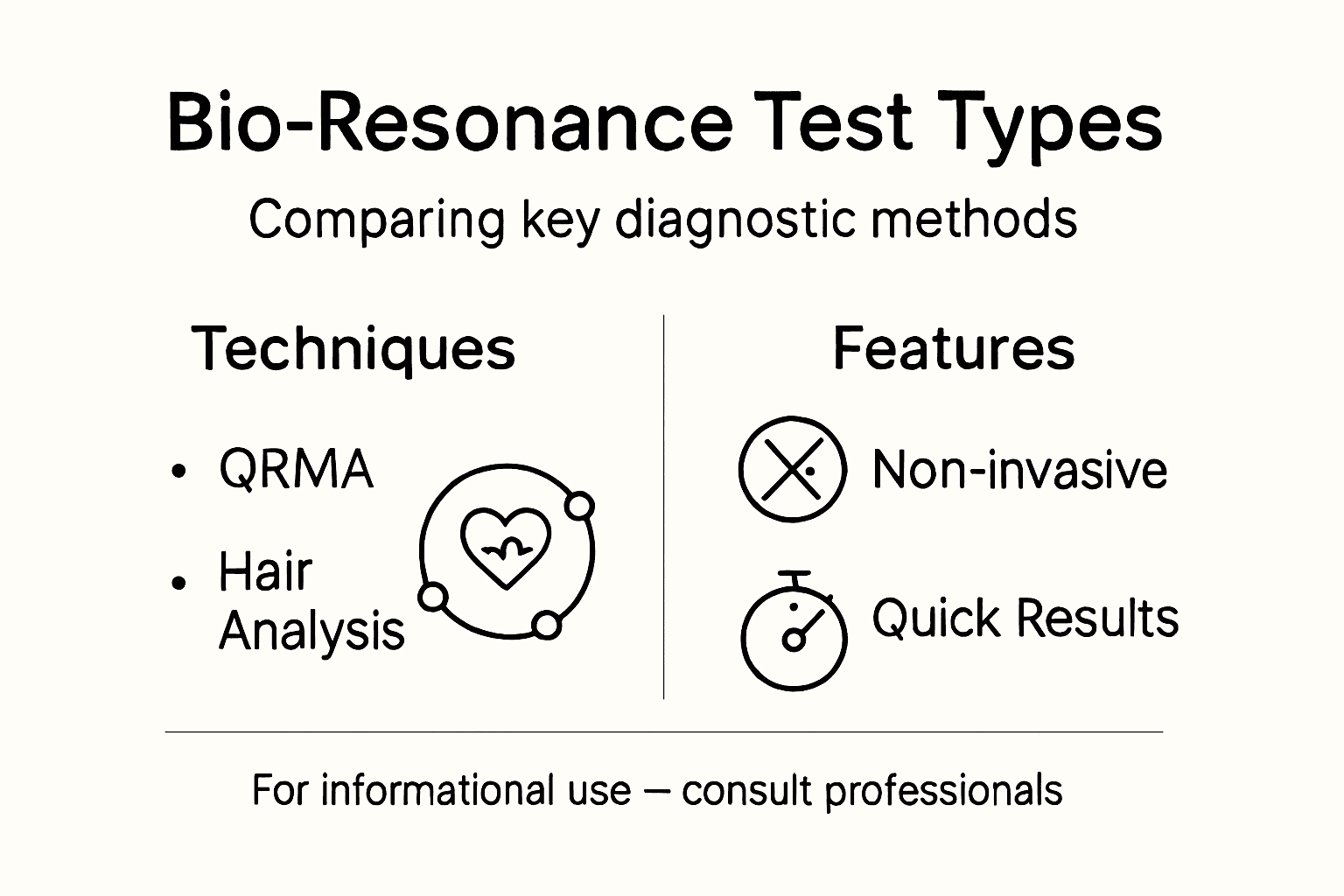
One prominent category involves quantum resonance magnetic analysis (QRMA), a non-invasive technique that examines the body’s electromagnetic signals to detect potential food-related inflammatory responses. This method utilises advanced electronic devices that measure electrical resistance and frequency patterns at specific meridian points, allowing practitioners to map potential sensitivities across multiple dietary categories. Another approach includes specialised devices like F-Scan and DIRP technology, which provide rapid diagnostic scans covering comprehensive nutritional assessment parameters.
These bio-resonance testing approaches differ significantly in their technological sophistication and diagnostic depth. Some tests focus exclusively on food-related sensitivities, while others offer broader health screening capabilities that incorporate nutritional intolerance mapping alongside other potential physiological imbalances. The underlying principle remains consistent: detecting subtle electromagnetic frequency variations that might indicate compromised cellular responses to specific dietary substances.
Pro tip: When exploring bio-resonance food intolerance tests, request detailed information about the specific testing methodology and ensure the provider can explain the scientific rationale behind their diagnostic approach.
How at-home hair sample analysis works
At-home hair sample analysis represents a revolutionary approach to food intolerance testing, offering individuals a convenient and non-invasive method to explore potential dietary sensitivities. The process begins with a simple yet precise hair collection procedure that allows comprehensive intolerance testing without requiring blood draws or invasive medical procedures.
The hair sample collection involves carefully extracting a small quantity of hair directly from the root, typically from the back of the head or behind the ears. This sample contains crucial biological information, including electromagnetic frequencies and cellular data that bio-resonance technology can analyse. Practitioners explain that hair follicles retain detailed energetic signatures that reflect an individual’s overall physiological responses, making them an ideal medium for detecting potential food-related sensitivities.

Once the hair sample is collected, it is securely packaged and sent to a specialised laboratory equipped with advanced bio-resonance scanning technology. The laboratory technicians perform a comprehensive analysis by subjecting the hair sample to electromagnetic frequency mapping, which helps identify potential inflammatory responses and cellular irregularities associated with specific food groups. This non-invasive approach allows for a detailed assessment of an individual’s potential dietary sensitivities without the discomfort of traditional testing methods.
Pro tip: Ensure your hair sample is clean, free from styling products, and collected from the root for the most accurate bio-resonance testing results.
Accuracy, reliability, and medical recognition
The scientific community maintains a cautious stance regarding bio-resonance testing, with ongoing debates about its clinical validity and reliability. Advertising Standards Authority investigations have consistently highlighted the lack of robust clinical evidence supporting bioresonance testing as a definitive diagnostic method for identifying food intolerances.
While some practitioners argue that bio-resonance techniques offer insights into potential physiological responses, mainstream medical professionals remain sceptical about the technology’s scientific foundation. The primary concerns centre on the absence of rigorous, peer-reviewed research demonstrating consistent and reproducible results. Despite some devices obtaining CE medical device certification, this marking does not necessarily validate their diagnostic accuracy or effectiveness in detecting precise food sensitivities.
The current scientific consensus suggests that bio-resonance testing should be viewed as a complementary approach rather than a standalone diagnostic tool. Healthcare professionals recommend using these tests in conjunction with traditional medical assessments, comprehensive dietary journals, and potentially elimination diet protocols. Individuals seeking to understand their potential food intolerances are advised to consult registered nutritionists or healthcare practitioners who can provide comprehensive, evidence-based guidance tailored to their specific health requirements.
Pro tip: Always discuss bio-resonance test results with a qualified healthcare professional and consider them as supplementary information rather than a definitive medical diagnosis.
Risks, misconceptions, and alternatives
Understanding the potential risks and limitations of bio-resonance testing is crucial for making informed health decisions. Advertising Standards Authority research highlights significant concerns about misconceptions surrounding these alternative diagnostic approaches, particularly the unfounded belief that they can definitively diagnose or cure medical conditions.
One of the most significant risks associated with bio-resonance testing is the potential for patients to delay or avoid conventional medical care. Individuals might mistakenly view these tests as comprehensive health assessments, when in reality, they should be considered supplementary information at best. Medical professionals warn that relying exclusively on bio-resonance testing could prevent patients from receiving timely and accurate diagnoses for underlying health conditions that require professional medical intervention.
To clarify common misconceptions about bio-resonance food intolerance testing, consider these key points:
| Misconception | Reality |
|---|---|
| Provides definitive diagnosis | Should be considered supplementary only |
| Can replace medical advice | Must be used alongside professional guidance |
| Diagnoses underlying conditions | Indicates only potential sensitivities |
Traditional medical alternatives offer more scientifically validated approaches to identifying food intolerances and allergies. These include medically recognised diagnostic methods such as skin prick tests, blood antibody screenings, and comprehensive elimination diet protocols conducted under professional supervision. Unlike bio-resonance testing, these established methods provide quantifiable, reproducible results that can be directly interpreted by healthcare practitioners. Patients seeking reliable insights into their dietary sensitivities are strongly encouraged to consult registered nutritionists or allergists who can provide evidence-based guidance tailored to individual health requirements.
Here’s a comparison of bio-resonance testing and medically recognised food intolerance diagnostics:
| Aspect | Bio-resonance Testing | Medically Recognised Methods |
|---|---|---|
| Scientific Validity | Lacks robust clinical evidence | Supported by peer-reviewed studies |
| Diagnostic Approach | Electromagnetic frequency mapping | Immunological or physiological tests |
| Practitioner Training | Alternative health practitioners | Registered nutritionists, doctors |
| Reliability | Results vary, often unconfirmed | Consistent, reproducible outcomes |
Pro tip: Prioritise medically validated diagnostic methods and always consult healthcare professionals before making significant dietary changes based on alternative testing approaches.
Discover Your Food Intolerances with Trusted At-Home Bio-Resonance Testing
If you struggle with unexplained symptoms that might be linked to hidden food sensitivities, bio-resonance testing offers a gentle, non-invasive way to explore these triggers. The article highlights how electromagnetic frequency analysis can detect subtle imbalances in your body that traditional tests might miss. At UK Food Intolerance, we provide easy-to-use hair sample tests that bring this advanced technology to your doorstep, helping you uncover potential food and environmental intolerances swiftly and conveniently.
Start feeling more in control of your wellbeing today by choosing from our Ultimate Single Intolerance Test or the more affordable Core Single Intolerance Test. Both options give you detailed reports within 48-72 hours to support your journey towards a healthier lifestyle. Learn more about our process and how bio-resonance testing works by visiting UK Food Intolerance and get ready to take the first step to regaining balance and comfort through personalised dietary insight.
Frequently Asked Questions
What is bio-resonance testing?
Bio-resonance testing is an alternative diagnostic technique that examines the electromagnetic frequencies emitted by human cells to identify potential health imbalances, particularly food intolerances.
How does bio-resonance testing for food intolerances work?
Bio-resonance food intolerance testing involves scanning the body’s electromagnetic signals using specialized devices to detect sensitivities to various food groups by analysing frequency patterns at specific points.
Is bio-resonance testing a reliable method for diagnosing food intolerances?
The scientific community remains cautious about the reliability of bio-resonance testing, as there is a lack of robust clinical evidence. It is best viewed as a complementary approach rather than a definitive diagnostic method.
Can bio-resonance testing be used alongside other medical assessments?
Yes, bio-resonance testing should be used in conjunction with traditional medical assessments and should not replace comprehensive approaches like elimination diets or tests conducted by registered nutritionists.










Leave a Reply
Want to join the discussion?Feel free to contribute!