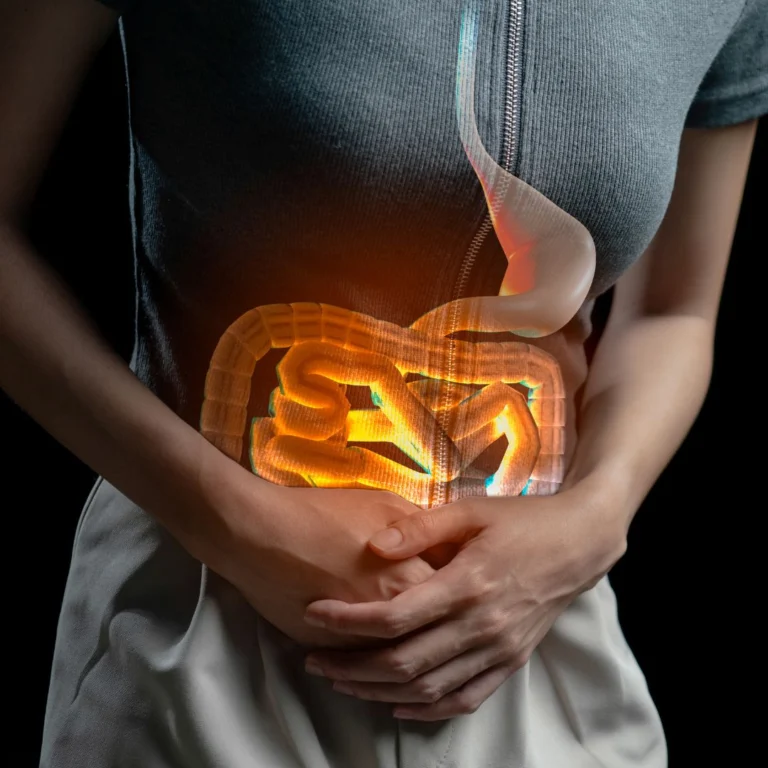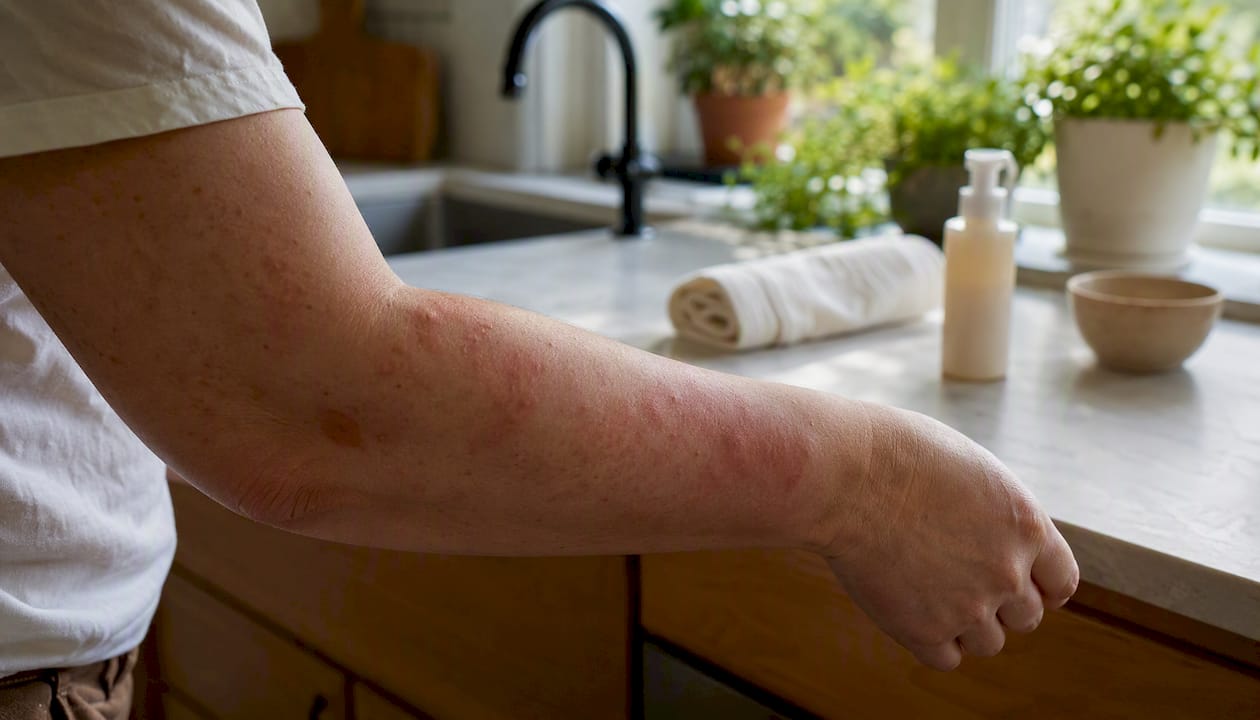
Food can affect your skin, but in different ways. A rash that appears within minutes of eating, especially hives or swelling, usually points to an allergy, while food intolerance tends to show up more slowly, if at all, as flushing, itching or skin that seems to flare on certain days. Certain foods can also make existing eczema worse for some people.
Skin reacts to many things besides food, from soap and washing powder to heat, stress and pollen. The most useful thing you can do is record what your skin is doing alongside what you eat and what touches your skin, so you can see what actually lines up.
Can food intolerance cause a skin rash?
It can, though digestive symptoms are much more common. When people notice skin changes linked to food, they often describe:
- flushing or redness of the face and neck, sometimes after wine, spicy food or hot drinks;
- itchiness without an obvious rash;
- blotchy or dry patches that seem worse a day or so after certain meals;
- skin changes alongside bloating, headaches or tiredness.
Some foods are naturally high in histamine or encourage its release, such as wine, aged cheese and some fermented foods, and some people notice flushing or itching after them. Our guide to histamine intolerance covers this in more detail.
Is it an allergy or an intolerance?
Timing is the biggest clue. Allergic skin reactions usually start within minutes to two hours of eating and include hives (raised, itchy welts) or swelling of the lips, eyes or face. Common culprits are nuts, peanuts, milk, egg, fish, shellfish, sesame and wheat.
Swelling of the lips, mouth or throat, or any difficulty breathing or swallowing, is an emergency: call 999. Hives that keep coming back should be checked by a GP, and intolerance testing is not a substitute for allergy testing. The NHS hives page lists other triggers too, including latex, plants, heat and medicines.
Intolerance-type skin changes are slower, depend more on how much you eat, and usually come with other symptoms. For a full comparison, see food intolerance vs allergy.
Can food make eczema worse?
Eczema is a skin condition with many triggers, and food is only one of them. The NHS lists certain foods among the things that can make atopic eczema worse for some people, alongside soaps, detergents, house dust mites, pet fur, pollen, stress, heat and changes in the weather.
In babies and young children with eczema, food allergy is more of a concern, and diet changes need medical guidance. The NHS advises not changing a child’s diet, or your own diet while breastfeeding, unless a doctor tells you to.
For adults, the practical approach is to keep up your usual skincare and any treatment you have been prescribed, and use a diary to see whether flare-ups follow particular foods. Removing foods will not replace good skincare, and cutting out whole food groups without replacing them can leave gaps in your diet.
Does dairy cause spots?
This comes up a lot. Some people feel their skin is worse when they have more milk, and researchers have looked at whether milk is linked to acne, but the evidence is mixed and the link is not established. The NHS acne page focuses on blocked follicles, hormones and greasy skin products as the main causes.
If you want to see whether dairy makes a difference for you, reduce it for six to eight weeks, replace the calcium with fortified alternatives, and keep using your usual skincare so you are only changing one thing. Our guide to dairy intolerance has practical swaps.
What else could be irritating your skin?
Before blaming food, check the everyday things your skin touches. Common culprits include:
| Type | Examples |
|---|---|
| Skincare and toiletries | Fragranced soaps, shower gels, moisturisers, make-up, hair dye |
| Household products | Washing powder, fabric conditioner, cleaning sprays |
| Fabrics | Wool, synthetic fabrics, tight or scratchy clothing |
| Airborne items | House dust mite, pet hair, pollen |
| Environment | Heat and sweat, cold wind, hard water, stress |
Our environmental sensitivity checklist walks you through these in more detail.
How do you track what is affecting your skin?
- Take a photo of your skin at the same time each day, in the same light.
- Score itch and redness from 0 to 10 each morning and evening.
- Log food and drink, plus any new products, washing powder changes, exercise, stress and sleep.
- Look for repeats over four to six weeks. Skin can lag behind its trigger by a day or two, so look further back than the meal before.
- Change one thing at a time and give it a few weeks before judging.
For more on related signs, see our food intolerance symptoms checklist.
When to speak to a GP
- A rash that is spreading, painful, blistering or weeping, or comes with a high temperature.
- Skin that is not improving with your usual treatment, or that affects your sleep.
- A baby or child whose eczema is hard to control, before changing their diet.
Where hair sample testing fits
Because skin can react to food, products and your surroundings, it helps to look at all three. The Ultimate Plus Intolerance Test tests 1,450 items: foods and drinks, E-numbers, pollens and airborne items such as house dust mite, everyday materials such as wool and latex, metals, plus skincare, household and stress-related items.
Your report groups them into high, medium and low response. That gives you a starting point for your diary and a shorter list of foods and products to try changing first, one at a time. It does not test for allergies and is not a diagnosis of any skin condition, so keep following your usual skincare and treatment.
You order online, post a few strands of hair to our UK lab and get your report within 3–5 working days of your sample arriving, or 48 working hours with priority. If you mainly want to look at foods and pollens, the Ultimate Intolerance Test covers 1,100 items.
Frequently asked questions
What does a food intolerance rash look like?
There is no single look. People describe flushing, blotchy redness, itchiness or dry patches that seem worse after certain foods, often with digestive symptoms too. Raised, itchy welts (hives) or swelling soon after eating are more typical of an allergy and should be checked.
How long after eating can a skin reaction appear?
Allergic reactions usually appear within minutes to a couple of hours. Intolerance-type skin changes are slower and can show up a day or so later, which is why a diary that looks back further than the last meal is useful.
Should I cut out dairy for my skin?
Some people feel their skin improves with less dairy, but the evidence is mixed. If you want to try, reduce it for six to eight weeks, replace calcium with fortified alternatives and keep your skincare the same. Do not cut out dairy for a child without medical advice.
Can washing powder cause an itchy rash?
Yes. Washing powder, fabric conditioner, fragranced soaps and other products are common causes of irritated, itchy skin. Switching to fragrance-free products for a few weeks is a simple way to see whether they are involved.
This guide is general wellness information, not medical advice. Our test uses bioresonance, a complementary (CAM) method; it does not diagnose allergies, coeliac disease or any medical condition. Speak to a GP if you have severe or ongoing symptoms.