The most common signs of food intolerance in dogs are itchy skin, especially around the paws, ears, face and belly, and digestive upsets such as loose stools, wind and occasional vomiting. The key clue is that the problem is ongoing or keeps coming back, rather than one bad day after a stolen sandwich.
Plenty of other things look exactly the same, from fleas to pollen, so a symptom on its own rarely tells you much. What helps is spotting the pattern, writing it down and then testing it properly with a food trial.
This guide walks through the signs to watch for, the foods most often involved, how to keep a useful record and what to do next.
What are the signs of food intolerance in dogs?
Food-related problems in dogs tend to show up in two places: the skin and the gut. Some dogs have one, some have both.
Skin and ear signs
- Itching that doesn’t follow the seasons. Scratching, licking or nibbling that carries on through winter as well as summer.
- Paw licking and chewing. Look for reddish-brown saliva staining on pale fur between the toes.
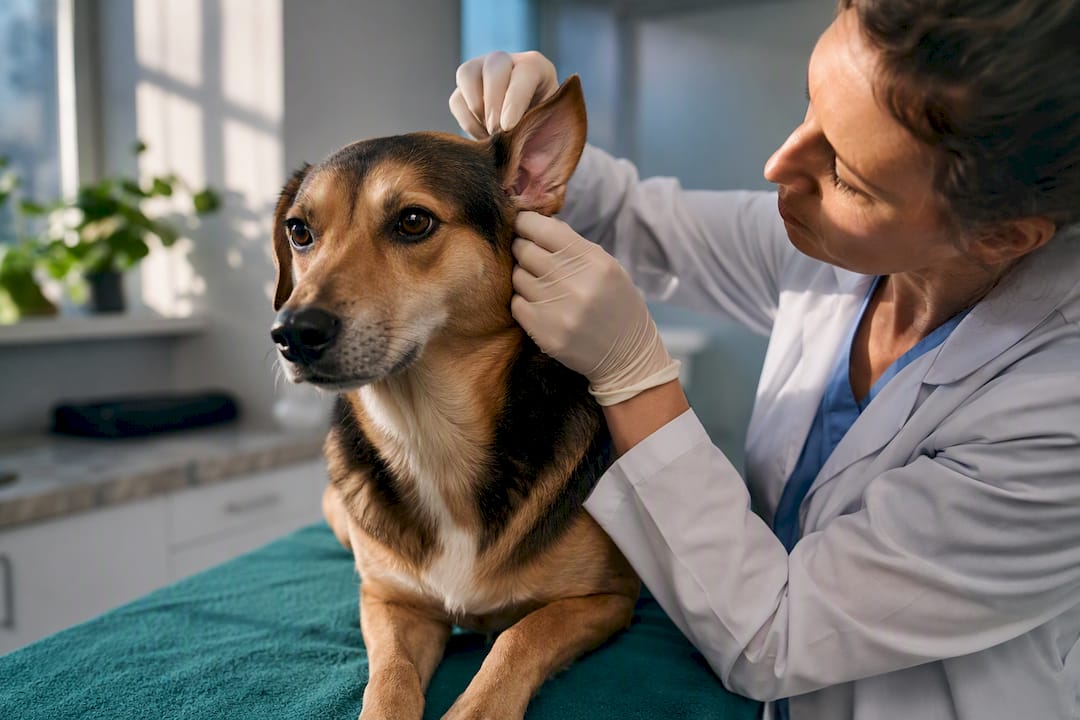
- Ear trouble that keeps returning. Head shaking, scratching at the ears, redness, a yeasty smell or dark wax.
- Red or sore skin on the face, chin, armpits, belly, groin or around the bottom.
- Patchy fur loss or scabs from constant scratching, which can lead to skin infections.
- Scooting or licking around the bottom more than usual.
Digestive signs
- Soft stools or diarrhoea that come and go.
- Going to the toilet more often than usual, sometimes with mucus or straining.
- Excess wind or a gurgling tummy.
- Vomiting now and then, sometimes with undigested food.
- Eating grass, restlessness after meals or a tucked-up, uncomfortable posture.
General signs
Some owners notice a dull coat, a dog who seems flat or grumpy when their skin is bad, or a fussy appetite. These are vague on their own, but worth recording alongside the clearer signs.
A dog with both skin and tummy signs at the same time is worth looking at closely for a food link, because those two together are a classic pattern vets look for.
Which foods most often upset dogs?
The PDSA’s guide to food allergies in dogs lists proteins, mainly meat and dairy, as the usual triggers, especially beef, chicken and lamb, along with wheat. That makes sense: these are the ingredients dogs eat most often.
A few points surprise many owners:
- A dog can react to a food they’ve eaten for years. Long-term feeding doesn’t make an ingredient safe; reactions often build up over time.
- “Lamb and rice” or “grain-free” isn’t automatically gentler. If your dog’s problem is beef or chicken, a grain-free beef food won’t help.
- Labels hide things. “Meat and animal derivatives” or “poultry” can include chicken, and many fish or lamb foods still contain chicken fat or meal.
- Treats count. Chews, dental sticks, training treats and table scraps are often where a trigger sneaks back in.
If chicken is your main suspect, our guide to dog diarrhoea after chicken covers that situation step by step.
Is it food, or something else?
Food is only one possible cause, and often not the most likely one. Before you change your dog’s diet, it helps to think about the other common reasons for the same signs:
| Possible cause | Clues that point to it |
|---|---|
| Fleas | Itching focused on the lower back and base of the tail; flea dirt in the coat. |
| Environmental allergies (pollen, dust mites, grasses) | Itching that is worse in certain seasons or after walks. |
| Mites, lice or skin infection | Sudden, intense itching, crusting or a strong smell. |
| A sudden change of food | Loose stools for a few days after switching brands or flavours. |
| Scavenging | A one-off upset after a walk, a bin raid or a barbecue. |
| Food intolerance or allergy | Year-round itching, ear problems and gut signs that keep returning on the usual diet. |
Why skin infections muddy the picture
Whatever starts the itch, constant scratching and licking damage the skin. Bacteria and yeast then take hold, and those infections are itchy in their own right.
That creates a loop: the original trigger fades into the background while the infection keeps your dog scratching. It’s one reason a food change can seem to “fail” when the real problem is an untreated ear or skin infection, so it’s worth getting those sorted before judging any diet.
For itching in particular, our guide to when food could be behind an itchy dog explains how to rule out fleas and the environment first. If you’re unsure of the difference between an intolerance and an allergy, see pet food intolerance vs allergy.
How quickly do food intolerance symptoms show in dogs?
Timing depends on the type of symptom.
- Tummy signs can appear within hours to a day or two of eating a problem food, which makes them easier to link to a meal or treat.
- Skin and ear signs build more slowly. Itching tends to grumble along in the background rather than flaring after one meal.
- Improvement is slow too. Once a trigger is removed, tummy signs often settle within a couple of weeks, while skin can take much longer to calm down.
This is why swapping food every few weeks rarely gives a clear answer. Each change muddies the picture before the last one has had time to show an effect.
What should you write down?
A simple daily record is the most useful thing you can bring to your vet. It turns “he’s always scratching” into a pattern you can both see.
| Record | What to note |
|---|---|
| Food | Main meals, brand and flavour, plus every treat, chew and scrap |
| Stools | Number per day and a simple score from 1 (firm) to 5 (watery) |
| Itching | A 0–10 score, plus where: paws, ears, belly, bottom |
| Ears | Head shaking, smell, redness or discharge |
| Other | Vomiting, wind, energy, walks in new places, flea treatment dates |
Take photos of the ears, paws and belly once a week in the same light, including on good days. Our food and symptom diary template is written for people, but the layout works just as well for a dog.
What should you do next?
If the signs fit a food pattern, the standard way to find out is a food trial: your dog eats one vet-recommended diet and nothing else for several weeks, then old foods go back one at a time to see which bring symptoms back. The PDSA suggests 6–12 weeks, and your vet will advise the exact length for your dog.
Our step-by-step guide to running a dog elimination diet covers choosing the food, avoiding the usual slip-ups and reading the result.
What your vet may check first
Expect your vet to look closely at the skin, ears and coat, ask about diet and flea treatment, and possibly take skin or ear samples to look for mites, bacteria or yeast. For tummy signs, they may ask for a poo sample to check for parasites.
Bring your notes and photos. A clear diet history, listing every food, treat and chew from the last few months, makes it much easier to pick a trial diet your dog hasn’t eaten before.
While you plan, a few things help straight away:
- Keep your dog on one food rather than trying a new bag every fortnight.
- Make sure flea treatment is up to date for every pet in the house.
- Cut back on treats and scraps so you know exactly what your dog is eating.
- Agree house rules with family and visitors so no one slips extra titbits.
When to call your vet: contact your vet promptly if your dog has blood in their poo, repeated vomiting, a painful tummy, weight loss or seems unwell in themselves, and treat facial swelling, hives or breathing difficulty as an emergency; intolerance testing is not an allergy test and never replaces veterinary care.
Where hair sample testing fits
A food trial works best when you start with a sensible shortlist, and that’s where testing can help. Our Pet Essential 500 intolerance test tests 500 food and environmental items, plus metals, vitamins and minerals and selected additives, from a small hair sample.
It’s simple to do at home. You order online and the sampling instructions arrive by email straight away; no kit is posted. Brush or snip a small amount of your dog’s hair, bag it separately and post it to our UK lab. Your report arrives by email within 3–5 working days of the sample arriving.
The report groups items into high, medium and low response. It isn’t a diagnosis, and it doesn’t replace the trial. Use it with your vet to plan a food trial: it can help you decide which proteins to leave out of the trial diet and which ingredients to test first when you reintroduce foods.
If you’d like to compare options, our guide to choosing a pet intolerance test sets out the differences between Intro 300, Essential 500 and Peak 700.
Frequently asked questions
Can a dog suddenly become intolerant to food they've always eaten?
Yes. Reactions often build up over time, so a dog can start having problems with a food they've eaten happily for years. Long-term feeding doesn't make an ingredient safe.
Does grain-free food help dogs with food intolerance?
Only if grain is the problem, and proteins such as beef, chicken and dairy are more often involved. A grain-free food still contains a main protein, which may be the very thing your dog reacts to. A vet-guided food trial is a better way to find out.
How long does it take for symptoms to settle after changing food?
Tummy signs often settle within a couple of weeks of removing a trigger, while skin and ear signs can take several weeks longer. That's why food trials usually run for 6 to 12 weeks.
Can puppies have food intolerances?
Puppies can react to foods, but they also get upset tummies easily from parasites, scavenging and food changes. Because diarrhoea can be more serious in puppies, speak to your vet rather than experimenting with their diet. Growing dogs need a complete puppy diet throughout.
This guide is general wellness information, not medical advice. Our test uses bioresonance, a complementary (CAM) method; it does not diagnose allergies, coeliac disease or any medical condition. Speak to a GP if you have severe or ongoing symptoms.