

Every parent faces uncertainty when their child struggles with mysterious symptoms, from persistent tummy aches to sudden rashes. These signs can be worrying and disrupt family life, especially when answers seem out of reach. Understanding the complexities of childhood allergies, including food intolerances, can offer reassurance and guide your next steps. This guide highlights the importance of early identification, gentle testing options, and allergy care pathways designed for accurate and safe diagnosis in the United Kingdom.
Table of Contents
- Allergy Testing in Children Explained
- Common Allergies and Symptoms in Children
- Available Allergy Tests and How They Work
- When Should Children Be Tested?
- Benefits of Identifying Childhood Allergies
- Risks, Costs and Alternatives to Allergy Testing
Key Takeaways
| Point | Details |
|---|---|
| Importance of Early Detection | Allergy testing in children is crucial for preventing serious reactions and promoting overall wellbeing. |
| Variety of Testing Methods | Different testing approaches exist, and healthcare professionals must choose techniques based on age, symptoms, and medical history. |
| Monitoring Symptoms | Parents should observe and document potential allergy symptoms to aid accurate diagnosis and management. |
| Professional Guidance Required | Consultation with a paediatric allergist is essential for personalised testing strategies and interpreting results effectively. |
Allergy Testing in Children Explained
Allergy testing for children represents a critical diagnostic approach to understanding potential health risks and managing immune system responses. Healthcare professionals increasingly recognise the importance of early detection to prevent potentially serious allergic reactions and support children’s long-term wellbeing.
The process of identifying allergies in children involves several sophisticated methods designed to provide accurate insights. Clinical allergy care pathways developed by the Royal College of Paediatrics and Child Health offer comprehensive guidance for healthcare practitioners. These pathways help medical professionals systematically assess and diagnose various allergic conditions in paediatric patients.
Key diagnostic techniques for childhood allergies include:
- Skin prick tests
- Blood tests measuring specific antibody levels
- Elimination diet assessments
- Comprehensive medical history evaluations
Parents should understand that allergy testing is a nuanced process requiring professional expertise. Different testing methods suit different age groups and potential allergen types. For instance, younger children might require gentler testing approaches compared to older children, and the specific symptoms experienced can significantly influence the recommended diagnostic strategy.
Important Considerations for Allergy Testing:
- Not all allergic reactions are immediately life-threatening
- Some allergies can develop or change over time
- Professional medical guidance is essential for accurate interpretation
- Multiple testing methods might be necessary for comprehensive assessment
Pro tip: Request a detailed consultation with a paediatric allergist who can provide personalised guidance tailored to your child’s specific health profile and potential risk factors.
Common Allergies and Symptoms in Children
Allergies represent a significant health concern for children, with various triggers potentially causing complex immune system responses. Understanding the most common allergies and their associated symptoms is crucial for parents and healthcare providers to manage children’s health effectively.
One of the most prevalent childhood conditions is asthma, which significantly impacts respiratory health. Long-term respiratory conditions demonstrate that asthma remains a critical health challenge for young people, characterised by symptoms such as:
- Persistent wheezing
- Shortness of breath
- Chest tightness
- Recurring coughs
- Difficulty breathing during physical activities
Beyond respiratory issues, food allergies represent another significant concern for children’s health. Common food-related allergic reactions include responses to:
- Peanuts
- Dairy products
- Eggs
- Wheat
- Soy products
- Tree nuts
Emerging Research Insights:
Recent studies have highlighted the potential impact of synthetic food additives on children’s health. Hypersensitivity to food additives suggests that certain preservatives and food colourings might trigger allergic-like symptoms, including:
- Increased hyperactivity
- Potential behavioral changes
- Skin irritations
- Digestive disruptions
Understanding these potential triggers can help parents make more informed dietary choices for their children.
Warning Signs Parents Should Monitor:
- Sudden skin rashes or hives
- Persistent digestive issues
- Respiratory difficulties
- Swelling around mouth or face
- Unusual fatigue or irritability
Pro tip: Maintain a detailed symptom diary to help healthcare professionals accurately diagnose and manage potential allergic conditions in your child.
Available Allergy Tests and How They Work
Allergy testing has evolved significantly, offering parents and healthcare professionals multiple diagnostic approaches to identify potential allergic conditions in children. Understanding the range of available tests can help guide more accurate and personalised healthcare decisions.
Allergy diagnostic tools developed by medical experts include several sophisticated methods for detecting potential allergic sensitivities. The most common allergy testing techniques for children are:
- Skin Prick Test (SPT): A method where small amounts of potential allergens are introduced to the skin to observe reactive responses
- Blood Tests: Measuring specific IgE antibodies to identify allergen sensitisation
- Elimination Diet Tests: Systematically removing and reintroducing foods to identify potential triggers
- Oral Food Challenges: Conducted under medical supervision to confirm or rule out specific food allergies
How Different Allergy Tests Function:
Each diagnostic approach offers unique insights into a child’s potential allergic sensitivities. Skin prick tests involve introducing microscopic amounts of allergen extracts into the skin’s surface, allowing healthcare professionals to observe immediate immune system reactions. Blood tests, conversely, analyse the body’s antibody production in response to specific allergens.
Professional medical guidance remains crucial in interpreting allergy test results accurately and developing appropriate management strategies.
Key Considerations for Allergy Testing:
- Not all tests are suitable for every age group
- Some tests require specific preparation
- Multiple testing methods might be necessary for comprehensive assessment
- Professional interpretation is essential for accurate diagnosis
Allergy care pathways provide critical guidance for healthcare professionals in selecting and interpreting appropriate diagnostic techniques. These pathways help differentiate between genuine allergic responses and other potential health conditions.
Factors Influencing Test Selection:
- Child’s age
- Specific symptoms
- Medical history
- Previous allergic reactions
- Potential risk factors
Pro tip: Consult a paediatric allergist who can recommend the most appropriate testing strategy tailored to your child’s individual health profile and specific symptoms.
To clarify allergy testing choices, here is a comparison of common methods and their key attributes:
| Test Method | Typical Age Range | Main Strength | Potential Limitation |
|---|---|---|---|
| Skin Prick Test | Over 6 months | Rapid results | May provoke minor skin reaction |
| Blood Test | All ages | Suitable for young children | Less immediate feedback |
| Elimination Diet | School-age and up | Pinpoints food triggers | Requires strict dietary adherence |
| Oral Food Challenge | Specialist clinics | Definitive for food allergy | Higher clinical supervision needed |
When Should Children Be Tested?
Allergy testing is not a one-size-fits-all approach, and determining the right time to test children requires careful consideration of various health indicators and risk factors. Parents and healthcare providers must work together to identify potential allergic conditions before they become significant health concerns.
Anaphylaxis care pathways highlight critical situations where immediate allergy testing becomes essential. Children should be considered for comprehensive allergy testing when experiencing:
- Recurring severe allergic reactions
- Persistent unexplained symptoms
- Family history of significant allergies
- Chronic respiratory conditions
- Uncontrolled skin disorders like eczema
Red Flags Indicating Potential Allergy Testing Needs:
Some symptoms serve as clear warning signs that professional allergy assessment might be necessary. These include:
- Frequent digestive disturbances
- Recurring respiratory difficulties
- Skin rashes or chronic inflammation
- Unexpected weight loss
- Growth developmental concerns
Paediatric allergy specialists recommend comprehensive testing for children presenting with complex health profiles. Specific scenarios that warrant immediate investigation include:
- Severe asthma symptoms
- Multiple food sensitivities
- Persistent gastrointestinal issues
- Known genetic predisposition to allergies
- Complications from previous allergic incidents
Early detection and intervention can significantly improve long-term health outcomes for children with potential allergic conditions.
Factors Influencing Testing Recommendations:
- Child’s overall health status
- Severity of observed symptoms
- Potential environmental triggers
- Family medical history
- Age and developmental stage
Pro tip: Maintain a detailed symptom diary documenting frequency, duration, and context of potential allergic reactions to provide comprehensive information during medical consultations.
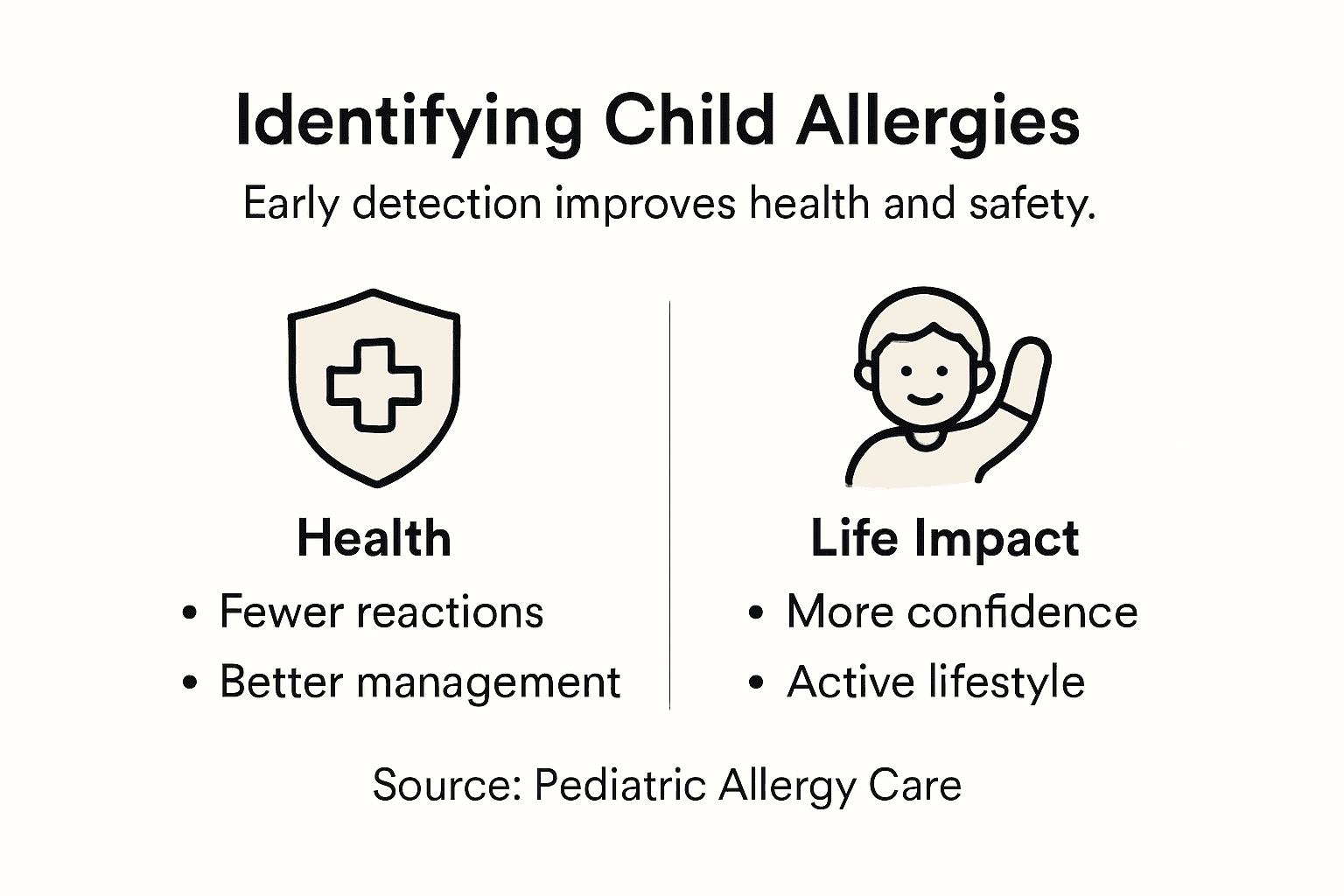
Benefits of Identifying Childhood Allergies
Identifying allergies in children represents a proactive approach to managing their health and preventing potential long-term complications. Early detection enables parents and healthcare professionals to develop targeted strategies that significantly improve a child’s quality of life and overall wellbeing.
Food intolerance in children can dramatically impact daily functioning, making comprehensive understanding crucial. The primary benefits of early allergy identification include:
- Preventing severe allergic reactions
- Improving nutritional management
- Reducing chronic health complications
- Enhancing emotional and psychological wellbeing
- Supporting optimal growth and development
Long-Term Health Advantages:
Early allergy detection allows for targeted interventions that can significantly mitigate potential health risks. Children with identified allergies can receive:
- Personalised dietary plans
- Tailored medical management
- Appropriate lifestyle modifications
- Preventative health strategies
- Enhanced nutritional support
Understanding a child’s specific allergic profile empowers families to make informed healthcare decisions and create supportive environments.
Critical Impact Areas:
- Respiratory health management
- Digestive system protection
- Immune system regulation
- Nutritional balance
- Mental health and social integration
Beyond physical health, identifying childhood allergies can have profound psychological benefits. Children with clear diagnosis can:
- Feel more confident about their health
- Understand their body’s unique needs
- Develop better self-management skills
- Reduce anxiety related to unexplained symptoms
- Create stronger support networks
Pro tip: Maintain open communication with your child about their allergies, transforming medical management into an empowering learning experience.

For easy reference, this summary table highlights the benefits of early childhood allergy identification:
| Benefit | Long-term Impact | Example Outcome |
|---|---|---|
| Reduced severe reactions | Fewer hospital visits | Emergency medication less needed |
| Improved dietary management | Better growth and nutrition | More confident food choices |
| Enhanced psychological wellbeing | Lower anxiety levels | Increased health awareness |
| Support for healthy development | Fewer missed school days | Steady academic progress |
Risks, Costs and Alternatives to Allergy Testing
Navigating the complex landscape of allergy testing requires careful consideration of potential risks, financial implications, and alternative diagnostic approaches. Parents must weigh multiple factors to make informed decisions about their child’s health assessment strategy.
Health protection strategies suggest multiple approaches to understanding potential allergic conditions beyond traditional testing methods.
Potential Risks of Allergy Testing:
- Potential false positive results
- Unnecessary anxiety for families
- Minor physical discomfort during testing
- Potential psychological impact on children
- Risk of misinterpreting test outcomes
Cost Considerations:
- Private testing can range from £50-£250
- NHS referral testing may have longer waiting periods
- Some specialist tests might not be fully covered by insurance
- Additional follow-up consultations increase overall expenses
- Potential ongoing management costs
Alternative Diagnostic Approaches:
- Detailed medical history evaluation
- Systematic symptom tracking
- Elimination diet observations
- Clinical professional assessment
- Gradual allergen exposure monitoring
Careful clinical evaluation can often provide insights without invasive or expensive testing procedures.
Penicillin allergy investigations demonstrate that strategic testing can have broader healthcare implications beyond immediate allergy management.
Comprehensive Assessment Strategies:
- Maintain detailed symptom documentation
- Consult multiple healthcare professionals
- Consider cost-effective testing options
- Understand potential long-term health implications
- Prioritise child’s overall wellbeing
Pro tip: Request a comprehensive consultation with a paediatric allergist to discuss the most appropriate and cost-effective diagnostic approach for your child’s specific health profile.
Discover Hidden Allergies with Simple At-Home Testing
If you are concerned about unexplained symptoms in your child or want to take control of their health following insights from allergy testing, our At-Home Allergy Kits Archives – UK Food Intolerance offer a gentle and comprehensive solution. These non-invasive tests use advanced bio-resonance technology to identify potential food and environmental triggers linked to allergies or intolerances that may affect your child’s wellbeing and digestive health.

Take action now to unlock detailed digital reports within 48 to 72 hours after submitting a simple hair sample from the comfort of your home. By understanding your child’s unique intolerance profile you empower yourself to make informed dietary changes and support long-term health. Visit ukfoodintolerance.co.uk for more details and explore helpful resources from our Digestive Health Archives – UK Food Intolerance to get started towards a happier, healthier child today.
Frequently Asked Questions
What are the common symptoms that indicate a child should be tested for allergies?
Common symptoms that may indicate a need for allergy testing include recurrent skin rashes or hives, persistent digestive issues, respiratory difficulties, swelling around the mouth or face, and unusual fatigue or irritability.
Why is early detection of allergies in children important?
Early detection of allergies is crucial as it helps prevent severe allergic reactions, addresses long-term health complications, and allows for better nutritional management, ultimately improving the child’s quality of life and wellbeing.
What are the different types of allergy tests available for children?
Common types of allergy tests for children include skin prick tests, blood tests measuring specific IgE antibodies, elimination diet assessments, and oral food challenges, each providing valuable insights into potential allergen sensitivities.
When should parents consider taking their child for allergy testing?
Parents should consider allergy testing when a child experiences recurring severe allergic reactions, persistent unexplained symptoms, has a family history of allergies, or shows chronic respiratory conditions or uncontrolled skin disorders like eczema.










Leave a Reply
Want to join the discussion?Feel free to contribute!