
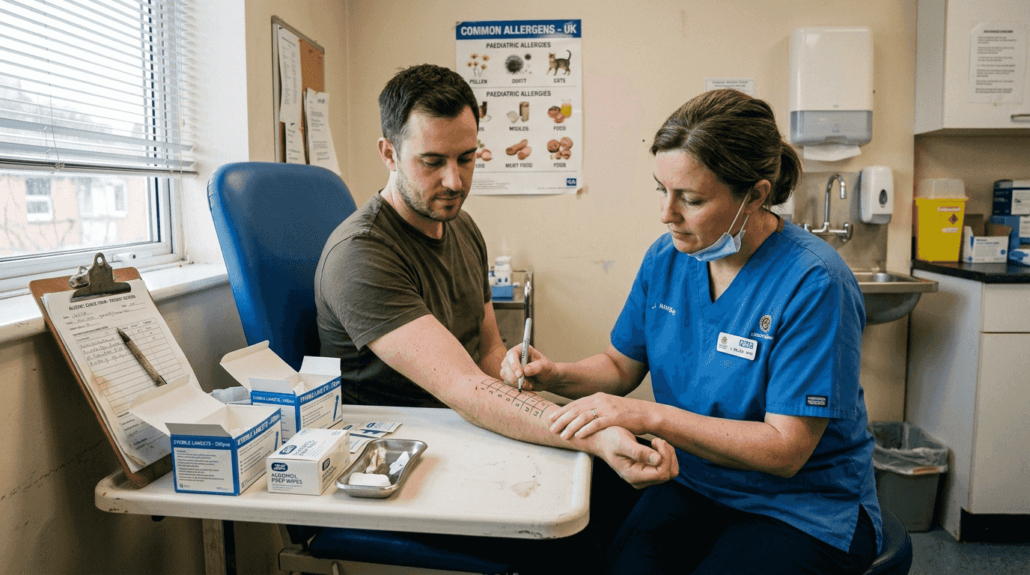
Unexplained symptoms such as persistent digestive discomfort, skin rashes, or respiratory issues can significantly impact your daily life, often signalling hidden allergens at play. Identifying the precise triggers is essential for managing your health effectively and avoiding unnecessary dietary restrictions. In 2026, a range of non-invasive, scientifically validated methods are available to help you pinpoint allergens with confidence. This article explores the most reliable approaches to allergen identification, from clinical tests to practical elimination strategies, empowering you to make informed decisions about your wellbeing.
Table of Contents
- How To Evaluate Allergen Identification Tests
- Skin Prick And Blood Tests: Proven Clinical Methods
- Advanced Laboratory Tests: Bat And Alex2 Allergy Explorer
- Comparison Of Allergen Identification Methods And Non-Invasive Approaches
- Trusted Allergen Testing And Support In The Uk
- Frequently Asked Questions
Key takeaways
| Point | Details |
|---|---|
| Clinical tests are gold standard | Skin prick and blood tests for IgE antibodies remain the most accurate methods for diagnosing allergies. |
| Advanced tests improve accuracy | Basophil Activation Test (BAT) and ALEX² offer enhanced precision, especially for children and complex cases. |
| Home kits often mislead | Many commercial home allergy test kits lack scientific validation and can prompt unnecessary dietary changes. |
| Elimination diets are practical | Systematically removing and reintroducing foods helps identify triggers without invasive procedures. |
| Professional guidance is essential | Consulting a GP or allergy specialist ensures access to validated testing and expert interpretation of results. |
How to evaluate allergen identification tests
Choosing the right allergen identification test requires careful consideration of accuracy, scientific backing, and the type of antibodies being measured. The most reliable tests detect immunoglobulin E (IgE) antibodies, which are the standard biomarkers for genuine allergic reactions. Healthcare professionals use blood or skin prick tests to diagnose allergies by detecting these specific antibodies, ensuring results are clinically meaningful.
Many home test kits available online measure immunoglobulin G (IgG) antibodies instead, which lack robust clinical support for allergy diagnosis. Home food allergy and intolerance testing kits are often inaccurate, leading to confusion and potentially harmful dietary restrictions. These tests can suggest you are allergic to foods you tolerate perfectly well, causing unnecessary stress and nutritional deficiencies.
When evaluating any test, prioritise those with transparent scientific validation and clinical endorsement. Look for methods that have been peer-reviewed and are recommended by allergy specialists or national health bodies. Tests should clearly state what they measure, how results are interpreted, and whether they are suitable for your specific symptoms. Avoid products that promise to identify hundreds of allergens without proper evidence or professional oversight.
Pro Tip: Before purchasing any allergen test, verify its credentials by checking whether it measures IgE antibodies and has endorsement from recognised medical organisations. Consulting your GP or an allergy specialist before testing ensures you choose a method that will genuinely help identify your triggers rather than create unnecessary worry. For comprehensive guidance, explore our allergy testing guide to understand the process from start to finish.
Key considerations when selecting a test include:
- Scientific validation and peer-reviewed evidence supporting the test methodology
- Detection of IgE antibodies rather than IgG or other non-specific markers
- Clear interpretation guidelines and professional support for understanding results
- Suitability for your age, symptoms, and suspected allergens
- Accessibility through your GP or a qualified allergy specialist
Skin prick and blood tests: proven clinical methods
Skin prick tests and blood tests are the cornerstone of clinical allergy diagnosis, offering reliable detection of IgE-mediated allergic reactions. Skin prick tests introduce allergens to the skin to observe wheal reactions indicating allergy, providing results within 15 to 20 minutes. During this procedure, a healthcare professional places tiny drops of allergen extracts on your forearm or back, then gently pricks the skin surface to allow the substance to enter. If you are allergic, a small raised bump surrounded by redness appears at the test site, resembling a mosquito bite.
Blood tests, also known as specific IgE tests or radioallergosorbent tests (RAST), work differently by measuring the levels of IgE antibodies in your bloodstream. Blood tests measure IgE antibody levels to assess allergic reactions, with higher concentrations suggesting a stronger allergic response. These tests are particularly useful when skin testing is not suitable, such as for patients with severe eczema, those taking antihistamines, or young children who may not tolerate skin pricks comfortably.
Both methods can identify a wide range of common allergens, including foods like peanuts, eggs, milk, and shellfish, as well as environmental triggers such as pollen, pet dander, dust mites, and mould spores. The tests are quick, minimally invasive, and widely available through NHS services and private allergy clinics across the UK. Skin prick tests deliver immediate feedback, while blood tests typically require a few days for laboratory analysis and results.
Despite their effectiveness, these tests have some limitations. Skin prick tests must be administered by trained specialists and require you to stop taking antihistamines beforehand, which can be inconvenient if you rely on them for symptom relief. Blood tests, while more flexible, may take longer to provide answers and can be slightly more expensive. Neither test is 100% definitive on its own, so results are always interpreted alongside your medical history and symptoms. For a broader understanding of available testing options, visit our food intolerance test options page.
Common allergens detected by skin prick and blood tests include:
- Foods: peanuts, tree nuts, eggs, milk, soya, wheat, fish, shellfish
- Pollens: grass, tree, and weed pollens causing hay fever
- Animals: cat and dog dander, horse hair
- Household: dust mites, mould spores
- Insects: bee and wasp venom
Advanced laboratory tests: BAT and ALEX² Allergy Explorer
Modern allergy diagnostics have evolved beyond traditional skin and blood tests, with advanced laboratory methods offering improved accuracy and broader allergen coverage. The Basophil Activation Test (BAT) is a cutting-edge blood test that measures how your white blood cells, specifically basophils, react when exposed to potential allergens. BAT more accurately diagnoses cow’s milk allergy in children and reduces oral food challenges, making it especially valuable for young patients where standard tests may be inconclusive.

BAT works by assessing the activation of basophils in response to allergen exposure, providing a functional measure of allergic reactivity rather than just antibody presence. This approach is particularly beneficial for diagnosing milk allergy in children under two years, where conventional IgE tests can produce ambiguous results. By reducing the need for oral food challenges, which carry a risk of severe allergic reactions, BAT offers a safer diagnostic pathway for families and clinicians.
Another innovative option is the ALEX² Allergy Explorer, a comprehensive screening test that analyses your blood for reactions to nearly 300 different allergens simultaneously. ALEX² screens for nearly 300 allergens and clarifies cross-reactivity with molecular precision, helping to distinguish between true allergies and cross-reactive responses. This molecular allergen testing identifies specific proteins responsible for allergic reactions, enabling more accurate diagnosis and tailored avoidance strategies.
ALEX² covers an extensive range of allergens, including foods, pollens, animal dander, dust mites, moulds, and insect venoms. Results are typically available within five to seven working days, providing timely insights that support swift clinical decision-making. The test is particularly useful when you have multiple unexplained symptoms or when initial tests have not provided clear answers, offering a comprehensive overview of your allergic profile in a single analysis.
Pro Tip: If standard allergy tests have left you with unclear or conflicting results, consider discussing advanced options like BAT or ALEX² with your GP or allergy specialist. These tests are especially helpful for children under two years with suspected milk allergy or for adults with complex, multi-allergen sensitivities. For more information on how sensitivity testing works, explore our sensitivity testing methods resource.
Key advantages of BAT and ALEX² include:
- Enhanced accuracy for diagnosing specific food allergies, especially in young children
- Comprehensive allergen screening in a single test, reducing the need for multiple procedures
- Molecular precision to identify true allergens versus cross-reactive proteins
- Reduced reliance on risky oral food challenges
- Faster results compared to traditional methods, supporting timely treatment decisions
| Test | Accuracy | Allergens Covered | Turnaround Time | Best For |
|---|---|---|---|---|
| BAT | High for milk allergy | Specific foods | 5 to 7 days | Children under 2, unclear IgE results |
| ALEX² | High, molecular level | Nearly 300 allergens | 5 to 7 days | Complex cases, multiple sensitivities |
| Skin Prick | Good | Common foods, pollens, dander | 15 to 20 minutes | General allergy screening |
| Blood IgE | Good | Common allergens | 3 to 5 days | Patients unsuitable for skin tests |
Comparison of allergen identification methods and non-invasive approaches
Understanding the strengths and limitations of different allergen identification methods helps you choose the most appropriate approach for your situation. Clinical tests such as skin prick tests, blood IgE tests, BAT, and ALEX² offer varying levels of accuracy, invasiveness, and allergen coverage. Meanwhile, elimination diets provide a practical, non-invasive alternative that empowers you to identify food triggers through careful observation and dietary management.
Elimination diets help identify food allergens by removing and reintroducing foods to monitor symptoms, offering a functional assessment of how your body responds to specific foods. This method involves systematically excluding suspected allergens from your diet for a set period, typically two to four weeks, then gradually reintroducing them one at a time while tracking any symptom changes. It requires careful planning, detailed food diaries, and ideally supervision from a dietitian to ensure nutritional adequacy and accurate interpretation.
Elimination diets are particularly useful when test results are inconclusive or when you suspect food intolerances rather than true IgE-mediated allergies. They allow you to observe real-world reactions in your daily life, providing insights that laboratory tests may miss. However, they demand discipline, patience, and meticulous record-keeping to avoid confusion and ensure reliable results. Without professional guidance, there is a risk of eliminating too many foods unnecessarily, leading to nutritional deficiencies.
Home test kits, while convenient and widely marketed, often lack the reliability and scientific validation of clinical methods. Many measure IgG antibodies, which are not recognised as valid markers for food allergies by mainstream medical organisations. These tests can suggest you are allergic to numerous foods, prompting restrictive diets that are not medically justified and may harm your health. Always approach home kits with scepticism and seek professional advice before making significant dietary changes based on their results.
For practical guidance on using test results to inform your diet, visit our elimination diet guidance page. This resource helps you understand how to interpret findings and implement dietary adjustments safely and effectively.
| Method | Methodology | Accuracy | Invasiveness | Time to Results | Best Use Case |
|---|---|---|---|---|---|
| Skin Prick Test | Allergen introduced under skin | High for IgE allergies | Minimal | 15 to 20 minutes | Rapid screening for common allergens |
| Blood IgE Test | Measures IgE antibodies in blood | High for IgE allergies | Minimal | 3 to 5 days | Patients unsuitable for skin tests |
| BAT | Basophil activation measurement | Very high for specific foods | Minimal | 5 to 7 days | Children, unclear results |
| ALEX² | Molecular allergen screening | Very high, broad coverage | Minimal | 5 to 7 days | Complex, multi-allergen cases |
| Elimination Diet | Food removal and reintroduction | Moderate to high | None | 4 to 8 weeks | Food intolerances, inconclusive tests |
| Home Test Kits | Varies, often IgG measurement | Low to unreliable | Minimal | 1 to 2 weeks | Not recommended |
Key considerations for choosing your approach:
- Clinical tests offer the highest accuracy for IgE-mediated allergies and are widely accessible through the NHS.
- Advanced tests like BAT and ALEX² provide enhanced precision and broader coverage for complex cases.
- Elimination diets are practical and non-invasive but require professional support to ensure safety and effectiveness.
- Home test kits are convenient but often unreliable, leading to unnecessary dietary restrictions and confusion.
- Always consult a GP or allergy specialist before making decisions based on test results or starting an elimination diet.
Trusted allergen testing and support in the UK
Navigating the landscape of allergen testing can feel overwhelming, but accessing trusted, professional support makes the process straightforward and reassuring. UK Food Intolerance offers a comprehensive range of allergy and intolerance tests, analysing over 900 items to help you identify potential triggers affecting your wellbeing. Our convenient home test kits range provides accessible options for those seeking initial insights, though professional consultation remains essential for accurate interpretation and safe dietary planning.

Our expert team is dedicated to helping you understand your results and plan an appropriate diet to manage your allergies effectively. Whether you are experiencing unexplained digestive issues, skin problems, or respiratory symptoms, our food intolerance tests available can provide valuable insights into the foods and environmental factors that may be impacting your health. We combine the convenience of at-home sample collection with the reliability of UK-based laboratory analysis, delivering detailed digital reports within 48 to 72 hours.
For personalised advice on using your test results to inform dietary changes, explore our food intolerance test diet advice resource. Taking confident steps towards relief starts with understanding your body’s unique responses, and we are here to support you every step of the way.
Frequently asked questions
What is the most reliable way to identify allergens?
The most reliable methods are skin prick tests and blood IgE tests administered by healthcare professionals, as they detect genuine allergic responses. Advanced tests like BAT and ALEX² offer even greater accuracy for complex cases. Always consult your GP before choosing a test to ensure it is appropriate for your symptoms.
When should I see a GP about allergy testing?
You should see your GP if you experience persistent or severe symptoms such as unexplained rashes, digestive issues, breathing difficulties, or anaphylaxis. Your GP can refer you to an allergy specialist and arrange validated testing. Early professional assessment prevents misdiagnosis and ensures you receive appropriate treatment.
Are home allergy test kits accurate?
Most home allergy test kits lack scientific validation and often measure IgG antibodies, which are not reliable markers for allergies. These kits can lead to unnecessary dietary restrictions and confusion. For accurate diagnosis, rely on clinical tests recommended by your GP or an allergy specialist.
How does an elimination diet work for identifying allergens?
An elimination diet involves removing suspected allergens from your diet for two to four weeks, then gradually reintroducing them while monitoring symptoms. This method helps identify food triggers through real-world observation. Professional guidance from a dietitian is essential to ensure nutritional balance and accurate interpretation.
What is the difference between food allergies and food intolerances?
Food allergies involve an immune system response mediated by IgE antibodies, causing rapid and potentially severe reactions. Food intolerances typically involve digestive issues without immune involvement and develop more gradually. Clinical tests like skin prick and blood IgE tests diagnose allergies, while elimination diets are more useful for identifying intolerances.
Can I use allergen test results to plan my diet safely?
Yes, but professional guidance is crucial to ensure you do not eliminate essential nutrients or foods unnecessarily. Test results should be interpreted alongside your symptoms and medical history. For comprehensive support on using test results to inform your diet, visit our allergy testing guidance page.










Leave a Reply
Want to join the discussion?Feel free to contribute!