

Gut symptoms rarely mean B12 deficiency on its own: more often, a digestive condition such as coeliac disease, autoimmune gastritis or Crohn’s disrupts absorption, and low B12 follows as a result. If you have ongoing digestive symptoms alongside fatigue, tingling or a sore tongue, see a GP for blood tests rather than guessing at the cause yourself.
TL;DR:
- Neurological symptoms can occur with a normal blood count; seek same day care for worsening numbness, walking difficulty, vision changes, or confusion.
- Metformin and long term acid suppressants can lower B12; ask your clinician about testing rather than stopping prescribed treatment on your own.
- Coeliac testing should happen while you are still eating gluten, because starting a gluten free diet early can make diagnosis harder.
- Autoimmune gastritis, total gastrectomy, and complete ileal removal require lifelong B12 injections; other causes may allow supervised oral doses of at least 1 milligram daily.
Table of Contents
- Common symptoms of B12 deficiency, including gut-related signs
- Gut conditions behind B12 malabsorption
- Medicines that can reduce B12 absorption
- How B12 absorption works and why gut health matters
- Diagnosing B12 deficiency: tests, limits and borderline results
- Treating B12 deficiency alongside the underlying gut condition
- When to see a clinician and what happens next
- Where at-home intolerance testing fits in the picture
- Bringing clinical tests and dietary investigation together
- A practical next step alongside clinical care
- FAQ
- Sources
Common symptoms of B12 deficiency, including gut-related signs
B12 deficiency produces a mix of systemic, neurological and digestive symptoms, and the pattern often hints at the underlying cause. Fatigue, pins and needles, memory changes and mood disturbance are common systemic and neurological features. Importantly, these neurological signs can appear even when a full blood count looks entirely normal, so a normal haemoglobin never fully rules out deficiency according to NICE guidance on diagnosis and management.
Gastrointestinal features tend to reflect the condition causing the deficiency rather than the deficiency itself. Loss of appetite, a sore or swollen tongue, and altered bowel habit often point towards an underlying gut disorder, such as coeliac disease or autoimmune gastritis, that is simultaneously damaging the gut lining and blocking B12 uptake.
Typical symptoms worth noting include:
- Persistent tiredness that does not improve with rest.
- Tingling, numbness or weakness in the hands and feet.
- A sore, red or swollen tongue, sometimes with mouth ulcers.
- Reduced appetite, bloating or changes in bowel habit.
- Difficulty concentrating, low mood or memory lapses.
Pro Tip: Write down your symptoms and roughly when each one started before your GP appointment: the pattern helps distinguish a dietary cause from a gut-related one.
Some presentations need urgent attention rather than a routine appointment. Progressive numbness or weakness, difficulty walking, vision changes, or confusion alongside known or suspected B12 deficiency should prompt same-day medical assessment. NICE NG239 notes that neurological symptoms can develop without anaemia, which is part of why clinicians investigate promptly when a patient reports both digestive and nervous system complaints together.
Gut conditions behind B12 malabsorption
Several digestive conditions interrupt the absorption pathway at different points, and identifying which one is at play changes both treatment and long-term monitoring.
Autoimmune gastritis, the cause of pernicious anaemia, destroys the stomach cells that produce intrinsic factor, the protein B12 needs to be carried through the gut and absorbed. Without intrinsic factor, B12 passes through unused regardless of how much is eaten. Peer-reviewed research on gastric histopathology links gastric atrophy and autoimmune gastritis closely with B12 deficiency in older adults.
Coeliac disease damages the villi lining the small intestine, and that damage can extend far enough to impair nutrient uptake generally, including B12. NHS guidance on coeliac disease lists vitamin B12 deficiency among the possible consequences, alongside more classic symptoms such as diarrhoea, bloating and abdominal pain. Symptoms can be mild or intermittent, so the absence of obvious diarrhoea does not exclude the diagnosis.
Other gut-related causes include:
- Crohn’s disease affecting the terminal ileum, where B12 is physically absorbed.
- Surgical removal of part or all of the terminal ileum.
- Partial or total gastrectomy, removing tissue that makes intrinsic factor.
- Pancreatic insufficiency or small intestinal bacterial overgrowth, both of which can interfere with B12 release and uptake.
Each of these shares a common thread: a structural or immune problem somewhere along the absorption chain, rather than B12 itself being the primary issue.
Medicines that can reduce B12 absorption
Certain common medicines reduce how well the body absorbs B12 over time, and recognising this matters because the solution is monitoring, not necessarily stopping treatment.
Gov confirms that long-term metformin use can lower vitamin B12, and recommends checking serum B12 in people on metformin who have symptoms or other risk factors. Risk rises with higher doses, longer treatment duration, a low-normal baseline B12, existing gastrointestinal disorders, a strict vegan diet, or concurrent use of acid-suppressing medicines. The advice is clear that monitoring, rather than discontinuing metformin, is the recommended response, and any decision should be made jointly with a prescriber.
Proton pump inhibitors and H2 antagonists reduce stomach acid, and stomach acid is needed to release B12 from food proteins before it can be absorbed. Long-term use of these acid-suppressing medicines is a recognised contributor to reduced B12 status, particularly when combined with another risk factor such as metformin use or older age.
Other relevant exposures include:
- Colchicine, which can interfere with intestinal absorption of several nutrients.
- Nitrous oxide exposure, which inactivates B12 in the body and can precipitate symptoms quickly in people with borderline stores.
- Long-term use of multiple interacting medicines, which compounds individual risk.
Pro Tip: Never stop a prescribed medicine because you suspect it’s affecting your B12: ask your GP for a blood test and discuss whether monitoring or a supplement alongside the medicine makes sense.
How B12 absorption works and why gut health matters
B12 absorption is a multi-step process, and understanding it explains why so many different gut problems can lead to the same deficiency.
B12 from food first needs to be released from the proteins it’s bound to, a step that depends on stomach acid and digestive enzymes. It then binds to intrinsic factor, a protein made by specialised stomach cells, which protects B12 as it travels through the gut. The B12 and intrinsic factor complex is only absorbed at one specific location: the terminal ileum, the final section of the small intestine. Clinical reviews of B12 absorption describe this stepwise mechanism and note that disruption at any point, acid production, intrinsic factor availability, or ileal integrity, can lead to deficiency.
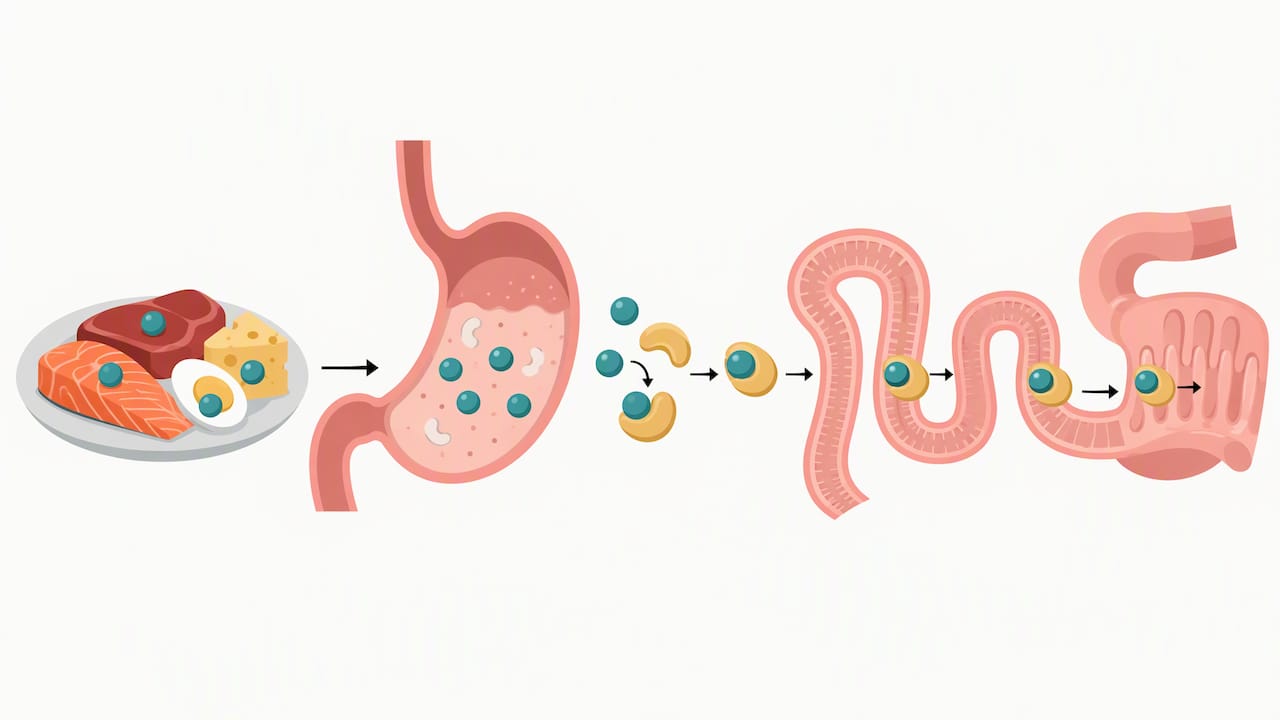
The liver stores several years’ worth of B12, which is why symptoms often take a long time to appear even after absorption has been impaired. This delay is also why deficiency can be well advanced by the time symptoms become noticeable, and why investigating the cause matters as much as replacing the vitamin itself.
Surgical removal of the stomach or terminal ileum, or disease affecting either site, interrupts this chain permanently in many cases, which is part of why some causes require lifelong treatment rather than a short course of supplements.
Diagnosing B12 deficiency: tests, limits and borderline results
Diagnosis relies on more than a single blood test, because NICE’s review of diagnostic evidence found that total B12, active B12, MMA and homocysteine each have limitations, and no single test is definitive on its own.
Total serum B12 is the standard screening test but can be normal even when a person is functionally deficient. Active B12, also called holotranscobalamin, measures the portion of B12 actually available for cells to use. Methylmalonic acid (MMA) rises when B12 is deficient at a cellular level and can help clarify borderline total B12 results. Homocysteine can also rise with deficiency, though it is less specific, since folate deficiency and other factors affect it too.
Borderline results are common, and clinicians interpret them alongside symptoms, risk factors and other markers rather than treating any single number as conclusive, as NICE’s evidence review on diagnostic tests sets out.
A full blood count can be normal even when neurological symptoms are present, which is why anaemia should never be used as the deciding factor for whether to investigate further.
When results are unclear or a gut cause is suspected, further tests may include:
- Anti-intrinsic factor antibodies to check for pernicious anaemia.
- Coeliac serology, ideally while the patient is still eating gluten.
- Gastroscopy to assess the stomach lining directly.
- Assessment for small intestinal bacterial overgrowth where relevant.
NICE NG239 recommends lifelong intramuscular B12 replacement specifically when deficiency is caused by autoimmune gastritis, total gastrectomy, or complete terminal-ileal resection, because these causes cannot be reversed and oral absorption will remain compromised indefinitely.
Treating B12 deficiency alongside the underlying gut condition
Treatment depends heavily on cause, and addressing the gut disorder matters as much as replacing the vitamin itself.
NICE recommends lifelong intramuscular replacement for people whose deficiency stems from autoimmune gastritis, total gastrectomy or complete removal of the terminal ileum, since oral B12 cannot reliably bypass these permanent absorption problems. For other malabsorption causes, high-dose oral regimens of 1 milligram or more daily may be considered under clinical supervision as an alternative to injections.
Treating the root gut condition is just as important as replacing B12. For coeliac disease, that means a strict gluten-free diet once diagnosis is confirmed through testing, never before. For Crohn’s disease, it means ongoing management of the inflammatory condition itself alongside B12 replacement.
Practical points to expect during treatment:
- Your clinician will reassess symptoms and repeat bloods after starting replacement.
- Neurological symptoms can take months to improve and may not fully resolve if treatment started late.
- Lifelong replacement, once recommended, generally continues even if symptoms improve, because the underlying cause has not changed.
- Dietary changes for an underlying gut condition should only begin after proper testing confirms the diagnosis.
When to see a clinician and what happens next
If you have digestive symptoms alongside fatigue, tingling, mouth soreness or mood changes, book a GP appointment rather than waiting to see if things settle on their own.
- Seek same-day care for progressive numbness, difficulty walking, vision changes or confusion, since these can signal advancing neurological involvement.
- Expect your GP to take a full medication and dietary history, since metformin, acid-suppressing drugs and a vegan or restrictive diet all raise risk.
- Blood tests typically start with a full blood count and serum B12, with further markers added if results are borderline.
- Persistent gut symptoms, abnormal coeliac serology, or unexplained anaemia may lead to referral to gastroenterology; confirmed pernicious anaemia or neurological signs often lead to haematology or neurology input.
Bring a written list of current medicines and recent dietary changes to your appointment: it speeds up the assessment considerably.
Where at-home intolerance testing fits in the picture
At-home intolerance testing does not diagnose B12 deficiency, and it is not a substitute for the blood tests and clinical assessment described above. What it can reasonably add is insight into food-related triggers that may be contributing to ongoing gut inflammation or discomfort, which is useful once a medical cause has been investigated or ruled out.
Our Ultimate Single Intolerance Test and Core Single Intolerance Test work from a simple hair sample collected at home, sent to a UK-based laboratory, with a digital report back within 48 to 72 hours.
- Results are best discussed with a GP or dietitian rather than acted on alone.
- Never start a gluten-free diet before coeliac testing is complete, since NHS guidance on coeliac diagnosis warns that early gluten avoidance can make the condition harder to diagnose accurately.
- Intolerance screening sits alongside clinical care, not in place of it, when gut symptoms and B12 levels are both in question.
Bringing clinical tests and dietary investigation together
In my view, the readers best served by this topic are the ones willing to do both things at once: get the proper bloods done and look honestly at what their gut reacts to day to day. Neither replaces the other, and treating B12 deficiency as purely a supplement problem misses the gut condition driving it in many cases.
Always bring any test results, whether from your GP or from an at-home kit, to a clinician or registered dietitian for interpretation alongside your full history.
— Rob
A practical next step alongside clinical care
Once your GP has investigated the gut-related causes of low B12, our Ultimate Single Intolerance Test and Core Single Intolerance Test can help you look further into food-related triggers that might be keeping your gut irritated. Both use a simple at-home hair sample, UK laboratory processing, and a digital report within 48 to 72 hours.

| What you get | Detail |
|---|---|
| Sample type | Hair sample collected at home |
| Lab processing | Laboratory processing |
| Report turnaround | A few days |
| Ultimate Plus Intolerance Test price | Current prices are on the pricing page |
Treat your report as one piece of a bigger picture: discuss it with your GP or a registered dietitian before making dietary changes, particularly if coeliac disease or another gut condition is still being investigated. When you are ready, you can browse our test range and choose the panel that fits your situation.
FAQ
What is the difference between vitamin B12 deficiency and high levels?
B12 deficiency causes fatigue, nerve symptoms and sometimes anaemia, and often points to an underlying absorption problem such as autoimmune gastritis or coeliac disease. High B12 levels are usually linked to supplementation, injections, or certain liver and blood conditions, and are generally assessed differently by a clinician based on the full clinical picture.
What does an early B12 deficiency rash look like?
There is no well-defined, universally recognised skin rash specifically caused by B12 deficiency, though some people report skin changes such as hyperpigmentation or a pale, sallow appearance as deficiency progresses. Any new or unexplained skin change should be assessed by a GP rather than self-diagnosed from images online.
What is a B12 “healing crisis”?
“Healing crisis” is not a recognised clinical term used in NICE guidance or NHS resources on B12 deficiency, and the concept should be treated cautiously. If you feel unwell after starting B12 replacement, contact your GP or the prescriber rather than assuming it is an expected part of recovery.
What are the main causes of vitamin B12 deficiency?
The most recognised causes include autoimmune gastritis (pernicious anaemia), coeliac disease, Crohn’s disease affecting the terminal ileum, and surgery such as gastrectomy or ileal resection, as outlined in NICE guidance on diagnosis and management. Certain medicines, including long-term metformin use confirmed by GOV.UK safety advice, and dietary factors such as a strict vegan diet, also contribute.
Sources
- Vitamin B12 deficiency in over 16s: diagnosis and management – NICE
- Gov
- Coeliac disease – Symptoms – NHS
- Vitamin B12 absorption and malabsorption – PubMed










Leave a Reply
Want to join the discussion?Feel free to contribute!