
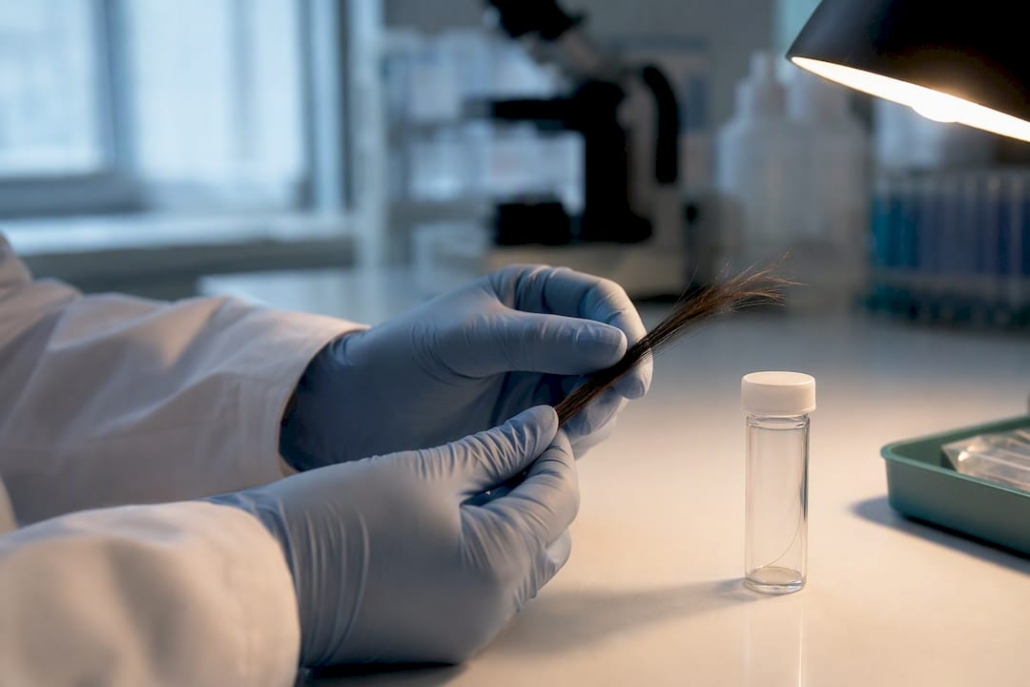
A gut microbiome hair test is an at-home bioresonance screening that checks a hair sample against a database of food, environmental and nutritional triggers. It is not a diagnostic tool, and clinical bodies including Allergy UK advise against relying on it alone. If you have persistent symptoms, treat any result as a starting point for discussion with a GP or registered dietitian, not a verdict.
TL;DR:
- The test offers a quick, non-invasive screening method but does not analyze gut bacteria or provide a clinical diagnosis.
- Scientific evidence suggests hair-based bioresonance tests lack reproducibility and reliable correlation with actual food sensitivities.
- Results often lead to unnecessary food restrictions, so professional guidance is crucial before removing entire food groups based on the test.
- The accuracy of the test is limited by potential false positives or negatives, regardless of whether the panel is entry-level, mid-tier, or premium.
- It is suitable for people with mild, unexplained symptoms willing to work with a healthcare professional for follow-up, but never for severe allergic reactions.
Table of Contents
- What is a gut microbiome hair test and how does it work?
- What does the evidence say about hair and bioresonance testing?
- Who might benefit from this kind of test, and who shouldn’t rely on it
- How to take the test and act on your results
- What the accuracy limits and pricing actually mean
- Our take on where hair testing genuinely fits
- How Ukfoodintolerance’s testing process works
- Sources
- FAQ
What is a gut microbiome hair test and how does it work?
The name is misleading if you picture a stool sample heading to a sequencing lab. This test works differently: a small sample of your hair is sent to a UK laboratory, where bioresonance technology screens it against a panel of items, looking for patterns linked to sensitivity, environmental exposure, or nutritional imbalance. It’s a non-invasive alternative to blood draws or lengthy clinic visits, which is a big part of its appeal for people juggling work and family life.
The process is simple by design:
- Order a kit and follow the hair sample collection guidance provided.
- Post your sample to the lab using the prepaid packaging.
- The laboratory runs the analysis against the test panel, which can cover 900 or more items depending on the plan.
Worth repeating clearly: this is a screening approach, not gut bacteria sequencing. If you searched expecting a breakdown of your microbial species, this isn’t that test, and no consumer-facing hair test currently offers that.
What does the evidence say about hair and bioresonance testing?
The clinical picture is consistent, and it’s worth knowing before you spend any money. A review of unconventional diagnostic methods found that many tests, including hair analysis and bioresonance, lack reproducibility and correlation with disease when assessed in blinded, controlled conditions. That doesn’t mean the process is fraudulent. It means the mechanism hasn’t been proven to isolate genuine food reactions in the way a controlled clinical trial would demand.
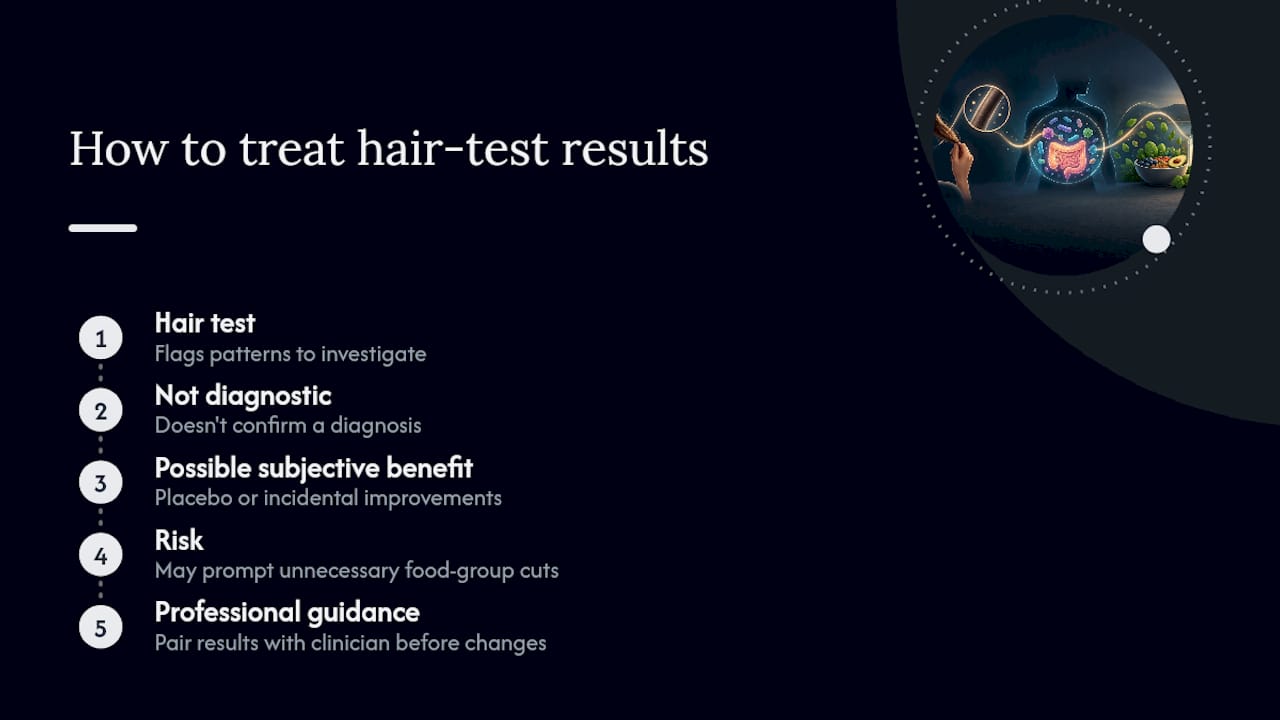
That’s the position from Allergy UK, and it’s the benchmark every at-home test should be measured against. Clinicians warn that hair-based results can prompt people to cut out entire food groups unnecessarily, which sometimes causes the very nutritional gaps they were trying to avoid.
Sceptical journalism has picked up on this too. One investigative analysis argues that hair and bioresonance tests are poorly evidenced and can lead to unnecessary restriction, though it also notes that some users report feeling genuinely better after making changes based on their results. That’s not a contradiction. Placebo effects, incidental dietary improvements, and increased food awareness can all produce real subjective benefit even where the underlying science is shaky.
The takeaway is straightforward: use a hair test to flag patterns worth investigating, not to confirm a diagnosis. Pair any result with professional guidance before making lasting changes to what you eat.
Who might benefit from this kind of test, and who shouldn’t rely on it
This test suits a specific type of reader. If you’ve had low-grade, unexplained symptoms for months, bloating, fatigue, skin flare-ups, and you’re willing to follow up with a clinician or dietitian afterwards, a screening test can give you a practical starting point for an elimination trial.
-
It’s the wrong tool if:
-
You suspect a true IgE-mediated allergy (swelling, hives, breathing difficulty) rather than an intolerance.
-
You’ve had a severe reaction to a food before.
-
You’re testing a child without ongoing supervision from a parent or clinician.
Pro Tip: If any symptom includes swelling of the face or throat, difficulty breathing, or a rapid widespread rash, that’s an emergency allergy presentation. Call 999 or go to A&E. No hair test replaces urgent medical care.
How to take the test and act on your results
Getting a usable sample matters as much as choosing the right test. Follow this sequence:
- Collect enough hair. Most kits ask for a small clipping from close to the scalp, following the step-by-step collection guide to avoid contamination from products or dyes.
- Package and post promptly. Use the supplied envelope and post the same day where possible.
- Read your report as a screening summary. Expect a list of items graded by response level, alongside any flagged nutritional patterns. Every legitimate report should carry a disclaimer that results are not a medical diagnosis.
- Start a food and symptoms diary the moment you get your results, noting what you eat and how you feel, so patterns become visible over weeks rather than days.
- Speak to a registered dietitian or your GP before removing entire food groups, particularly dairy, gluten, or common allergens.
- Trial elimination for around 4 to 6 weeks, which is the timeframe dietitians typically recommend for identifying non-IgE mediated intolerance, followed by structured reintroduction. A full elimination process guide can help you plan this safely.
Bring genuine curiosity to the process, not a fixed conclusion. If a food you love turns up flagged, that’s a prompt to test it properly through reintroduction, not a life sentence.
What the accuracy limits and pricing actually mean
No screening test is infallible, and hair-based methods carry a meaningful chance of false positives or false negatives, results that don’t match how your body genuinely responds to a food. A fast turnaround tells you about lab efficiency; it says nothing about clinical validity, so don’t let speed substitute for scrutiny.
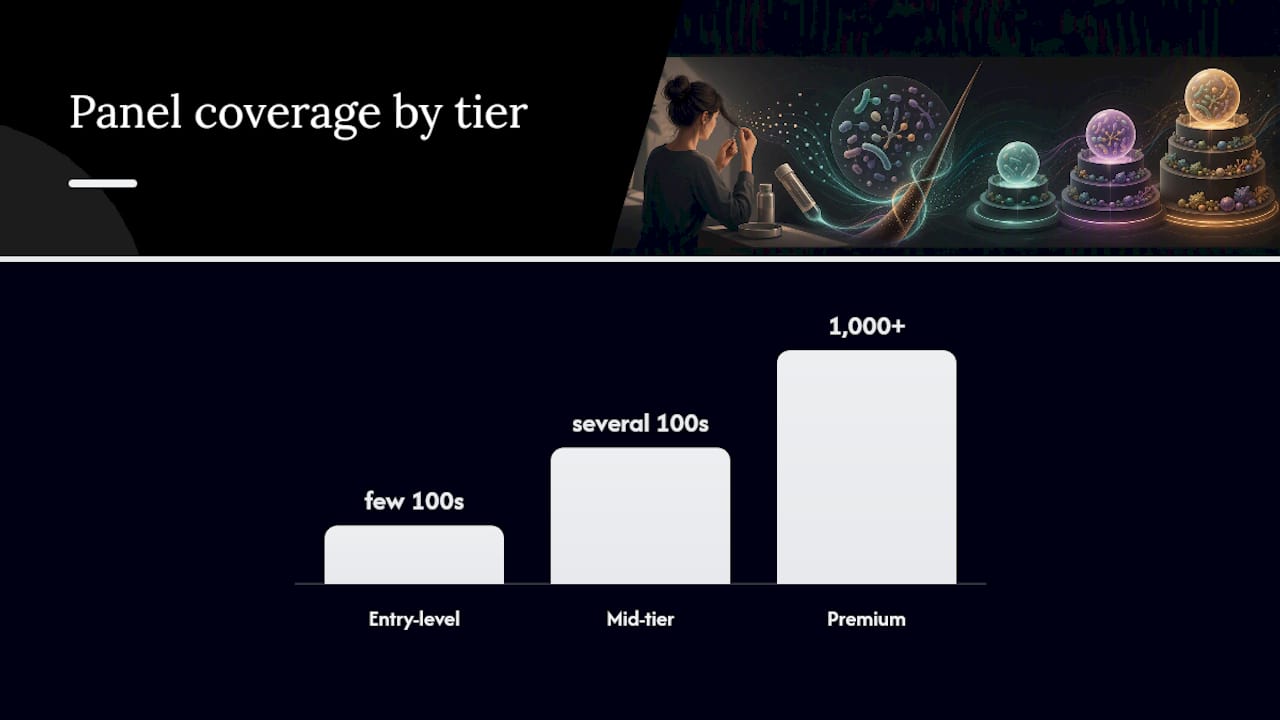
Pricing across the market generally falls into three bands:
- Entry-level panels covering a few hundred items, aimed at people wanting a broad first look.
- Mid-tier panels with several hundred more items, often including common environmental triggers.
- Premium panels covering well over a thousand items for the most thorough screening available.
Whatever tier you choose, prioritise nutritional adequacy over strict elimination. Cutting foods without professional input is the most common way these tests cause more harm than good.
Our take on where hair testing genuinely fits
Screening tests like this earn their place when they’re used as a conversation starter, not a conclusion. The evidence is clear that hair and bioresonance methods haven’t been validated the way clinical allergy testing has, and readers deserve to hear that plainly rather than have it buried in small print. What gets lost in most of the debate, though, is that the alternative for many people isn’t a rigorous clinical workup. It’s years of guessing, cutting foods at random, or doing nothing at all.
Used well, alongside a dietitian and a proper elimination and reintroduction plan, a screening test can shortcut months of trial and error. Used badly, as a substitute for medical advice, it can create new problems. The difference comes down to what you do after the report lands in your inbox.
— Rob
How Ukfoodintolerance’s testing process works
The testing process is designed to provide useful screening information via a non-invasive hair sample method that is processed at a UK laboratory, with digital reports typically delivered within a few days.
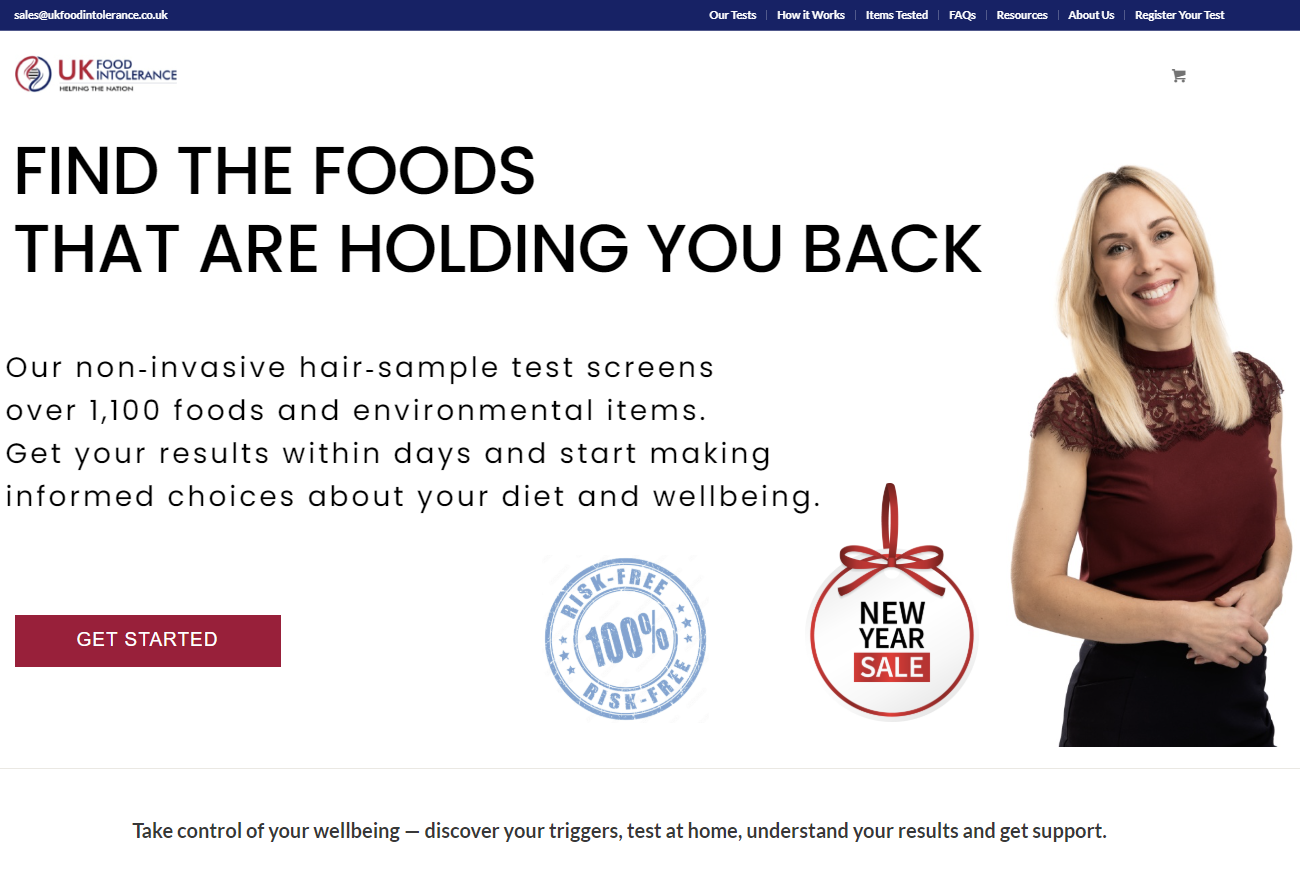
The Core Test, Essential Test, Premium Test and Ultimate Test cover different panel sizes depending on how broad you want your screening to be, and the Ultimate Plus Intolerance Test at £140.99 one-off per person is the most extensive option available. If you’re testing for a pet rather than yourself, the Intro 300, Peak 700 and Essential 500 panels apply the same hair-based approach to dogs and cats.
Reports include guidance for interpreting results and support for planning a safe elimination diet approach. Browse the full range of tests and order a kit to get your first report within days.
Sources
For balanced, evidence-based context beyond this guide, three sources stand out. Allergy UK’s guidance on allergy versus intolerance explains why clinical history and supervised elimination remain the diagnostic standard. The PubMed review of unproven diagnostic tests sets out the reproducibility problems found across unconventional methods. The Skeptic’s investigation into hair and bioresonance testing offers a consumer-facing look at where the risks of unnecessary restriction come from. If your symptoms are ongoing, a GP or registered dietitian remains your best next call.
This article is general information, not a substitute for advice from a qualified doctor. Consult a qualified healthcare professional about your own circumstances before acting on anything here.
- Unproven Diagnostic Tests for Adverse Reactions to Foods (PubMed)
- Allergy vs intolerance | Allergy UK
- Hair analysis and bioresonance food sensitivity tests are simply junk science – The Skeptic
FAQ
Is a gut microbiome hair test the same as gut microbiome sequencing?
No. A hair test uses bioresonance screening on a hair sample to flag possible food and environmental sensitivities, while microbiome sequencing analyses gut bacteria from a stool sample. They test entirely different things using different methods.
How long does it take to get results?
Most digital reports arrive within 48 to 72 hours of the laboratory receiving your sample. Turnaround speed reflects lab processing efficiency, not the clinical certainty of the result.
Can a hair test diagnose a food allergy?
No test of this kind can diagnose a true allergy. Allergy UK states that allergy diagnosis relies on clinical history, and suspected allergic reactions need proper medical assessment, not a home screening kit.
How much does UK Food Intolerance’s testing cost?
The Ultimate Plus Intolerance Test costs £140.99 as a one-off payment per person. Pricing for the Core, Essential, Premium and Ultimate Test tiers is available on the tests page.
Should I stop eating a food as soon as it’s flagged?
Not immediately. Speak to a registered dietitian or your GP first, then consider a supervised elimination trial of roughly 4 to 6 weeks before deciding whether reintroduction confirms a genuine reaction.










Leave a Reply
Want to join the discussion?Feel free to contribute!