

Food intolerances can contribute to immune-related and systemic symptoms, even though they are not driven by the same mechanisms as classical allergy. The NHS defines food intolerance as a non-immune digestive difficulty that produces symptoms such as bloating, stomach pain, diarrhoea, fatigue, and rashes, typically appearing a few hours after eating. The FSA estimates around 1.2 million people in the UK live with food intolerance, and the burden on daily life is measurable.
Here is the practical position:
- Food intolerance is not the same as allergy, but it can still affect how you feel systemically through gut-linked pathways.
- At-home tests can be a useful starting point for a structured elimination diet when you treat results as hypotheses rather than diagnoses.
- They are not a replacement for GP or NHS assessment, particularly if your symptoms are severe, progressive, or suggest allergy or coeliac disease.
Key takeaways
Food intolerances can plausibly contribute to systemic and immune-related symptoms through gut barrier disruption, microbiota changes, and low-grade inflammation, even though they are not immune conditions in the clinical sense.

| Point | Details |
|---|---|
| Intolerance vs allergy | Intolerance is non-immune; allergy and coeliac disease need NHS clinical testing, not elimination diets. |
| Gut-immune link | Microbiota disruption and gut barrier changes can influence low-grade inflammatory signalling and systemic symptoms. |
| Use results as hypotheses | Eliminate flagged items for 2–4 weeks, then reintroduce one at a time over 3–7 days each, with a symptom diary. |
| Know the red flags | Breathing difficulty, rapid-onset hives, unexplained weight loss, or worsening symptoms need GP assessment, not self-testing. |
| Ukfoodintolerance | Offers UK lab-processed hair sample tests covering 500–1,450+ items with 48–72 hour digital reports and elimination diet guidance. |
Table of Contents
- How does intolerance affect immunity and overall health?
- Can gut disturbance from intolerance influence your immune system?
- What symptoms suggest intolerance, and when should you see a GP?
- What can at-home intolerance tests actually tell you?
- How to use an at-home intolerance report safely
- How to choose a reliable UK at-home intolerance test
- When self-testing is not enough
- An editorial perspective on at-home testing
- What Ukfoodintolerance offers for UK residents
- Sources
How does intolerance affect immunity and overall health?
The term “food intolerance” in this guide means what most UK consumers mean by it: a non-allergic, non-coeliac difficulty with specific foods, often detected through at-home sensitivity tests and used to guide elimination diets. It is not the same as immunological tolerance, which is a separate scientific concept.
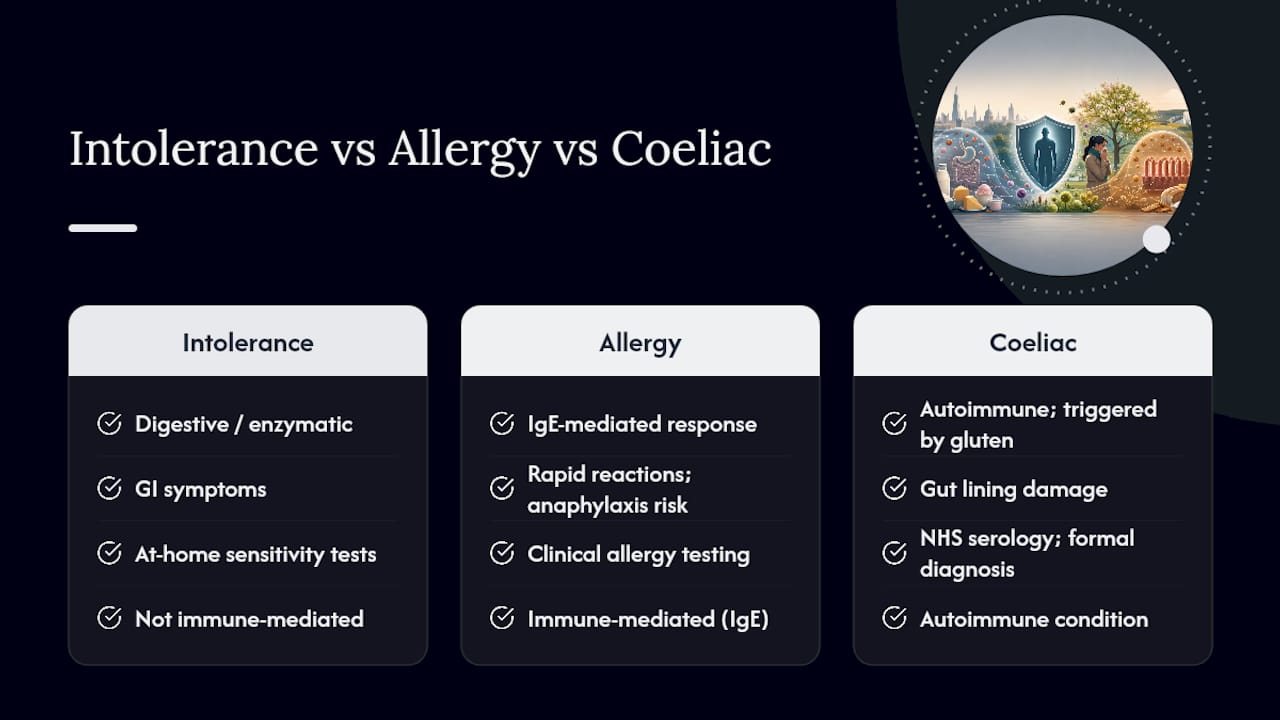
Food intolerance involves digestive or enzymatic difficulties rather than an immune attack. Lactose intolerance, for example, results from insufficient lactase enzyme. Non-coeliac gluten sensitivity sits in a similar category.
Food allergy is immune-mediated. The body produces IgE antibodies against a food protein, triggering rapid, sometimes severe reactions including anaphylaxis.
Coeliac disease is an autoimmune condition where gluten triggers immune damage to the gut lining. It requires NHS serology testing and a formal diagnosis.
The practical difference matters for testing. Allergy and coeliac disease need clinical investigation. Intolerance, in the consumer sense, is where at-home sensitivity testing has a role.
Pro Tip: If your symptoms include rapid swelling, hives, or breathing difficulty after eating, do not use an at-home test. Seek urgent medical attention, as these are allergy red flags, not intolerance signs.
Can gut disturbance from intolerance influence your immune system?
Intolerance is not an immune condition, but the gut and immune system are closely connected. Plausible biological pathways explain why persistent intolerance can contribute to low-grade systemic symptoms beyond simple digestion.
- Gut barrier function: Repeated exposure to a poorly tolerated food can irritate the gut lining. A compromised gut barrier may allow microbial products to enter circulation, triggering low-grade inflammatory signalling.
- Microbiota changes: Diet strongly shapes gut bacteria. A review published in MDPI Nutrients found that microbiota diversity, short-chain fatty acids (SCFAs), and microbial metabolites support regulatory T-cell function and gut barrier integrity. Disruption to this balance can alter immune homeostasis.
- Low-grade inflammation: Persistent gut irritation can elevate cytokine signalling, which may contribute to fatigue, brain fog, and skin symptoms that feel immune-related without being a true allergy.
- Nutrient malabsorption: Poor digestion of certain foods can reduce absorption of nutrients such as vitamin D and iron, both of which play a direct role in immune function. Low iron, for instance, is associated with impaired immune cell activity.
Pro Tip: If your fatigue, skin issues, or recurring infections cluster with digestive symptoms after meals, that pattern is worth tracking. A symptom diary kept for two weeks before any test gives you a clearer baseline than memory alone.
What symptoms suggest intolerance, and when should you see a GP?
Common signs of food intolerance typically appear within a few hours of eating and can persist for hours or days:
- Bloating, stomach cramps, and diarrhoea
- Persistent fatigue or low energy
- Skin rashes, eczema flares, or itching
- Headaches or brain fog
- Nausea
The FSA’s quality-of-life research found that adults with food intolerance valued removing its impacts at a mean of around £540 per year, reflecting how significantly these symptoms affect daily life, eating out, and social activities.
Seek GP assessment rather than self-testing if you experience any of the following:
- Breathing difficulty, swelling of the face or throat, or rapid-onset hives after eating
- Unexplained significant weight loss
- Persistent iron deficiency or signs of malnutrition
- Symptoms that worsen progressively despite dietary changes
- Chronic diarrhoea with blood, or persistent malabsorption signs
These red flags suggest allergy, coeliac disease, or another condition that requires NHS investigation, not an elimination diet.
What can at-home intolerance tests actually tell you?
At-home tests offer a possible signal, but their validity varies considerably. Understanding the difference between test types helps you judge what a result is actually worth.
NHS-validated tests include specific IgE blood tests for allergy and coeliac serology. These are clinically validated and available through your GP.
Commonly sold private tests fall into two main categories:
- IgG panels: These measure IgG antibodies to foods. IgG is a normal immune response to food exposure, not a marker of intolerance. The British Association of Dermatologists (BAD) warns that many private online tests use IgG panels or unvalidated methods with unaccredited laboratories, and that such tests can lead to inaccurate results and unnecessary dietary restrictions.
- Bioresonance tests: These use hair samples to assess sensitivity signals. The scientific evidence base is limited, and clinical bodies urge caution. However, when used as a structured starting point for an elimination diet rather than a definitive diagnosis, they can help you identify patterns worth investigating.
A note on accreditation: Before purchasing any private test, check whether the laboratory is UK-based and holds recognised accreditation (such as UKAS). Ask whether a clinician reviews results before they reach you. Transparent methodology statements and clear guidance on how to use results safely are markers of a credible provider. Without these, results carry a higher risk of misleading you into unnecessary long-term exclusions.
For a clear explanation of how intolerance tests work and what methodology transparency looks like in practice, that context helps you read any report more critically.
How to use an at-home intolerance report safely
Treat your results as hypotheses to test, not absolute diagnoses. The NHS recommends a careful elimination and reintroduction approach as the most reliable way to confirm food triggers.
- Record your baseline. Keep a symptom diary for one to two weeks before starting any elimination. Note what you eat, when symptoms appear, and their severity.
- Remove only plausible items. Based on your report, eliminate the flagged foods most consistent with your symptoms. Do not cut out entire food groups without reason.
- Hold the elimination for 2–4 weeks. This is long enough to see a meaningful change in symptoms.
- Reintroduce one item at a time. Allow 3–7 days per item, monitoring symptoms carefully before adding the next.
- Log everything. A written record makes patterns clear and gives your GP or dietitian useful data if you need professional support.
| Stage | Timeframe |
|---|---|
| Hair sample collection and submission | Day 1 |
| Digital report turnaround | 48–72 hours |
| Elimination phase | 2–4 weeks |
| Controlled reintroduction (per item) | 3–7 days |
Pro Tip: Excluding multiple foods simultaneously raises the risk of nutritional gaps. If your report flags more than three or four items, speak to a registered dietitian before starting. They can help you plan substitutes that protect your intake of calcium, iron, and B vitamins.
For a structured approach to managing food sensitivities naturally, pairing that with your report gives you a clearer framework. Diet can also affect mood and energy, so tracking those alongside physical symptoms gives you a fuller picture of how diet affects your overall wellbeing.
How to choose a reliable UK at-home intolerance test
Not all tests are equal. Use this checklist when evaluating any provider:
- UK laboratory processing: Results processed in a UK-accredited lab carry more accountability than overseas alternatives.
- Stated accreditation: Look for UKAS or equivalent recognition.
- Clinical or physician review: A credible provider has a clinician review results before they reach you.
- Transparent methodology: The provider should explain clearly what is being measured and how.
- Range of items tested: Broader coverage (500 to 1,450+ items) gives you more useful data for an elimination plan.
- Clear sample instructions: Simple, non-invasive hair sample collection with step-by-step guidance reduces user error.
- Report turnaround: 48–72 hours for a digital report is a reasonable standard.
- Support resources: Elimination diet guides, symptom tracking tools, and access to further guidance reduce the risk of unsafe self-management.
A credible report labels results as sensitivities or indicators rather than diagnoses, includes confidence notes, and points you towards clinical next steps when warranted. The Ukfoodintolerance guide on using test results sets out what a well-structured report should contain.
When self-testing is not enough
At-home tests have real limits. Being clear about them protects you.
- They cannot diagnose allergy, coeliac disease, or any clinical condition.
- False positives can lead to unnecessary exclusions and nutritional risk.
- False negatives can give false reassurance when a real condition is present.
- Bioresonance and IgG methods are not validated for clinical diagnosis.
See your GP if:
- Symptoms are severe, worsening, or include any of the red flags listed earlier.
- You have lost weight unexpectedly or show signs of malnutrition.
- Symptoms persist or worsen despite a careful elimination trial.
- You suspect allergy or coeliac disease.
Pro Tip: Bring your symptom diary and test report to your GP appointment. They give your GP useful context and can help direct appropriate NHS tests, such as coeliac serology or specific IgE testing, without duplicating effort.
An editorial perspective on at-home testing
The most honest thing you can say about at-home intolerance testing is that it works best when you treat it as a structured starting point, not a final answer. The science behind bioresonance is limited, and the BAD’s warnings about unvalidated private tests are worth taking seriously. But the alternative for many people is years of unexplained symptoms and no structured way to investigate them.
Used sensibly, with a symptom diary, a careful elimination protocol, and GP involvement when symptoms warrant it, an at-home report gives you a framework that most people simply do not have. Ukfoodintolerance offers UK laboratory processing, rapid digital reports, and clear guidance resources that fit this workflow. The key is pairing the report with clinical oversight for anything serious, and not letting a positive result become a reason to exclude foods indefinitely without confirmation.
What Ukfoodintolerance offers for UK residents
If you want a UK-based starting point that fits the safe elimination workflow described here, Ukfoodintolerance provides at-home hair sample kits with UK laboratory analysis and digital reports covering 500 to 1,450+ items, returned within 48–72 hours.

The service includes clear elimination diet guidance, support resources, and transparent methodology so you understand what the results represent. The Core Single Intolerance Test covers 500 items; the Ultimate Single Intolerance Test covers over 1,100. Both are designed to give you a structured hypothesis to work from, not a clinical verdict. Browse the available intolerance test options to find the right fit for your situation, or explore the full test overview for coverage details before ordering.
Sources
- Food intolerance – NHS
- Living with a Food Hypersensitivity in the UK – the costs and the impact on a person’s quality of life – Food Standards Agency (FSA)
- Dermatologists warn against the use of private unvalidated food allergy tests – British Association of Dermatologists (BAD)
- Review on microbiota, diet and immune regulation – MDPI Nutrients
This article is general information, not a substitute for advice from a qualified doctor. Consult a qualified healthcare professional about your own circumstances before acting on anything here.










Leave a Reply
Want to join the discussion?Feel free to contribute!