

At-home health tests are medical diagnostic tools you use outside a clinical setting, collecting your own sample and sending it for analysis. Understanding at-home health tests means knowing what they can and cannot tell you, which providers meet UK regulatory standards, and how to act on your results sensibly.
What are at-home health tests and how do they work?
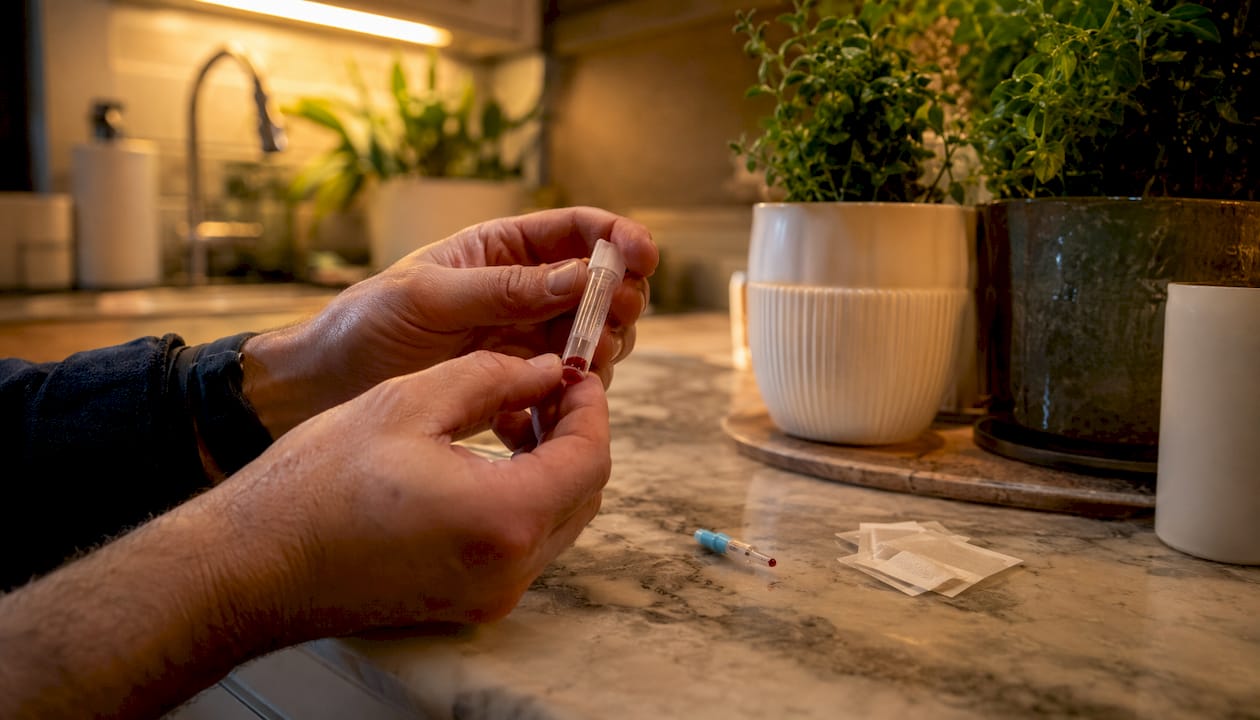
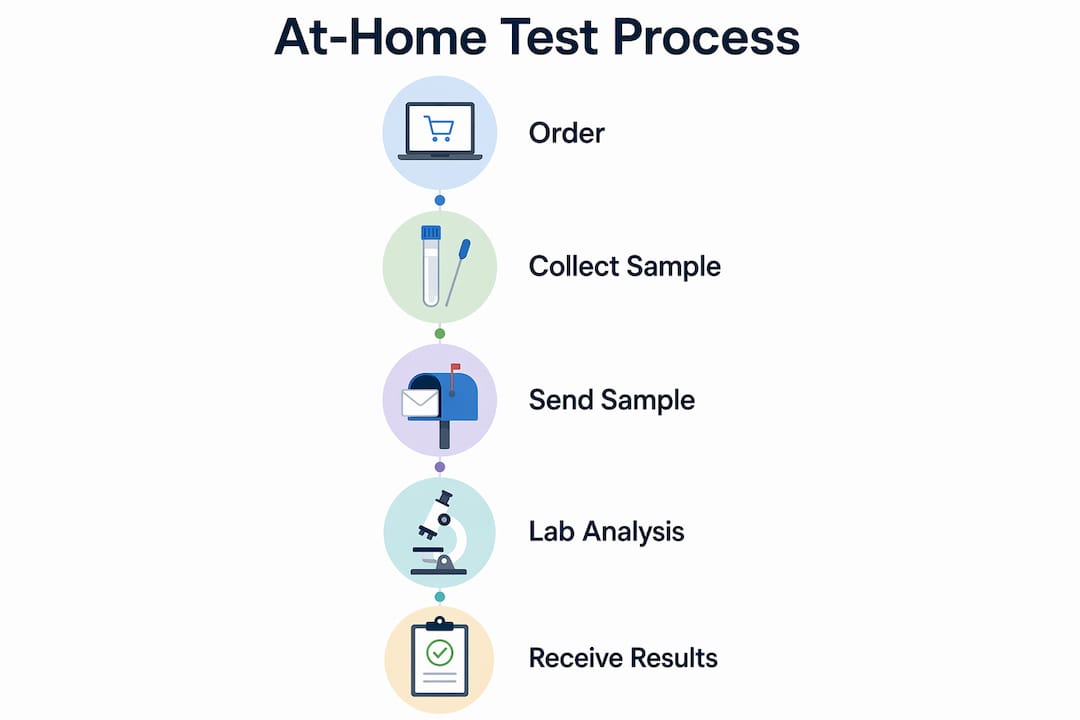
At-home health tests let you collect a biological sample yourself, post it to a laboratory, and receive results digitally in due course. They cover a wide range of health indicators, from blood markers and infections to food sensitivities. The basic workflow is consistent across most kits:
- Sample collection: you collect blood via a finger-prick lancet, a swab from the throat or genitals, a stool sample, or a few strands of hair
- Submission: the sample goes into a prepaid envelope and is posted to an accredited UK laboratory
- Analysis: the lab processes your sample using validated methods
- Results: a digital report arrives, usually with guidance on what the findings mean
Providers such as Medichecks offer blood-based panels covering hormones, vitamins, and organ function. Ukfoodintolerance uses bio-resonance technology with hair samples to identify food and environmental sensitivities. These tests give you preliminary health data, not a definitive diagnosis. Think of them as a starting point for a conversation with your GP, not a replacement for one.
What types of at-home health tests are available in the UK?
The range of DIY health testing kits available to UK residents has expanded considerably. Each type targets a different health concern and uses a different sample method.
- Blood tests (finger-prick): check nutritional status, thyroid function, cholesterol, vitamin D, and hormone levels; you prick a fingertip and collect drops onto a card or into a microtube
- Venous blood collection kits: some providers supply a kit for a small venous draw at home, offering a larger sample for more detailed panels
- STI self-sampling kits: swabs or urine samples sent to a lab to test for infections including chlamydia, gonorrhoea, and HIV; available through NHS services in many regions
- Cancer screening: the NHS bowel cancer screening programme sends a faecal immunochemical test (FIT) kit to everyone aged 50–74 every two years; you collect a small stool sample at home and post it back
- Food intolerance and sensitivity tests: use hair samples or blood to identify potential triggers; Ukfoodintolerance’s Ultimate Single Intolerance Test covers over 1,100 food and environmental items, while the Core Single Intolerance Test checks 500 items using bio-resonance analysis.
- Allergy indicator tests: blood-based IgE tests for common allergens such as pollen, pet dander, and dust mites
- Blood pressure monitoring: home blood pressure machines let you track readings twice daily; a reading of 135/85 or higher at home is considered elevated
- Blood glucose monitoring: finger-prick meters used daily by people managing diabetes, with self-monitoring of blood glucose (SMBG) recommended at least four times a day for those with Type 1 diabetes
The NHS provides some of these tests free of charge; others are available privately at varying price points. Convenience and privacy are consistent benefits across all categories.
How accurate are at-home health tests, and what are their limits?

Accuracy in home testing depends on two things: how well you collect the sample, and how well the laboratory processes it. A poorly collected finger-prick sample, for example, can produce haemolysis that skews results. Instructions for use are often misunderstood, and counterintuitive test indicators increase the risk of user error if you do not read the guidance carefully.
Laboratory quality is the other critical variable. UKAS accreditation to ISO 15189 ensures a home blood test lab meets the same quality standards as NHS hospital testing. Always check whether your chosen provider uses a UKAS-accredited facility before ordering.
A 2025 UK review of 30 direct-to-consumer self-tests found that 18 provided clear abnormal result thresholds, while 7 omitted detection limits entirely, raising the risk of misinterpretation. That gap in information quality is real and worth knowing about before you choose a provider.
Reference ranges are statistical distributions, not strict pass/fail thresholds. A result outside the reference range is not automatically serious, and a result inside it is not always reassuring. Trends over time and your personal symptom history matter just as much as a single reading.
The fundamental risk of home testing is the absence of clinical context. Without a full picture of your symptoms and medical history, a result can create false reassurance or unnecessary anxiety. At-home test results should be a starting point for discussion with a healthcare professional, not a diagnostic endpoint.
Pro Tip: Before ordering any home test kit, check the provider’s website for confirmation that their laboratory holds UKAS accreditation to ISO 15189. If that information is not clearly stated, contact them directly before purchasing.
How are at-home health tests regulated in the UK?
At-home health tests are classified as in vitro diagnostic (IVD) medical devices. The MHRA is the UK’s regulatory authority for all medical devices, and every IVD must be registered with the MHRA before it can be placed on the Great Britain market.
The UK Medical Devices Regulations 2002 set out the framework. Key points for consumers:
- Four risk categories: general IVDs (hormone tests, clinical chemistry), self-test IVDs (pregnancy, cholesterol), higher-risk self-tests (blood glucose), and the highest-risk category covering HIV, hepatitis B, C, D, and blood grouping
- Conformity assessment: general IVDs can be self-certified by the manufacturer; self-test IVDs require examination by a UK approved body before registration
- CE marking: currently valid for IVDs on the Great Britain market until 30 june 2030, after which a UKCA mark will be required
- Post-market surveillance: manufacturers must submit vigilance reports to the MHRA when incidents occur involving their device
- Consumer protection: the essential requirements under the regulations aim to confirm that products do not compromise health or safety and perform as the manufacturer claims
Regulatory compliance sets a baseline for safety and accuracy, but it does not guarantee that every registered test is equally reliable. Checking for UKAS-accredited laboratory analysis remains the most practical step you can take as a consumer.
How does Ukfoodintolerance approach specialist food intolerance testing?
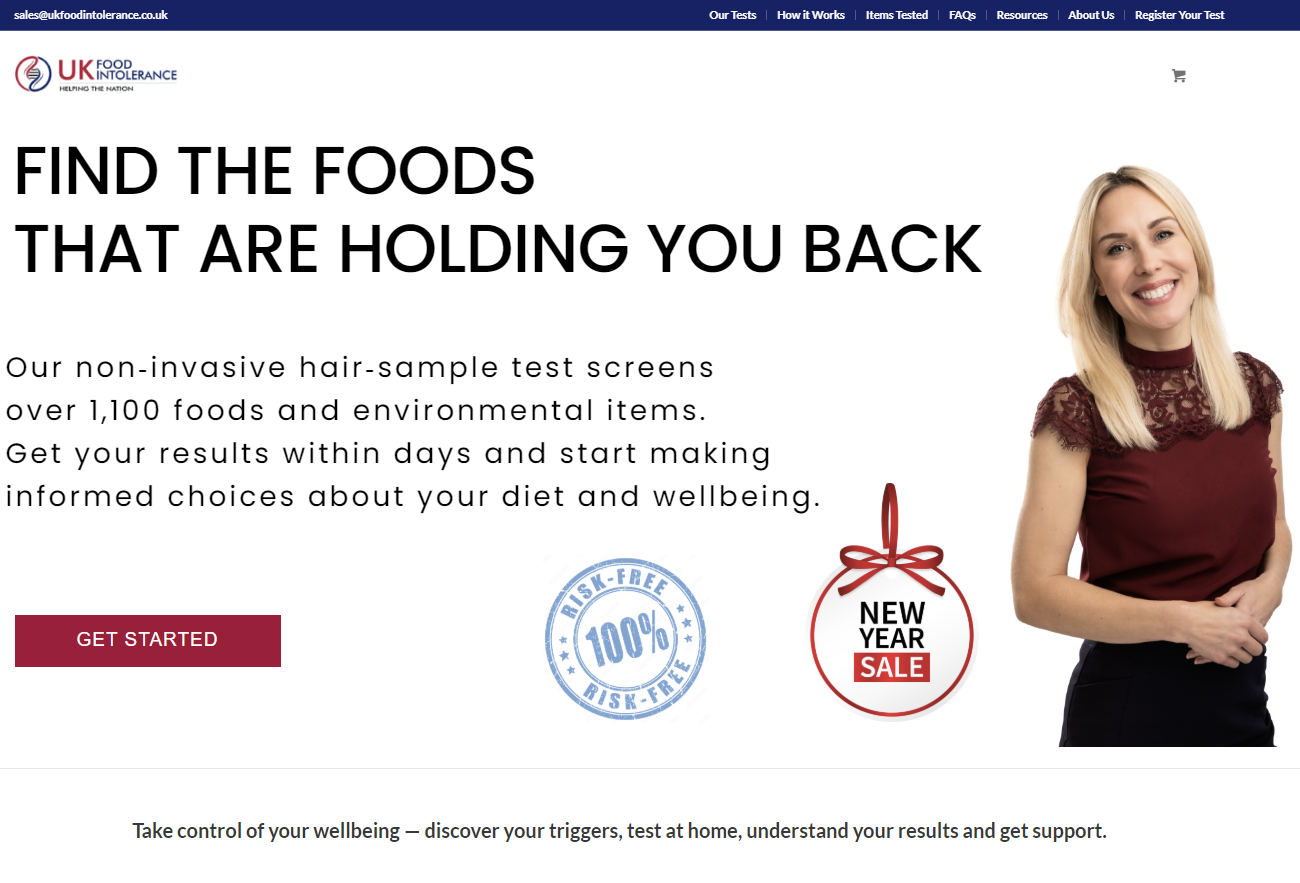
Ukfoodintolerance offers a non-invasive route to identifying food and environmental sensitivities through bio-resonance technology. Rather than a blood draw, you collect a small hair sample at home and post it to a UK-based laboratory for analysis.
Two main products are available:
- Ultimate Single Intolerance Test: covers over 1,100 food and environmental items, making it one of the most comprehensive panels available for home use
- Core Single Intolerance Test: tests 500 items at a more accessible price point, suited to those looking for a focused starting assessment
Results arrive as a detailed digital report within 48–72 hours of the lab receiving your sample. The report identifies items your body may be reacting to and includes guidance for an elimination diet, helping you make practical dietary changes based on your results. Ukfoodintolerance also provides educational resources on bio-resonance technology, FAQs, and support for interpreting your findings. For a clear walkthrough of the process from sample collection to results, the step-by-step workflow guide is a practical starting point.
What do at-home health tests typically cost in the UK?
Pricing varies considerably depending on the type of test and the provider. NHS-provided tests such as the bowel cancer FIT kit and STI self-sampling kits are free to eligible people. Private options carry a cost that reflects the complexity of the panel and the laboratory involved.
Blood tests from private providers typically range from around £30 for a single-marker check to over £200 for a comprehensive multi-panel screen. Food intolerance and sensitivity tests sit at various price points depending on how many items are included. Ukfoodintolerance’s Core Single Intolerance Test offers an affordable entry point, while the Ultimate Single Intolerance Test covers a broader range at a higher price. Blood pressure monitors for home use are a one-off purchase, generally available from pharmacies and online retailers. Before spending on any private test, check whether your GP can request the same test on the NHS, particularly for blood markers related to thyroid function, vitamin D, or cholesterol.
What should you know about data privacy when using at-home tests?
When you use a private at-home health test, you share sensitive personal and biological data with a commercial company. Before ordering, check the provider’s privacy policy for clarity on how your data is stored, whether it is shared with third parties, and how long it is retained.
UK providers must comply with the UK General Data Protection Regulation (UK GDPR) and the Data Protection Act 2018. Look for explicit statements about whether your health data is used for research purposes and whether you can request deletion. Reputable providers will also use secure, encrypted portals to deliver your results rather than plain email. If a provider’s privacy policy is vague or hard to find, treat that as a warning sign.
How do you choose a reliable at-home health test provider in the UK?
The most reliable providers combine MHRA-registered devices with UKAS-accredited laboratory analysis and clear, clinically contextualised results. Use this checklist when evaluating any provider:
- Confirm the test is registered with the MHRA as an IVD medical device
- Check that the laboratory holds UKAS accreditation to ISO 15189
- Look for clear abnormal result thresholds and reference ranges in the sample report
- Verify that the provider offers clinical support or GP referral guidance alongside results
- Read the privacy policy before submitting any personal data
- Check independent reviews for feedback on result clarity and customer support
Ukfoodintolerance meets UK regulatory requirements and processes samples in a UK-based laboratory, with results delivered digitally and supported by educational guidance. For a broader view of at-home intolerance testing and its practical benefits, their resource pages offer clear, accessible information.
What are the real benefits and risks of testing at home?
Home health testing gives you access to health data on your own terms, without a GP referral or clinic appointment. The benefits are genuine. You can monitor chronic conditions between appointments, screen for issues before symptoms appear, and investigate potential food triggers that might otherwise go unidentified for years. Privacy is another real advantage, particularly for STI testing.
The risks are equally real. Misinterpreting a result without clinical context can lead to unnecessary worry or, worse, false reassurance that delays proper medical attention. Blood test results are clues, not verdicts. Clinical judgment combines results with symptoms and history to reach a meaningful conclusion. A home test cannot do that on its own. Used well, alongside professional guidance, at-home diagnostic tools are a genuinely useful addition to how you manage your health. Used in isolation, they can mislead.
Key takeaways
At-home health tests are most useful when you choose a regulated, accredited provider and treat results as a prompt for professional discussion rather than a final answer.
| Point | Details |
|---|---|
| Regulation matters | All IVDs must be registered with the MHRA under the UK Medical Devices Regulations 2002 before sale. |
| Lab accreditation is key | UKAS accreditation to ISO 15189 confirms a lab meets NHS-equivalent quality standards. |
| Results need context | A 2025 UK review found 7 of 30 self-tests omitted detection limits, raising misinterpretation risk. |
| Results are a starting point | At-home test results should prompt GP discussion, not replace clinical assessment. |
| Specialist options exist | Ukfoodintolerance offers the Ultimate Single Intolerance Test covering over 1,100 items, and the Core Single Intolerance Test covering 500 items, both via non-invasive hair sample analysis with 48–72 hour turnaround. |
If you are ready to explore food and environmental sensitivity testing from home, Ukfoodintolerance offers clear, fast results with practical dietary guidance included. Browse the full range of food intolerance test kits to find the panel that fits your needs.










Leave a Reply
Want to join the discussion?Feel free to contribute!